
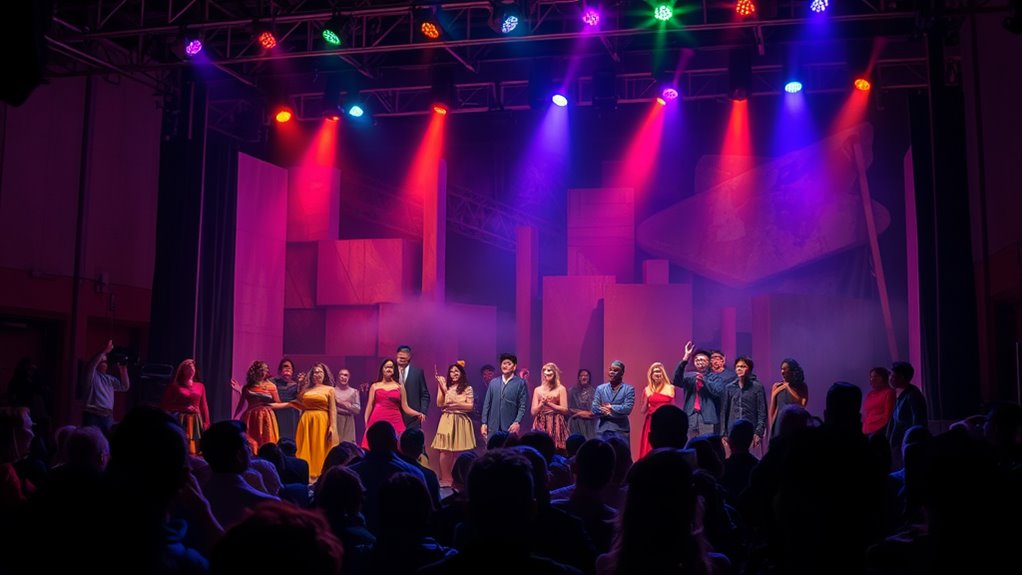
Theater is currently experiencing a remarkable evolution, marked by groundbreaking works that redefine audience engagement and narrative structure. Productions like "Sleep No More" employ innovative storytelling techniques, incorporating interactive elements that transform spectators into participants. Diverse voices are being amplified through plays like "Sweat" and "Eclipsed," cultivating empathy and social consciousness. Technological advancements, such as augmented reality, improve immersive experiences. Furthermore, notable musicals like "Hadestown" and "Six" offer unique musical compositions that resonate with contemporary societal themes. To fully appreciate the scope of innovation shaping modern theater, one might explore emerging trends that are continuing to redefine this dynamic art form.
Innovative Storytelling Techniques
In recent years, theater has witnessed a remarkable evolution in storytelling techniques, engaging audiences in new and unexpected ways. Among these innovations, interactive narratives and nonlinear storytelling have emerged as influential tools that redefine the traditional theater experience. This shift allows audiences not merely to observe, but to actively participate in the unfolding of the narrative, nurturing a deeper connection to the material.
Interactive narratives invite viewers to make choices that influence the direction of the story. This participatory approach transforms spectators into co-creators, blurring the lines between performer and audience. Productions such as "Sleep No More" exemplify this technique, allowing attendees to explore the space and engage with the storyline on their own terms. This immersive experience challenges conventional passive viewing, as each participant's decisions lead to unique interpretations of the narrative.
Nonlinear storytelling further enriches the complexity of theatrical works. By presenting events out of chronological order, playwrights can create a fabric of interconnected moments that encourages audiences to piece together the narrative puzzle. This method invites viewers to engage actively with the material, promoting critical thinking and emotional investment. Works like "The Vagrant Trilogy" showcase how nonlinear structures can reflect the intricacies of human experience and memory, resulting in a more profound engagement with the themes presented.
Diverse Voices in Theater
The evolution of storytelling techniques in theater has paved the way for a richer fabric of voices and perspectives to emerge on stage. The inclusion of diverse narratives not merely reflects the complexity of contemporary society but additionally amplifies underrepresented voices that have historically been marginalized in the performing arts. This shift in direction of diversity enriches the theatrical environment and invites audiences to engage with a wide array of cultural narratives.
To illustrate the impact of diverse voices in theater, consider the following table showcasing various groundbreaking works that have highlighted underrepresented perspectives:
| Play Title | Author | Cultural Narrative |
|---|---|---|
| *Sweat* | Lynn Nottage | Working-class struggles in America |
| *The Vagrant Trilogy* | J. T. Rogers | Immigrant experiences and identity |
| *Eclipsed* | Danai Gurira | Women's resilience during conflict |
| *Indecent* | Paula Vogel | Jewish immigrant culture and history |
Each of these works serves as a confirmation of the richness of cultural narratives that diverse voices bring to the stage. By spotlighting the experiences of different communities, theater not only nurtures empathy but also challenges audiences to confront their own biases. In a world that is increasingly interconnected, the representation of diverse voices in theater becomes crucial, ensuring that all stories are told and heard, thereby paving the way for a more inclusive artistic future.
Use of Technology in Productions
Amid the rapid advancements in technology, theater productions have increasingly embraced innovative tools and techniques that improve storytelling and audience engagement. The integration of technology in contemporary theater has transformed the way narratives are conveyed, enriching the overall spectator experience. One notable development is the use of virtual reality, which allows audiences to immerse themselves in a fully realized digital environment. This technology not only enriches traditional performances but likewise invites participation, blurring the lines between actor and audience.
Furthermore, interactive installations have emerged as a compelling method to engage viewers beyond passive observation. These installations encourage audience members to interact with the performance space, contributing to a dynamic and personalized experience. By allowing attendees to influence the narrative or environment, productions can create a more intimate connection between the story and the viewer.
The combination of virtual reality and interactive elements promotes an innovative approach to storytelling, where the audience is no longer just an observer but an active participant in the theatrical experience. This evolution reflects a broader trend in the arts, where technology serves not merely as a tool, but as a catalyst for creativity and exploration. The future of theater lies in its ability to adapt and incorporate these technological advancements, ensuring that productions resonate with contemporary audiences whilst preserving the core essence of live performance. As theater continues to evolve, the possibilities for imaginative storytelling through technology are boundless. This integration of technology not only redefines audience engagement but also expands the boundaries of stagecraft, allowing for dynamic and immersive narratives. Companies experimenting with these innovations often review the mobile units Henry V to assess how portable and digital elements can enhance the accessibility and impact of classical performances. By embracing these advancements, theater-makers can bridge the gap between tradition and modernity, crafting experiences that captivate both longtime enthusiasts and new generations of theatergoers.
Impactful Themes and Messages
Groundbreaking new works in theater increasingly embrace themes of social justice and mental health awareness, reflecting pressing societal issues. These narratives not only amuse but additionally provoke critical conversations among audiences, nurturing a deeper comprehension of marginalized experiences. In this manner, they serve as essential platforms for advocacy and change within contemporary culture.
Social Justice Representation
Exploring the intricate terrain of social justice representation in contemporary theater, recent productions have emerged as impactful vehicles for dialogue and change. These works often center around themes that resonate deeply within society, addressing issues such as race, gender, and socioeconomic disparities. By weaving narratives that reflect the lived experiences of marginalized communities, theater has become a platform for intersectional activism, nurturing a more inclusive cultural conversation.
Equitable casting practices play a vital role in this movement, allowing performers of diverse backgrounds to inhabit roles that authentically represent their experiences. This shift not only empowers actors but additionally enriches the storytelling process, creating a more genuine depiction of societal dynamics. Productions that prioritize social justice representation challenge audiences to confront uncomfortable truths, urging them to reflect on their own roles in perpetuating or dismantling systemic inequalities.
The impact of these theatrical endeavors extends beyond the stage, influencing public discourse and inspiring activism within communities. As theater continues to evolve, its commitment to social justice representation promises to cultivate empathy, comprehension, and in the end, a more equitable society. Through these groundbreaking works, the stage becomes a significant catalyst for change.
Mental Health Awareness
The commitment to social justice representation in theater has paved the way for a heightened focus on mental health awareness, with contemporary productions increasingly addressing the intricacies of mental illness and emotional well-being. These works challenge the long-standing theater stigma surrounding mental health, inviting audiences to engage with sensitive topics through impactful narratives and relatable characters.
By depicting the lived experiences of individuals grappling with mental health issues, these productions nurture empathy and comprehension. They encourage open dialogue, breaking the silence that often surrounds mental illness. For instance, shows that explore themes of anxiety, depression, and trauma not only provide visibility to these challenges but additionally highlight the importance of seeking help and support.
Moreover, theater serves as a platform for education, illustrating the challenges of mental health in a way that resonates with diverse audiences. The authenticity of these narratives offers a cathartic experience, prompting reflection and discussion long after the curtain falls. As theater continues to evolve, its role in promoting mental health awareness remains essential, dismantling harmful stereotypes and contributing to a more compassionate society. Through this lens, contemporary theater emerges not only as art but as an essential vehicle for social change.
Notable New Musicals
Notable new musicals are redefining the genre through innovative storytelling techniques that engage audiences on multiple levels. These productions prioritize diverse representation on stage, reflecting the rich fabric of contemporary society. Furthermore, unique musical compositions improve the narrative experience, pushing the boundaries of traditional musical theater.
Innovative Storytelling Techniques
How do contemporary musicals redefine narrative boundaries? In an era increasingly characterized by innovation, new works in theater are embracing experimental narratives and non-linear storytelling to create immersive experiences that challenge traditional formats. This evolution not merely captivates audiences but additionally stimulates a deeper emotional engagement with the material.
Here are four notable techniques that exemplify this trend:
- Fragmented Timelines: Stories are told through disjointed sequences, requiring audiences to piece together the narrative as they progress.
- Multiple Perspectives: Characters' viewpoints are interwoven, allowing for a richer and more complex comprehension of the story.
- Audience Participation: Some musicals encourage direct involvement, blurring the lines between performer and spectator, thereby enhancing the storytelling experience.
- Multimedia Integration: The use of projections and digital media creates a layered narrative, allowing for a dynamic interplay of visuals and sound.
These innovative storytelling techniques not only redefine the essence of musicals but additionally invite audiences to engage in a dialogue with the art form, ultimately broadening the horizons of theatrical expression.
Diverse Representation on Stage
Embracing diverse representation on stage has become a defining hallmark of contemporary musicals, reflecting the rich fabric of modern society. This shift not only improves the authenticity of storytelling but also allows for a broader spectrum of cultural narratives to be explored. By incorporating characters and stories from various backgrounds, musicals can transcend traditional boundaries and engage audiences in meaningful ways.
Notable new works have successfully spotlighted intersectional identities, showcasing how race, gender, and socioeconomic factors intertwine to shape individual experiences. Musicals like "Hamilton" and "The Prom" exemplify this trend, using their platforms to amplify voices that have historically been marginalized in theater. These productions invite audiences to witness the complexity of human experiences, nurturing empathy and comprehension through relatable characters and compelling plots.
Furthermore, the emphasis on diverse representation in theater not only enriches the artistic realm but also encourages a new generation of artists to share their unique stories. As diverse narratives continue to emerge, the theater becomes a lively space where varied perspectives converge, challenging societal norms and inspiring dialogue about inclusion and equity in the arts.
Unique Musical Compositions
The evolution of diverse representation on stage has paved the way for innovative musical compositions that challenge conventional norms and expand the boundaries of the genre. Remarkable new musicals are embracing experimental soundscapes and cross-genre fusion, creating rich auditory experiences that resonate with contemporary audiences. Here are four standout examples:
- "Hadestown" – This groundbreaking work intertwines Greek mythology with folk and jazz elements, showcasing a unique narrative through its eclectic score.
- "The Band's Visit" – Blending Middle Eastern melodies with American musical theater, it creates a poignant exploration of connection and culture.
- "Six" – A modern retelling of the lives of Henry VIII's wives, this show fuses pop music with historical storytelling, resulting in a fresh and lively theatrical experience.
- "A Strange Loop" – This Pulitzer Prize-winning musical employs a complex layering of sound and narrative, reflecting the inner struggles of a Black queer artist through a rich fabric of musical influences.
These works exemplify how contemporary musicals are redefining traditional storytelling while embracing diverse sonic environments, enriching the theater experience for all.
Trailblazing Playwrights to Watch
As audiences increasingly seek diverse narratives that challenge societal norms, a new generation of playwrights is emerging, poised to redefine the terrain of contemporary theater. These emerging playwrights are not merely reshaping traditional storytelling but additionally amplifying voices often marginalized in mainstream narratives. Their works reflect a rich mosaic of cultural influences, drawing from personal experiences, historical contexts, and global perspectives.
One such playwright is Aleshea Harris, whose innovative storytelling interlaces themes of identity, trauma, and resilience. Harris's work resonates deeply, offering audiences an introspective look into the intricacies of the human experience as it addresses pressing societal issues. Similarly, playwrights like Jeremy O. Harris and Martyna Majok are making waves with their unique approaches. Harris's groundbreaking piece "Slave Play" interrogates race, sexuality, and influence dynamics, whereas Majok's "Cost of Living" explores the nuances of disability and human connection.
These playwrights exemplify the strength of theater as a medium for social commentary and transformation. Their narratives challenge preconceived notions and invite audiences to engage with uncomfortable yet necessary dialogues. As they continue to rise in prominence, it is crucial for theater institutions and audiences alike to support and celebrate their contributions to the art form.
Audience Engagement Strategies
Engaging audiences in contemporary theater has become increasingly vital as playwrights introduce diverse narratives that resonate with a wide range of experiences. To cultivate deeper connections and improve the overall theatrical experience, many artists are implementing innovative audience engagement strategies. These approaches not just captivate attendees but also transform passive spectators into active participants, creating a more immersive environment.
Here are four effective strategies for improving audience engagement:
- Interactive Performances: These productions invite audience members to influence the storyline, blurring the lines between performer and spectator. This can lead to unexpected outcomes and a heightened sense of investment in the narrative.
- Post-Show Discussions: Facilitating conversations between cast members and the audience after performances allows for reflection and deeper comprehension. These discussions can illuminate thematic elements and personal relevance, encouraging audience participation in the dialogue.
- Immersive Experiences: By transforming traditional theater spaces into multi-sensory environments, these productions encourage audience members to explore the setting and engage with the story on a more personal level. This approach often includes elements of physical movement and sensory interaction.
- Digital Engagement: Utilizing social media platforms and apps, theaters can create pre-show excitement and post-show reflection opportunities. This digital engagement nurtures a community that extends beyond the theater walls and encourages ongoing audience participation.
These strategies not just enrich the theatrical experience but also guarantee that audiences feel valued and engaged in the narratives being presented.
Future Trends in Theater
Frequently, theater is at the forefront of cultural innovation, adapting to societal shifts and technological advancements. As we look to the future, several trends are emerging that promise to redefine the audience's experience. One of the most notable trends is the rise of immersive experiences, where the traditional boundaries between performers and spectators blur. Productions are increasingly inviting audiences to engage directly with the narrative, creating environments that encourage exploration and interaction. This shift not only improves emotional investment but additionally cultivates a communal atmosphere, transforming theater into a shared expedition.
Another significant trend is the emphasis on collaborative performances, often involving multidisciplinary artists from various backgrounds. This approach enriches the storytelling process, as diverse perspectives can lead to more nuanced narratives. Collaborative efforts can additionally include the integration of technology, such as augmented reality and virtual reality, which improve the storytelling experience and allow for innovative stagecraft.
Furthermore, as society grapples with pressing issues such as climate change and social justice, theater is poised to tackle these themes in increasingly impactful ways. Productions are likely to feature more socially conscious narratives, motivating audiences to reflect on their roles within the larger community.
As theater continues to evolve, the blending of immersive experiences and collaborative performances will not only captivate audiences but additionally create a platform for dialogue and change, ensuring that theater remains a crucial part of cultural discourse. The future of theater is not just in the stories told, but in the ways they are shared and experienced.
Frequently Asked Questions
How Have Ticket Prices Changed for Groundbreaking New Works?
Ticket prices for groundbreaking new works have experienced notable fluctuations, reflecting broader pricing trends within the theater industry. As some productions have embraced premium pricing models to improve revenue, this approach has raised concerns regarding ticket affordability for audiences. As a result, many theaters are exploring tiered pricing strategies and discount offerings to guarantee access to innovative performances remains viable for diverse patron demographics. Balancing financial sustainability with audience accessibility is increasingly vital in today's theatrical environment.
What Are the Best Ways to Support New Theater Productions?
One effective way to support new theater productions is through crowdfunding campaigns, exemplified by the success of the "Hadestown" initiative, which gathered substantial financial backing from theater enthusiasts. Engaging the community in this process not merely raises funds but additionally promotes a sense of ownership and investment in the arts. By actively involving local audiences through events and outreach, productions can cultivate a loyal support base that improves their sustainability and reach.
How Do Theater Festivals Influence New Works?
Theater festivals play an essential role in shaping new works by providing a platform for artistic innovation. These events promote collaboration among diverse artists, facilitating the exchange of ideas and techniques that improve creativity. The festival impact is significant, as they often attract audiences, critics, and industry professionals, which can lead to increased visibility and funding opportunities for emerging productions. In the end, festivals serve as incubators for fresh narratives and experimental forms within the theatrical environment.
Are There Any Notable Collaborations Between Filmmakers and Theater Artists?
The domain of artistic fusion between filmmakers and theater artists has given birth to collaborations that seem nothing short of revolutionary. Notable partnerships, such as those between the acclaimed director Julie Taymor and playwright Edward Albee, exemplify this dynamic. Moreover, film adaptations of stage works, like "Chicago" and "West Side Story," showcase how the two mediums can improve storytelling, creating a rich fabric that captivates audiences and raises the artistic panorama.
What Role Do Critics Play in the Success of New Theater Productions?
Critics play a vital role in the success of new theater productions by shaping audience reception through their reviews and analyses. Their insights can improve public interest and influence ticket sales, as positive critiques often lead to heightened visibility and credibility for a production. Conversely, negative reviews may deter potential viewers. In the end, the critic influence serves as an essential bridge between the artistic intentions of creators and the perceptions of the audience.
About the Author


