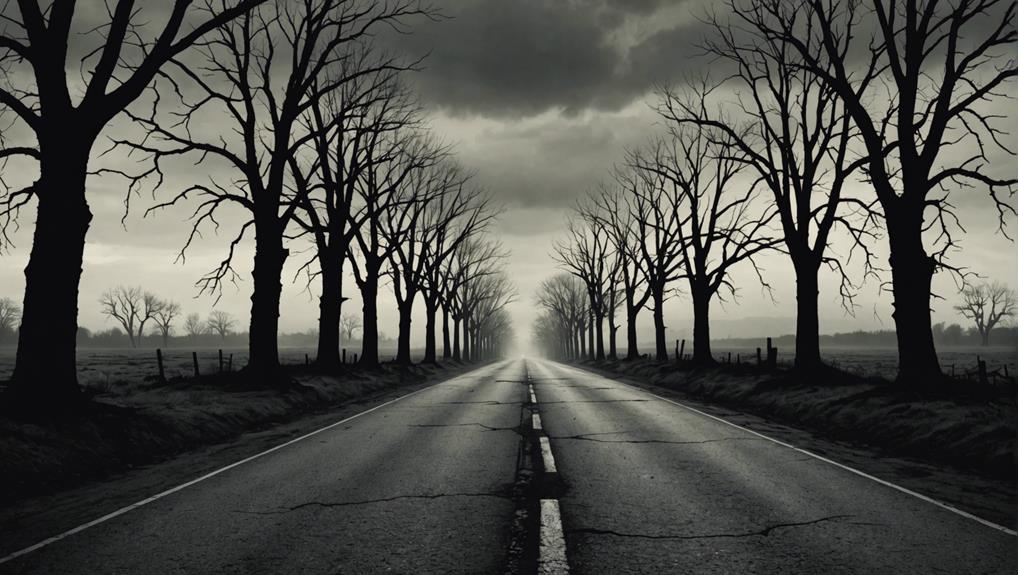
At the APA Institute at NYU, Zarina's Dark Roads exhibition serves as a powerful catalyst for breaking the silence surrounding the traumatic legacy of the Partition of India and Pakistan. The exhibition navigates the fragmented topography of post-Partition India, capturing the emotional toll of human suffering, displacement, and cultural erasure. Through printmaking, drawing, and sculpture, Zarina's work reclaims and redefines cultural identity, reflecting the dark roads of partition's lasting impact. As the exhibition unearths forgotten histories, it inspires a deeper exploration of the human experience, where the complexity of identity and belonging await further discovery.
The Partition of India and Pakistan
As the British Raj's grip on the Indian subcontinent began to loosen in the mid-20th century, the tumultuous process of dividing British India into separate Hindu and Muslim nations, India and Pakistan, respectively, set the stage for one of the most violent and traumatic events in South Asian history. This event, known as the Partition of India and Pakistan, holds immense historical significance, shaping the national identity and cultural heritage of both nations.
The Partition's legacy is marked by border conflicts, religious tensions, and ethnic divisions, which continue to affect the region to this day. The colonial legacy of divide-and-rule policies exacerbated these tensions, making the road to independence a struggle. The geopolitical implications of Partition were far-reaching, with the creation of new borders and the displacement of millions of people.
The socioeconomic impact of Partition was devastating, with widespread violence, loss of life, and property, and the displacement of millions. The trauma inflicted during this period continues to resonate, influencing the relationships between India and Pakistan. The scars of Partition still linger, with ongoing tensions and conflicts between the two nations. Understanding the complexities of Partition is essential in navigating the intricacies of modern-day India and Pakistan, and its influence on their national identities, cultural heritage, and geopolitical relationships.
Zarina's Dark Roads Exhibition
Zarina's Dark Roads Exhibition is a powerful demonstration of the artist's ability to transform personal experiences into thought-provoking art. Through this exhibition, she masterfully weaves together artistic expressions, maps of memory, and a journey through darkness, creating a complex tapestry that resonates deeply with viewers. By exploring these interconnected themes, Zarina sheds light on the profound impact of partition on the human experience.
Artistic Expressions
In her Dark Roads exhibition, Zarina employs a range of artistic expressions to convey the disjointedness and trauma inflicted by the Partition. Through her unique blend of printmaking, drawing, and sculpture, Zarina creates a visual language that captures the fragmented nature of cultural identity in the wake of Partition. Her use of abstract forms and bold colors evokes a sense of creative freedom, as if the very act of creating is a powerful affirmation in response to the oppressive forces that sought to divide and conquer.
Zarina's artistic expressions also serve as a powerful tool for reclaiming and redefining cultural identity. By incorporating traditional Indian motifs and symbolism, she asserts her cultural heritage and challenges the dominant narratives that have sought to erase or distort it. Her art becomes a manifestation of the resilience of the human spirit, a declaration of creative autonomy in the face of oppression. Through her work, Zarina reminds us that art has the power to transcend borders, to heal, and to bring people together in the pursuit of freedom and understanding.
Maps of Memory
Through her meticulously crafted maps, Zarina navigates the cartography of memory, charting the fragmented topography of a nation torn apart by Partition. These maps are not just geographical representations, but rather a cartographic imagination that weaves together the threads of personal and collective memory. By doing so, Zarina's work embodies the concept of spatial storytelling, where the physical landscape becomes a canvas for the narrative of a nation's history.
| Map Title | Symbolism | Memory Fragment |
|---|---|---|
| Divided Land | Broken lines, torn edges | Memories of separation |
| River of Blood | Red ink, wavy lines | Violence and loss |
| Lost Homelands | Faded landscapes, erasure | Longing and nostalgia |
Through these maps, Zarina's Dark Roads exhibition offers a poignant exploration of the human experience during Partition, highlighting the ways in which memory and geography intersect. By charting the fragmented topography of a nation, Zarina's work invites the viewer to navigate the complex terrain of memory and history, ultimately revealing the profound impact of Partition on the human psyche.
Journey Through Darkness
Darkness permeates every corner of Zarina's Dark Roads exhibition, a poignant journey that plunges viewers into the depths of human suffering and resilience during Partition. This poignant exhibition is a reflection of the artist's ability to convey the Dark Emotions and Inner Turmoil that accompanied one of the most tumultuous periods in Indian history.
As visitors navigate the exhibition, they are met with a sense of foreboding, as if the shadows of the past linger in every corner. The artwork serves as a window into the souls of those who lived through the traumatic event, their stories etched on the canvas like scars on the human psyche.
- The use of muted colors and abstract forms evokes a sense of despair and hopelessness.
- The twisted, gnarled forms seem to writhe and twist, like the tortured souls of those who lived through the horrors of Partition.
- The exhibition's somber atmosphere is a stark reminder of the devastating consequences of human conflict.
Art as a Form of Expression
Zarina's Dark Roads, a poignant graphic novel, employs art as a powerful form of expression, allowing the creator to convey the traumatic experiences of partition through a unique visual narrative. Through her art, Zarina accesses a deep sense of creative freedom, liberating her emotions and conveying the turmoil she experienced during the partition. This emotional release is palpable in the haunting imagery and vibrant colors that bring her story to life.
| Artistic Elements | Emotional Significance |
|---|---|
| Imaginary Landscapes | Representation of displaced identity and cultural roots |
| Personal Symbolism | Expression of inner turmoil and emotional scars |
| Visual Language | Conveyance of the unspeakable trauma of partition |
| Artistic Voice | Assertion of cultural identity and personal narrative |
The Human Experience of Exile
In the midst of partition-induced chaos, the human experience of exile unfolds as a poignant narrative of dislocation, estrangement, and longing. As individuals are uprooted from their homelands, they're forced to navigate uncharted territories, both physically and emotionally. This displacement gives rise to a complex web of emotions, where cultural identity is constantly being redefined.
The emotional landscapes of exiles are marked by a sense of disorientation, as they struggle to reconcile their past with their present. They're torn between the nostalgia for a lost homeland and the uncertainty of their current surroundings. This internal conflict often manifests as a deep-seated longing for a sense of belonging, which remains elusive.
- The fragmentation of identity, as individuals grapple with the loss of cultural heritage
- The emotional toll of displacement, which can lead to feelings of isolation and disconnection
- The struggle to reconcile the past with the present, as exiles attempt to forge a new sense of self
Through the lens of exile, we're reminded that cultural identity is not fixed, but rather a dynamic and evolving concept. As individuals navigate the complexities of displacement, they're forced to renegotiate their sense of self, often leading to a deeper understanding of their emotional landscapes.
Longing and Loss in Art
As exiles struggle to reconcile their past and present, their emotional landscapes become a fertile ground for artistic expression, where longing and loss are distilled into powerful works of art that capture the essence of displacement. This longing and loss are palpable in Zarina's works, which serve as a testament to the devastating effects of partition. Through her art, Zarina conveys the emotional toll of cultural erasure, where entire communities are wiped out of existence, leaving behind only memories and a deep sense of longing.
| Emotional Landscape | Artistic Expression |
|---|---|
| Longing for homeland | Maps and cartographies that recreate lost territories |
| Loss of identity | Fragmented self-portraits that convey dislocation |
| Fear of erasure | Intricate paper sculptures that defy fragility |
Zarina's art is a powerful reflection of the emotional landscapes of exiles, where the pain of displacement is palpable. Her works serve as a reminder of the devastating consequences of cultural erasure, where entire communities are erased from existence. Through her art, Zarina gives voice to the voiceless, capturing the essence of displacement and the human experience of exile.
Historical Records of Partition
She turns to the historical records of partition, exploring the archival evidence uncovered in British colonial archives. These records provide a wealth of information on the events leading up to and following the partition of India. By examining these documents, it becomes clear that the trauma and displacement caused by partition had a profound impact on the people affected.
Archival Evidence Uncovered
Historical records of Partition, carefully preserved in the National Archives of India, reveal a chilling account of the tumultuous events that unfolded in 1947. These forgotten files, hidden from public eye for decades, now shed light on the human cost of the Partition. The archives contain firsthand accounts of violence, displacement, and loss, painting a haunting picture of a nation torn apart.
- Documents detailing the communal riots and massacres, with eyewitness testimonies of the atrocities committed during Partition.
- Records of the mass migration and the subsequent refugee crisis, with numbers of displaced persons and the struggles they faced.
- Correspondence between government officials, revealing the political tensions and negotiations that led to the eventual division of India and Pakistan.
These archival records provide a glimpse into the dark roads of India's past, exposing the hidden histories that have been buried under the dust of time. By unearthing these forgotten files, we can begin to understand the true extent of the Partition's devastating impact and honor the memories of those who suffered during that tumultuous period.
British Colonial Archives
British colonial archives, scattered across London's dusty repositories, hold a wealth of records that meticulously chronicle the tumultuous events surrounding India's Partition. These archives serve as a testimony to the colonial legacy, which continues to shape the narrative of India's past. However, amidst the wealth of records, there exists an archival silence – a deliberate omission of voices and experiences that challenge the dominant colonial narrative.
The British colonial archives are a treasure trove of historical records, documenting the events leading up to Partition and its devastating aftermath. They contain memos, reports, and letters that provide insight into the colonial administration's role in shaping the trajectory of India's independence. However, these records often perpetuate the colonial gaze, marginalizing the voices and experiences of Indians who lived through the tumultuous period.
It is essential to acknowledge the archival silence and the colonial legacy that underpins these records. By doing so, we can begin to reframe the narrative of Partition, incorporating the voices and perspectives of those who were silenced or marginalized. Only then can we truly understand the far-reaching consequences of Partition and its continued impact on the Indian subcontinent.
Personal Narratives of Displacement
Through the lens of personal narratives, the Partition of India emerges as a cataclysmic event that shattered lives, scattering families and communities across newly drawn borders. The stories of those who lived through this tumultuous period offer a poignant glimpse into the human cost of forced migration and the shattering of cultural identities.
These intimate stories of displacement reveal the emotional landscapes of individuals who were forced to leave behind their lost homelands, carrying with them only memories of a life left behind. The refugee voices that echo through these narratives speak of shattered dreams, of lives uprooted and forever changed.
- The personal narratives of displacement serve as a testimony to the resilience of the human spirit, even in the face of unimaginable trauma.
- They highlight the importance of preserving the unheard stories of those who lived through Partition, ensuring that their experiences are not lost to the annals of history.
- By amplifying these voices, we can work towards healing the wounds of the past and fostering a deeper understanding of the lasting impact of Partition on individuals and communities.
Through these personal narratives, we gain a deeper understanding of the complexities of Partition, and the ways in which it continues to shape the lives of individuals and communities today.
The Lasting Impact of Partition
As the echoes of personal narratives fade, the lingering shadows of Partition's legacy come into sharp focus, revealing a tangled web of communal tensions, social hierarchies, and contested identities that continue to influence the lives of individuals and communities today. The lasting impact of Partition is a complex and multifaceted phenomenon that has reshaped the social fabric of the region, leaving an indelible mark on national identity.
The boundaries drawn in 1947 not only divided territories but also fractured communities, perpetuating animosity and mistrust. The trauma of displacement and violence has been passed down through generations, perpetuating a cycle of hate and fear. The social hierarchy, once built on communal harmony, was disrupted, and new power dynamics emerged. The dominant narrative of national identity was rewritten, often at the expense of minority voices.
Today, the echoes of Partition continue to reverberate, informing political rhetoric, influencing policy decisions, and shaping individual identities. The legacy of Partition has created a fragile social fabric, prone to manipulation by those seeking to exploit communal divisions. As a result, the struggle for freedom and self-determination is ongoing, with communities continuing to navigate the treacherous landscape of national identity and social hierarchy. The lasting impact of Partition serves as a poignant reminder of the devastating consequences of division and the urgent need for reconciliation and healing.
Art Breaking the Silence
As Zarina's art gains momentum, the Breaking the Silence Act becomes a catalyst for creative expression, paving the way for the emergence of protest art that challenges the status quo. Through her work, unspoken truths are revealed, and the silence surrounding the partition is finally broken. By giving voice to the voiceless, Zarina's art becomes a powerful tool for social change.
Breaking the Silence Act
How does the Breaking the Silence Act, a groundbreaking art movement, challenge the dominant narratives of Zarina's Dark Roads by giving voice to the voiceless? This movement is a beacon of hope for those who have been silenced by the oppressive forces of history. By amplifying the voices of the marginalized, the Breaking the Silence Act creates a platform for Silent Resistance, where Fearless Voices can emerge.
Through this movement, artists and activists come together to challenge the status quo, refusing to be bound by the shackles of oppression. They use their art as a form of resistance, creating a powerful counter-narrative that sheds light on the darkest corners of human experience.
- The Breaking the Silence Act provides a safe space for marginalized communities to share their stories, free from fear of persecution.
- It challenges the dominant narratives that have been imposed upon them, allowing for a more nuanced understanding of history.
- By giving voice to the voiceless, this movement inspires a new generation of changemakers to rise up and demand justice.
Art of Protest Emerges
Through the Breaking the Silence Act, a powerful artistic response emerges, as marginalized voices, now amplified, begin to reshape the narrative of Zarina's Dark Roads through a vibrant tapestry of protest art. This creative outcry is a proof of the power of artistic freedom, where artists can express their cultural identity without fear of repression. The artworks that emerge are a potent mix of emotions, conveying the pain, struggle, and resilience of the marginalized communities.
As the art of protest emerges, it sparks a wave of social change, challenging the status quo and demanding justice. The artworks become a clarion call, urging viewers to confront the harsh realities of partition and its aftermath. Through their creative expression, the artists are reclaiming their narratives, rewriting the history that was once silenced. This outpouring of artistic freedom is a beacon of hope, illuminating the path towards a more just and equitable society. As the art of protest continues to evolve, it will surely inspire a new generation of change-makers, fueling the fire of social change and paving the way for a brighter future.
Unspoken Truths Revealed
Behind the vibrant facade of protest art, unspoken truths revealed themselves, exposing the dark underbelly of partition’s devastating legacy. Zarina’s Dark Roads at the APA Institute at NYU explores the hidden narratives of a tumultuous past, unearthing forgotten histories and hidden stories. The exhibition is a powerful affirmation of the silenced voices of those who suffered during the partition, their silent screams and whispered tales finally given a platform. Through intricate prints and haunting cartographies, Zarina captures the pain of displacement and the longing for a lost homeland, much like the evocative works seen in the David Wojnarowicz art exhibit. Her use of stark lines and minimalist compositions echoes the fragmented memories of those uprooted by history, emphasizing the personal toll of geopolitical turmoil. By drawing parallels between individual suffering and collective memory, the exhibition compels viewers to confront the lingering scars of partition.
- The art pieces on display are a poignant reminder of the buried secrets and untold stories of the past.
- Through her work, Zarina illuminates the human cost of partition, giving voice to the voiceless and visibility to the invisible.
- By breaking the silence, the exhibition provides a space for catharsis, allowing the audience to confront the painful truths of the past and begin the process of healing and reconciliation.
Through this thought-provoking exhibition, the audience is invited to confront the darker aspects of human history, and in doing so, to reclaim the forgotten histories and hidden stories that have been lost to time.
The Power of Collective Memory
As Zarina's Dark Roads navigates the traumatic legacy of partition, the power of collective memory emerges as an essential element in shaping the narrative's exploration of identity, belonging, and the human experience. The artist's use of collective memory serves as a powerful tool in unearthing the silenced voices and forgotten stories of the past. By tapping into this shared experience, Dark Roads creates a sense of communal understanding, acknowledging the cultural legacy of partition that continues to shape the lives of individuals and communities today.
Through the lens of collective memory, Zarina's work reveals the complexities of cultural identity and the ways in which historical events continue to resonate in the present. The shared experience of partition becomes a catalyst for introspection, encouraging viewers to confront the unspoken truths of the past and their ongoing impact on contemporary society. By doing so, Dark Roads underscores the significance of collective memory in shaping our understanding of ourselves and our place within the world.
Ultimately, the power of collective memory in Dark Roads serves as a testament to the enduring impact of partition on the human experience. By honoring the cultural legacy of this traumatic event, Zarina's work fosters a deeper understanding of the intricate web of relationships between identity, belonging, and historical trauma. Through this nuanced exploration, Dark Roads inspires a renewed sense of empathy and solidarity, reminding us that our collective memories have the power to both heal and liberate.
The Influence of Historical Trauma
Zarina's Dark Roads lays bare the lingering presence of historical trauma, which continues to reverberate through generations, perpetuating cycles of pain and silence. The artist's work serves as a poignant reminder that the effects of trauma can be inherited, manifesting as Cultural Scars that linger long after the initial wound has healed. This phenomenon, known as Trauma Inheritance, highlights the ways in which historical events can shape the experiences and perceptions of subsequent generations.
The influence of historical trauma is multifaceted, affecting not only individuals but also communities and societies as a whole. Some key aspects of this influence include:
- The perpetuation of silence and shame, as individuals and communities struggle to come to terms with past traumas
- The transmission of traumatic experiences through storytelling, cultural practices, and collective memory
- The ongoing impact on mental and physical health, as trauma can alter gene expression and shape the body's response to stress
Zarina's Legacy in Contemporary Art
Through her pioneering work, Zarina has instilled a sense of urgency in contemporary art, inspiring a new generation of artists to confront the darker aspects of human experience. Her artistic voice, which resonates deeply with the complexities of identity, displacement, and belonging, has become a beacon for artists seeking to explore the nuances of the human condition.
As a cultural ambassador, Zarina's work has traversed geographical and cultural boundaries, fostering a sense of global citizenship and solidarity. Her artistic practice, which often incorporates traditional techniques and materials, has inspired a new wave of artists to engage with their own cultural heritage and experiences.
Zarina's legacy in contemporary art is multifaceted, influencing not only the way we think about art but also how we engage with the world around us. Her work has created a ripple effect, inspiring artists to explore the intersections of politics, history, and identity. By doing so, she has empowered a new generation of artists to find their own artistic voice, unafraid to tackle the complexities and challenges of our time.
In the domain of contemporary art, Zarina's influence is undeniable. Her pioneering spirit, artistic innovation, and commitment to social justice have left an indelible mark on the art world. As we move forward, her legacy will continue to inspire, provoke, and challenge us to confront the complexities of our shared human experience.
Frequently Asked Questions
How Does Zarina's Art Address the Trauma of Partition-Era Refugees?
It's no coincidence that Zarina's art resonates deeply with those who've experienced displacement. Her work addresses the trauma of partition-era refugees by exploring displacement narratives and fragmented identities. Through her pieces, she gives voice to the silenced, allowing their stories to unfold. By doing so, she humanizes the statistics, reminding us that freedom is not just a political concept, but a fundamental human right.
Can Art Truly Capture the Complexity of Historical Trauma?
She ponders whether art can truly capture the complexity of historical trauma. While artistic expression has the power to evoke emotions and spark conversations, it often risks simplifying the intricacies of traumatic events. The danger of historical inaccuracy looms, potentially perpetuating misconceptions. Yet, art's ability to humanize and empathize can be a powerful tool in processing trauma, even if it can't fully capture its complexity.
What Role Do Personal Narratives Play in Shaping Collective Memory?
In the grand tapestry of collective memory, personal narratives are the threads that weave together to form a rich, complex fabric. Memory Keepers, armed with the Storytelling Power, spin tales that shape our understanding of the past. As they share their Personal Truths, they etch their mark on the Historical Record, influencing the Collective Identity of a nation. By doing so, they guarantee that the voices of the marginalized aren't silenced, and the truth, no matter how painful, is set free.
How Does the Art World Respond to Historical Events Like Partition?
She argues that the art world responds to historical events like partition through artistic activism, sparking a historical reckoning that confronts cultural amnesia. By taking artistic license, artists create new narratives that challenge the dominant historical record. This reckoning is vital in reclaiming silenced voices and promoting freedom from the shackles of forgotten memories. Through art, the collective memory is reshaped, and the truth is rewritten, allowing for a more inclusive and just representation of the past.
Can Art Heal the Wounds of Intergenerational Trauma?
As the ghosts of yesterday's wounds whisper through the corridors of time, can art's balm soothe the intergenerational trauma that lingers? Like a gentle rain, art's cultural legacy nourishes the parched earth of collective memory, allowing emotional expression to bloom. Through creative expression, the shackles of pain are loosened, and the weight of inherited sorrow begins to lift. As freedom's torchbearers, artists illuminate the path to healing, guiding us toward a brighter tomorrow.
About the Author