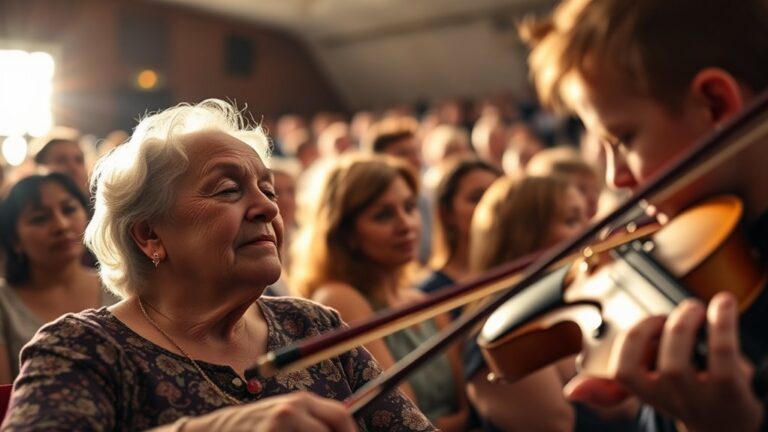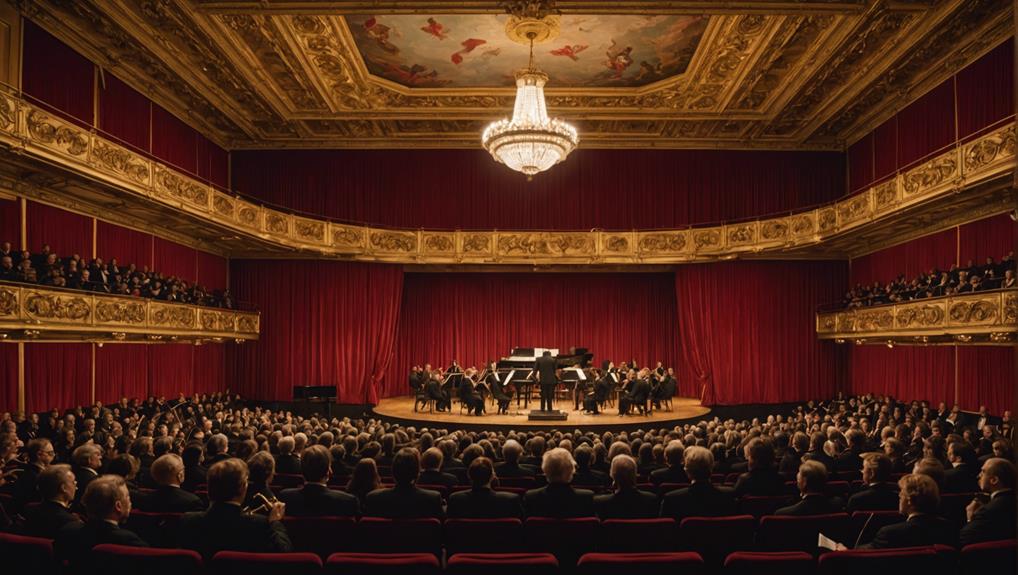
As we stepped into the iconic Carnegie Hall, we knew we were in for a transcendental experience. Maestro Andris Nelsons led the Boston Symphony Orchestra in a breathtaking performance of Wagner's Tristan und Isolde Act II. The opera's timeless themes of all-consuming love, deceit, and sacrifice captivated us, transporting us to medieval Ireland's land of myth and legend. The orchestra's technical mastery and passion were on full display, as the vocalists pushed their limits to convey the intensity of Tristan and Isolde's doomed love. With every note, we felt the emotional depth of this legendary opera, and we couldn't help but wonder – what secrets lay hidden beneath the surface of this masterpiece, waiting to be uncovered?
The Timeless Allure of Tristan Und Isolde
As we explore the world of Wagner's Tristan und Isolde, we find ourselves succumbing to the eternal allure of this iconic opera. The mythic romance of Tristan and Isolde's doomed love affair continues to captivate audiences, transcending time and cultural boundaries. This opera obsession is rooted in its timeless beauty, which resonates deeply within us.
At its core, Tristan und Isolde is a Musical myth that speaks to the universal human experience of eternal love. The opera's themes of longing, passion, and sacrifice continue to inspire artistic passion, making it an enduring legacy in the world of classical music. As a cultural icon, Tristan und Isolde has inspired countless adaptations, interpretations, and reimaginings, yet its essence remains unchanged.
We're drawn to the opera's haunting melodies, its soaring vocals, and the intoxicating drama that unfolds on stage. The music is a siren's call, beckoning us to surrender to its beauty and emotional intensity. As we surrender, we become part of a long line of enthusiasts who've been entranced by this masterpiece. In Tristan und Isolde, we find a reflection of our own deepest desires and darkest fears, making it an experience that's both deeply personal and universally relatable. The opera's allure is a tribute to the power of art to move, to inspire, and to transform us.
Andris Nelsons Leads the BSO
As we experience Andris Nelsons leading the Boston Symphony Orchestra, we're struck by the way his vision for Tristan und Isolde comes alive. The maestro's masterful touch is evident in the rich orchestral colors that swirl around us, drawing us deeper into the drama. With each note, the tension builds, and we can't help but feel the music's emotional intensity.
Maestro's Vision Realized
Leading the Boston Symphony Orchestra, Andris Nelsons brings his distinct vision to life, skillfully steering through the intricate harmonies and dramatic intensity of Wagner's Tristan und Isolde Act II. We're thrilled to witness the maestro's Conductor's Insight, as he masterfully weaves together the musical threads, creating a rich tapestry on the musical canvas.
As Nelsons takes the podium, we're treated to a nuanced interpretation that's both innovative and authentic. He coaxes the orchestra to produce a kaleidoscope of sounds, each one carefully balanced to evoke the desired emotional response. It's clear that Nelsons has a deep understanding of Wagner's score, and he's not afraid to take risks to bring out its full dramatic potential.
Here are three key elements that make Nelsons' vision so compelling:
- Dynamic contrasts: Nelsons expertly navigates the score's drastic shifts in volume and intensity, creating an electrifying sense of tension and release.
- Orchestral textures: He skillfully blends the orchestra's diverse timbres, crafting a rich sonic landscape that's both beautiful and haunting.
- Dramatic pacing: Nelsons knows just when to accelerate or decelerate the tempo, expertly ratcheting up the drama and emotional stakes.
As the music swirls around us, we're completely immersed in Nelsons' vision, and it's nothing short of breathtaking.
Orchestral Color Palette
We're struck by the way Andris Nelsons coaxes a vast array of tonal hues from the Boston Symphony Orchestra, masterfully orchestrating the intricate harmonies and timbres that bring Wagner's Tristan und Isolde Act II to vivid life. As we immerse ourselves in the performance, we're acutely aware of the meticulous attention to timbre contrasts, which add a profound depth to the music. The way Nelsons balances the instrumental textures is nothing short of masterful – the soaring strings, the mournful woodwinds, and the sonorous brass all blend together in a rich tapestry of sound. We marvel at how the orchestra's palette of colors is expertly woven, with each instrument adding its unique timbre to the overall sonic landscape. The result is a kaleidoscope of sound that perfectly captures the drama and passion of Wagner's opera. As we listen, we're constantly discovering new nuances and shades, a reflection of Nelsons' innovative approach to orchestration.
Dramatic Tension Builds
With Nelsons at the helm, the Boston Symphony Orchestra expertly ratchets up the dramatic tension, plunging us into the turbulent emotional landscape of Tristan und Isolde's second act. As the music swirls around us, we're swept up in a maelstrom of passion and despair. The orchestra's masterful performance creates an atmosphere of heightened anticipation, where every note seems to vibrate with emotional intensity.
As we're drawn deeper into the drama, we experience three key moments that showcase the orchestra's ability to craft Tense Moments and Emotional Peaks:
- The heart-stopping climax of the love duet, where the music surges to a fever pitch.
- The anguished cries of Tristan, echoed by the mournful whispers of the orchestra.
- The precipitous plunge into chaos, as the music tumbles toward the act's devastating conclusion.
Throughout the performance, Nelsons' leadership and the orchestra's virtuosity combine to create a sense of urgency, propelling us toward the tragic conclusion of this iconic opera. As the music reaches its Emotional Peaks, we're left breathless, our senses reeling from the intense dramatic tension.
The Grandeur of Carnegie Hall
As we stepped into Carnegie Hall, the iconic venue's opulent interior and storied history enveloped us, setting the tone for a truly unforgettable musical experience. The grandeur of this historic landmark is undeniable, and we couldn't help but feel a sense of awe as we took our seats.
Carnegie Hall is an architectural marvel, boasting a design that seamlessly blends functionality with aesthetics. The venue's acoustic perfection is renowned, and we were excited to experience it firsthand. As a performance space, Carnegie Hall has hosted some of the world's most talented musicians, and we felt privileged to be a part of that legacy.
Here's a snapshot of Carnegie Hall's impressive stats:
| Category | Description | Notable Feature |
|---|---|---|
| Capacity | 2,804 seats | Intimate yet spacious |
| Design | Renaissance Revival style | Grand staircase and ornate details |
| Acoustics | Precision-designed for excellent sound | State-of-the-art sound system |
| History | Opened in 1891 | Hosted legendary performers like Tchaikovsky and Bernstein |
As we settled in for the Boston Symphony Orchestra’s performance of Wagner’s Tristan und Isolde, we couldn’t help but feel grateful for the opportunity to experience this iconic venue. Carnegie Hall’s grandeur is more than just a backdrop – it’s an integral part of the musical experience itself. The rich history and exceptional acoustics of the hall enhance every note, making the evening truly unforgettable. Just as the Vienna Philharmonic at Carnegie Hall has delivered legendary performances, tonight’s concert promises to be a mesmerizing journey through Wagner’s lush harmonies. The anticipation in the air is palpable as the musicians take their places, ready to bring this masterpiece to life.
Unpacking Act II's Emotional Depth
Having absorbed the majesty of Carnegie Hall, our attention turned to the emotional turmoil of Wagner's Tristan und Isolde, Act II, where the doomed lovers' passion reached a fever pitch. As we explored the opera's emotional landscapes, we found ourselves entangled in a web of complex characters, each with their own distinct psyche.
Tristan and Isolde's love is a force to be reckoned with, a maelstrom of desire and desperation that consumes them both. But it's not just the titular characters that exhibit Character Complexity. King Marke, Tristan's loyal friend and Isolde's betrothed, is a masterclass in subtlety, his emotions simmering just below the surface.
Here are three key aspects of Act II's emotional depth:
- The Lovers' Dilemma: Tristan and Isolde are trapped in a loveless marriage, yet they can't resist each other. This internal conflict is palpable, as they struggle to reconcile their desires with their duties.
- King Marke's Heartache: The king's sorrow is a slow burn, building from a quiet sadness to a crescendo of anguish. His devotion to Tristan is matched only by his love for Isolde, making his ultimate heartbreak all the more devastating.
- The Weight of Deception: As the act unfolds, the lies and half-truths pile up, threatening to destroy the very fabric of their relationships. This toxic web of deceit adds an layer of tension, as the characters navigate the treacherous landscape of their own making.
As we explored the emotional depth of Act II, we found ourselves drawn into the vortex of these complex characters, our own emotions in turmoil as we experienced the highs and lows of Tristan and Isolde's doomed love.
The Opera's Enduring Popularity
We still find ourselves enthralled by Tristan und Isolde's timeless tale, its themes of all-consuming love and deceit continuing to captivate audiences. This opera's cultural significance extends beyond the world of music, speaking to fundamental human emotions that transcend time and space. The timeless themes of love, passion, and betrayal resonate deeply, making Tristan und Isolde an enduring masterpiece that continues to captivate new generations.
As an artistic legacy, Tristan und Isolde has left an indelible mark on the world of opera. Its influence can be seen in countless adaptations, parodies, and references in popular culture, cementing its status as a musical icon. The opera's enduring appeal lies in its ability to evoke powerful emotions, transporting audiences to a world of intense passion and drama. The music, with its soaring melodies and lush harmonies, is both beautiful and haunting, perfectly capturing the turmoil and ecstasy of the characters.
Wagner's masterpiece has become a cultural touchstone, symbolizing the pinnacle of artistic expression. Its impact can be seen in various art forms, from literature to film, and continues to inspire new creations. As we continue to be drawn to Tristan und Isolde's hypnotic world, we're reminded of the opera's profound significance, a tribute to the power of art to move and inspire us.
Wagner's Innovative Compositional Style
As we explore Wagner's innovative compositional style, we'll examine how he pushed the boundaries of harmony and orchestration. We'll see how his harmonic experiments led to a richer, more complex sound, and how his orchestral innovations redefined the role of instruments in opera. By analyzing these elements, we'll gain a deeper understanding of Wagner's groundbreaking approach to music.
Harmonic Experiments
Wagner's innovative compositional style in Tristan und Isolde features bold harmonic experiments that shattered traditional tonal conventions and paved the way for modern classical music. We, as music enthusiasts, are drawn to the revolutionary nature of his work, which continues to inspire and influence composers to this day.
Wagner's harmonic experiments can be seen in his use of unconventional chord progressions and innovative dissonance resolution techniques. These innovations allowed him to create a sense of tension and release that was unprecedented in music at the time. For example:
- Chord progressions: Wagner's use of unusual chord progressions, such as the famous "Tristan chord," added a level of complexity and emotional depth to his music.
- Dissonance resolution: His innovative approach to dissonance resolution created a sense of longing and yearning that perfectly captured the tragic love story of Tristan and Isolde.
- Tonal ambiguity: Wagner's use of tonal ambiguity, where the listener is unsure of the key or tonal center, added to the sense of uncertainty and tension in the music.
These harmonic experiments not only pushed the boundaries of classical music but also paved the way for future generations of composers.
Orchestral Innovations
In Tristan und Isolde, Wagner's orchestral innovations revolutionized the sound of classical music, as he explored the expressive capabilities of individual instruments to create a rich, nuanced, and deeply expressive soundworld. We're still reeling from the impact of his bold experiments. By probing the boundaries of instrumental textures, Wagner crafted sonic landscapes that transported audiences to uncharted territories. He masterfully wove together contrasting timbres, dynamics, and articulations to evoke the emotional intensity of the opera's narrative.
Wagner's use of instrumental colors was particularly innovative. He often paired instruments in unexpected ways, creating novel timbres that added depth and complexity to his score. The result was a kaleidoscope of sound that defied conventions and expanded the possibilities of orchestral music. As we explore Act II, we're struck by the way Wagner's orchestral innovations continue to inspire and influence generations of composers. His pioneering spirit and artistic courage have left an indelible mark on the classical music landscape.
The BSO's Commitment to Excellence
We've come to expect a high level of artistry from the Boston Symphony Orchestra, and their commitment to excellence is a key factor in their enduring success. It's no secret that the BSO's dedication to artistic integrity has earned them a reputation as one of the world's premier orchestras.
At the heart of the BSO's commitment to excellence is their unwavering commitment to preserving and advancing their musical heritage. This is evident in their tireless pursuit of innovative programming, which consistently pushes the boundaries of classical music. Whether it's revisiting timeless masterpieces or premiering bold new works, the BSO's passion for artistic expression is palpable in every performance.
The BSO's commitment to excellence can be seen in three key areas:
- Artistic Vision: The orchestra's bold programming and innovative collaborations have earned them a reputation as a leader in the classical music world.
- Musical Craftsmanship: The BSO's musicians are among the finest in the world, and their technical mastery is matched only by their passion for music.
- Innovative Spirit: From commissioning new works to incorporating cutting-edge technology into their performances, the BSO is constantly seeking new ways to engage and inspire audiences.
Bringing Medieval Ireland to Life
As we venture into the world of medieval Ireland, the Boston Symphony Orchestra's rendition of Wagner's Tristan und Isolde Act II at Carnegie Hall promises to transport us to a land of myth and legend. We're not just attending a concert – we're immersing ourselves in a journey through the Emerald Isle's rich cultural heritage.
| Celtic Mythology | Irish Folklore | Emerald Landscapes |
|---|---|---|
| Legendary heroes like Cú Chulainn | Ancient rituals and mystical legends | Towering cliffs and windswept coastlines |
| Forgotten lore of the Tuatha Dé Danann | Mystical creatures like the sidhe | Rolling hills and sparkling lakes |
| Ancient castles and fortresses | Whispers of the Otherworld | Mysterious stone circles and dolmens |
As we explore further into this enchanting world, we'll uncover the echoes of Celtic mythology in Wagner's score. The soaring strings and haunting woodwinds will transport us to the windswept landscapes of Ireland's rugged coast, where ancient castles stand sentinel against the crashing waves. We'll walk among the legendary heroes of Irish folklore, where mystical legends and forgotten lore await around every corner. With the Boston Symphony Orchestra as our guide, we'll reveal the hidden treasures of medieval Ireland, and experience the magic that has captivated generations. Join us on this unforgettable journey, as we bring medieval Ireland to life through the sublime music of Tristan und Isolde Act II.
The Vocal Demands of Tristan Und Isolde
Wagner's Tristan und Isolde Act II pushes vocalists to their limits, demanding a level of technical precision and emotional depth that few operas can match. As we explore the world of Tristan und Isolde, we're struck by the sheer vocal acrobatics required to bring these characters to life. The singers must maneuver treacherous melodic lines, exploring dramatic leaps and plunges with ease.
But it's not just the technical demands that make Tristan und Isolde a vocal marathon. The opera's emotional intensity is equally challenging, pushing singers to the brink of emotional exhaustion. To convey the all-consuming passion and despair of Tristan and Isolde, singers must tap into a deep well of emotional authenticity.
To meet these demands, singers must possess:
- Breath control: The ability to sustain long, winding phrases with precision and power.
- Pitch precision: The capacity to hit notes with laser-like accuracy, even in the most challenging registers.
- Dynamic range: The ability to convey the full spectrum of human emotion, from whispered intimacy to soaring climaxes.
It's a demanding task, one that requires a willingness to make artistic sacrifices in pursuit of vocal stamina. But the payoff is well worth it: a performance that transcends mere singing and becomes a truly immersive experience. As we prepare to experience Tristan und Isolde Act II, we're reminded that the true magic happens when singers challenge themselves to the limits of human endurance.
A Night to Remember at Carnegie
As we settled into our seats at Carnegie Hall, we knew we were in for a treat. The Boston Symphony Orchestra's performance of Wagner's Tristan und Isolde Act II was about to unfold, and we couldn't wait to experience opera at its finest. With the orchestra's masterful playing and the singers' emotional intensity, we were on the edge of our seats, ready to be swept away by this musical masterpiece.
Opera at Its Finest
We stepped into Carnegie Hall, and the anticipation was palpable as we prepared to experience one of opera's most revered masterpieces, Tristan und Isolde, in a way we'd never seen before. As the lights dimmed, we were transported to a world of operatic storytelling, where the boundaries of human emotion were pushed to the limits. The Boston Symphony Orchestra's presentation of Act II was a masterclass in Vocal mastery, with each performer bringing their A-game to the iconic score.
What made this performance truly unforgettable was the trifecta of elements that came together in perfect harmony:
- Immersive staging, which transported us to the mythological domain of medieval Ireland.
- Sublime vocals, which soared to breathtaking heights and plumbed the depths of human emotion.
- Orchestral grandeur, which swelled to cinematic proportions, enveloping us in a sea of sound.
Together, these elements coalesced into an unforgettable night of opera at its finest, one that will stay with us long after the curtain call.
Musical Masterpiece Unfolds
With the lights dimmed and the anticipation palpable, the Boston Symphony Orchestra's performance of Tristan und Isolde Act II unfolded like a rich tapestry, weaving a complex narrative of love, deceit, and fate. As we settled in for the night, the orchestra's sonic landscapes transported us to a world of drama and passion. Conductor Andris Nelsons' artistic vision was palpable, guiding the ensemble with precision and nuance. The strings sang with aching beauty, while the woodwinds and brass added depth and texture to the score. We were fully immersed in Wagner's masterpiece, the music swirling around us like a vortex of emotion. The orchestra's mastery of dynamics and phrasing created a sense of tension and release, drawing us deeper into the story. As the act came to a close, we felt exhilarated, our senses heightened by the sheer power of the music. It was truly a night to remember at Carnegie Hall.
Emotional Depth Explored
In the midst of this sonic tapestry, we found ourselves exploring the emotional labyrinth of Tristan and Isolde, their passions and sorrows unfolding with heart-wrenching intensity. The Boston Symphony Orchestra's rendition of Act II of Tristan und Isolde at Carnegie Hall was a night to remember, as the musicians masterfully navigated a narrative of Heartfelt Longing and Inner Turmoil.
As we delved deeper into the performance, we noticed three pivotal aspects that elevated the emotional depth of the opera:
- Vocal nuances: The singers' expressive vocals conveyed the anguish and ecstasy of the star-crossed lovers, drawing us into their world of passion and despair.
- Orchestral textures: The orchestra's rich, layered soundscapes evoked the turbulent seas and mystical landscapes of the medieval legend, immersing us in the drama.
- Dramatic tension: The careful pacing and dynamic contrasts built an almost unbearable sense of anticipation, mirroring the characters' own turmoil.
Through this masterful performance, we experienced the devastating beauty of Tristan und Isolde, our emotions resonating with the doomed lovers as their fate unfolded before our eyes.
Frequently Asked Questions
Is Tristan Und Isolde a Difficult Opera to Understand?
As we explore the domain of Wagner's masterpiece, we're faced with the question: is Tristan und Isolde a difficult opera to understand? We'd argue that it's the intricate harmony of musical complexity and dramatic symbolism that can make it challenging to grasp. The opera's dense, layered narrative and avant-garde score can be overwhelming, but that's what makes it a rich, thought-provoking experience.
Can I Attend the Concert if I'm Not an Opera Fan?
We think you'll be surprised by how much you'll gain from attending a performance of Tristan und Isolde, even if you're not an opera fan. It's an opportunity for musical exploration, allowing us to discover new sounds and emotions. Plus, it's a chance for cultural immersion, letting us experience the art form in a unique way. So, come with an open mind, and we're sure you'll find yourself swept up in the drama and beauty of the music.
Will There Be Subtitles or Translations Provided?
As we commence on this operatic journey, we wonder: will language barriers hinder our understanding of Wagner's masterpiece? Fear not, dear companions! We'll be provided with subtitles or translations, ensuring that cultural nuances aren't lost in translation. This thoughtful touch bridges the gap between art and audience, allowing us to fully immerse ourselves in the tragic tale of Tristan and Isolde.
Are There Any Age Restrictions for the Performance?
As we consider attending this performance, we wonder about age restrictions. Typically, venues like Carnegie Hall don't have strict age limits, but they do have a Venue Policy in place. We're guessing it's more about the audience demographics – families with older kids or mature teens might attend. An ID Requirement might be in place for certain seats or areas, but it's unlikely for the entire event. We're excited to experience this innovative take on Wagner's classic!
Can I Take Photos or Record the Performance?
When we're immersed in a performance, we love capturing the magic! However, we need to be mindful of camera etiquette. Generally, non-flash photography is allowed for personal use, but we should make sure we're respectful of the artists and others around us, keeping our devices on silent mode and avoiding any recording that might infringe on copyright laws.
About the Author