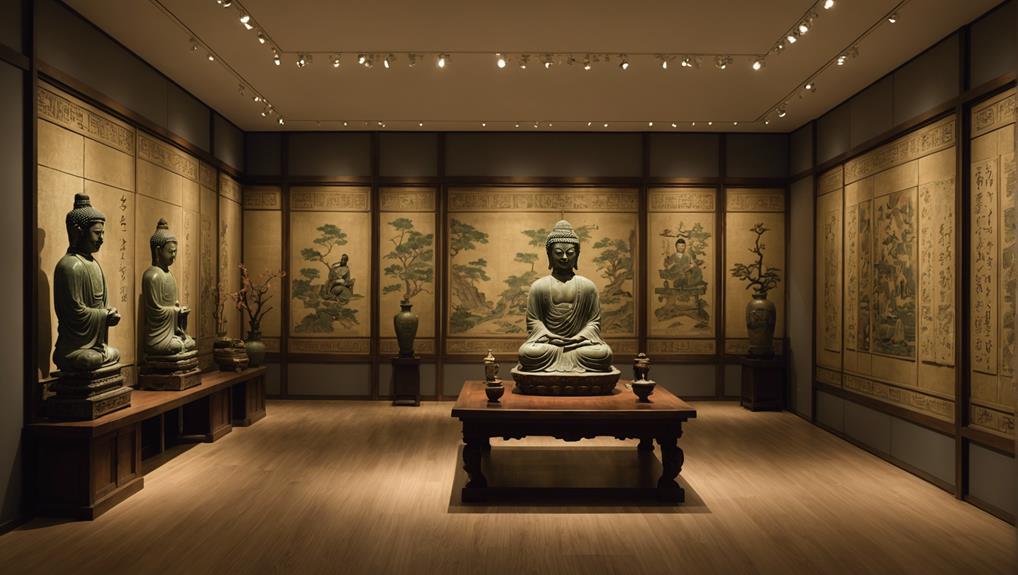
As you venture into the Brooklyn Museum’s Arts of Korea, you’ll discover an extensive collection of Korean art and artifacts spanning 5,000 years. Explore ancient tombs, where furniture and essentials reveal social hierarchy and burial practices. Ceramics and sculpture masterpieces showcase refined techniques and craftsmanship. Buddhist art, painting, and decorative arts collections await, along with imperial portraits and vibrant folk art. You’re about to uncover the cultural significance of Korean art, rooted in Confucian heritage and shaped by cultural exchange. As you wander through the galleries, get ready to uncover the fascinating story of Korea’s artistic evolution. The exhibit not only highlights Korea’s distinct artistic legacy but also places it within a broader global context. Just as the Brooklyn Museum Assyrian reliefs offer insight into ancient Mesopotamian civilization, the Arts of Korea collection reveals the profound historical and cultural influences that have shaped Korean art. Each artifact tells a story of innovation, adaptation, and a deep respect for tradition, inviting visitors to appreciate Korea’s artistic achievements through the centuries.
Ancient Korean Art and Archaeology
Exploring the ancient art and archaeology of Korea, you'll uncover a rich cultural heritage that spans thousands of years. As you investigate this fascinating world, you'll discover the importance of Korean Tombs, which played a vital role in understanding the lives of ancient Koreans.
Korean Tombs, particularly the Royal Burials, offer a unique glimpse into the social hierarchy and burial practices of ancient Korea. These tombs, often adorned with intricate artifacts and treasures, provide valuable insights into the lives of Korean rulers and nobles. You'll find that the tombs were designed to resemble the homes of the living, complete with furniture, food, and other essentials for the afterlife.
The Royal Burials, in particular, showcase the opulence and grandeur of Korea's monarchs. The tombs are filled with precious artifacts, including golden ornaments, jade, and ceramics, which demonstrate the advanced craftsmanship of ancient Korean artisans. As you explore these ancient burial sites, you'll gain a deeper understanding of Korea's rich cultural heritage and the values of its ancient people.
Celadon Pottery and Ceramic Traditions
As you explore the world of Korean ceramics, you'll discover the artistry of celadon pottery and ceramic traditions. You'll learn about the techniques used to create these stunning pieces, including Korean ceramic techniques that have been refined over centuries. You'll also uncover the secrets of celadon glazing methods, which give Korean ceramics their distinctive beauty and elegance.
Korean Ceramic Techniques
You'll discover that Korean ceramic techniques have been refined over centuries, with celadon pottery being one of the most revered and iconic traditions in Korean ceramics. As you explore further, you'll find that the mastery of kiln construction is essential, as it allows artisans to control the high-temperature firing process. Understanding glaze chemistry is also vital, as it enables the creation of distinctive celadon hues. Ceramic anthropology reveals that these techniques have been passed down through generations, with each artisan contributing to the evolution of Korean ceramic traditions. In modern studios, ceramicists continue to refine their craft, sourcing high-quality materials and perfecting their firing techniques. At the heart of Korean ceramic techniques lies a deep respect for craftsmanship values, where artisanal skills are honed through dedication and patience. As you explore the world of Korean ceramics, you'll come to appreciate the intricate dance of technical skill, creative vision, and cultural heritage that defines this ancient craft.
Celadon Glazing Methods
In the domain of celadon pottery, mastering the art of glazing is essential, and Korean ceramicists have perfected techniques to achieve the signature soft, jade-green hues that define this iconic tradition. As you explore the world of celadon, you'll discover that the key to achieving these coveted colors lies in the intricate dance of firing temperatures, glaze chemistry, and kiln designs. By carefully controlling these factors, Korean ceramicists have been able to coax a range of subtle, nuanced hues from their materials.
As you investigate the history of celadon, you'll find that ancient recipes and techniques have been passed down through generations, with modern ceramicists continuing to push the boundaries of this ancient art form. Color theory and material science play an important role in understanding how to achieve the perfect celadon glaze, and studio practices have been honed over centuries to produce the distinctive, luminous quality that defines this tradition. By examining the intersection of art and science, you'll gain a deeper appreciation for the mastery and craftsmanship that goes into creating these exquisite pieces.
Buddhist Art and Sculptural Masterpieces
As you explore the Brooklyn Museum's Arts of Korea exhibition, you'll encounter breathtaking Buddhist art and sculptural masterpieces that showcase the country's rich spiritual heritage. You'll notice intricate depictions of Buddhist deities, crafted with precision and devotion, which have been preserved for centuries. As you gaze upon these masterworks, you'll gain a deeper understanding of Korea's unique cultural identity and its enduring connection to Buddhist principles.
Buddhist Deities in Sculpture
As you explore the world of Korean Buddhist art, you'll discover the significance of Buddhist deities in sculpture during the Goryeo dynasty. During the Goryeo dynasty, Buddhist deities emerged as dominant figures in Korean sculpture, exemplified by the serene and majestic Guanyin Bodhisattva, a masterpiece of Buddhist art. This iconic figure embodies the essence of Buddhist ideals, radiating compassion and wisdom.
When analyzing the iconography of these deities, you'll notice the intricate details that convey their divine representation. The subtle curves of Guanyin's face, the delicate folds of her robes, and the gentle gesture of her hand all contribute to a profound sense of serenity. These subtle nuances are not mere artistic flourishes; they hold deep symbolic meaning, conveying the deity's role as a guardian of wisdom and compassion. By examining these sculptures, you'll gain insight into the cultural and spiritual values of the time, revealing the significance of Buddhist deities in Korean art and spirituality.
Masterpieces of Korean Art
Among the most revered masterpieces of Korean art, Buddhist sculptures like the Guanyin Bodhisattva stand out for their exquisite craftsmanship and profound spiritual significance. As you gaze upon these masterpieces, you're struck by the intricate details and the sense of serenity they evoke.
Here are a few examples of the breathtaking artistic innovation and cultural fusion on display:
- Delicate lotus petals: Intricately carved to resemble the gentle curves of a blooming flower, these petals seem to unfurl before your eyes.
- Golden halos: Radiant and luminous, these halos surround the Buddha's head, symbolizing enlightenment and spiritual awakening.
- Intricate folds: The flowing drapery of the Buddha's robes appears to ripple and undulate, as if caught in a gentle breeze.
These masterpieces showcase the cultural fusion of Buddhist ideals with Korean aesthetics, resulting in a unique and mesmerizing artistic style. As you explore these works, you'll gain a deeper understanding of the artistic innovation and cultural fusion that define Korean art.
Painting and Decorative Arts Collections
The Brooklyn Museum's Painting and Decorative Arts Collections boast an impressive array of Korean art, featuring exquisite ceramics, sculptures, and paintings that showcase the country's rich cultural heritage. As you explore this collection, you'll be struck by the diversity and beauty of Korean art. One of the highlights is the Folk Art section, which showcases vibrant and colorful pieces that reflect the daily lives of ordinary Koreans. You'll see intricate woodcarvings, ceramics, and textiles that tell stories of Korean traditions and customs.
Imperial Portraits are another standout feature of the collection. These stunning paintings depict Korean monarchs and nobility in exquisite detail, offering a glimpse into the country's royal past. You'll be amazed by the level of craftsmanship and attention to detail in these works of art. From the intricate folds of royal robes to the delicate features of the subjects, every brushstroke is a testament to the skill of Korean artists.
As you wander through the galleries, you'll notice the careful curation of the collection, which takes you on a journey through Korea's artistic evolution. You'll see how different styles and techniques emerged over time, reflecting the country's complex history and cultural influences. Whether you're an art enthusiast or simply curious about Korean culture, the Brooklyn Museum's Painting and Decorative Arts Collections are a must-see.
Cultural Significance of Korean Art
You'll find that Korean art is deeply rooted in the country's Confucian heritage, with many pieces showcasing the values of harmony, balance, and respect for authority. This cultural significance is deeply ingrained in the nation's artistic heritage, reflecting the importance of social hierarchy and community. As you explore the world of Korean art, you'll see that it's not just about aesthetics; it's a window into the country's history, identity, and values.
Here are three key aspects that shape the cultural significance of Korean art:
- National Pride: Korean art is a symbol of national pride, reflecting the country's rich history and cultural heritage. It's a declaration of the nation's resilience and determination to preserve its unique identity.
- Cultural Exchange: Korean art has been shaped by cultural exchange with neighboring countries, including China and Japan. This interaction has influenced the development of unique art forms, such as celadon pottery and Buddhist art.
- Historical Context: Korean art is deeply rooted in its historical context, with many pieces created during times of war, peace, and social change. Understanding the historical context of each piece provides insight into the nation's values, struggles, and triumphs.
As you explore the Brooklyn Museum's Korean art collection, remember that each piece is a reflection of the country's artistic heritage, cultural values, and national pride. By appreciating the cultural significance of Korean art, you'll gain a deeper understanding of the nation's identity and its place in the world.
Exploring the Museum's Korean Galleries
As you step into the Brooklyn Museum's Korean galleries, vibrant colors, intricate patterns, and delicate craftsmanship immediately capture your attention. The museum's thoughtful layout and navigation system guarantee that you can easily explore the extensive collection of Korean art and artifacts.
The galleries are organized chronologically, allowing you to navigate through the history of Korean art, from ancient ceramics to modern installations. As you wander through the galleries, you'll notice that each room is carefully designed to showcase specific periods or themes, such as the Goryeo dynasty or Buddhist art. The museum's navigation system makes it easy to find your way around, with clear signage and interactive displays that provide additional context and insights.
The gallery layout is designed to create an immersive experience, with carefully placed artifacts and interactive exhibits that encourage you to engage with the art on a deeper level. You'll find yourself drawn to the intricate designs and patterns on the ceramics, the vibrant colors of the paintings, and the delicate craftsmanship of the wooden carvings. With each new discovery, you'll gain a deeper understanding of Korea's rich cultural heritage and the significance of its art.
As you explore the galleries, take your time to appreciate the attention to detail and the museum's commitment to preserving Korea's cultural treasures. The Brooklyn Museum's Korean galleries are a true treasure trove, and with careful navigation and thoughtful gallery layout, you'll uncover the beauty and richness of Korean art.
Frequently Asked Questions
Is Photography Allowed in the Korean Art Galleries?
You're wondering if you can snap away in the Korean art galleries. Think of photography like a delicate dance – you need to be mindful of your steps. Flash photography is often a no-go, as it can damage the artwork. So, check your camera settings before clicking away. At the Brooklyn Museum, non-flash photography is usually allowed for personal use, but it's always best to ask a staff member to be sure.
Are the Exhibits Wheelchair and Stroller Accessible?
As you plan your visit, you'll be happy to know that most exhibits are designed with accessibility in mind. You'll find wheelchair and stroller-friendly ramps, wide pathways, and elevators connecting galleries. The museum's inclusive design guarantees that everyone can enjoy the art. With features like accessible restrooms and seating areas, you can take a break when needed. You'll have a comfortable and enjoyable experience, free to focus on the beautiful Korean art surrounding you.
Can I Touch or Handle the Artifacts on Display?
As you reach out to touch that ancient vase, remember the cautionary tale of the Midas touch – everything you contact turns to dust. Unfortunately, it's not just a myth. When you handle artifacts, oils from your skin can damage the piece, accelerating decay. It's a curator's dilemma: balancing preservation with public engagement. So, sadly, the answer is no, you can't touch or handle the artifacts on display. Artifact preservation takes precedence, ensuring these treasures remain intact for generations to come.
Are Guided Tours Available in Languages Other Than English?
As you plan your visit, you might wonder if guided tours are available in languages other than English. Fortunately, many museums offer language options to break down cultural barriers. You can usually find this information on the museum's website or by calling ahead. Don't let language limitations hold you back – inquire about multilingual tour options to guarantee a richer experience.
Are Food and Drinks Allowed in the Museum's Korean Galleries?
As you plan your museum visit, you're probably wondering if you can grab a snack or sip on a drink while exploring the exhibits. Generally, food and drinks aren't allowed in museum galleries to maintain museum etiquette and preserve the artifacts. This is especially important when it comes to cultural sensitivity, as some exhibits may be sacred or hold deep cultural significance.
About the Author