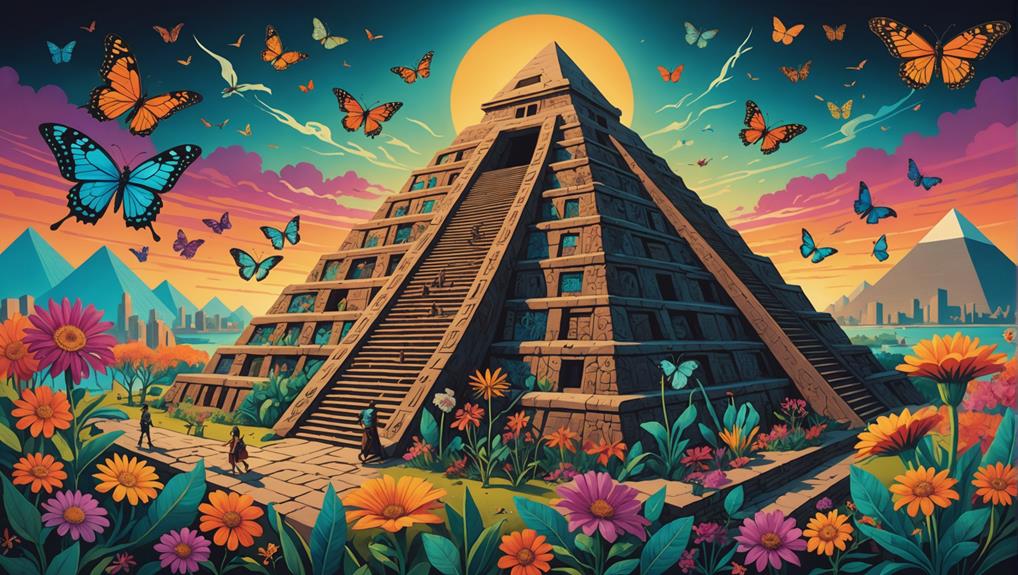
The Brooklyn Museum’s exhibition ‘Life, Death, and Transformation in the Americas’ explores the rich cultural heritage of ancient Mesoamerican cultures. It uncovers how they viewed death as a transformation, not an end, and a journey that bridged the physical and spiritual domains. Through ceremonial objects and artifacts, the exhibit showcases the significance of ancestral worship, rituals, and symbolism in these cultures. As visitors navigate the exhibit, they’ll gain insight into the complexities of mortality and the human experience in ancient America, and perhaps, discover new perspectives on the mysteries of life and death. The exhibit not only highlights the beliefs of ancient civilizations but also encourages visitors to reflect on how different cultures interpret existence and the afterlife. In a similar vein, the Njideka Akunyili Crosby exhibition at the Brooklyn Museum offers a contemporary exploration of identity, memory, and transformation through layered compositions that blend history and personal experience. Together, these exhibitions create a dialogue between past and present, inviting audiences to consider the evolving ways in which humanity grapples with life’s greatest mysteries.
Ancient Cultures of Mesoamerica
In the lush, tropical lowlands of southern Mexico and Guatemala, the ancient cultures of Mesoamerica flourished, leaving behind a rich legacy of architectural, artistic, and intellectual achievements. These ancient civilizations, including the Olmec, Maya, and Aztec, developed innovative agricultural practices that allowed them to thrive in the region's fertile landscape. They cultivated crops like maize, beans, and squash, and implemented sophisticated irrigation systems to support their growing populations.
Urban planning was also a hallmark of Mesoamerican civilizations. Cities like Tikal and Palenque were designed with grandeur and functionality in mind, featuring grand plazas, pyramids, and temples that showcased the cultures' advanced understanding of astronomy and mathematics. The cities were carefully planned to maximize space, with buildings often constructed around central courtyards that provided natural ventilation and lighting.
The Mesoamericans' emphasis on urban planning and agricultural practices demonstrates their deep connection to the land and their desire for freedom and self-sufficiency. By cultivating their own food and designing sustainable cities, they were able to maintain their independence and live in harmony with their environment. These achievements not only testify to the ingenuity of ancient Mesoamerican cultures but also offer valuable lessons for modern societies seeking to promote freedom, sustainability, and community development.
Death and the Afterlife
Their elaborate rituals and symbolic artifacts reveal that the ancient Mesoamericans had a profound understanding of death and the afterlife. They believed that death wasn't an end, but a transformation, and that the soul continued to exist in the afterlife. This understanding is reflected in their funeral rites, which were crafted to guarantee the deceased person's safe passage into the afterlife.
In many Mesoamerican cultures, the afterlife was seen as a journey, not a destination. The soul had to navigate through treacherous landscapes, avoiding obstacles and challenges along the way. To aid the deceased on this journey, the living would provide them with offerings, such as food, drink, and other necessities. These offerings were believed to sustain the soul on its journey, allowing it to reach the afterlife safely.
The concept of eternal souls was central to Mesoamerican beliefs about death and the afterlife. They believed that the soul was eternal, and that it continued to exist even after the physical body had perished. This belief was reflected in their funeral rites, which were designed to honor and respect the deceased person's eternal soul. Through their rituals and artifacts, the ancient Mesoamericans demonstrated a deep understanding of the mysteries of death and the afterlife, and their beliefs continue to inspire and fascinate us today.
Ceremonial Objects and Artifacts
As they investigate the domain of ceremonial objects and artifacts, researchers are struck by the significance of ritual masks and headdresses that adorned the faces of spiritual leaders. Sacred ceremonial instruments, such as drums and rattles, also played a pivotal role in ancient rituals, while ancient burial offerings provide valuable insights into the spiritual beliefs of past cultures. These artifacts not only held spiritual power but also served as a means of communication with the divine.
Ritual Masks and Headdresses
Ritual masks and headdresses, imbued with spiritual power, played a pivotal role in the ceremonial lives of ancient American cultures. These sacred objects were crafted with precision and care, often adorned with feathers, beads, and other materials that held significant meaning. In many cultures, masks and headdresses were believed to hold the power to connect with the divine, facilitating communication between the physical and spiritual domains.
Here are some fascinating aspects of ritual masks and headdresses:
- Cultural Significance: Masks and headdresses were often used to represent ancestral spirits, animals, or mythological creatures, connecting the wearer to their cultural heritage.
- Artistic Expression: The intricate designs and craftsmanship of these objects showcase the artistic prowess of ancient American cultures.
- Spiritual Connection: Ritual masks and headdresses were believed to possess spiritual energy, allowing the wearer to tap into the mystical sphere.
- Ceremonial Use: These objects were used in various ceremonies, such as initiation rites, harvest festivals, and shamanic rituals, to invoke spiritual guidance and protection.
Through these sacred objects, ancient American cultures expressed their deep connection to the spiritual sphere, showcasing their rich cultural heritage and artistic expression.
Sacred Ceremonial Instruments
Beyond the domain of ritual masks and headdresses, ancient American cultures crafted a diverse array of sacred ceremonial instruments, imbuing them with spiritual potency and symbolic meaning. These instruments were not merely tools for creating sounds, but vessels for spiritual expression and communication with the divine. Drums, rattles, and flutes were crafted with precision, often adorned with intricate designs and symbolism. They were used to create Instrumental Harmony, evoking emotions and transcendent states during Sonic Rituals. Shamans and spiritual leaders wielded these instruments to channel the sacred, conjuring the spirits and ancestors to guide their communities. The rhythms and melodies produced by these instruments resonated deeply, awakening the collective consciousness and bridging the gap between the physical and spiritual domains. Through these sacred instruments, ancient American cultures orchestrated a symphony of spiritual expression, weaving a rich tapestry of sound and meaning that continues to inspire and uplift.
Ancient Burial Offerings
In ancient American burial sites, archaeologists have unearthed a treasure trove of ceremonial objects and artifacts, purposely placed alongside the deceased to ensure a safe journey into the afterlife. These funerary treasures offer a glimpse into the burial rites and spiritual beliefs of ancient American cultures. The objects buried with the dead were believed to provide comfort, protection, and guidance on their passage to the afterlife.
Some examples of these ceremonial objects include:
- Turquoise beads, used for their spiritual significance and beauty.
- Ceramic vessels, containing food and drink offerings for the deceased.
- Carved stone figurines, representing ancestors or spiritual guides.
- Woven textiles, symbolizing the connection between the living and the dead.
These artifacts not only demonstrate the complexity of ancient American burial rites but also highlight the importance of honoring the dead in their journey to the afterlife. By examining these funerary treasures, we gain a deeper understanding of the cultural and spiritual practices that shaped the lives of ancient Americans.
Ancestors and the Spirit World
Throughout the diverse cultures of the Americas, ancestors played an essential role in the spiritual lives of indigenous peoples, serving as intermediaries between the physical and spiritual domains. These revered ancestors were believed to possess wisdom, power, and spiritual authority, guiding their descendants on the path to enlightenment and self-discovery.
In many Native American cultures, ancestors were revered as Spirit Guides, offering counsel and protection to their living descendants. This sacred bond between the living and the dead was rooted in the concept of Family Legacy, where the actions of ancestors continued to shape the lives of their descendants.
| Culture | Ancestor Reverence | Spiritual Significance |
|---|---|---|
| Aztec | Ancestors as gods | Intermediaries between humans and gods |
| Inca | Ancestors as wise elders | Guardians of cultural heritage |
| Ojibwe | Ancestors as spirit guides | Protectors of the community |
| Mayan | Ancestors as ancestors | Keepers of ancient knowledge |
| Iroquois | Ancestors as teachers | Wisdom-keepers of the nation |
The reverence for ancestors was deeply ingrained in the spiritual practices of indigenous peoples, fostering a sense of community, shared identity, and collective memory. By honoring their ancestors, indigenous peoples acknowledged the enduring presence of their loved ones, ensuring their legacy lived on through generations.
The Cycle of Life and Death
As the cycle of life and death unfolds, mortality and impermanence become stark realities that shape the human experience. It's in these moments of loss that rituals of mourning take center stage, providing a framework for coping with grief and facilitating transformation. By examining these rituals, we can gain insight into the complex interplay between life, death, and the spiritual domain.
Mortality and Impermanence
Every culture in the Americas has struggled to come to terms with mortality, recognizing that death is an inevitable part of the cycle of life. Mortality and impermanence have been a vital aspect throughout human history, with each society developing its own unique way of coping with the fear of death. Fear management has been an essential aspect of this process, as humans have sought to understand and make sense of the unknown.
Here are some key ways that cultures in the Americas have addressed mortality and impermanence:
- Ancestor worship: Many indigenous cultures in the Americas have revered their ancestors, believing that they continue to play an active role in the lives of their descendants.
- Elaborate funeral rites: From the intricate masks of the Aztecs to the grand pyres of the ancient Maya, many cultures have developed elaborate funeral rites to honor the dead.
- Concepts of the afterlife: From the Christian notion of heaven and hell to the Aztec belief in the sun god's journey through the underworld, cultures have developed a range of beliefs about what lies beyond this life.
- Leaving a lasting legacy: Many individuals have sought to transcend mortality by leaving behind a lasting legacy, whether through art, architecture, or great deeds.
Through these strategies, humans have sought to come to terms with mortality, leaving behind a rich cultural heritage that continues to inspire and educate us today.
Rituals of Mourning
The bereaved in many American cultures have developed elaborate rituals of mourning, which serve as a testimony to the profound impact of death on the living. These rituals provide a framework for the bereaved community to process their emotions, find solace, and ultimately, begin to heal. In many indigenous cultures, funerary silence is an essential aspect of mourning rituals. This period of quiet contemplation allows the bereaved to reflect on their loss and connect with their loved one in a profound way. During this time, the bereaved community comes together to support one another, sharing stories and memories of the deceased. This collective grief serves as a powerful catalyst for healing and transformation. Through these rituals, individuals can transcend their grief and find a sense of liberation, ultimately emerging transformed and renewed. By examining these rituals, we gain insight into the complexities of human emotions and the resilience of the human spirit.
The Power of Ritual and Symbolism
Rituals and symbolic practices played a pivotal role in shaping the cosmology and worldview of ancient American societies. These practices allowed individuals to connect with the spiritual domain, communicate with ancestors, and navigate the complexities of life and death. Through rituals, people could transcend the mundane and access higher states of consciousness, facilitating spiritual growth and self-discovery.
In many ancient American cultures, rituals were an integral part of daily life, used to mark important life events, such as birth, coming of age, and death. These rituals often involved the use of symbolic objects, such as masks, headdresses, and ceremonial garments, which held deep spiritual significance.
Here are some examples of the power of ritual and symbolism in ancient American societies:
- Shamanic Journeys: Shamans would undertake spiritual journeys to communicate with ancestors and retrieve knowledge and wisdom.
- Ceremonial Masks: Masks were used to connect with ancestral spirits and access higher states of consciousness.
- Ritual Offerings: Offerings were made to appease the gods and maintain balance and harmony in the universe.
- Vision Quests: Individuals would engage in vision quests, seeking guidance and wisdom from the spiritual domain.
Through these rituals and symbolic practices, ancient Americans were able to tap into the spiritual domain, access higher states of consciousness, and connect with the natural world. These practices continue to inspire and influence contemporary art, literature, and spirituality, reminding us of the enduring power of ritual and symbolism in shaping our understanding of the world and our place within it.
Mortality and the Human Experience
As ancient Americans navigated the complexities of life, death, and the afterlife, they came to understand mortality as an integral part of the human experience. The reality of death forced them to confront their own existential crisis, grappling with the meaning and purpose of life. This confrontation sparked a deep sense of human vulnerability, as individuals realized their own mortality and the impermanence of all things.
In response, ancient Americans developed a profound appreciation for the present moment, recognizing that life was fragile and fleeting. They understood that death was not an end, but rather a transformation, a passage to another domain or state of being. This perspective allowed them to cultivate a sense of humility and reverence for the natural world, acknowledging their place within the grand tapestry of existence.
The awareness of mortality also inspired a rich cultural heritage, as ancient Americans sought to make sense of their place in the universe. Through art, ritual, and storytelling, they explored the mysteries of life and death, seeking to transcend the boundaries of mortality. In doing so, they created a rich legacy, one that continues to inspire and guide us today. By embracing mortality as an integral part of the human experience, ancient Americans were able to find meaning, purpose, and freedom in the face of uncertainty.
Ancient Philosophies of Transformation
In their quest for understanding, ancient American philosophers developed sophisticated concepts of transformation, where death was not an end, but a threshold to new domains of existence. They recognized that transformation was an inherent part of life, and that it held the key to revealing the secrets of the universe. Through their philosophical inquiry, they discovered that transformation was not limited to the physical domain, but extended to the spiritual and cosmic spheres as well.
These ancient philosophers understood that spiritual alchemy, the process of transforming the self, was essential for achieving liberation and enlightenment. They believed that by transmuting their inner nature, they could transcend the limitations of the material world and tap into the infinite potential of the cosmos. This understanding of transformation was deeply rooted in their concept of cosmic evolution, which held that the universe was constantly evolving and unfolding.
Here are four key principles of ancient American philosophies of transformation:
- Death as transformation: Death was seen as a threshold to new domains of existence, rather than an end.
- Spiritual alchemy: The process of transforming the self was essential for achieving liberation and enlightenment.
- Cosmic evolution: The universe was constantly evolving and unfolding, and humans were an integral part of this process.
- Interconnectedness: All things were interconnected, and transformation was a universal principle that applied to all aspects of existence.
Cosmology and the Universe
The ancient American philosophers' understanding of transformation was deeply rooted in their concept of cosmology, which held that the universe was a vast, interconnected web of relationships that governed the workings of the cosmos. This holistic view of the universe recognized that every element, from the smallest subatomic particles to the vast expanses of space, was intricately connected and interdependent. In this context, transformation was seen as a natural process of evolution, driven by the dynamic interplay of cosmic forces.
The ancient Americans believed that the universe was shaped by mysterious forces, such as Dark Matter, which governed the motion of celestial bodies. They also recognized the existence of Cosmic Strings, theoretical threads that crisscrossed the universe, influencing the formation of galaxies and galaxy clusters. The evolution of galaxies, from the earliest moments of the Big Bang to the present day, was seen as a gradual process of transformation, shaped by Quantum Fluctuations and the subtle vibrations of the cosmos.
In this cosmological framework, transformation was not a static state, but a dynamic process of growth, decay, and rebirth. The ancient Americans saw themselves as part of this larger cosmic drama, connected to the land, the ancestors, and the universe as a whole. Their understanding of transformation was deeply rooted in their reverence for the mysteries of the universe, and their recognition of the intricate web of relationships that governed the cosmos.
Unveiling the Mysteries of Mortality
Ancient American cultures believed that death was not an endpoint, but a transformation that marked a passage into a new dimension of existence, where the soul continued to evolve and grow. This profound understanding of mortality allowed them to approach death with a sense of reverence and respect, rather than fear and dread. By embracing the mysteries of mortality, these cultures were able to transcend their personal fears and focus on building an eternal legacy.
In many ancient American cultures, death was seen as a shift, rather than an end. This perspective allowed individuals to focus on the impact they wanted to leave on the world, rather than fearing the unknown. As a result, they were able to build lasting legacies that continued to inspire and educate future generations.
Some key takeaways from these ancient cultures' approach to mortality include:
- Embracing mortality: By acknowledging and accepting death as a natural part of life, individuals can focus on making the most of the time they have.
- Building an eternal legacy: By focusing on the impact they want to leave on the world, individuals can transcend their personal fears and create a lasting legacy.
- Transcending personal fears: By embracing mortality, individuals can overcome their personal fears and focus on building a better future.
- Finding freedom in mortality: By understanding that death is a transformation, rather than an endpoint, individuals can find freedom from the fear of mortality and live a more fulfilling life.
Frequently Asked Questions
What Is the Significance of Butterflies in Ancient Mesoamerican Cultures?
In ancient Mesoamerican cultures, butterflies symbolized transformation and spiritual growth. According to legend, the Butterfly Goddess, Itzpapalotl, would descend to earth, carrying the spirits of the dead to the afterlife. This metamorphic power was revered, as butterflies embodied the spirit animal's ability to transcend life and death. By embracing the butterfly's transformative cycle, the ancients honored the eternal cycle of life, death, and rebirth, seeking freedom from the confines of mortality.
How Did Ancient Americans View the Concept of Reincarnation?
She explores how ancient Americans viewed reincarnation as a cyclical journey of the soul. They believed that after death, the soul commenced on a transformative journey, shedding old identities to be reborn anew. This afterlife belief system emphasized the soul's continuous evolution, with each life building upon the last. The soul journey was a path of spiritual growth, where the individual's essence was refined, ultimately achieving spiritual liberation.
What Role Did Dreams Play in Ancient Spiritual Practices?
In the domain of the unknown, dreams unfolded like a map, guiding ancient seekers toward hidden truths. Shamanic journeys and dreamwalking rituals allowed them to traverse the realms, communing with ancestors and spirits. By surrendering to the subconscious, they accessed the collective unconscious, revealing secrets of the universe. In this mystical world, the veil between worlds was thin, and the dreamer became the bridge between the physical and spiritual dimensions, where freedom from the mundane was the ultimate prize.
Were Ancient Mesoamerican Cultures Influenced by Astronomy?
She explores the world of ancient Mesoamerican cultures, where the mysteries of the cosmos held profound significance. Were they influenced by astronomy? The answer lies in their intricate understanding of cosmic cycles and stellar alignments. They meticulously tracked celestial events, weaving them into their spiritual fabric. The harmony between earth and sky was paramount, guiding their daily lives and sacred rituals.
What Is the Symbolism Behind the Use of Skulls in Ancient Rituals?
She explores the symbolism behind ancient ritual skulls, uncovering the profound significance of these macabre relics. Skull metaphors represented the cycle of life and death, emphasizing the transience of human existence. Ritual masks, often adorned with skulls, facilitated spiritual communication between the living and the dead. In ancient cultures, skulls embodied the duality of life and death, advocating for the acceptance of mortality and the pursuit of spiritual freedom.
About the Author