
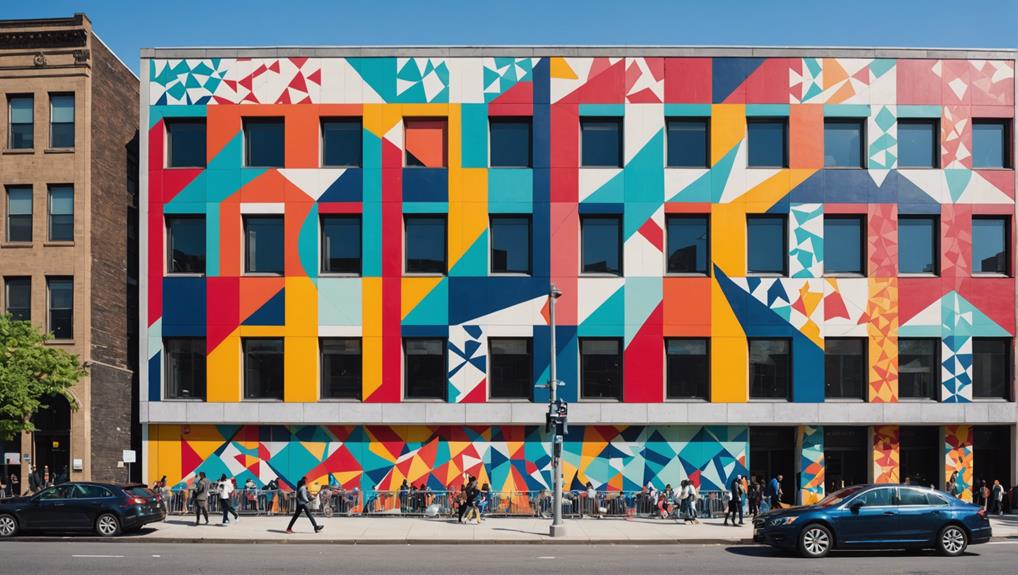
The Brooklyn Museum's rediscovery of 24 vibrant murals from the 1980s has unearthed a treasure trove of hidden artistic gems that celebrate the spirit of Williamsburg's community and creative expression. These murals, showcasing artistic talent and hidden messages, reflect the community's voices and sentiments. As they decorate the walls of the Williamsburg Houses, they convey messages of resilience, collective strength, and freedom. This artistic revival sparks pride and identity, marking a significant shift in urban rebirth. As you explore this artistic treasure, you'll uncover more secrets of these vibrant murals and their enduring impact on the community.
Murals of the Great Depression
During the Great Depression, the Federal Art Project, a New Deal program, commissioned artists to create murals that would adorn the walls of public buildings, capturing the spirit of a nation in crisis. This ambitious project, one of the most extensive of its kind, was a demonstration of President Franklin D. Roosevelt's (FDR's) influence on the art world. Through the Federal Art Project, FDR aimed to provide economic relief to artists while promoting a sense of national unity and hope.
The murals, often grand in scale and scope, were more than just decorative pieces – they were tools of artistic propaganda. They conveyed messages of resilience, perseverance, and collective strength, inspiring Americans to come together in the face of adversity. Many of these works featured scenes of everyday life, industrial landscapes, and American icons, emphasizing the importance of community, hard work, and democracy.
As a result, the murals became powerful symbols of American identity, reflecting the nation's values and ideals. By supporting artists and promoting this form of artistic expression, FDR's administration helped to foster a sense of freedom and creativity, even in the darkest of times. The murals of the Great Depression remain a demonstration of the transformative power of art, serving as a beacon of hope and inspiration for generations to come.
Discovering Hidden Artistic Treasures
As the Brooklyn Museum's rediscovery of Williamsburg murals continues, it's time to explore the hidden gems that lie beneath the surface. By uncovering street art secrets, art enthusiasts can gain a deeper understanding of the murals' context and significance. Beyond the obvious, there are uncharted artistic landscapes waiting to be explored, holding the key to a richer appreciation of these artistic treasures.
Unveiling Street Art Secrets
Twenty-four vibrant murals, hidden from public view for decades, have been rediscovered in the Brooklyn Museum's archives, offering a fascinating glimpse into Williamsburg's street art scene of the 1980s. These murals not only showcase the artistic talent of the era but also reveal the hidden messages and urban legends that defined the city's graffiti culture.
| Street Art Elements | Characteristics |
|---|---|
| Art Rebellion | Challenging social norms |
| Hidden Messages | Concealed meanings |
| City Canvas | Urban landscape as art space |
The rediscovery of these murals highlights the significance of street art as a form of public expression and creative freedom. The visual language of these artworks speaks directly to the community voice, echoing the sentiments of a generation. As we bring to light the secrets of these murals, we're reminded that street art is not just about aesthetics; it's about the freedom to express, to rebel, and to create.
Murals Beyond the Surface
Delving into the layers of these rediscovered murals, art historians and enthusiasts alike are uncovering the hidden artistic treasures that have been waiting to be revealed. As they peel back the layers, they're discovering symbolic meanings that were previously concealed. These murals, once mere decorations, now reveal deeper cultural reflections, telling stories of the community that created them.
The artistic processes behind these masterpieces are equally fascinating, showcasing the creative visions of the artists who dared to express themselves freely. Each brushstroke, each color choice, and each composition reveal a piece of the artist's soul. By analyzing these visual narratives, experts can reconstruct the historical context in which they were created, exposing the hopes, fears, and aspirations of the people who lived in Williamsburg during that time.
As the murals are restored to their former glory, they're not only a tribute to the artists' skills but also a reflection of the community's spirit. They're a celebration of freedom, creativity, and self-expression – a reminder that art has the power to bring people together and inspire positive change.
Uncharted Artistic Landscapes
Beyond the faded facades of Williamsburg's buildings, a treasure trove of hidden artistic landscapes awaits discovery. Urban explorers and art enthusiasts alike can venture into the unknown, uncovering creative frontiers that redefine the neighborhood's cultural identity. As they explore further, they'll stumble upon vibrant murals, quirky street art, and eclectic graffiti that transform drab walls into dynamic canvases. These uncharted artistic landscapes are a proof of the community's rebellious spirit, where creativity knows no bounds and self-expression is the ultimate freedom.
As they navigate the labyrinthine streets, explorers will encounter an array of styles, from abstract to figurative, each telling a unique story of the neighborhood's history, diversity, and resilience. The urban landscape becomes a living, breathing entity, where art and architecture converge in a symphony of color and texture. In this world, creativity knows no boundaries, and the lines between art and reality blur, inviting all who dare to venture into the uncharted territories of Williamsburg's artistic landscape.
Williamsburg Houses Backstory
In the early 1930s, the New York City Housing Authority (NYCHA) responded to the growing need for affordable housing by constructing the Williamsburg Houses, a pioneering public housing project in Brooklyn. This innovative project marked a significant shift in housing reform, providing a model for future developments. The Williamsburg Houses were designed to offer a better quality of life for low-income families, with a focus on community growth and neighborhood roots.
| Feature | Description |
|---|---|
| Architectural Style | Modernist, with a mix of Art Deco and International styles |
| Number of Buildings | 27, with 1,623 apartments |
| Original Cost | $12 million (approximately $230 million today) |
| Completion Date | 1938 |
The Williamsburg Houses were a reflection of the city's commitment to providing affordable housing, setting a precedent for future public housing projects. The development's settlement history is a reflection of the area's transformation from a mainly industrial zone to a thriving residential community. Today, the Williamsburg Houses remain an important part of Brooklyn's landscape, holding significant historical importance as a pioneering example of housing reform.
The Artists Behind the Murals
Eighteen artists, commissioned by the Federal Art Project, created the vibrant murals that adorned the walls of the Williamsburg Houses, injecting a sense of community and beauty into the newly built development. These artists, with their unique artistic visions, brought a burst of color and creativity to the once-barren walls. Their creative process was a collaborative effort, with each artist contributing their personal story and artistic roots to the project.
Through their murals, the artists shared their inspirational journeys, reflecting their cultural influences and artistic experiences. For instance, artist Philip Guston's mural, "Building More Stately Mansions," showcased his fascination with architecture and urban landscapes. Meanwhile, artist Ilya Bolotowsky's "Abstract Composition" demonstrated his fascination with geometric shapes and abstract forms.
As we delve into the artist profiles, we discover the diverse backgrounds and experiences that shaped their artistic vision. Some, like Guston, were immigrants who brought their cultural heritage to the project. Others, like Bolotowsky, were American-born artists who drew inspiration from European modernism. Despite their differences, the artists worked together, sharing their skills and ideas to create a cohesive and stunning visual narrative. Their collaborative efforts resulted in a body of work that not only beautified the Williamsburg Houses but also celebrated the community's diversity and creativity.
Art for the People Initiative
The Federal Art Project's 'Art for the People' initiative, launched in 1935, empowered artists to create public art that was accessible and engaging for the broader community. This pioneering program aimed to bring art to the people, rather than confining it to elite galleries and museums. By doing so, it fostered a sense of community and belonging among the masses.
The 'Art for the People' initiative was a groundbreaking effort to democratize art, making it an essential part of everyday life. It achieved this through:
- Community Outreach: Engaging with local communities to understand their needs and aspirations, ensuring that the art created was relevant and meaningful to them.
- Public Engagement: Encouraging public participation in the creative process, allowing people to take ownership of the art and feel connected to it.
- Accessibility: Placing art in public spaces, such as parks, schools, and libraries, making it easily accessible to all.
- Inclusivity: Encouraging diversity in the art created, reflecting the multicultural fabric of American society.
Uplifting the Community Spirit
Through vibrant murals and public art, the Federal Art Project's 'Art for the People' initiative infused community spaces with a renewed sense of pride and collective identity. This artistic infusion sparked a wave of Neighborhood Revitalization, as once-neglected public spaces transformed into vibrant hubs of Community Engagement. As residents gathered to admire the murals, a sense of Social Change began to take hold, fostering a renewed commitment to Urban Renewal. The murals became a symbol of Cultural Pride, reflecting the community's Local Identity and celebrating its unique heritage.
As people from diverse backgrounds came together to appreciate the art, a shared sense of Collective Memory began to emerge. Public Spaces, once forgotten, were reborn as vibrant gathering places, fostering a sense of community and shared ownership. The murals served as a catalyst for Social Change, inspiring residents to take an active role in shaping their neighborhood's future. Through the 'Art for the People' initiative, the community discovered a powerful tool for Neighborhood Revitalization, one that brought people together and inspired a renewed sense of purpose. As the community continued to grow and thrive, the murals remained a symbol of the transformative power of art, a beacon of hope for a brighter, more vibrant future.
Rediscovering a Forgotten Legacy
As Brooklyn Museum shines a light on the Williamsburg murals, it's clear that a forgotten legacy is waiting to be unearthed. The revival of these lost artworks not only celebrates the pioneers of street art but also highlights the transformative power of urban landscapes. By exploring this forgotten chapter, the museum is paving the way for a new appreciation of the city's rich cultural heritage.
Lost Art Revival
She discovered a dusty archive of forgotten murals while exploring the Brooklyn Museum's storage rooms, uncovering a treasure trove of artwork that had been hidden from the public eye for decades. This discovery sparked a Lost Art Revival, breathing new life into the forgotten masterpieces. As she investigated further, she realized that these murals were not just beautiful pieces of art, but also a window into the past, telling stories of the community's history and struggles.
The Lost Art Revival is not just about rediscovering forgotten art, but also about reclaiming a piece of the community's heritage. It's an Artistic Rebirth, where the forgotten masters are given a new platform to shine.
Some key aspects of the Lost Art Revival include:
- Uncovering hidden gems in the museum's storage rooms
- Restoring and preserving the murals for public display
- Providing a platform for the community to engage with their cultural heritage
- Celebrating the Forgotten Masters who created these incredible works of art
Street Art Pioneers
By unearthing the forgotten murals, the Brooklyn Museum has inadvertently shone a light on the pioneering street artists of Williamsburg, who bravely challenged the status quo with their vibrant, often provocative works. These Graffiti Roots rebels dared to defy conventions, claiming the city's walls as their canvas. Urban Legends like COPE2 and KET1, known for their bold, colorful tags, paved the way for future generations of street artists. The Rebel Artists of Williamsburg's Street Art scene were the original Creative Outlaws, refusing to be bound by traditional art world norms. With their Art Vandals' spirit, they transformed the urban landscape, making it a vibrant, ever-changing tapestry. Through their work, they declared their independence from the mainstream, forging a new path for self-expression. Today, their legacy inspires a new wave of Street Rebels, ensuring their innovative spirit continues to thrive.
Urban Landscape Transformation
The rediscovery of Williamsburg's forgotten murals has sparked a renewed appreciation for the street artists who transformed the urban landscape, imbuing it with vibrant colors and rebellious energy. As the city's industrial landscape was crumbling, these artists saw an opportunity to rebirth the urban environment, turning abandoned buildings and streets into a vibrant canvas. Their work not only beautified the area but also helped to revitalize the community, fostering a sense of pride and ownership among residents.
The impact of their work can be seen in several ways:
- Urban rebirth: The murals brought new life to a neglected area, attracting visitors and stimulating local businesses.
- City revitalization: The street art movement paved the way for further development, making Williamsburg a hub for creatives and entrepreneurs.
- Community engagement: The murals inspired a sense of community, encouraging residents to take ownership of their surroundings and work together to improve their neighborhood.
- Artistic freedom: The street artists' bold expression of creativity has inspired generations to come, promoting a culture of freedom and self-expression.
Preserving the Murals' Originality
Capturing the essence of the Williamsburg Murals requires preserving their originality, a task that involves delicate balancing acts between restoration and conservation. The Brooklyn Museum's conservators must walk a fine line between preserving the murals' artistic integrity and maintaining their historical authenticity. This balancing act is essential in ensuring that the murals remain true to their original intent, conveying the spirit of the era in which they were created.
Mural conservation is a highly specialized field that requires a deep understanding of the materials, techniques, and context in which the artworks were created. The conservators employ a range of preservation methods, from gentle cleaning to careful stabilization, to prevent further deterioration. Restoration techniques, such as inpainting and retouching, are used judiciously to maintain the murals' original appearance.
The ultimate goal of preservation is to safeguard the murals' cultural significance, ensuring that they continue to inspire and educate future generations. By preserving the Williamsburg Murals in their original state, the Brooklyn Museum can guarantee that these important works of art remain an integral part of our cultural heritage. As the museum continues to rediscover and showcase these hidden gems, it's clear that the painstaking effort to preserve their originality is well worth it.
A Glimpse Into 1930S Brooklyn
As the Williamsburg Murals burst with vibrant colors and dynamic energy, they transport viewers back to the gritty, yet vibrant, streets of 1930s Brooklyn. This era was marked by a unique blend of vintage fashion, community life, and urban sounds that defined the neighborhood's charm. The murals offer a glimpse into the daily life of Brooklynites, showcasing the hustle and bustle of city streets, the sounds of jazz and swing music, and the vibrant energy of community gatherings.
The Williamsburg Murals also provide a window into the historical context of the time, highlighting the significant changes that were taking place in the cityscape. The 1930s were a time of great transformation in Brooklyn, with new infrastructure projects, urban renewal initiatives, and a growing immigrant population.
Some key aspects of 1930s Brooklyn that the murals bring to life include:
- The fashion of the era, with its iconic flapper dresses, fedoras, and oxford shoes
- The vibrant community life, with its bustling streets, lively markets, and crowded tenements
- The urban sounds that filled the air, from the clanging of streetcars to the sounds of jazz and swing music
- The daily life of Brooklynites, with its bustling streets, crowded markets, and lively community gatherings
Cultural Significance Today
Today, the Williamsburg Murals' vibrant depictions of 1930s Brooklyn continue to resonate with contemporary audiences, inspiring reflections on the neighborhood's evolution and cultural heritage. As a confirmation to the area's rich history, the murals serve as a powerful symbol of cultural identity, bridging the past and present. They remind us that cultural heritage is not static, but rather a dynamic force that shapes our understanding of ourselves and our communities.
The murals' significance extends beyond their aesthetic appeal, as they also speak to the complex issues of urban revitalization. The gentrification of Williamsburg has led to concerns about the erasure of the neighborhood's cultural identity. However, the murals stand as a defiant statement, asserting the importance of preserving the community's history and cultural heritage. They serve as a powerful reminder of the need to balance progress with preservation, ensuring that the area's unique character is not lost in the face of urban development.
Through the Williamsburg Murals, we are reminded that cultural identity is not a fixed entity, but rather a dynamic and evolving concept. As we navigate the complexities of urban revitalization, the murals offer a powerful reminder of the importance of preserving our cultural heritage, while embracing the diversity and creativity that defines our communities.
Unveiling the Exhibition
As the Brooklyn Museum prepares to showcase the Williamsburg Murals exhibition, a sneak peek reveals the meticulous curation of this highly anticipated event. Behind-the-scenes, the museum's team has been working tirelessly to guarantee a seamless presentation of the murals, which promises to be an immersive experience. The exhibition preview hints at the grandeur that awaits visitors, offering a glimpse into the rich cultural heritage of Williamsburg's vibrant art scene.
Mural Exhibition Preview
Fifty large-scale murals, each a vibrant reflection of Brooklyn's eclectic spirit, await visitors at the exhibition's grand demonstration. The Brooklyn Museum's latest exhibition is a confirmation of the borough's rich cultural heritage, showcasing the artistic vision of local artists who have contributed to the vibrant street art scene in Williamsburg.
- The exhibition design guarantees an immersive experience, with murals spanning entire walls and ceilings, transporting visitors to the bustling streets of Brooklyn.
- Curator insights provide context to the artworks, highlighting the cultural trends and artistic movements that have shaped the neighborhood's aesthetic.
- On preview night, art enthusiasts and locals alike can mingle with the artists, gaining insight into the creative process behind these monumental works.
- As the art market continues to evolve, this exhibition solidifies the Brooklyn Museum's commitment to preserving the borough's cultural legacy, celebrating the freedom of artistic expression that defines Williamsburg's spirit.
Behind the Scenes
Curators and installation teams worked tirelessly behind the scenes to transform the museum's galleries into a vibrant streetscape, meticulously recreating the urban landscape of Williamsburg. Every detail was carefully considered, from the distressed brick walls to the graffiti-covered subway trains.
| Department | Task | Timeline |
|---|---|---|
| Curator Insights | Selecting artworks, writing labels | 6 weeks |
| Artist Profiles | Conducting interviews, researching backgrounds | 8 weeks |
| Museum Logistics | Coordinating deliveries, arranging storage | 4 weeks |
| Conservation Efforts | Cleaning, preserving, and restoring murals | 12 weeks |
| Restoration Process | Repairing damaged areas, matching original materials | 10 weeks |
Through Archival Research, the team uncovered rare photographs and documents that informed the Exhibition Design. The Installation Methods required careful planning to guarantee a seamless visitor experience. From the initial concept to the final installation, the team's dedication to preserving the spirit of Williamsburg's street art scene is evident throughout the exhibition.
Frequently Asked Questions
Are the Williamsburg Murals Open to the Public for Viewing?
She wonders if the vibrant Williamsburg murals are open to the public for viewing. The answer is a resounding yes! After undergoing meticulous mural conservation, these stunning works of art are now accessible to everyone. Public accessibility is a top priority, ensuring that people from all walks of life can revel in their beauty. With freedom to explore, visitors can indulge in the murals’ rich history and cultural significance, fostering a deeper connection with the community. In addition to admiring the murals, visitors can enhance their experience by exploring Williamsburg unique dining and shopping options. The neighborhood offers a diverse culinary scene and eclectic boutiques, providing a perfect complement to the artistic atmosphere. This vibrant combination of art, food, and culture makes Williamsburg a must-visit destination for locals and tourists alike.
Can I Take Photos of the Murals for Personal Use?
She can snap away, but with respect. When it comes to taking photos of the murals for personal use, good Mural Etiquette dictates asking permission first. Typically, Photo Permissions are granted for non-commercial use, but it's essential to check with museum staff or the artist beforehand. Freedom to capture memories is encouraged, but not at the expense of respecting the artwork and its creators.
Are the Murals Available for Reproduction or Commercial Use?
She inquires about using the murals for commercial purposes. Unfortunately, it's not that simple. Anyone interested in reproducing or commercially using the murals must navigate copyright laws and obtain the necessary permissions. This often involves paying licensing fees to the copyright holders. While it may seem restrictive, these laws protect the artists' rights and guarantee they're fairly compensated for their work.
How Long Did It Take to Restore the Williamsburg Murals?
She wonders how long it took to restore the Williamsburg murals. The meticulous process demanded artistic precision, ensuring every brushstroke and color was true to the original. The restoration timeline spanned several months, with skilled conservators working tirelessly to revive the vibrant artwork. With precision and patience, they coaxed the murals back to life, preserving their beauty for generations to come.
Will the Exhibition Be Traveling to Other Museums or Locations?
As the curtains open on the exhibition, the question on everyone's mind is: will this masterpiece travel? The answer is a resounding yes! The museum is already orchestrating tour logistics to share this treasure with the world. Through cross-promotion and museum outreach, the art will spread its wings, embracing artistic mobility. Get ready for a cultural explosion, as this exhibition takes flight, bringing freedom of expression to the masses!
About the Author