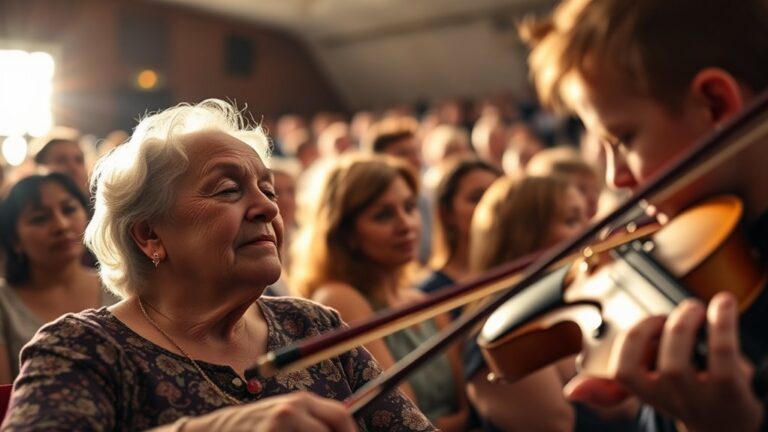
We’re excited to explore the iconic decade that reshaped America’s identity! Carnegie Hall’s city-wide festival is the perfect opportunity to delve into the transformative 1960s, where music, art, and activism merged to change history. We’ll immerse ourselves in the era’s revolutionary spirit, from civil rights and social activism to psychedelic rock and avant-garde art. Iconic moments, like the March on Washington and Woodstock, will come alive alongside the era’s dark tragedies, such as assassinations and riots. As we navigate this pivotal decade, we’ll uncover how the 1960s continue to inspire new generations – and there’s still more to uncover. Through performances, discussions, and exhibitions, we’ll celebrate the artists and activists who defined the era while reflecting on their lasting influence. The Oratorio Society of New York will contribute to the festivities with powerful choral works that capture the spirit of change and resilience from the decade. By revisiting these monumental moments, we gain a deeper understanding of how the 1960s shaped the world we live in today.
Exploring the Era of Revolution
As we explore the fabric of the 1960s, we find ourselves in the midst of a transformative era, where cultural, social, and political upheavals converged to reshape the world around us. It's an era that birthed radical politics, challenging the status quo and pushing for revolutionary change. We think of iconic figures like Martin Luther King Jr. and Malcolm X, who fought tirelessly for civil rights and social justice. But what about the forgotten heroines who played an essential role in shaping this era of revolution?
Women like Diane Nash, a civil rights activist who worked closely with King, and Fannie Lou Hamer, a voting rights activist who faced brutal racism and sexism, are often overlooked in the annals of history. Yet, they were instrumental in mobilizing communities and sparking change. We must acknowledge their contributions and celebrate their bravery in the face of adversity.
As we explore deeper into this era, we're struck by the convergence of radical politics and social activism. The 1960s were marked by widespread protests, from the Civil Rights Movement to the anti-war movement. Students, activists, and ordinary citizens came together to challenge the establishment and demand a more just and equitable society. It's a powerful reminder that even in the darkest of times, collective action can spark transformative change.
Music That Defined a Generation
We still recall the iconic sounds of the 1960s, when music became a powerful catalyst for social change, with artists like Bob Dylan and Joan Baez using their voices to protest the status quo. The decade was marked by a sonic rebellion, with musicians pushing the boundaries of traditional genres and creating a new wave of funky instrumentation. This fusion of sounds and styles gave birth to some of the most iconic music of the century.
Some of the key elements that defined the music of the 1960s include:
- The rise of psychedelic rock, characterized by the use of distortion, feedback, and other experimental techniques
- The emergence of funk, with its emphasis on rhythm, groove, and soulful vocals
- The development of folk rock, which blended the storytelling of folk with the energy of rock and roll
- The growth of the counterculture, which rejected mainstream values and embraced alternative lifestyles
- The role of music as a form of social commentary, with artists addressing issues like war, racism, and inequality
Through their music, artists of the 1960s were able to tap into the mood of the times, capturing the spirit of rebellion and social change that defined the era. As we look back on this pivotal decade, it's clear that the music of the 1960s continues to inspire and influence new generations of musicians and fans alike.
Cultural Upheaval and Social Change
As we explore the cultural upheaval and social change of the 1960s, we're struck by the way counterculture took center stage, influencing everything from fashion to politics. We're also seeing a surge in protest and activism, as people from all walks of life rise up to demand equality and justice. And at the heart of it all, we're finding a fierce commitment to freedom of expression, as artists, musicians, and writers push boundaries and challenge the status quo.
Counterculture Takes Center
By the mid-1960s, counterculture had taken center stage, symbolizing a profound cultural upheaval that would challenge traditional values and spark widespread social change. We found ourselves in the midst of a revolution, where creativity, free expression, and nonconformity became the guiding principles of our generation. The counterculture movement embodied the spirit of rebellion, rejecting mainstream norms and embracing alternative lifestyles.
Some notable aspects of this era include:
- Flower Power: a symbol of peaceful protest, where flowers were used as a powerful symbol of nonviolent resistance
- Hippie Chic: a fashion movement characterized by flowing garments, bright colors, and a free-spirited attitude
- Psychedelic rock: a genre of music that fueled our imagination and inspired artistic expression
- Communal living: a social experiment where like-minded individuals came together to create self-sustaining communities
- Alternative media: underground newspapers and zines that became the voice of the counterculture, challenging mainstream media's dominance
As we look back, it's clear that the counterculture movement played a significant role in shaping our collective identity and paving the way for future generations of free thinkers and change-makers.
Protest and Activism Rise
Through the streets, campuses, and public squares, our voices echoed, demanding civil rights, an end to the Vietnam War, and social justice, as protests and activism surged to unprecedented levels, marking a cultural upheaval that would forever alter the fabric of our society.
We, the youth, were determined to challenge the status quo, and our passion for change ignited a fire that spread across the nation. The 1960s were a time of great turmoil, but also of great progress.
| Protest Movements | Key Demands |
|---|---|
| Civil Rights Movement | End segregation, voting rights, and equality |
| Anti-War Movement | Immediate withdrawal from Vietnam |
| Student Unrest | Reform of higher education, democratic decision-making |
From local riots to national demonstrations, our voices were heard loud and clear. We refused to be silenced, and our collective activism paved the way for future generations to continue the fight for a more just and equitable society. As we look back, it's clear that our protests and activism were a catalyst for the significant social and cultural changes that defined the 1960s.
Freedom of Expression
We exploded onto the cultural scene, rejecting mainstream values and embracing a vibrant, unapologetic freedom of expression that would shake the foundations of traditional America. This was the era of artistic liberation, where creatives broke free from the shackles of conformity and explored new modes of expression. We rejected the censored voices of the past, instead opting for raw, unbridled creativity that challenged the status quo.
Some notable examples of this freedom of expression include:
- The Beat Generation's spoken word poetry, which rejected traditional literary norms and embraced a more spontaneous, improvisational style.
- The rise of psychedelic rock, which pushed the boundaries of music with its experimental sound and visuals.
- The emergence of underground comix, which tackled taboo topics and challenged the Comics Code Authority's strict guidelines.
- The development of avant-garde theater, which experimented with non-traditional formats and pushed the limits of performance art.
- The flourishing of street art, which transformed urban landscapes into vibrant, dynamic canvases.
Through these examples, we see how the 1960s embodied a spirit of artistic liberation, where creatives were unafraid to challenge norms and push boundaries.
Iconic Moments in American History
As we look back on the 1960s, we're reminded of the pivotal moments that shaped America's identity. We're going to explore the iconic events that defined this transformative decade, from the social awakenings that sparked freedom's flame to the tragic assassinations that rocked the nation. From the Summer of Love to the tumultuous years that followed, we'll examine the moments that continue to resonate with us today.
Freedom's Social Awakening
During the 1960s, our nation underwent a profound transformation, witnessing a surge in social activism that would redefine the fabric of American society. It was an era of radical empathy, where people from diverse backgrounds came together to challenge the status quo and fight for equality and justice. We saw the rise of civil disobedience, a powerful tool used to bring attention to the injustices faced by marginalized communities.
Some of the most notable moments of freedom's social awakening include:
- The March on Washington for Jobs and Freedom, where Martin Luther King Jr. delivered his iconic 'I Have a Dream' speech
- The Freedom Rides, which tested the enforcement of desegregation laws in the South
- The formation of the Student Nonviolent Coordinating Committee (SNCC), a student-led organization that played a significant role in the Civil Rights Movement
- The emergence of feminist icons like Gloria Steinem, who fought for women's rights and reproductive freedom
- The anti-war movement, which protested the Vietnam War and its devastating impact on American society
Summer of Love
In the sweltering summer of 1967, a cultural explosion rocked San Francisco's Haight-Ashbury neighborhood, as tens of thousands of free-spirited youths converged to celebrate the 'Summer of Love,' a defining moment in American counterculture. We, the flower children, donned Hippie Chic attire, flaunting colorful dashikis, bell-bottom jeans, and flowers in our hair, as we danced to the rhythms of psychedelic rock. The air was alive with the sweet scent of incense and the promise of social revolution. We gathered in Golden Gate Park, tripping out to the sounds of Janis Joplin and the Grateful Dead, our minds expanded by the possibilities of Psychedelic Dreams. It was a season of unbridled idealism, where love, peace, and freedom were the only currencies that mattered. We believed that, together, we could change the world, and for one fleeting summer, it felt like we just might. As we looked up at the stars, our spirits soaring, we knew that this was a moment that would forever be etched in the annals of American history.
Assassinations Rock Nation
We, the counterculture movement, were still basking in the afterglow of the Summer of Love when the nation was rocked by a series of assassinations that shook our collective psyche. It was as if the very fabric of our society was unraveling before our eyes. The senseless killings of iconic figures like Martin Luther King Jr. and Robert F. Kennedy sent shockwaves across the nation, leaving a deep sense of national trauma in its wake.
- The assassination of Martin Luther King Jr. in April 1968 sparked widespread riots and protests, exposing the deep-seated racial tensions that had been simmering beneath the surface.
- The brutal slaying of presidential hopeful Robert F. Kennedy in June 1968 sent a chilling message that no one was immune to the violence.
- The senseless murder of Malcolm X in 1965 had already left a scar on the nation's conscience.
- The attempted assassination of George Wallace in 1972 was a stark reminder that the forces of hate and intolerance were still at large.
- The cumulative effect of these assassinations was a nation in mourning, grappling with the dark historical shadows that threatened to consume us.
As we struggled to make sense of the senseless, we realized that our nation was forever changed, and that the trauma of these events would linger for generations to come.
The Art and Fashion of the 60s
Sixties art and fashion exploded with vibrant colors, psychedelic patterns, and bold statements, reflecting the era's rebellious spirit and cultural upheaval. We're talking tie-dye, bell-bottoms, and afros – the more outrageous, the better. As we explore the art and fashion of the 60s, we're struck by the era's unbridled creativity and experimentation.
Psychedelic patterns, in particular, defined the decade's aesthetic. From paisley to op-art, these vibrant designs seemed to pulse with the energy of the times. We see them on everything from posters to album covers, and even on the clothes themselves. The result was a kaleidoscope of color and pattern that still inspires designers today.
But it wasn't just about the visuals – the 60s were also about attitude. Fashion became a form of self-expression, a way to signal one's values and beliefs. Mods, hippies, and beats each had their own distinct style, and we're still feeling the influence of these vintage vibes today. From the Beatles' sleek suits to Jimi Hendrix's flamboyant stage wear, the 60s were a time when fashion truly became an art form.
As we celebrate the art and fashion of the 60s, we're reminded of the era's boundless energy and innovation. It was a time when anything seemed possible, and the boundaries of creativity were stretched to their limits. We can't help but feel inspired by the era's bold spirit, and we can't wait to see how it continues to influence the art and fashion of today.
The Lasting Impact of the Decade
As we reflect on the 60s, it's clear that the decade's creative explosion has left an indelible mark on our cultural landscape. The era's innovative spirit and rebellious attitude continue to shape our world today.
The 60s' lasting impact can be seen in various aspects of our lives:
- Social Justice: The decade's fight for civil rights, women's liberation, and LGBTQ+ rights has paved the way for ongoing struggles for equality and justice.
- Economic Shift: The 60s' economic growth and technological advancements laid the groundwork for the modern service-based economy and the rise of the digital age.
- Family Dynamics: The decade's shift towards more liberal and permissive attitudes has redefined traditional family structures and values.
- Artistic Expression: The 60s' explosion of creative expression in music, art, and literature continues to inspire new generations of artists and innovators.
- Global Connectivity: The decade's technological advancements in transportation and communication have made the world a smaller, more interconnected place.
As we celebrate the 60s, we're reminded that the decade's innovative spirit and rebellious attitude continue to influence our world today. The 60s' enduring impact is a reflection of the power of creativity, innovation, and progressive thinking.
Frequently Asked Questions
Are Tickets Required for All Festival Events and Installations?
We're excited to share the scoop on festival access! While some events require tickets, others offer ticket alternatives, like RSVPs or first-come, first-served entry. We've planned carefully to guarantee festival capacity is managed smoothly, so everyone can enjoy the experience. We're all about innovation, so we've got a seamless ticketing system in place to minimize wait times and maximize fun. So, grab your tickets or RSVPs, and get ready to grove to the 60s vibe!
Will Food and Drinks Be Available for Purchase at the Festival?
"When in Rome, do as the Romans do" – and in this case, we're talking food! We're excited to share that yes, food and drinks will be available for purchase at the festival! Foodie favorites and retro snacks will transport you back in time. From classic burgers to vintage-inspired treats, our curated culinary lineup is designed to delight your taste buds. Come hungry and ready to indulge in a far-out foodie adventure!
Are Festival Events Suitable for All Ages, Including Young Children?
We're excited to say that our festival events are designed to be fun for the whole family! We've got kids' entertainment galore, from interactive exhibits to live performances that'll have little ones dancing in the aisles. And, we're all about family fun, so you can bet there'll be plenty of activities and games to enjoy together. So, whether you're 5 or 50, we've got something for everyone – come one, come all!
Can I Attend the Festival if I'm Not a Carnegie Hall Member?
The beat of the festival drums calls to us, and we can't help but wonder, can we join the party? The good news is, we don't need to be a Carnegie Hall member to attend the festival! Festival accessibility is key, and everyone's invited. Membership benefits are a perk, but not a prerequisite. So, come one, come all – let's groove to the rhythm of the 60s and experience the festival's vibrant energy together!
Will There Be Accessible Seating Options for People With Disabilities?
We're committed to making our festival inclusive for all! We're ensuring that people with disabilities can fully participate by providing accessible seating options. We've designed our venues with disability awareness in mind, featuring accessible pathways and seating areas that cater to diverse needs. Our goal is to create a welcoming environment where everyone can enjoy the festival without barriers.
About the Author