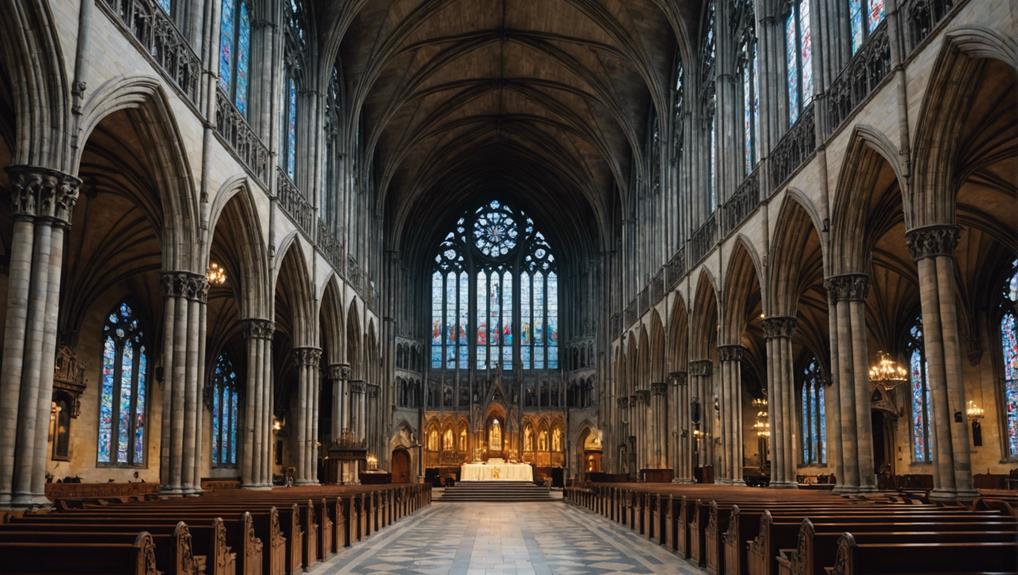
Located in the heart of New York City, the Cathedral of St. John the Divine is an iconic Episcopal cathedral that has been a beacon of spiritual growth, community, and architectural grandeur for over a century. With a rich history spanning over 130 years, this magnificent structure has overcome numerous challenges, from financial issues to devastating fires. Blending Gothic Revival architecture with Byzantine, Romanesque, and Art Nouveau styles, the cathedral boasts stunning features like the Rose Window and Chapel of St. Saviour. As you step inside, you're surrounded by intricate stone carvings, tapestries, and stained-glass windows, evoking a sense of awe and reverence. There's more to discover about this sacred space…
History of the Cathedral
In 1887, Bishop Henry Codman Potter laid the cornerstone of the Cathedral of St. John the Divine, marking the beginning of a long and tumultuous construction process that would span over a century. This monumental undertaking was a tribute to the Episcopal roots of the cathedral, which sought to create a sacred space that would inspire spiritual growth and community.
From its inception, the cathedral's construction was plagued by setbacks, including financial woes, design changes, and even a devastating fire in 1899. Despite these obstacles, the cathedral's visionaries persevered, driven by a shared dream of creating a sacred space that would uplift and inspire the people of New York City. The cathedral's Gothic precursors, such as the great cathedrals of Europe, served as a powerful inspiration for its design and architecture.
Throughout the 20th century, the cathedral continued to evolve, with various architects and builders contributing to its development. In the 1970s, a major restoration project was undertaken to repair damage caused by years of wear and tear. Today, the Cathedral of St. John the Divine stands as a tribute to the power of faith, perseverance, and human ingenuity. Its stunning architecture and rich history make it a beloved landmark in New York City, a beacon of hope and freedom for all who enter its doors.
Architectural Style and Design
As the Cathedral of St. John the Divine began to take shape, its architects drew heavily from the grand traditions of Gothic Revival architecture, incorporating soaring vaulted ceilings, stunning stained glass, and intricate stone carvings to create a sacred space of awe-inspiring beauty. This iconic style, popularized in the 19th century, provided the perfect framework for the cathedral's elaborate design. The architects' vision was to craft a space that would inspire a sense of wonder and reverence in those who entered.
To add depth and complexity to the design, the architects incorporated eclectic elements, blending the Gothic Revival style with Byzantine, Romanesque, and Art Nouveau influences. The result is a unique and captivating aesthetic that sets the cathedral apart from other architectural landmarks. The intricate stone carvings, ornate furnishings, and vibrant stained glass windows all contribute to a visually stunning environment that invites contemplation and reflection.
The cathedral's design is also notable for its use of natural light, with towering windows and clerestory windows allowing sunlight to flood the interior spaces. This emphasis on natural light creates a sense of airiness and openness, further enhancing the sense of freedom and spiritual uplift that the cathedral embodies. Through its masterful blend of Gothic Revival and eclectic elements, the Cathedral of St. John the Divine has become an iconic symbol of spiritual expression and artistic innovation.
Construction Timeline and Challenges
The construction of the Cathedral of St. John the Divine was marked by early delays, which hindered the project's progress from the outset. Cost overruns also plagued the project, putting a significant strain on resources. As a result, the cathedral's completion timeline was repeatedly pushed back, testing the patience and resolve of its builders.
Early Construction Delays
Delays plagued the early construction of the Cathedral of St. John the Divine, with workers struggling to excavate the rocky Morningside Heights site. The project, which began in 1892, was expected to be completed in a relatively short period. However, the harsh weather conditions and labor disputes hindered progress, causing significant delays.
Some of the major obstacles faced during the early construction phase include:
- Harsh weather conditions: Extreme temperatures, heavy rainfall, and strong winds made it difficult for workers to excavate the site and lay the foundation.
- Labor disputes: Workers went on strike several times, demanding better working conditions and higher wages, which further delayed the construction.
- Rocky terrain: The Morningside Heights site was characterized by hard, unyielding rock, making excavation a slow and laborious process.
These challenges not only delayed the construction but also added to the overall cost of the project. Despite these setbacks, the cathedral's founders remained committed to their vision, and the project pressed on, albeit slowly.
Budget Overruns
Cost overruns, exacerbated by the early construction delays, pushed the project's budget to unsustainable levels, forcing the cathedral's founders to reevaluate their financial strategy. The initial cost projections had been overly optimistic, and the reality of the project's expenses began to sink in. Financial mismanagement was a major contributor to the budget crisis, with poor planning and a lack of accountability allowing costs to spiral out of control.
As the project's expenses continued to rise, the cathedral's founders were faced with the challenging task of finding a way to bring the budget back in line. This required a thorough reassessment of the project's financials, including a review of cost projections and a search for areas where expenses could be cut. The situation was difficult, but the founders were determined to find a way to complete the cathedral without sacrificing its grand vision.
In the end, the budget overruns served as a wake-up call, prompting the founders to take a harder look at their financial management and implement more stringent controls to prevent similar crises in the future.
Notable Features and Artwork
Stunning stained-glass windows, vibrant tapestries, and intricate stone carvings adorn the Cathedral of St. John the Divine, transforming it into a masterpiece of Gothic Revival architecture. The cathedral's interior is a treasure trove of artistic and architectural wonders, showcasing the creativity and craftsmanship of its designers.
Some of the cathedral's most notable features include:
- The Rose Window, a stunning example of medieval-inspired stained glass artistry
- The Baptismal Font, a beautifully crafted sculpture of bronze and marble
- The Chapel of St. Saviour, featuring intricate carvings and ornate details
The cathedral's stained-glass windows are a particular highlight, with vibrant colors and intricate designs that filter the light and create an otherworldly atmosphere. The sculptural elements, including the stone carvings and bronze statues, add an extra layer of depth and complexity to the space. From the ornate pulpit to the delicate filigree, every detail of the cathedral has been carefully crafted to create a sense of awe and reverence. As visitors wander through the cathedral, they can't help but be struck by the sheer beauty and craftsmanship that surrounds them.
Worship and Spiritual Significance
As a beacon of spiritual guidance, the Cathedral of St. John the Divine offers a sacred space for prayer and contemplation, fostering an environment that nurtures spiritual growth. Through its various programs, the cathedral provides opportunities for individuals to deepen their faith and connection with the divine. By embracing a rich tradition of liturgical practices, the cathedral inspires a sense of community and worship among its congregation.
Sacred Space for Prayer
In this majestic space, worshippers from all walks of life gather to connect with the divine, finding solace in the serene atmosphere that permeates every corner of the Cathedral of St. John the Divine. The Cathedral's sacred space for prayer is a beacon of hope, offering a tranquil escape from the hustle and bustle of daily life. Here, individuals can quiet their minds, focus on their breath, and explore the depths of their souls.
- Meditation practices are encouraged, with guided sessions available for those seeking to cultivate mindfulness and inner peace.
- The Cathedral's peaceful ambiance invites introspection, allowing visitors to engage in inner reflection and self-discovery.
- As they sit in stillness, worshippers can contemplate on their values, goals, and aspirations, gaining clarity and direction for their lives.
In this sacred space, prayer and meditation become a powerful catalyst for personal growth, healing, and spiritual transformation. As individuals surrender to the present moment, they may discover a deeper sense of connection to themselves, others, and the divine. By cultivating mindfulness and stillness, they learn to embrace a slower pace, allowing clarity and inner peace to emerge naturally. This intentional slowing down fosters greater self-awareness, strengthening their ability to navigate life’s challenges with grace and wisdom.
Spiritual Growth Programs
Through a diverse range of spiritual growth programs, the Cathedral of St. John the Divine fosters a deeper understanding of faith, guiding worshippers on a journey of spiritual exploration and discovery. These programs offer a safe space for individuals to explore their faith, free from judgment and constraints. The cathedral's Mindful Meditation program, for instance, provides a serene atmosphere for worshippers to quiet their minds and connect with their inner selves. This mindful approach to spirituality encourages self-reflection, allowing individuals to tap into their inner wisdom and cultivate a deeper sense of awareness.
Faith Formation programs are also an essential part of the cathedral's spiritual growth initiatives. These programs provide a thorough understanding of Christian teachings, helping worshippers to develop a more profound relationship with God. By engaging in these programs, individuals can break free from the shackles of doubt and uncertainty, embracing a life of purpose and meaning. Through these spiritual growth programs, the Cathedral of St. John the Divine empowers worshippers to start on a transformative journey of self-discovery and spiritual awakening.
Liturgical Practices
The Cathedral of St. John the Divine's liturgical practices embody the sacred rituals and traditions that foster a deeper spiritual connection, weaving together the threads of faith, community, and worship. These practices are rooted in sacramental theology, which emphasizes the importance of sacred rituals in conveying God's grace and presence. The cathedral's liturgical practices are designed to engage the senses, inviting worshippers to participate fully in the rituals and traditions that bring them closer to the divine.
Some of the key aspects of the cathedral's liturgical practices include:
- Eucharistic celebrations, which are at the heart of the cathedral's worship, emphasizing the sacred meal as a means of communion with God and one another.
- Baptismal rites, which mark the beginning of a person's spiritual journey, symbolizing new life and purification.
- Lenten and Easter observances, which commemorate the passion, death, and resurrection of Jesus Christ, highlighting the cathedral's commitment to ritual dynamics and sacred storytelling.
Through these liturgical practices, the Cathedral of St. John the Divine creates a sacred space where individuals can experience spiritual freedom, growth, and transformation.
Community Events and Programs
How does the Cathedral of St. John the Divine foster a sense of community among its congregation and neighbors through its diverse array of events and programs? By hosting various community events and programs, the Cathedral brings people together, promoting unity and social responsibility. These events and programs not only enrich the lives of its congregation but also extend to the broader community, creating a ripple effect of kindness and compassion.
| Event/Program | Description |
|---|---|
| Charity Galas | Annual fundraising events supporting local charities and social causes |
| Volunteer Opportunities | Regular community service projects, such as food drives and park cleanups |
| Concerts and Performances | Free cultural events featuring local artists and musicians |
| Educational Workshops | Free seminars and lectures on topics like social justice and environmental sustainability |
Through these initiatives, the Cathedral of St. John the Divine demonstrates its commitment to fostering a sense of community and promoting social responsibility. By engaging in charity galas, volunteer opportunities, and other community events, the Cathedral inspires individuals to make a positive impact in their community. By doing so, it embodies the values of freedom, compassion, and social justice, creating a safe space for people to come together and make a difference.
Famous Visitors and Performers
The Cathedral of St. John the Divine has played host to numerous esteemed visitors and performers throughout its history. Among them are notable guests, including heads of state, royalty, and other dignitaries who have attended services, concerts, and other events. These royal visits have helped solidify the cathedral's reputation as a sacred and culturally significant institution.
Notable Guests
Cathedral of St. John the Divine has played host to a diverse array of notable guests, including world leaders, celebrities, and renowned performers. This iconic New York City landmark has been a popular destination for state visits, celebrity weddings, and other high-profile events.
- The Cathedral has welcomed world leaders such as Nelson Mandela, who addressed a gathering of over 4,000 people in 1990.
- It has also hosted celebrity weddings, including the marriage of actress Brooke Shields to Chris Henchy in 2001.
- The Cathedral's stunning architecture and rich history have made it a sought-after venue for performances by renowned artists, including jazz legend Duke Ellington and opera star Jessye Norman.
Through its doors, the Cathedral has welcomed individuals from all walks of life, fostering a sense of community and freedom. As a symbol of hope and unity, it continues to inspire visitors from around the world.
Royal Visits
Members of royal families from around the world have stepped into the Cathedral's majestic nave, including Queen Elizabeth II, who, in 2000, became the first reigning British monarch to visit the Cathedral. This historic visit was a confirmation of the Cathedral's significance as a symbol of faith and freedom. The Queen's visit was a carefully choreographed event, adhering to strict Royal Protocol, with every detail meticulously planned to guarantee a seamless experience. During her visit, she exchanged Diplomatic Gifts with Cathedral officials, strengthening ties between the two nations. The Cathedral's grandeur and beauty left a lasting impression on the Queen, and her visit marked a new chapter in the Cathedral's history. Since then, other royal families have followed in her footsteps, drawn to the Cathedral's majestic architecture and rich history. These visits have not only fostered international goodwill but have also reinforced the Cathedral's status as a beacon of hope and freedom.
Restoration and Preservation Efforts
Ongoing restoration and preservation efforts have been underway since the 1990s to address structural damage and decay at the Cathedral of St. John the Divine. The cathedral's massive size and intricate stone carvings make conservation a intricate and challenging task. Despite these challenges, the cathedral's leadership has been committed to preserving this iconic landmark for future generations.
To achieve this goal, the cathedral has employed various conservation strategies, including:
- Implementing a thorough stone consolidation program to guarantee the structural integrity of the cathedral's walls and towers
- Conducting meticulous cleaning and restoration of the cathedral's stunning stained-glass windows
- Developing a robust fundraising campaign to support the cathedral's ongoing preservation efforts
Through these efforts, the cathedral aims to not only preserve its physical structure but also to maintain its role as a beacon of freedom, hope, and community. By supporting the cathedral's restoration and preservation efforts, individuals can help guarantee that this beloved landmark continues to inspire and uplift people from all walks of life.
The Cathedral's Iconic Towers
Rising high above the surrounding landscape, the cathedral's iconic towers have become an unmistakable symbol of hope and spirituality, beckoning visitors from around the world. These towering giants, reaching for the heavens, embody the essence of freedom and liberation, inspiring all who lay eyes on them. The tower's symbolism is multifaceted, representing the connection between the earthly and divine domains.
Architecturally, the towers showcase innovation and creativity, blending Gothic and Romanesque styles to create a unique visual identity. The intricate stonework, ornate carvings, and stunning stained-glass windows all contribute to a sense of awe and reverence. As visitors ascend the towers, they're treated to breathtaking views of the city, symbolizing the pursuit of spiritual enlightenment and self-discovery.
The towers' design is a tribute to human ingenuity and the pursuit of excellence. The cathedral's architects pushed the boundaries of what was thought possible, creating a masterpiece that continues to inspire generations. Today, the iconic towers stand as a beacon, reminding us of the power of faith, hope, and perseverance. As a symbol of freedom and spirituality, they continue to captivate and inspire, inviting all to experience the beauty and majesty of the Cathedral of St. John the Divine.
Comparisons to Other Cathedrals
While the Cathedral of St. John the Divine's iconic towers stand as a demonstration of architectural innovation, comparisons to other renowned cathedrals reveal a rich tapestry of similarities and differences.
The Cathedral of St. John the Divine is often compared to its European counterparts, such as Notre Dame Cathedral in Paris and St. Paul's Cathedral in London. These comparisons highlight the unique features of each cathedral, while also showcasing their shared grandeur and beauty.
Some notable comparisons include:
- Size comparisons: The Cathedral of St. John the Divine is one of the largest cathedrals in the world, with a length of 601 feet and a height of 232 feet. In comparison, Notre Dame Cathedral in Paris is considerably smaller, with a length of 425 feet and a height of 226 feet.
- Architectural style: While the Cathedral of St. John the Divine is a mix of Romanesque and Gothic styles, St. Paul's Cathedral in London is a prime example of English Baroque architecture.
- Historical significance: Each cathedral has its own unique history and significance, with the Cathedral of St. John the Divine being a symbol of freedom and democracy in the United States.
These comparisons not only highlight the beauty and grandeur of each cathedral but also provide a deeper understanding of their historical and cultural significance.
Visiting the Cathedral Today
What draws millions of visitors to the Cathedral of St. John the Divine each year, making it one of the most popular tourist attractions in New York City? The answer lies in its stunning architecture, rich history, and welcoming atmosphere. Today, visitors from all over the world flock to the cathedral to experience its grandeur and spiritual significance.
To guarantee a safe and enjoyable experience for all visitors, the cathedral has implemented robust security measures. These measures include metal detectors, security personnel, and bag checks. Visitors are also encouraged to report any suspicious activity to the cathedral staff.
In addition to its striking architecture, the cathedral offers guided tours that provide in-depth insights into its history, art, and symbolism. Knowledgeable guides lead visitors through the cathedral, sharing fascinating stories and anecdotes about its construction, stained-glass windows, and ornate carvings. Visitors can choose from a range of tour options, including self-guided tours, audio tours, and special themed tours.
Whether you're a spiritual seeker, history buff, or simply a curious traveler, the Cathedral of St. John the Divine is a must-visit destination. With its impressive architecture, rich history, and warm hospitality, it's no wonder that millions of visitors make their way to this iconic landmark every year.
Frequently Asked Questions
Are Guided Tours of the Cathedral Available?
Visitors seeking an in-depth exploration of historic sites often wonder: are guided tours available? Fortunately, many iconic landmarks offer behind-scenes experiences. At esteemed institutions, knowledgeable guides share fascinating Cathedral History, revealing hidden gems and untold stories. By participating in a guided tour, curious minds can uncover the rich heritage and significance of these revered spaces, feeling truly liberated as they explore further into the world of architecture and spirituality.
Can I Take Photographs Inside the Cathedral?
She's thrilled to capture memories, and fortunately, photography is generally allowed inside. However, she should skip the flash to avoid disrupting worshippers or damaging artwork. Tripod usage is also a no-go, as it may obstruct pathways or cause a tripping hazard. With these guidelines in mind, she's free to snap away, preserving her experience without disturbing others.
Are Weddings and Other Private Events Allowed?
As she plans her special day, she wonders if she can hold her wedding ceremony within sacred walls. Yes, private events like weddings are allowed, offering a unique and memorable experience. The cathedral's staff helps with ceremony logistics, ensuring a seamless celebration. Couples are also free to choose their own event decorations, allowing them to personalize their big day. With freedom to customize, the ceremony becomes an intimate reflection of their love story.
Is the Cathedral Wheelchair Accessible?
She appreciates the importance of accessibility in sacred spaces. Is the sacred space wheelchair friendly? Fortunately, many places of worship now prioritize accessibility. They guarantee ramp entrances and wide aisles, like a minimum of 3-4 feet, for easy navigation. This thoughtful design allows everyone to freely participate in spiritual practices, fostering a sense of community and inclusivity.
Are Pets Allowed in the Cathedral?
Are pets allowed in sacred spaces? Generally, it's a no-go, but there's an exception: Service Animals. These specially trained companions are always welcome, as they assist individuals with disabilities. However, if you're looking for a special ceremony, some places of worship offer Pet Blessings, a heartwarming way to celebrate your furry friends. At the Cathedral of St John the Divine, they understand the bond between humans and animals, so they might just have a special treat in store for you and your pet.
About the Author