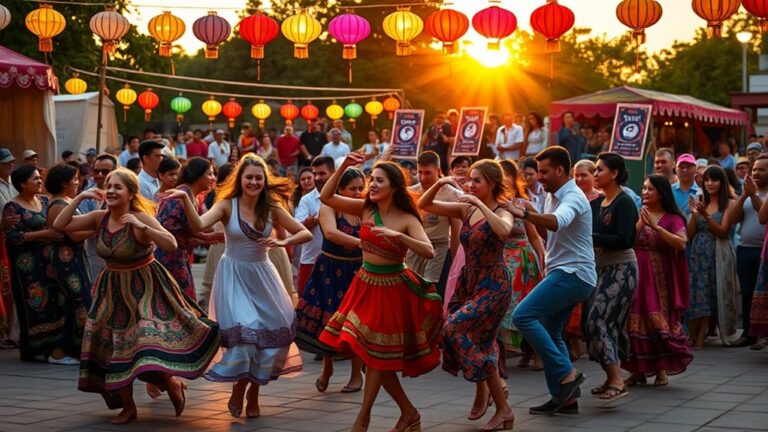
Music shapes your dance experience by guiding movements and conveying emotions. It acts as the rhythm's heartbeat, inspiring unique styles from hip-hop to ballet. Each genre influences choreography, pushing you to express feelings in ways that resonate culturally and historically. As you tap into music's emotional strength, you'll find it eases anxiety and sparks creativity in your movements. Iconic performances highlight this relationship, transforming dance into significant storytelling. The interplay between music and dance creates an evolving fabric of artistic expression, inviting you to explore deeper into this fascinating connection.
Historical Relationship Between Music and Dance
Throughout history, music and dance have shared a deep, intertwined relationship that enriches the human experience. You can trace this bond back to ancient civilizations where dance rituals played pivotal roles in communal life. These rituals often combined rhythm and movement to convey emotions, tell stories, and connect people to their heritage. When you participate in these dances, you're not just moving; you're engaging with a tradition that has shaped societies.
In various cultures, music has served as the heartbeat of dance, guiding movements and enhancing the emotional depth of the experience. Think about the tribal gatherings where songs and dances celebrate life events, from births to harvests. These societal functions create a sense of belonging; they unite individuals in shared purpose and joy. When you join in, you become part of a larger narrative, one that transcends time and space.
As you explore different dance forms, you'll notice how they reflect the rhythms of their respective cultures. Whether it's the intricate footwork of flamenco or the lively beats of African dance, each style carries the weight of its history. Music isn't just a backdrop; it's a vital element that amplifies movement into a form of expression and liberation. By grasping this historical relationship, you can appreciate how music and dance continue to inspire and empower people, allowing you to express your own freedom through movement.
The Role of Rhythm in Dance
Rhythm serves as the backbone of dance, guiding your movements and shaping the overall experience. It creates a pulse that you can feel deep within, urging you to explore your body movement in ways that feel both natural and exhilarating. When you tap into the rhythm, you find yourself instinctively syncing with the music, allowing its beats to dictate your flow.
Musical synchronization is crucial for dancers, as it connects every step and gesture to the sound that surrounds you. You may feel the beat resonate in your core, motivating you to express yourself freely. Each beat offers a cue, a moment to leap, twist, or sway, transforming mere steps into an art form. The more you embrace the rhythm, the more you discover how it can liberate your spirit.
As you engage with the rhythm, it becomes a dance partner that leads you through different styles and tempos. Whether it's the steady thump of a drum or the syncopated notes of a jazzy tune, you can let the rhythm dictate your body movement, allowing you to lose yourself in the moment. This connection empowers you to express emotions and tell stories through your dance.
Ultimately, rhythm is what makes dance alive. So, when you hear that familiar beat, don't hesitate to let it guide you. Allow the rhythm to bring out the joy in your movements, and watch as your dance transforms into an expression of freedom and creativity.
Emotional Impact of Music on Movement
The connection between music and movement goes beyond merely keeping time; it taps into the emotional core of dance. When you hear a melody that resonates with your inner self, you can't help but feel an emotional connection that urges you to move. This isn't just about rhythm; it's about how music improves your mood and transforms your physical expression. The right song can uplift your spirit, inviting you to express feelings you might not even realize are there.
As you dance, you engage in a sensory experience where every note and beat influences your body language. Your movements become a form of communication, a way to convey emotions through expressive interpretation. Music tells a story, and your body interprets it, creating a dialogue that transcends words.
The psychological effects of music are profound; it can soothe anxiety, ignite passion, or evoke nostalgia. When you allow the music to dictate your movement, you're merely dancing—you're living a moment of musical storytelling. You might find that certain songs reveal deeper layers of emotion, pushing you to explore and express yourself in ways that feel liberating.
In this dance of life, music invites you to embrace your vulnerability and share your authentic self. So, let the music guide you, and let your movements flow freely, for in this beautiful interplay, you discover not just your dance but your very essence.
Influence of Music Genres on Dance Styles
When you explore different music genres, you'll notice how their unique rhythmic patterns shape the way you move. Each genre often carries cultural roots that inform traditional dance styles, creating a rich fabric of expression. Plus, genre-specific choreography techniques can improve your comprehension of how music influences movement in distinct ways.
Rhythmic Patterns and Movement
Various music genres shape dance styles through their unique rhythmic patterns, creating distinct movements that resonate with audiences. When you listen to jazz, you can't help but feel the urge to incorporate syncopated movements into your dance. Those off-beat accents encourage you to break free from conventional steps, allowing you to express yourself in unexpected ways.
In contrast, when you immerse yourself in the smooth flow of classical music, you might find yourself drawn to more fluid, graceful movements. The melodic improvisation inherent in styles like hip-hop invites you to play with rhythm and spontaneity, empowering you to explore your personal dance vocabulary.
Each genre offers a different heartbeat, influencing how you interpret sound through movement. Whether you’re twirling to the rapid beats of salsa or gliding to the mellow tones of R&B, you’re constantly responding to the rhythmic patterns that define the music. Embrace these variations, and let them guide your body in ways that feel authentic and liberating. The beauty of dance lies in its ability to transform sound into motion, inviting you to celebrate your individuality. As you delve deeper into each genre, you may find yourself influenced by critics’ views on experimental dance, which often challenge traditional notions of rhythm and movement. These perspectives can inspire you to break free from conventional steps and explore new ways to express yourself. Ultimately, the journey of dance is a personal one, encouraging you to blend the familiar with the avant-garde, allowing your body to articulate stories that resonate on a profound level.
Cultural Roots in Dance
Cultural roots shape dance styles profoundly, intertwining with the music that accompanies them. When you look at traditional dances, you can see how folk influences breathe life into movements. Each dance tells a story, reflecting regional variations that showcase unique cultural expressions. For instance, the lively rhythms of African drumming inspire energetic dances that celebrate community, during the graceful sways of ballet echo European heritage.
You'll find that many historical dances carry ritual significance, connecting performers to their ancestors. Dance symbolism plays a significant role too; movements often convey societal roles or narrate important events. Think about how a traditional wedding dance honors love and unity, or how a harvest dance expresses gratitude for the earth's bounty.
In these moments, you experience an intense blend of music and movement, where the essence of a culture shines through. As you explore the diverse world of dance, you'll appreciate how each style is a living demonstration to the values and beliefs of its people. By embracing these cultural roots, you celebrate the past and maintain the spirit of freedom alive in every step and beat.
Genre-Specific Choreography Techniques
Music genres shape choreography in distinct ways, guiding dancers to express the unique rhythms and emotions each style evokes. When exploring the connection between music and dance, you'll notice how different genres inspire specific movements and techniques. By embracing these influences, you can break boundaries and discover new ways to express yourself.
Here's a quick look at how various genres shape choreography:
| Music Genre | Choreography Techniques | Key Characteristics |
|---|---|---|
| Hip-Hop | Freestyle, isolation, popping | High energy, street style |
| Ballet | Structured, classical forms | Graceful lines, fluidity |
| Jazz | Improvisational techniques | Syncopation, playful movements |
| Contemporary | Fluid shifts, floor work | Emotional expression, freedom |
| Latin | Rhythmic patterns, sharp turns | Passionate, intricate footwork |
As you explore these styles, don't hesitate to experiment with improvisational techniques. Allow the music to guide your movements, giving you the freedom to investigate and create your own unique choreography. Each genre invites you to tap into your creativity and express your individuality.
Choreography Shaped by Musical Elements
Choreography thrives on the dynamic relationship between rhythm and movement, where every beat can inspire a new step. When you listen to music, you might feel the urge to move, and that's due to musical dynamics playing an essential role in shaping your dance. The ebb and flow of sound guide you, allowing your body to respond instinctively to each note. Whether it's the crescendo of a symphony or the subtle whisper of a solo piano, these elements ignite your creativity.
As you explore choreography, consider how different musical styles offer unique opportunities for innovation. Each genre provides a distinct energy, inviting you to experiment with your movements. For instance, the sharp staccato of jazz can lead to quick, punctuated gestures, whereas the smooth legato of classical music encourages fluidity and grace. Embracing these contrasts inspires your choreographic innovation and invites you to break free from conventional patterns.
You're not just interpreting music; you're creating a dialogue between sound and motion. The interplay of rhythm, melody, and harmony can evoke emotions and tell stories through your movements. Every time you choreograph, you have the ability to transform music into a visual narrative that resonates with audiences. So, let the music guide you, and don't be afraid to let your imagination soar. The relationship between choreography and musical elements is an endless expedition of exploration and expression, waiting for you to immerse yourself.
Cultural Contexts and Dance Interpretations
When you think about dance, it's crucial to reflect on how historical musical influences shape regional styles. Each culture brings its unique rhythms and sounds, creating distinct interpretations that reflect their heritage. Today, contemporary fusion trends likewise blend these elements, resulting in exciting new forms of expression.
Historical Musical Influences
Throughout history, dance has often immersed in the interplay between diverse musical influences and cultural contexts. Each era boasts its unique sounds, shaping the way you express yourself through movement. From the haunting medieval melodies that echoed in early courts to the intricate Baroque beats, music has always driven dance's evolution.
As you explore Romantic rhythms, you can feel the emotions that fuel passionate performances. The emergence of jazz improvisation added a layer of spontaneity, transforming traditional steps into a lively dialogue between dancers and musicians.
Cultural folk traditions have additionally played a crucial role, passing down stories and nurturing community through shared dances. As the world progressed, the electronic evolution introduced new dimensions, broadening possibilities for creativity. Today, you might find hip hop influence intertwining with global sounds, creating a rich mosaic of movement that celebrates diversity.
Here's a quick overview of how music has influenced dance through the ages:
| Era | Musical Influence | Dance Style |
|---|---|---|
| Medieval | Medieval melodies | Court dances |
| Baroque | Baroque beats | Ballet |
| Romantic | Romantic rhythms | Interpretive dance |
| Modern | Jazz improvisation | Hip hop |
Regional Dance Styles
Music's impact on dance varies greatly across different regions, reflecting the unique cultural contexts and interpretations that shape each style. When you explore regional dance styles, you'll discover rich traditional variations that tell stories unique to their origins. For instance, the lively rhythms of Afro-Cuban salsa pull from African heritage, creating a dance that's both expressive and deeply rooted in community.
As you plunge deeper into these regional influences, you'll notice how local music molds movements. In India, classical dances like Bharatanatyam are intricately tied to specific ragas, where every gesture and expression conveys profound meaning. The same goes for Flamenco in Spain, where the passionate strumming of guitars and clapping of hands fuel the dancer's fiery interpretation.
Each region's music doesn't just accompany the dance; it breathes life into it, allowing you to feel the pulse of the culture. Whether you're watching a traditional Irish jig or a soulful tango from Argentina, the music and dance intertwine seamlessly, showcasing not just movement, but a celebration of identity and freedom. Embrace these regional nuances, and you'll find yourself dancing through diverse cultural terrains.
Contemporary Fusion Trends
In today's lively dance scene, contemporary fusion trends are reshaping how we interpret movement and music across cultures. You'll find that these trends invite you to explore and experiment with various styles, encouraging you to break away from traditional boundaries. Through experimental fusion, dancers and choreographers are blending influences from hip-hop, ballet, and world dance forms, creating a vibrant mosaic of expression.
Innovative collaborations between musicians and dancers further enrich this dynamic environment. By working together, they push each other's limits, crafting performances that resonate deeply with audiences. You might notice how a hip-hop beat can seamlessly merge with classical melodies, inspiring you to rethink what dance can be.
These trends not only celebrate diversity but also reflect the interconnectedness of our global community. As you engage with contemporary fusion, you're part of a movement that values creativity and personal expression. So, whether you're dancing in a studio or watching a performance, embrace the freedom these trends offer, and let the music guide your movement. In this world, there are no rules—just the joy of discovery and the thrill of connection.
The Evolution of Dance in Modern Music
Dance has transformed dramatically in the realm of modern music, reflecting changes in culture, technology, and artistic expression. As you engage with this evolution, you'll notice how dance technology and social media have played pivotal roles in shaping contemporary dance styles. The accessibility of platforms like TikTok and Instagram allows dancers to showcase their creativity, pushing boundaries and inspiring new movements.
Here's a snapshot of how dance has adapted in recent years:
| Era | Key Influence | Dance Style Examples |
|---|---|---|
| 1990s | Hip-Hop and Rave | Street Dance, Breakdancing |
| 2000s | Pop and Electronica | Dance Pop, Music Videos |
| 2010s-Present | Social Media | Viral Challenges, TikTok Dances |
In each era, you can see a direct link between the music and the dance styles that emerged. The 1990s brought an explosion of hip-hop, where battles and street performances ruled the scene. With the advent of music videos in the 2000s, choreographed routines became mainstream, creating icons. Now, in the age of social media, you can participate in viral dance challenges, remixing and redefining movements at your fingertips.
This evolution celebrates freedom, encouraging you to express yourself through dance, connecting with others regardless of geography. Embrace the changes and let your passion for dance flourish in this lively, constantly changing environment!
Case Studies of Iconic Dance Performances
Iconic dance performances have a unique ability to encapsulate the essence of an era, often becoming cultural touchstones that influence generations. Think about Michael Jackson's "Thriller." This performance didn't just showcase his incredible talent; it transformed music videos and dance choreography. The intricate moves you see in that video laid the groundwork for how dance evolved in pop culture, blending storytelling with rhythm.
Then there's Madonna's "Vogue," which took inspiration from the poses of classic Hollywood stars and infused them with a modern twist. This performance wasn't just about dance; it was a bold statement of self-expression and freedom. The fusion of music and movement pushed boundaries, encouraging audiences to embrace their individuality.
Another example is Beyoncé's Super Bowl performance, where she celebrated Black culture during the time and addressed social issues. This iconic performance left an imprint on the dance evolution domain, reminding everyone that dance can be an influential vehicle for change and awareness.
In each of these cases, music served as a catalyst that amplified the dancers' messages and emotions. You can see how these iconic performances have not merely shaped the way we comprehend dance but also how they reflect the societal values of their time. By studying these moments, you'll appreciate how music and dance work hand in hand, creating a legacy that continues to inspire and empower.
Frequently Asked Questions
How Does Music Theory Influence Dance Choreography?
When you immerse yourself in music theory, you'll find rhythm patterns and melodic structures shaping your dance choreography. These elements guide your movements, helping you express emotions and tell stories. By comprehending how rhythms interact with your body, you gain the freedom to explore various styles. You'll feel the nuances in melodies, allowing you to create dynamic sequences that resonate. Embrace these principles, and watch your choreography come alive with lively energy and creativity.
Can Silence Enhance Dance Performances?
Silence, like a deep breath before a storm, can amplify the strength of a dance performance. When you embrace silence, you invite emotional resonance that speaks louder than any note. It creates a canvas for movement, allowing your body to tell stories that words can't capture. The effects of silence can stir your audience, drawing them into the depths of each gesture. In that stillness, you find freedom to express, connect, and inspire.
What Role Does Improvisation Play in Dance With Music?
Improvisation plays an essential role in dance, allowing you to express yourself freely. When you incorporate improvisational techniques, you tap into your instincts and emotions, creating spontaneous, expressive movement. This freedom lets you explore various styles and interpretations, enhancing your connection to the music. You'll find that breaking away from structured routines nurtures creativity and individuality, making your performances not just dances, but unique expressions of who you are in the moment.
How Do Dancers Select Music for Performances?
When you're choosing music for a performance, it's like picking the perfect playlist for a road trip in a vintage car. You consider the performance vibe you want to create, matching the energy and emotions of the piece. You listen closely, feeling how each track resonates with your choreography. In the end, your music selection should inspire both you and your audience, capturing the essence of your dance and elevating the entire experience.
Are There Specific Techniques for Dancing to Different Musical Instruments?
Yes, there are specific techniques you can use for dancing to different musical instruments. Each instrument has its own unique sound and rhythm interpretation, leading you to explore instrument-specific styles. For instance, as you dance to a violin, you might focus on fluid movements, whereas a drum might inspire sharper, more rhythmic steps. Embrace this freedom to express yourself, letting the instrument guide your body and creativity in every performance.
About the Author