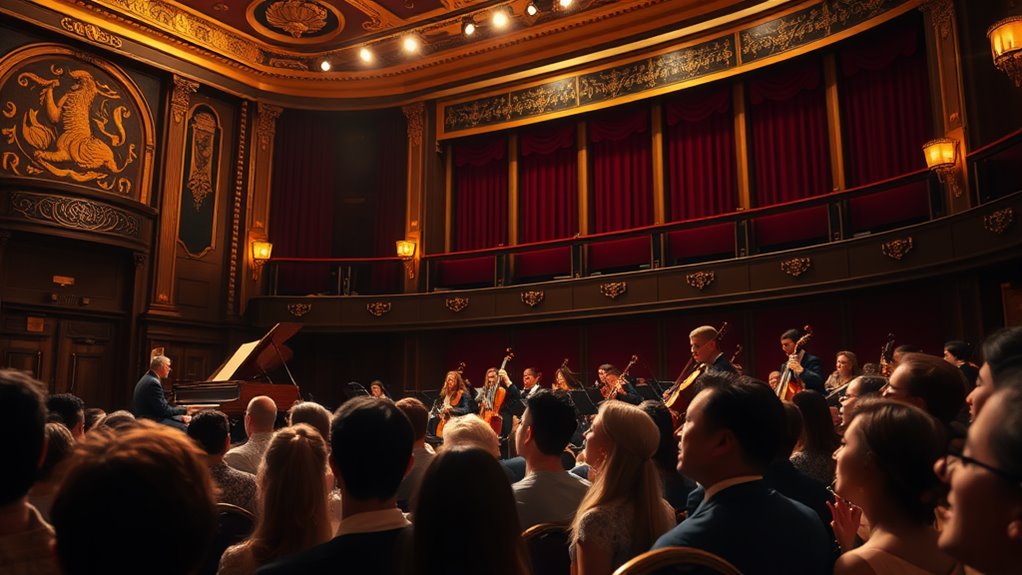
You should know several iconic classical pieces that have shaped the genre. Beethoven's *Symphony No. 9* is a monumental work, famous for its choral finale. Mozart's *Requiem* explores deep themes of life and death with haunting melodies. Bach's *Brandenburg Concertos* showcase his genius in blending instruments, during Vivaldi's *The Four Seasons* captures the essence of nature's changes. Chopin's *Nocturnes* evoke deep emotional connections. Tchaikovsky's *Swan Lake* tells a poignant ballet story, and Stravinsky's *The Rite of Spring* transformed classical music with its boldness. Discover more about these masterpieces and their lasting impact on music history.
Beethoven's Symphony No. 9
Beethoven's Symphony No. 9 is often hailed as one of the greatest musical achievements of all time. When you listen to it, you're not just hearing music; you're experiencing a significant statement of unity and hope. This symphony broke barriers, showcasing Beethoven's innovations, especially with its bold incorporation of a choral finale. The moment the choir joins in the last movement is nothing short of electrifying, transforming the symphonic form into something deeply communal.
As you explore the fourth movement, you'll notice how it echoes Friedrich Schiller's "Ode to Joy," a universal call for brotherhood. The music invites everyone to celebrate together, transcending language and cultural boundaries. This sense of belonging feels palpable, as if you're part of a grand conversation that resonates across time and space.
Beethoven's ability to meld orchestral and vocal elements was revolutionary. He didn't just compose a symphony; he created a movement. Through his innovations, he challenged the conventions of his time, encouraging you to reflect on the influence of collective joy.
Mozart's Requiem
When you investigate Mozart's Requiem, you're stepping into a profound exploration of life and death. This masterful work, left unfinished at Mozart's death in 1791, resonates deeply with anyone who grapples with the themes of mortality and redemption. The Requiem's significance lies not just in its haunting melodies but also in its emotional depth, making it a piece that connects people across time and culture.
As you listen, you can feel the raw strength of Mozart's legacy. Each movement tells a compelling story, from the solemn "Introitus" to the triumphant "Dies Irae." The blend of choral and orchestral elements creates an atmosphere that invites you to reflect on your own experiences of loss and hope. You're not merely an observer; you become part of a collective odyssey through sorrow and solace.
The Requiem showcases Mozart's genius in crafting music that speaks to the soul. The unfinished nature of the piece adds a layer of mystique, prompting questions about what might have been had he lived longer. Yet, it's this very incompleteness that invites you to engage more intimately with the music.
In embracing Mozart's Requiem, you join countless others who find meaning and connection in its impactful expressions. This piece stands as a symbol of the enduring impact of Mozart's artistry, reminding us all of the shared human experience in facing life's most profound moments.
Bach's Brandenburg Concertos
Immerse yourself in the dynamic world of Bach's Brandenburg Concertos, a collection that showcases the pinnacle of Baroque instrumental music. These six concertos, composed between 1711 and 1721, are a reflection of Bach's genius and his unparalleled ability to blend various instruments into a harmonious fabric. You'll feel the pulse of Baroque innovation as you listen, with each concerto presenting a unique character and instrumentation that captures your imagination.
As you explore each movement, you can't help but be swept away by the orchestral brilliance that defines this collection. From the spirited energy of the First Concerto to the intricate dialogues between instruments in the Third, every piece invites you into a world where melody and rhythm dance together. The way Bach juxtaposes strings, woodwinds, and brass creates a lively soundscape that feels both intimate and grand.
These concertos aren't just music; they're an experience that resonates with those who appreciate the artistry of classical compositions. Whether you're a seasoned listener or new to the genre, you'll find a sense of belonging in the rich textures and dynamic exchanges that characterize Bach's work. Each performance draws you in, encouraging you to explore the emotional depths and technical mastery that have made these concertos timeless treasures. So, let the Brandenburg Concertos be your gateway to the brilliance of Baroque music, and discover the joy they bring to every listener.
Tchaikovsky's Swan Lake
Now, let's explore Tchaikovsky's "Swan Lake," a ballet that beautifully combines an enchanting story with unforgettable music. You'll find that the narrative of love and transformation unfolds alongside stunning musical highlights that elevate the emotional depth. Get ready to experience how these elements intertwine to create a timeless masterpiece.
Story Overview
Tchaikovsky's "Swan Lake" weaves an enchanting tale of love and betrayal, centered around the tragic fate of Princess Odette. The story unfolds in a mystical environment where Odette is cursed to transform into a swan by day. As you immerse yourself in the narrative, you'll discover the intense emotions that drive the characters, especially Prince Siegfried, who falls deeply in love with Odette.
Here's a brief overview of the key elements of the story:
| Character | Role | Significance |
|---|---|---|
| Princess Odette | The cursed swan princess | Represents purity and unattainable love |
| Prince Siegfried | The noble prince | Embodies the struggle between duty and desire |
| Rothbart | The sorcerer | Symbolizes evil and deception |
| Odile | Rothbart's daughter | Represents temptation and betrayal |
Set against its historical context, "Swan Lake" showcases the cultural significance of love's intricacies and the consequences of betrayal. It's a timeless story that resonates with anyone who's ever felt passion or loss, inviting you to connect with its characters on a profound level.
Musical Highlights
Engaging audiences with its rich melodies and dramatic orchestration, "Swan Lake" showcases Tchaikovsky's genius in blending music with emotion. You can feel the tension and beauty in every movement, creating a world where love and despair intertwine. The ballet's score reflects Tchaikovsky's own musical evolution, shifting from classical forms to more expressive, romantic styles.
As you listen, you'll find yourself captivated by the iconic themes, like the haunting "Swan Theme," which evokes the delicate grace of Odette. Each note pulls you deeper into the narrative, making it impossible to connect with the characters' struggles.
"Swan Lake" has made a lasting cultural impact, influencing not just ballet but also contemporary music and film. Its themes of transformation and yearning resonate universally, reminding us of our own paths.
Whether you're a lifelong fan of classical music or just starting to explore, "Swan Lake" invites you into a community that appreciates its beauty. So, let the music wash over you and join others who share this timeless experience. You'll find that the emotional depth of Tchaikovsky's work speaks to the heart of what it means to be human.
Vivaldi's The Four Seasons
Often celebrated as one of the most beloved works in classical music, Vivaldi's "The Four Seasons" is a lively set of violin concertos that evokes the essence of each season through its dynamic melodies and rich harmonies. This masterpiece showcases Vivaldi's innovation, using seasonal motifs to paint vivid musical vistas that resonate with listeners of all ages.
As you listen, you can almost feel the crisp air of autumn or the warmth of summer's sun. Each concerto is carefully crafted to reflect the unique characteristics of its respective season. For instance, the energetic passages in "Spring" bring to mind blooming flowers and the joyful sounds of nature awakening. Conversely, "Winter" captures the chill of frost and the stillness of a snow-covered panorama, creating an emotional connection that pulls you in.
Vivaldi's ability to convey such detailed imagery through music is an indication of his genius. You might find yourself tapping your foot to the lively rhythms or swaying gently to the softer melodies, feeling a sense of belonging to the world he's created. The way he intertwines the violin with orchestral accompaniment invites you to experience each season as if you were living it.
Whether you're a seasoned classical music fan or just starting your expedition, "The Four Seasons" offers a beautiful entry point. Its timeless appeal speaks to a shared human experience, making it a piece everyone should know and cherish.
Chopin's Nocturnes
Chopin's Nocturnes are a stunning showcase of emotional depth and expression that resonate with listeners on many levels. You'll find notable compositions that highlight his unique style, blending lyrical melodies with intricate harmonies. Their influence on modern music is undeniable, shaping the way we think about piano compositions today.
Emotional Depth and Expression
Though many composers have explored the depths of human emotion, few have done so with the same intensity as Chopin in his nocturnes. These pieces resonate deeply with listeners, creating a sense of belonging through shared feelings of love, sorrow, and longing. Chopin's expressive techniques—like rubato and dynamic contrasts—invite you to feel each note, drawing you into an intimate dialogue with the music.
To highlight the emotional depth of Chopin's nocturnes, consider the following table that illustrates how different elements contribute to their emotional resonance:
| Element | Description | Emotional Impact |
|---|---|---|
| Melody | Lyrical and flowing | Evokes nostalgia and warmth |
| Harmony | Rich and complex | Creates tension and release |
| Rhythm | Flexible and varied | Improves the feeling of yearning |
When you listen to Chopin's nocturnes, you experience a profound connection to your own emotions. Each piece becomes a mirror reflecting your innermost thoughts, and in that shared space, you find a sense of community with others who feel the same. It's this emotional depth that makes Chopin's nocturnes truly unforgettable.
Notable Compositions Overview
The emotional depth found in Chopin's nocturnes is matched by their remarkable diversity in composition. These pieces, often characterized by their lyrical melodies and intricate harmonies, showcase the genius of one of history's most notable composers. Chopin wrote these works during the Romantic era, a time when music began to express individual feelings and experiences more profoundly.
You'll notice how each nocturne captures a different mood, from the haunting beauty of Nocturne in E-flat Major, Op. 9, No. 2, to the passionate intensity of Nocturne in C-sharp Minor, Op. posth. Each piece reflects Chopin's unique ability to blend technical skill with deep emotion, making them resonate with listeners across generations.
Understanding the historical context of these compositions amplifies your appreciation. As Europe faced social and political upheaval in the 19th century, Chopin's nocturnes offered a reprieve and a connection to the human experience. By immersing yourself in these works, you join a community of music lovers who recognize the timeless beauty and emotional richness that Chopin so masterfully conveyed.
Influence on Modern Music
How have Chopin's nocturnes shaped modern music? Their rich emotional depth and innovative structures have left a lasting impression on various genres, influencing countless artists and composers. You might be surprised by how they've permeated today's music environment. Here are a few ways these pieces have made their cultural impact:
- Emotional Expression: Chopin's nocturnes convey profound feelings, inspiring singer-songwriters to explore vulnerability in their lyrics.
- Harmonic Complexity: The intricate harmonies found in nocturnes have informed jazz musicians, pushing genre evolution and improvisation techniques.
- Melodic Inspiration: Many pop and indie artists borrow melodic lines from these nocturnes, creating a bridge between classical and contemporary styles.
- Atmospheric Qualities: The ambient soundscapes of electronic and cinematic music often reflect the serene and introspective qualities of Chopin's work.
Debussy's Clair De Lune
Debussy's "Clair De Lune," with its delicate melodies and evocative harmonies, captures the essence of moonlight in a way that resonates deeply with listeners. When you listen to this piece, you can almost feel the serene glow of the moon reflecting on still waters. Debussy's impressionist style embraces subtlety, allowing you to immerse yourself in a realm of shifting emotions and vivid imagery. Each note unfolds like a gentle breeze, creating a soundscape that feels both familiar and ethereal.
As you explore "Clair De Lune," you'll notice how the music invites you to connect with your own feelings. The emotional resonance of the piece speaks to universal experiences of love, longing, and reflection. It's easy to envision yourself in a quiet moment, perhaps gazing at the night sky as the music envelops you. This sense of belonging to something greater is what makes Debussy's work so impactful.
Whether you're a seasoned classical music lover or just beginning your expedition, "Clair De Lune" is a piece that welcomes you with open arms. It encourages you to embrace your emotions and find solace in its beauty. So, the next time you listen, allow yourself to be carried away on its gentle waves. Let the music wrap around you, and discover how Debussy's enchanting composition can deepen your appreciation for the realm of classical music.
Stravinsky's The Rite of Spring
In 1913, "The Rite of Spring" premiered and instantly transformed the terrain of classical music. Igor Stravinsky's groundbreaking work shocked audiences with its intense rhythms and dissonant harmonies, marking a radical departure from traditional forms. You can't help but feel the raw energy and ritual significance echoing through the music, as it tells a story of ancient pagan customs and the renewal of life through sacrifice.
Here are four reasons why "The Rite of Spring" remains crucial:
- Ritual Significance: The ballet explores themes of fertility and sacrifice, immersing you in a world where nature's forces reign supreme.
- Musical Innovation: Stravinsky challenged conventions with complex rhythms and unexpected shifts in tonality, reshaping what classical music could be.
- Cultural Impact: Its premiere sparked riots, illustrating how art can provoke and unite or divide communities. You're part of a legacy that understands music's influence.
- Enduring Legacy: Today, it influences genres beyond classical, from jazz to film scores, reminding you that innovation knows no bounds.
Frequently Asked Questions
What Instruments Are Featured in These Classical Pieces?
When you explore classical music, you'll notice the rich orchestral arrangements that bring each piece to life. Different instrument roles create unique soundscapes; violins often lead with their soaring melodies, as cellos provide warmth and depth. Woodwinds add color, and brass instruments contribute strength and brilliance. By comprehending these instruments and their roles, you'll deepen your appreciation and feel even more connected to the timeless beauty of orchestral music.
How Long Do These Compositions Typically Last?
When you're exploring how long compositions typically last, you'll notice a lot of timing variations. Most classical pieces range from a few minutes to over an hour, depending on the genre and complexity. Duration analysis reveals that shorter works, like concertos, might last around 20 minutes, whereas symphonies can stretch to 40 minutes or more. Comprehending these variations helps you appreciate the artistry behind each piece and lets you connect more deeply with the music.
Are There Any Famous Performances of These Works?
Envision standing in a grand concert hall, the air buzzing with anticipation. When you think of famous performances, names like Leonard Bernstein and Herbert von Karajan come to mind, known for their iconic recordings. These legendary conductors brought masterpieces to life, creating moments that resonate with listeners. You can feel the passion and artistry in their interpretations, connecting you to a rich tradition that unites music lovers across generations. You belong to this legacy.
What Historical Context Influenced These Compositions?
To understand the historical context that influenced these compositions, you need to contemplate the Romantic Era's emphasis on emotion and individualism. This period was shaped by cultural influences like nationalism, which inspired composers to express their national identities. You'll notice how personal experiences and societal changes seeped into their works, creating music that resonates deeply. By exploring these influences, you'll feel a greater connection to the pieces and the artists behind them.
How Can I Listen to These Pieces for Free?
Listening to beautiful music shouldn't feel like chasing shadows. You can explore classical masterpieces for free on streaming platforms like Spotify and YouTube. Just search for playlists or specific pieces, and you'll be surrounded by stunning sounds. Online radio stations likewise offer great options, letting you enjoy curated selections without spending a dime. So, grab your headphones, and immerse yourself in the harmony that connects us all!
About the Author