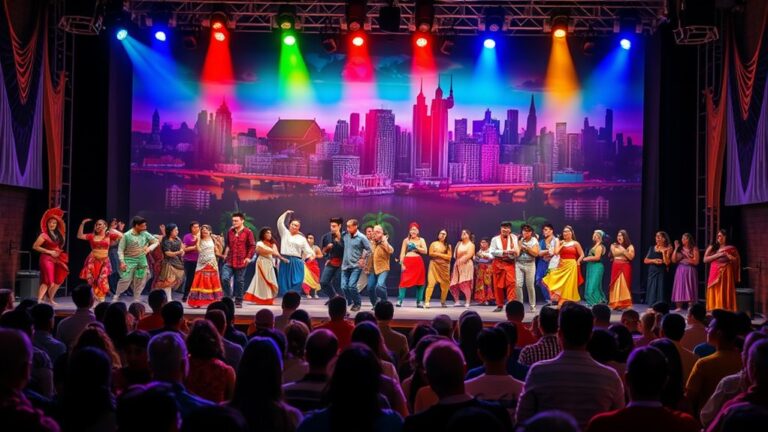
Broadway revivals rejuvenate classic works by reinterpreting their narratives for modern audiences, ensuring their relevance. These productions often use innovative staging techniques and technology to create immersive experiences that resonate emotionally. Diverse casting reflects a commitment to representation, enriching storytelling and challenging traditional norms. Moreover, contemporary themes such as social justice are highlighted, prompting critical discussions about societal values. By engaging with familiar tales through fresh perspectives, revivals cultivate broader community connections and preserve theatrical heritage, offering a dynamic platform for change. Discover how these elements intertwine to redefine classics in today's context.
The Importance of Revivals
Reviving classic Broadway productions serves not simply to honor their historical significance but also to introduce their narratives and themes to new generations. The importance of revivals lies in their ability to bridge the gap between the past and the present, ensuring that the influential messages embedded within these works resonate with contemporary audiences. Each revival stands as a reflection of the timeless relevance of the stories being told, allowing for a renewed exploration of issues such as identity, love, and societal transformation.
The revival significance extends beyond mere nostalgia; it provides a platform for critical reflection on how these narratives interact with current cultural and social dynamics. By reinterpreting classic works, directors and performers can shed light on the intricacies of modern life, offering fresh perspectives that challenge audiences to rethink their values and beliefs. This dynamic process not only revitalizes the original material but also encourages dialogue about the evolving nature of the human experience.
Moreover, revivals play an essential role in preserving the legacy of theatrical craftsmanship. They serve as educational tools for aspiring artists, imparting the skills, techniques, and emotional depth that define the art form. In this respect, each revival contributes to the broader cultural mosaic, ensuring that the lessons learned from the past inform the trajectory of future artistic endeavors. In the end, the importance of revivals lies in their ability to transform, engage, and inspire, making them a significant aspect of Broadway's enduring allure.
Innovative Staging Techniques
The revival of classic Broadway productions often paves the way for innovative staging techniques that breathe new life into familiar narratives. These techniques not just engage audiences but additionally raise the storytelling to unprecedented heights. By reimagining the physical space of the theater, directors and designers create immersive experiences that captivate and enthrall.
Modern revivals utilize technology in ways that improve visual storytelling, utilizing projections, dynamic lighting, and intricate set designs to forge deeper connections between the narrative and the audience. For instance, the integration of augmented reality can transport viewers into the heart of the action, allowing them to experience the drama from multiple perspectives. This shift from traditional staging to more fluid, experiential setups transforms the theater into a living canvas, where the lines between performer and audience blur.
Moreover, innovative staging techniques often emphasize the emotional undercurrents of classic works, allowing for a fresh interpretation that resonates with contemporary themes. By employing non-linear storytelling or interactive elements, productions invite patrons to not merely observe but to participate in the unfolding drama. This engagement nurtures a sense of agency, enabling audiences to explore the intricacies of the storyline and its characters.
In essence, the application of innovative staging techniques in Broadway revivals is not merely about aesthetics; it is a strategic approach that rejuvenates timeless tales, ensuring they remain relevant and impactful in today's cultural environment. Through these transformative techniques, the strength of storytelling on stage reaches new zeniths, compelling audiences to experience the magic of theater like never before.
Diverse Casting Choices
Diverse casting choices in Broadway revivals have become increasingly significant, reflecting a commitment to representation on stage. This shift not just enriches the storytelling experience but additionally invites fresh perspectives that challenge traditional narratives. As audiences embrace this evolution, the potential for deeper connections with the material and performers becomes evident.
Representation on Stage
As the scenery of Broadway evolves, the push for greater representation on stage has become a pivotal focus for both creators and audiences alike. This transformation is not simply a trend; it reflects a profound shift in the direction of intersectional narratives that resonate across diverse demographics. The incorporation of inclusive storytelling allows productions to transcend traditional boundaries, enriching the theatrical environment by showcasing a multitude of voices and experiences.
Diverse casting choices are crucial in this endeavor, as they challenge the historical norms of representation in theater. By reimagining classic roles through a contemporary lens, revivals can breathe new life into familiar stories, making them relevant to today's audience. This approach not only amplifies marginalized voices but additionally invites reflection on the influence dynamics inherent in storytelling.
Moreover, the impact of representation extends beyond the stage, influencing societal perceptions and encouraging dialogue about identity, culture, and belonging. As Broadway embraces this responsibility, it lays the groundwork for a more inclusive future, one where every individual can see themselves reflected in the narratives being told. The momentum generated by these changes is both inspiring and necessary, marking a critical evolution in the art of theater.
Fresh Perspectives Emergence
With a commitment to evolving narratives, fresh perspectives in casting are reshaping the scenery of Broadway revivals. This transformative approach is not simply a trend; it is a significant movement that challenges traditional norms and invites audiences to engage with familiar stories in unprecedented ways. By embracing diverse casting choices, productions are promoting fresh interpretations that resonate with a broader spectrum of experiences and cultures.
Directors and creators are utilizing unique visions that reflect contemporary society, empowering artists from varied backgrounds to bring their own narratives to iconic roles. This shift not only improves the authenticity of the performance but additionally amplifies the emotional depth of the characters, allowing audiences to connect on a more profound level.
The impact of these diverse casting decisions extends beyond the stage; it cultivates a richer dialogue around representation and inclusivity within the arts. As Broadway revivals continue to embrace innovative casting strategies, they are not just breathing new life into classic works but also establishing a dynamic platform for change that resonates with the influence of modern storytelling. This evolution is an indication of the strength of diversity and the importance of seeing ourselves reflected in the stories we cherish.
Modern Interpretations of Themes
Modern interpretations of themes in Broadway revivals reflect a sharp awareness of contemporary social issues, allowing productions to resonate with today's audiences. By integrating diverse casting choices and innovative staging techniques, these revivals not just celebrate the original works but additionally recontextualize them for a new generation. This evolution enriches the theatrical experience, inviting deeper engagement and reflection on relevant societal narratives.
Contemporary Social Issues
Contemporary Broadway revivals often serve as a mirror reflecting the pressing social issues of today, reinterpreting classic narratives to resonate with modern audiences. This dynamic transformation not merely revitalizes the storytelling but additionally amplifies themes of social justice and community engagement, compelling viewers to confront uncomfortable truths.
Through innovative staging and fresh interpretations, these revivals address critical issues, making them relevant for a new generation. Consider the following elements:
- Gender Equality: Revivals highlight the struggles and triumphs of women, challenging patriarchal narratives.
- Racial Identity: Classic works are reimagined to explore race relations and cultural heritage, encouraging dialogue on systemic inequality.
- LGBTQ+ Representation: Themes of love and identity are brought to the forefront, showcasing diverse experiences and advocating for acceptance.
- Mental Health Awareness: The portrayal of characters grappling with mental health issues encourages open conversations about stigma.
- Environmental Concerns: Revived narratives often incorporate themes of sustainability, reflecting the urgency of ecological responsibility.
Diverse Casting Choices
In recent years, diverse casting choices have emerged as a significant tool in Broadway revivals, transforming traditional narratives into inclusive representations of society. By embracing color blind casting, productions not merely challenge preconceived notions of race but additionally expand the emotional depth and relatability of classic characters. This approach allows actors from varied backgrounds to inhabit roles traditionally defined by whiteness, thereby enriching the storytelling experience and resonating with a broader audience.
Furthermore, gender swapped roles have become a potent means of reexamining themes of dominance, agency, and identity. When a male character is portrayed by a female actor, or vice versa, the dynamics of the narrative shift, prompting audiences to question societal norms and expectations. This reinterpretation not merely highlights the fluidity of gender but furthermore encourages a more nuanced discussion surrounding the essence of the characters involved.
Diverse casting choices in Broadway revivals are more than just a trend; they represent a pivotal movement in the direction of inclusivity and representation, finally nurturing a more profound comprehension of the human experience. As these practices continue to evolve, they promise to reshape the scenery of American theater for generations to come.
Innovative Staging Techniques
As Broadway revivals embrace diverse casting choices, they similarly increasingly incorporate innovative staging techniques that reinterpret classic themes for today's audiences. These modern interpretations utilize state-of-the-art technology and creative design to forge immersive experiences that resonate with contemporary viewers. By reimagining the physical space of the theater, directors and designers uplift the narrative through dynamic visual storytelling.
Key strategies include:
- Multimedia Integration: Employing projections and digital backdrops to improve narrative depth.
- Flexible Set Design: Utilizing modular sets that transform to reflect varying emotional environments.
- Audience Interaction: Engaging viewers directly, blurring the line between performer and spectator.
- Soundscapes: Incorporating innovative sound design that envelops the audience, deepening the emotional experience.
- Symbolic Props: Using minimalistic yet impactful objects to convey complex themes succinctly.
These techniques not just amplify the emotional impact of classic works but invite new interpretations and discussions. As a result, the revival scene is not merely a nostalgic homage; it is a bold redefinition of what theater can achieve, ensuring that timeless stories continue to thrive in a swiftly changing cultural climate.
Engaging New Audiences
Broadway revivals frequently seek innovative ways to engage new audiences, recognizing the importance of attracting a diverse demographic to sustain the theater's relevance. By strategically targeting demographics that may have previously overlooked traditional productions, these revivals aim to transform the theater-going experience into a formidable cultural event. This purposeful engagement is not solely about filling seats; it is about forging connections that resonate deeply with today's society.
The integration of modern technology, such as social media platforms and interactive marketing strategies, facilitates a dynamic dialogue with potential attendees. By comprehending the preferences and values of various audience segments, producers can craft experiences that captivate and inspire. This approach not only drives ticket sales but likewise improves the overall impact of the production, nurturing a sense of community among viewers.
Additionally, revivals often incorporate contemporary themes and diverse casting to reflect the multifaceted nature of modern life. This commitment to inclusivity broadens the appeal of classic works, inviting a spectrum of voices and perspectives that enrich the narrative. By doing so, theaters can raise audience engagement, creating an environment where patrons feel seen, heard, and valued.
Ultimately, the success of Broadway revivals hinges on their ability to adapt and evolve, ensuring that the stories they tell remain relevant to a new generation. In the pursuit of theatrical excellence, engaging new audiences is not merely an objective; it is a strategic imperative that will secure the future of the arts on this iconic stage.
Preserving Theatrical Heritage
Engaging new audiences is crucial, yet it must coexist with efforts to preserve the rich theatrical heritage that defines the Broadway experience. The practice of theatrical preservation not just safeguards the artistic legacy of iconic productions but likewise guarantees that their cultural significance resonates through generations. As Broadway revivals breathe new life into classic works, they simultaneously honor the traditions that have shaped the theatrical environment.
To achieve a balanced approach to preservation and innovation, several strategies must be implemented:
- Archival Documentation: Maintaining thorough records of performances, scripts, and production designs.
- Community Engagement: Involving local artists and scholars in discussions about the importance of theatrical history.
- Educational Programs: Offering workshops and seminars focused on the techniques and themes of classic works.
- Support for Original Casts: Encouraging the participation of original cast members in revivals to share their experiences and insights.
- Collaboration with Cultural Institutions: Partnering with museums and libraries to create exhibitions that celebrate Broadway's history.
These initiatives not just protect the artistic integrity of classic productions but likewise elevate their relevance in contemporary discourse. By prioritizing theatrical preservation, Broadway can guarantee that its storied past informs its dynamic future, cultivating an environment where both legacy and innovation thrive. The enduring influence of theater lies in its ability to reflect society, and preserving its heritage is paramount to maintaining that impactful dialogue.
Impact on Cultural Conversations
The impact of Broadway revivals on cultural conversations is profound, as these productions often serve as a lens through which contemporary societal issues are examined and debated. By reinterpreting classic works, these revivals not only breathe new life into timeless narratives but also highlight their cultural relevance in today's context. The dialogue ignited by these performances can provoke thought, inspire action, and promote a deeper comprehension of the pressing issues that shape our society.
Broadway revivals act as a mirror reflecting societal challenges such as race relations, gender identity, and economic disparity. The conversations they inspire extend beyond the theater, influencing public opinion and policy discussions. As audiences engage with these themes, they are compelled to reflect on their own beliefs and the societal impact of the narratives at play.
| Revival | Key Theme | Cultural Relevance |
|---|---|---|
| "West Side Story" | Immigration & Identity | Examines the immigrant experience in America |
| "Angels in America" | LGBTQ+ Rights | Highlights the ongoing fight for equality |
| "The Color Purple" | Race & Empowerment | Celebrates resilience amidst racial injustice |
Through the influence of performance, Broadway revivals stimulate essential conversations that can lead to transformative societal change. In this manner, they are not merely entertainment but rather significant platforms for engaging with and challenging the status quo. The narratives unfold before us, urging reflection and action in a world that demands both.
Frequently Asked Questions
How Do Revivals Affect Ticket Sales for Original Productions?
Revivals greatly influence ticket sales for original productions by creating renewed interest and visibility. As audiences flock to experience familiar narratives, ticket pricing often sees strategic adjustments, reflecting heightened demand. Sales trends indicate that revivals can lead to increased attendance not just for the revived shows but additionally stimulate interest in original productions. This interconnected dynamic improves overall revenue streams, allowing theaters to capitalize on nostalgic sentiments and contemporary interpretations alike.
What Are Some Notable Failures of Broadway Revivals?
Broadway revivals can be as exhilarating as a rollercoaster ride, but not all ventures reach dizzying heights. Some notable failures, such as the ill-fated revival of "Carrie," suffered from poor audience reception and critical disdain, leading to swift closures. Similarly, "The Little Mermaid" struggled to capture the magic of its animated predecessor. These instances highlight the precarious nature of revivals, where the expectations can far outweigh the actual artistic execution, resulting in disheartening outcomes.
How Do Revivals Influence the Careers of Emerging Artists?
Revivals serve as a significant platform for emerging talent, providing invaluable career opportunities that can enhance their visibility within the industry. By participating in these productions, new artists gain access to seasoned professionals and established networks, improving their artistic skills and career trajectories. Additionally, successful performances in revivals can lead to increased demand for their work, solidifying their presence in a competitive environment and nurturing future collaborations that propel their careers forward.
What Role Do Critics Play in the Success of Revivals?
The role of critics in the success of theatrical revivals is pivotal yet often underestimated. Their assessments can either catapult a production into the spotlight or cast a long shadow, affecting its revival longevity. A well-articulated critique can amplify a show's strengths, attracting audiences and investors. Conversely, negative reviews may stifle enthusiasm and dampen ticket sales. In the end, the critic's impact serves as a double-edged sword, shaping public perception and influencing the fate of the revival.
Are There Any Legal Issues Involved in Reviving Classic Shows?
Reviving classic shows involves traversing complex legal terrain, particularly concerning copyright restrictions and licensing agreements. The original creators or their estates often retain rights that dictate how a work can be adapted or performed. Producers must secure appropriate permissions and negotiate terms, ensuring compliance with intellectual property laws. Failure to address these legalities can result in costly disputes, thereby jeopardizing the revival's success and undermining the artistic vision intended for these timeless works.
About the Author