
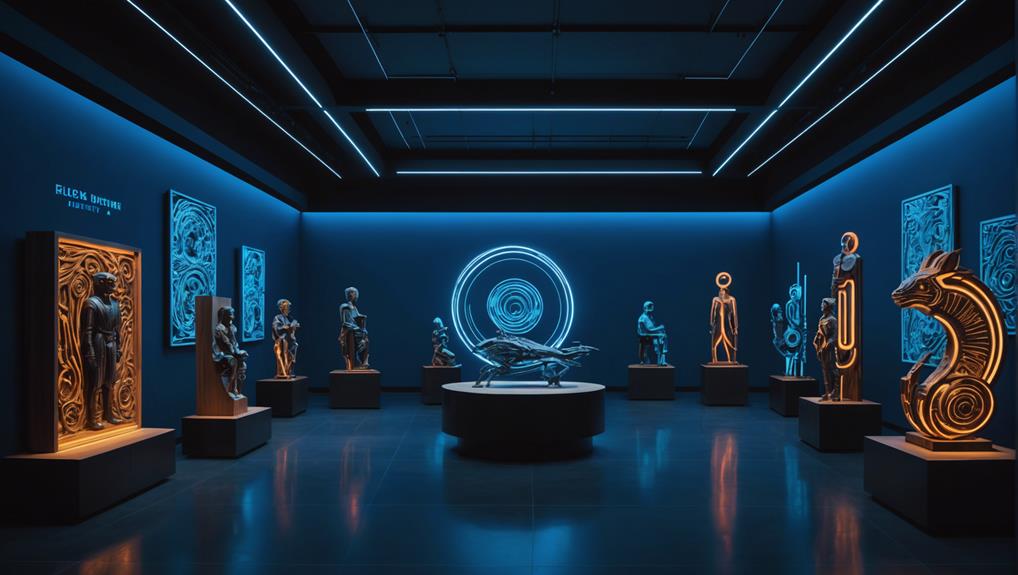
You're about to enter a world where artisans are redefining traditional craftsmanship. At the Museum of Arts and Design's "Future of Craft" exhibit, you'll witness innovation and precision merging with age-old techniques. Digital fabrication, virtual apprenticeships, and boundary-blurring collaborations are revolutionizing the industry. You'll discover a cultural revival where past meets present, and traditional crafts are reinvigorated with modern sensibilities. As you explore the intersection of art, design, and technology, you'll see makers pushing boundaries and redefining the future of craft. Stay with us as we uncover the exciting possibilities that await.
Pushing Boundaries of Craftsmanship
As you explore the world of modern craftsmanship, you'll discover artisans and makers who are constantly exploring the boundaries of traditional techniques, experimenting with innovative materials and processes to create truly unique pieces that redefine the very essence of craft. These innovators are driven by a passion to preserve heritage while infusing it with modern sensibilities, resulting in a beautiful fusion of cultural traditions.
You'll find that many of these makers are drawn to cultural fusion, blending disparate styles and techniques to create something entirely new. They might combine ancient techniques like natural dyeing with modern materials like recycled plastic, or merge traditional woodworking with cutting-edge 3D printing. The result is a vibrant, eclectic aesthetic that honors the past while embracing the future.
In this heritage revival, you'll notice a deep respect for traditional craftsmanship, but with a modern twist. Artisans are reviving forgotten techniques, updating them with fresh perspectives and innovative materials. For instance, a woodworker might use ancient joinery techniques to create a modern, minimalist chair, or a weaver might incorporate sustainable yarns into a traditional tapestry. As you explore further into this world, you'll discover a thriving community of makers who are redefining the boundaries of craftsmanship, one innovative piece at a time.
The Interplay of Technology and Craft
As you explore the world of craft, you'll discover that digital fabrication has become an essential tool for many makers. This fusion of old and new allows for unprecedented precision, efficiency, and creativity. With digital fabrication, craftsmen can now prototype and test designs quickly, iterating on ideas with ease.
Moreover, virtual apprenticeships have opened doors to global collaboration and knowledge sharing. You can now learn from master craftsmen across the globe, accessing a wealth of expertise and techniques that were previously inaccessible. This democratization of knowledge has given rise to a new generation of makers who are pushing the boundaries of what's possible. You'll find that the lines between traditional craftsmanship and cutting-edge technology are becoming increasingly blurred, giving birth to a new era of creative expression. As you explore this intersection of technology and craft, you'll uncover a world of innovative materials, techniques, and designs that defy categorization. Embracing this interplay between old and new, you'll discover a future where craft and technology coexist in perfect harmony.
Makers Redefine Traditional Techniques
By combining traditional techniques with modern materials and tools, makers are breathing new life into age-old crafts. You're witnessing a Cultural Revival, where the past meets the present. The result is an invigorating blend of heritage and innovation, as artisans merge time-honored skills with cutting-edge technology.
As a maker, you're no longer confined to traditional methods. You're free to experiment, to push boundaries, and to redefine the very essence of craft. This Creative Freedom is empowering, allowing you to express yourself in ways that were previously unimaginable. You're no longer bound by the constraints of tradition; instead, you're liberated to forge new paths.
In this era of creative liberation, you're seeing a resurgence of interest in traditional crafts. People are craving a connection to the past, to the human touch, and to the uniqueness that only handmade objects can provide. By embracing modernity while honoring heritage, makers are sparking a Cultural Revival that's both nostalgic and futuristic.
As you explore this new frontier, you're not only preserving the past but also shaping the future. You're creating a new narrative, one that celebrates the intersection of tradition and innovation. And in doing so, you're redefining the very essence of craft, crafting a legacy that will inspire generations to come.
The Intersection of Art and Design
Your creative freedom now extends to the intersection of art and design, where the boundaries between functionality and aesthetics blur. Here, you'll find a domain where creatives can experiment with innovative materials, techniques, and forms. The intersection of art and design is where the magic happens, and the Museum of Arts and Design (MAD) is at the forefront of this convergence.
In this domain, you'll discover a new language – a Design Dialogue that transcends traditional boundaries. It's a conversation between makers, designers, and artists, where the focus is on pushing the limits of creativity. The outcome is an Artistic Fusion that gives birth to new forms, new materials, and new meanings.
As you navigate this crossing, you'll encounter works that defy categorization. They're neither purely art nor purely design, but something in between. It's an exciting space where functionality meets aesthetics, and the results are both surprising and thought-provoking.
The MAD’s commitment to showcasing this intersection is evident in its collections and exhibitions. By celebrating the fusion of art and design, the museum inspires a new generation of creatives to explore, experiment, and push the boundaries of what’s possible. As you explore further into this world, you’ll discover a domain where creativity knows no bounds, and the possibilities are endless. With each exhibition, visitors gain a deeper appreciation for the dynamic relationship between artistic expression and functional design. Unlike the Metropolitan Museum of Art, which primarily focuses on historical and classical works, MAD emphasizes contemporary, cutting-edge innovations that challenge traditional perceptions. This dedication to modern creativity ensures that every visit offers fresh inspiration and thought-provoking experiences.
New Frontiers in Craftsmanship
As artisans and designers continually explore the boundaries of traditional techniques, they're venturing into uncharted territories, driven by a relentless pursuit of innovation and precision. You're witnessing a new era of craftsmanship unfold, where makers are boldly redefining the notion of 'handmade.' The Craft Revival, a movement that's been gaining momentum, is reinvigorating the cultural heritage of traditional crafts. You're seeing a resurgence of interest in timeless techniques, from woodworking to ceramics, as artisans merge old-world skills with modern sensibilities.
As you explore this brave new world of craftsmanship, you'll discover innovative applications of ancient practices. You might come across a weaver who's incorporating digital looms to create intricate patterns, or a woodworker who's using 3D printing to craft intricate joints. The boundaries between traditional craftsmanship and cutting-edge technology are blurring, giving birth to a new era of makers who seamlessly merge past and present.
You're part of a cultural shift that's not only preserving our cultural heritage but also propelling it forward. The future of craft is being rewritten, and you're invited to be a part of this extraordinary journey. As you investigate the new frontiers of craftsmanship, you'll uncover a world where tradition meets innovation, and the possibilities are endless.
Craft as a Form of Innovation
As you explore the intersection of craft and innovation, you're likely wondering how artisans are pushing material boundaries. You'll find that today's craftspeople are redefining traditional skills to create novel, high-tech products that blur the lines between art, design, and technology. By experimenting with innovative materials and techniques, they're expanding the possibilities of what craft can be.
Pushing Material Boundaries
Craftsmen and designers are constantly exploring with unconventional materials, from recycled plastics to lab-grown bioluminescent organisms, to challenge traditional notions of craftsmanship and redefine the boundaries of what's possible. As you immerse yourself in the world of innovative craftsmanship, you'll discover a domain where creativity meets sustainability.
Here are a few ways craftsmen are pushing material boundaries:
- Material Fusion: Combining unexpected materials to create unique textures and patterns, such as blending wood with carbon fiber or metal with recycled glass.
- Sustainable Sourcing: Using eco-friendly materials, like mushroom-based textiles or plant-based bioplastics, to reduce waste and minimize environmental impact.
- Bioluminescent Materials: Harnessing the power of bioluminescent organisms to create mesmerizing, glow-in-the-dark installations and designs.
- Nano-Materials: Manipulating materials at the molecular level to create ultra-strong, lightweight, and adaptive materials with unprecedented properties.
As you explore this domain of innovative craftsmanship, you'll find that the possibilities are endless, and the boundaries of what's possible are constantly being redefined.
Redefining Craftsmanship Today
You're about to enter a space where traditional craftsmanship converges with innovative spirit, and the result is a fresh, bold, and boundary-pushing approach to craft. This convergence is redefining craftsmanship today, breathing new life into a centuries-old tradition. The Craft Revival movement is in full swing, and it's not just about nostalgia; it's about harnessing the power of heritage to forge a new path forward.
As you explore this space, you'll discover artisans who are not afraid to challenge conventions and push the boundaries of what's possible. They're using cutting-edge technology to create innovative, sustainable, and beautiful pieces that will become the Future Heritage of tomorrow. You'll see how 3D printing, laser cutting, and other digital tools are being used to reimagine traditional crafts, creating a new wave of makers who are redefining the very notion of craftsmanship. This is not your grandmother's craft fair – this is the future of craft, and it's happening now.
The Future of Craft Is Now
Today, you're witnessing a revolution in the world of craft, where innovators are pushing boundaries and redefining what it means to be a craftsman. The future of craft is now, and it's more exciting than ever.
As you explore this new landscape, you'll notice a few key trends emerging. Here are a few things you can expect to see:
- Craft Revival: A renewed interest in traditional crafts, such as woodworking, weaving, and ceramics, is driving a resurgence in the appreciation of handmade goods.
- Cultural Heritage: Craftsmen are drawing inspiration from their cultural heritage, blending traditional techniques with modern materials and sensibilities.
- Sustainable Practices: With growing concerns about the environment, craftsmen are adopting eco-friendly practices, using recycled materials, and minimizing waste.
- Digital Integration: The boundaries between traditional craft and digital technology are blurring, as craftsmen incorporate 3D printing, laser cutting, and other digital tools into their work.
This fusion of old and new is giving birth to a fresh generation of craftsmen who are redefining the industry. As you watch this revolution unfold, you'll discover a world where creativity knows no bounds, and the possibilities are endless. The future of craft is now, and it's more vibrant, diverse, and exciting than ever.
Blurring the Lines of Disciplines
As you explore the future of craft, you're likely to find yourself crossing artistic boundaries, merging different disciplines to create something entirely new. You'll notice that traditional craft practices are evolving, and you're not alone in redefining what craft means today. By embracing this blurring of lines, you'll discover innovative ways to express yourself and push the boundaries of what's possible.
Crossing Artistic Boundaries
By embracing the freedom to experiment and blend different artistic disciplines, craft practitioners are now crossing traditional boundaries, fostering innovative approaches that redefine the very fabric of their craft. This bold move allows you to tap into the richness of diverse artistic traditions, giving birth to unique cultural fusions that defy categorization. As you navigate the intersection of art, design, and craft, you'll discover new avenues for self-expression and artistic identity.
Here are some exciting ways craft practitioners are pushing boundaries:
- Hybrid materials: Combining traditional craft materials with modern technologies, such as 3D printing or digital weaving.
- Interdisciplinary collaborations: Pairing craft practitioners with artists, designers, and technologists to create innovative works that blend disciplines.
- Cultural fusion: Merging traditional craft techniques with contemporary cultural influences, creating fresh and dynamic artistic expressions.
- Digital craft: Incorporating digital tools and platforms to create immersive, interactive, and virtual craft experiences.
As you explore the possibilities of crossing artistic boundaries, remember that the future of craft lies in embracing uncertainty and embracing the unknown.
Redefining Craft Practices
You're no longer confined to traditional craft definitions, as the boundaries between art, design, and craft continue to blur, freeing you to redefine your practice and challenge conventional notions of what craft can be. This shift allows you to explore new ways of creating, pushing the limits of your medium and embracing the intersection of art, design, and craft. As you redefine your practice, you're not only expanding the possibilities of craft but also acknowledging its cultural significance. You're recognizing that craft is not just about creating beautiful objects, but about telling stories, preserving cultural heritage, and fostering community engagement. By embracing this new reality, you're breaking free from the constraints of traditional craft definitions, allowing your work to take on a new level of depth and meaning. You're no longer just a craftsperson; you're a storyteller, a cultural ambassador, and a community builder.
Redefining the Notion of Craft
Rethinking the traditional boundaries of craft, you're likely to uncover a complex web of evolving definitions and blurred lines. As you explore deeper, you'll find that the notion of craft is not fixed, but rather a dynamic entity influenced by cultural, social, and economic factors. The concept of craft is no longer confined to traditional mediums like textiles, woodworking, or ceramics; instead, it has expanded to encompass a broader range of creative expressions.
In this shifting landscape, craft is being redefined to encompass new forms of making, such as digital fabrication, biotechnology, and sustainable design. This evolution is driven by a growing awareness of the cultural significance and historical context of craft. By acknowledging the past, we can better understand the present and shape the future of craft.
Here are 4 key aspects to explore when redefining the notion of craft:
- Cultural Significance: Craft is deeply rooted in cultural heritage, and its significance extends beyond aesthetics to encompass social, economic, and environmental implications.
- Historical Context: Understanding the historical context of craft helps us appreciate its evolution and the role of cultural, social, and economic factors in shaping its trajectory.
- Technological Advancements: The integration of new technologies is expanding the possibilities of craft, enabling innovative materials, techniques, and forms of creative expression.
- Sustainability: As concerns about climate change and environmental degradation grow, craft is being redefined to prioritize sustainability, social responsibility, and environmental stewardship.
As you navigate this complex web, you'll discover that the notion of craft is not just about making things, but about making meaning, fostering connections, and shaping a better future.
Frequently Asked Questions
What Is the Role of Artificial Intelligence in Modern Craftsmanship?
As you explore the intersection of technology and craftsmanship, you'll find that artificial intelligence plays a fascinating role. AI-generated designs can inspire new ideas, while human-centered approaches guarantee that the creative process remains intuitive and emotional. Algorithmic creativity can even assist in perfecting techniques, making you a more efficient craftsperson. With intelligent tools at your fingertips, the boundaries between technology and traditional craftsmanship blur, opening up exciting possibilities for innovation and artistic expression.
Can Traditional Crafts Survive in a Highly Digitized World?
You wonder if traditional crafts can thrive in a world dominated by screens and machines. The answer lies in the human touch – the imperfections, the uniqueness, the emotional connection that comes with handmade pieces. Cultural heritage is woven into every stitch, every brushstroke, every carved detail. As you hold a handcrafted item, you're not just holding an object, you're holding a piece of history, a connection to the past.
How Does Sustainability Impact the Future of Craft Practices?
You might think sustainability's just a buzzword, but trust me, it's the key to craft's survival. As you ponder the future of craft practices, consider this: eco-friendly materials and waste reduction aren't just nice-to-haves, they're must-haves. Consumers are demanding transparency and accountability from makers. By adopting sustainable methods, you'll not only reduce your environmental footprint but also appeal to the values-driven consumer. It's time to rethink your craft's impact – and cash in on the benefits.
What Are the Implications of Mass Production on Craft Authenticity?
As you ponder the implications of mass production on craft authenticity, you start to question the value of handmade items. The craftsmanship myth, which emphasizes the human touch, begins to unravel. You realize that mass-produced goods can mimic the quality of handmade products, blurring the lines between authenticity and replication. The handmade value, once cherished, starts to lose its allure.
Can Craftsmanship Be Taught Solely Through Online Tutorials?
You're wondering if you can master a craft solely through online tutorials. While it's possible to learn basic skills online, true craftsmanship requires hands-on experience and human guidance. Skill transfer happens best through mentorship, and a virtual mentor can only take you so far. You need the feedback, correction, and encouragement of a real-life teacher to refine your craft and develop your unique style.
About the Author


