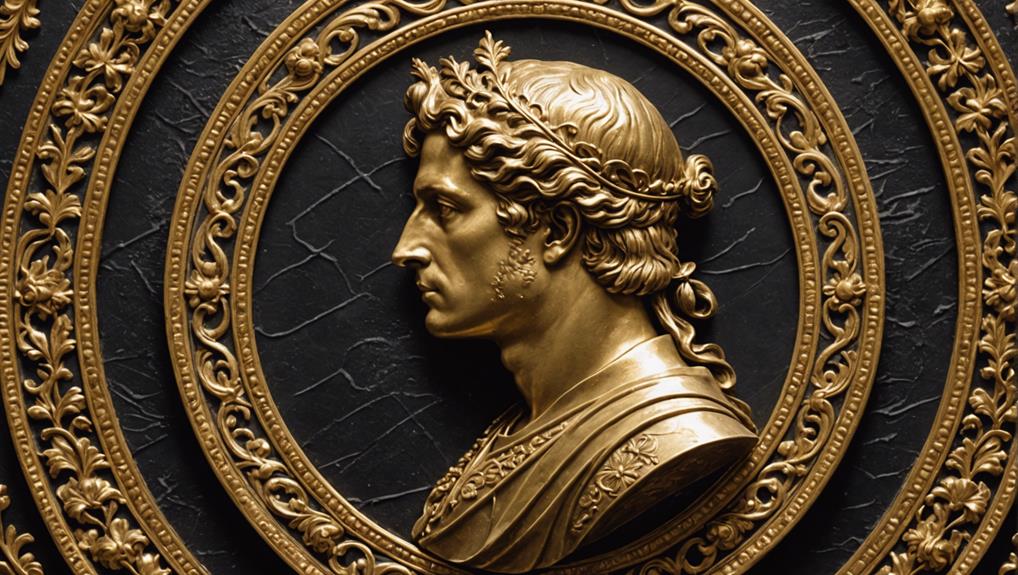
The Robert Lehman Collection at the Met Fifth Avenue presents an impressive array of Renaissance portrait medals, showcasing the expertise of master medalists like Niccolò Fiorentino and Valerio Belli. Their innovative techniques and artistic rivalries drove excellence in medal making. The collection highlights the evolution of the portrait medal tradition, influenced by ancient Greek and Roman coins, and characterized by humanism, individualism, and classical culture. As you explore this treasure trove, you'll uncover the intricate details, symbolism, and stories behind each medal, and discover the nuances of Renaissance art and history.
Renaissance Medalists and Their Craft
During the Renaissance, skilled artisans like Niccolò Fiorentino and Valerio Belli mastered the craft of medal making, elevating it to an art form. These medalists didn't just create beautiful works of art; they also left behind a legacy of artistic rivalries and intriguing biographies.
Fiorentino, for instance, was known for his impeccable attention to detail and innovative techniques. His medals often featured intricate designs and nuanced expressions, setting a new standard for the craft. Belli, on the other hand, was celebrated for his bold, expressive style, which captivated collectors and enthusiasts alike.
As these medalists honed their skills, they also engaged in artistic rivalries that drove innovation and excellence. They pushed each other to experiment with new techniques, explore different materials, and perfect their craft. These rivalries not only elevated the art form but also led to the creation of some truly remarkable pieces.
Through their medalist biographies, we gain insight into the lives and motivations of these Renaissance masters. We discover their inspirations, their struggles, and their triumphs. We see how they balanced artistic vision with commercial viability, and how they navigated the complex web of patronage and commission. By studying these biographies, we come to appreciate the intricate dance between art, commerce, and creativity that defined the Renaissance medal-making tradition.
Origins of the Portrait Medal Tradition
Skilled artisans and nobles of the Renaissance era collaborated to create a new art form: the portrait medal, a small, intricately designed piece that captured the likeness and essence of its subject. This innovative art form emerged in 15th-century Italy, where a revival of classical culture and humanism led to a renewed interest in ancient art and artifacts. The portrait medal drew inspiration from medal precursors, such as ancient Greek and Roman coins, which often featured portraits of rulers and deities. These ancient influences can be seen in the medal's use of profile portraits, inscriptions, and symbolic motifs.
The Renaissance portrait medal also borrowed from other art forms, including sculpture, painting, and numismatics. Medalists adapted techniques from these disciplines to create intricate, high-relief designs that showcased their subjects' likenesses and personalities. The medal's small size and portability made it an ideal medium for commemorating events, honoring individuals, and symbolizing power and status.
As the Renaissance progressed, the portrait medal evolved to incorporate new techniques, themes, and styles. Despite its ancient roots, the medal remained a distinctly Renaissance art form, reflecting the era's fascination with humanism, individualism, and classical culture. The portrait medal's unique blend of artistry, craftsmanship, and historical significance has captivated art lovers for centuries, offering a window into the Renaissance's vibrant cultural landscape.
Metallurgy and Medal Production Techniques
Five key metallurgical techniques enabled Renaissance medalists to craft intricate, high-relief designs that showcased their subjects' likenesses and personalities. The first technique, casting, involved pouring molten metal into a mold to create the desired shape. Renaissance medalists mastered various casting methods, such as lost-wax casting and sand-casting, to achieve high-quality results. These methods allowed for precise control over the metal's flow and cooling, enabling the creation of delicate details and textures.
The second technique, striking, involved hammering or pressing metal into a die to create the design. This method was particularly useful for producing large quantities of medals with intricate designs. Striking allowed medalists to achieve high levels of precision and consistency, making it an essential technique in Renaissance medal production.
Patina techniques, which involved applying chemicals or heat to the metal to achieve specific colors or textures, added an extra layer of depth and nuance to the medals. By mastering patina techniques, Renaissance medalists could create a range of subtle, naturalistic hues that enhanced the overall aesthetic of the medal.
These metallurgical techniques, when combined, enabled Renaissance medalists to push the boundaries of medal production. The intricate designs, high-relief details, and subtle color variations achieved through these techniques allowed medalists to capture the essence of their subjects, creating truly remarkable works of art. As a result, Renaissance portrait medals have become iconic symbols of artistic innovation and craftsmanship.
Royal and Aristocratic Portrait Medals
Renaissance royal and aristocratic portrait medals, often commissioned to commemorate significant events or solidify alliances, featured intricate designs and symbolism that conveyed the power, status, and refinement of their esteemed subjects.
These medals showcased the complexities of courtly intrigue, where alliances were forged and broken, and aristocratic lineage was paramount. Royal patronage played a significant role in the creation of these medals, as monarchs and nobles sought to solidify their legacies and assert their dynastic power.
| Medal Type | Symbolism | Purpose |
|---|---|---|
| Royal Portrait Medals | Regal iconography, heraldic symbols | Assert dynastic power, commemorate events |
| Aristocratic Lineage Medals | Family crests, noble emblems | Solidify alliances, establish noble legacy |
| Commemorative Medals | Symbols of power, status, and refinement | Mark significant events, celebrate royal patronage |
In these medals, the Renaissance fascination with classical antiquity is evident, as mythical and allegorical figures are often incorporated into the design. The subtle nuances of regal iconography and aristocratic symbolism conveyed the complexities of courtly intrigue, where alliances were forged and broken. Through these medals, the nobility and royalty of the Renaissance era left a lasting legacy, one that continues to inspire and captivate art lovers today.
Medals of Intellectuals and Artists
Renaissance portrait medals also celebrated the achievements of renowned intellectuals and artists of the time. These medals often featured likenesses of famous literary figures, such as Dante and Petrarch, as well as prominent artists, including Michelangelo and Titian. By capturing their likenesses in miniature, these medals not only honored their subjects but also provided a tangible connection to the cultural and artistic movements of the Renaissance.
Famous Literary Figures
During the Renaissance, medalists honored famous literary figures, such as Petrarch and Boccaccio, by creating exquisite portrait medals that celebrated their intellectual and artistic achievements. These medals not only showcased the likeness of the authors but also highlighted their contributions to literature and culture.
| Literary Icon | Notable Works |
|---|---|
| Petrarch | Sonnets and Odes |
| Boccaccio | The Decameron |
| Dante Alighieri | The Divine Comedy |
| Giovanni Boccaccio | On Famous Women |
Medalists of the time demonstrated their skill and artistry by capturing the likenesses of these literary icons, often incorporating symbols and motifs that reflected the authors' works. These portrait medals served as a tribute to the impact of literature on Renaissance society and the admiration for these literary giants. They continue to inspire us today, serving as a reminder of the power of art and literature to transcend time and inspire future generations.
Artists and Their Portraits
Medalists of the Renaissance era immortalized prominent artists and intellectuals, including Michelangelo and Leonardo da Vinci, by crafting exquisite portrait medals that captured their likenesses and celebrated their groundbreaking contributions to the world of art and science. These medals not only honored the artists' achievements but also provided a unique window into their artistic identity. By capturing the subtleties of their features and expressions, the medalists conveyed the essence of their creative process. The intricate details and textures of the medals allowed the artists' personalities to shine through, offering a glimpse into their inner worlds. For instance, Michelangelo's medal, with its strong facial features and piercing gaze, conveyed his intense passion and dedication to his craft. Similarly, Leonardo's medal, with its subtle smile and inquisitive eyes, hinted at his boundless curiosity and innovative spirit. Through these medals, the Renaissance artists' legacies were forever etched in metal, inspiring future generations to emulate their creative genius.
Symbolism and Iconography in Medals
She explores the symbolic language embedded in Renaissance portrait medals, where artistic nuances convey subtle messages. Iconic female figures, often depicted with specific attributes, hold the keys to revealing hidden meanings. As she examines these medals, she reveals the intricate web of symbolism woven into every detail.
Artistic Symbolism Unveiled
What secrets do Renaissance portrait medals uncover beneath their intricate designs, waiting to be deciphered by a curious observer? As one explores the world of Renaissance portrait medals, it becomes apparent that these small, intricately crafted pieces of art are more than just decorative trinkets. They conceal a rich tapestry of cultural codes, visual metaphors, and symbolic languages, all woven together to convey the artistic intentions of their creators.
Upon closer examination, the medals reveal a complex web of meanings, cleverly encoded in their design. The use of specific motifs, colors, and allegorical figures speaks to a deeper understanding of the cultural context in which they were created. By deciphering these symbolic languages, one can uncover the underlying messages, values, and ideals that the artists sought to convey. As we unravel the threads of these cultural codes, we gain a deeper appreciation for the artistic genius and intellectual curiosity that defined the Renaissance era.
Iconic Female Figures
Renaissance portrait medals featuring iconic female figures offer a fascinating window into the symbolic languages and cultural codes of the time, as these women were often imbued with powerful meanings and allegorical significance. These medals showcased female power, reflecting the cultural ideals of femininity, beauty, and virtue. The depiction of goddesses, queens, and mythological figures conveyed messages about morality, politics, and social hierarchy.
| Female Figure | Symbolism | Meaning |
|---|---|---|
| Venus | Love, Beauty, Desire | Female Power, Sensuality |
| Minerva | Wisdom, War, Crafts | Goddess Legacy, Female Intellect |
| Juno | Marriage, Childbirth, Royalty | Maternal Power, Queenly Authority |
These iconic female figures embodied the ideals of the Renaissance, celebrating female power and the goddess legacy. By examining these medals, we gain insight into the cultural values and symbolic languages of the time, revealing the complex and multifaceted nature of femininity during the Renaissance.
Hidden Meanings Revealed
Exploring their ornate surfaces, Renaissance portrait medals conceal complex layers of symbolism and iconography, waiting to be deciphered. These medals, often small in size, hold a wealth of hidden meanings, inviting the viewer to uncover their secrets. Symbolic codes, woven into the intricate designs, reveal the artist's intent, while secret languages whisper messages to those who know how to listen. Forgotten allegories, buried beneath the surface, await rediscovery, offering a glimpse into the Renaissance mind.
Unraveling messages, cleverly embedded in the medals' iconography, challenge the viewer to decipher their meaning. A delicate balance between beauty and significance, these medals embody the Renaissance spirit of intellectual curiosity and artistic innovation. As we explore the world of Renaissance portrait medals, we begin to untangle the threads of a rich tapestry, woven from the very fabric of history. By cracking the codes, we gain access to a hidden world of symbolism, where art and meaning entwine, revealing the essence of the Renaissance.
Portraits of Women in Renaissance Medals
During the Renaissance, medalists increasingly turned to portraits of women, often depicting them as virtuous and pious, as seen in the medal of Bianca Maria Sforza, wife of Emperor Maximilian I. This shift in focus towards feminine subjects allowed medalists to explore and celebrate feminine beauty, showcasing women as empowered queens and noble patrons. Medals featuring women often conveyed a sense of elegance and refinement, highlighting their role in Renaissance society as bearers of cultural and moral values.
The medal of Bianca Maria Sforza, for instance, presents her as a paragon of virtue, with her serene features and ornate dress conveying a sense of dignity and poise. Similarly, the medal of Isabella d'Este, Marchioness of Mantua, showcases her as a patron of the arts and a champion of learning, highlighting her intellectual and cultural pursuits.
These portraits of women in Renaissance medals not only captured their physical beauty but also conveyed their inner qualities, such as intelligence, wisdom, and strength. By celebrating feminine beauty and empowerment, these medals served as powerful symbols of women's agency and influence in Renaissance society. Therefore, they provide a unique window into the lives and experiences of women during this period, offering a nuanced understanding of their roles and contributions.
The Art of Engraving and Chasing
Skilled craftsmen carefully engraved and chased intricate designs onto medal surfaces, their meticulous workmanship elevating the art form to new heights. The art of engraving and chasing required essential artisan skills, which were honed through rigorous training and dedication. Craftsmen employed advanced engraving techniques, utilizing specialized metalworking tools to precision-cut minute details onto the medal surface. Chasing methods involved hammering and shaping the metal to create three-dimensional reliefs, adding depth and texture to the design.
Toolmaking traditions played a significant role in the evolution of craftsmanship, as artisans continually refined their techniques and adapted to new materials and technologies. Material selection was vital, as the choice of metal and alloys determined the medal's durability and aesthetic appeal. Design principles guided the creative process, ensuring balance, proportion, and harmony in the composition.
Throughout the Renaissance, craftsmen pushed the boundaries of their art, experimenting with innovative techniques and designs. As a result, the art of engraving and chasing underwent significant transformations, yielding increasingly sophisticated and exquisite medal designs. The mastery of these techniques enabled artisans to bring complex and intricate designs to life, resulting in breathtaking works of art that continue to inspire and awe art enthusiasts today. These remarkable advancements in craftsmanship are still celebrated in prestigious art fairs and exhibitions around the world. Events like TEFAF at the Armory showcase the enduring legacy of Renaissance artistry, highlighting the intricate detail and innovation that defined the period. Collectors and historians alike marvel at these masterpieces, recognizing their influence on contemporary design and artistic expression.
Collecting Renaissance Portrait Medals
Renaissance portrait medals, coveted by collectors and connoisseurs alike, have been treasured for centuries, their intricate designs and historical significance sparking a passion for collecting that transcends time. For many, collecting these medals is not just about acquiring rare and valuable items, but about connecting with the past and understanding the cultural and historical context in which they were created.
| Aspect | Collector's Considerations | Challenges |
|---|---|---|
| Market Trends | Staying ahead of the curve, identifying emerging trends | Avoiding auction fever, overpaying for medals |
| Display Options | Creative display solutions, showcasing medals in a unique way | Balancing preservation with accessibility |
| Storage Solutions | Protecting medals from damage, ensuring long-term preservation | Ensuring accessibility for research and appreciation |
Collectors of Renaissance portrait medals must navigate market trends, understanding the psychology behind the desire to collect and the thrill of the hunt for rare finds. They must also consider the practicalities of display and storage, ensuring that their medals are showcased in a way that honors their historical significance while also protecting them for future generations. By understanding the complexities of collecting Renaissance portrait medals, collectors can build a meaningful and significant collection that inspires and educates.
Frequently Asked Questions
Can Renaissance Portrait Medals Be Considered a Form of Propaganda?
She contends that Renaissance portrait medals can indeed be seen as a form of propaganda. By conveying political messaging through artistic manipulation, these medals promoted specific ideologies and agendas. Rulers and nobles commissioned medals to shape public opinion, disseminate their values, and legitimize their power. By doing so, they exercised control over the narrative, using art to influence and persuade the masses.
Were Portrait Medals Only Created for the Wealthy and Elite?
Like a velvet rope, social hierarchy cordoned off access to portrait medals, reserving them for the elite. These intricately crafted tokens were a status symbol, flaunting the owner's wealth and influence. However, they also served as a means of artistic expression, allowing the wealthy to commission unique pieces that reflected their power and prestige. While not exclusively reserved for the aristocracy, portrait medals were unquestionably a luxury only the privileged few could afford.
How Did Medalists Achieve Intricate Details on Small Medals?
Medalists achieved intricate details on small medals by mastering various metalworking techniques, engraving methods, and miniature artistry. With precision crafting, they utilized specialized sculpting tools to shape and refine their designs. By combining these skills, they created intricate, high-relief designs on tiny surfaces, showcasing their exceptional craftsmanship. This level of precision required patience, dedication, and a deep understanding of the materials and techniques involved.
Were Renaissance Portrait Medals Used as a Form of Currency?
She explores whether Renaissance portrait medals served as a form of currency. Surprisingly, they didn't. Instead, they held economic significance as luxury items, often gifted to nobles or used as diplomatic tokens. They didn't circulate as currency alternatives, unlike coins. Their value lay in their artistic and symbolic worth, not as a medium of exchange.
Can Modern Medals Be Considered Authentic Renaissance Reproductions?
"Get ready for a history hijack! Can modern medals really claim Renaissance authenticity? Only if 'authentic' means 'artistic license to fabricate'. Let's be real, folks! If historical accuracy is the goal, modern medals should be called out for their creative liberties. But hey, who needs facts when you can have flashy reproductions? Freedom to fantasize, anyone?"
About the Author