
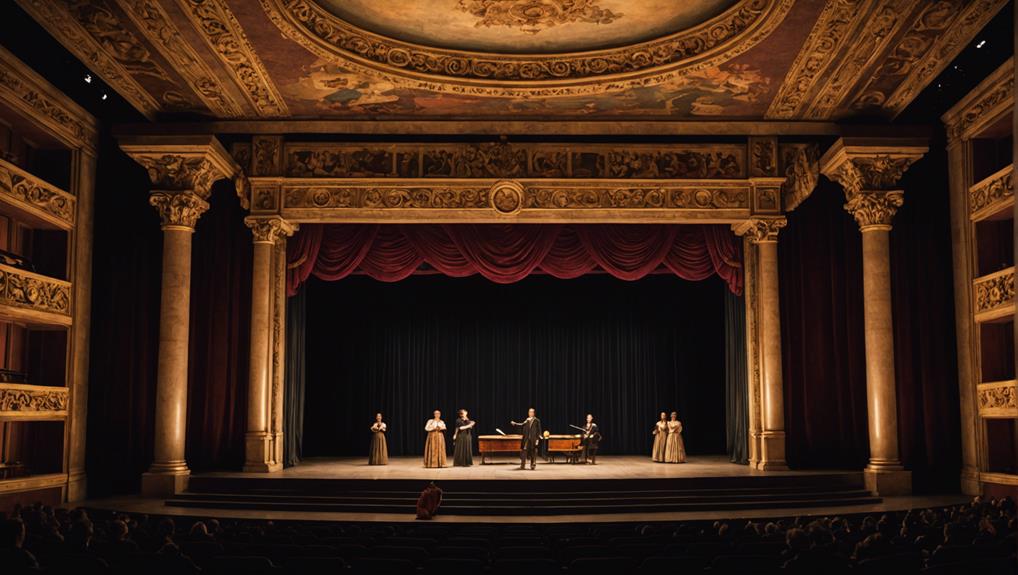
You're in for a treat as the Lincoln Center's production of The Merchant of Venice brings 16th-century Venice to life with its sleek set design, avant-garde costumes, and talented cast. This bold take on the classic tale explores love, power, and social hierarchy, with a talented cast bringing complex characters to life. As you immerse yourself in the lavish world of Venice, you'll uncover the complexities of humanity, moral ambiguities, and the timeless themes that still resonate with us today. As the curtain rises, get ready to be drawn into a world that's both historically rich and strikingly modern – and that's just the beginning.
A Bold Take on a Classic
As you settle into your seat at Lincoln Center, you're immediately struck by the unconventional staging of this centuries-old tale, a deliberate choice that sets the tone for a boldly innovative take on Shakespeare's Merchant of Venice. The production's daring approach is evident in its modern, sleek set design, which cleverly incorporates projection mapping to evoke the bustling streets of Venice. This Classic Reimagined is not your grandfather's Shakespeare; it's a Fresh Perspective that invigorates the original text with a modern sensibility.
The director's bold vision is evident in every aspect of the production, from the avant-garde costumes to the clever use of multimedia elements. The result is a show that feels both timeless and timely, speaking to universal themes that transcend centuries. You can't help but be drawn in by the sheer audacity of the production, which breathes new life into a story that's been told and retold countless times.
The cast, too, brings a youthful energy to their roles, injecting a sense of vibrancy and urgency into the performances. It's clear that the entire creative team has worked in tandem to create something truly innovative, a true masterpiece that will leave you on the edge of your seat. With its daring staging and bold vision, this production of Merchant of Venice is an absolute must-see for anyone looking for a Fresh Perspective on a timeless classic.
Love and Prejudice in 16th Century
You're immediately immersed in the world of 16th-century Venice, where love and prejudice entwine like the city's winding canals, as the production masterfully uncovers the darker underpinnings of a society built on racial and religious tensions.
The world of Merchant of Venice is a complex tapestry, woven from threads of social norms, forbidden romance, cultural clashes, and historical context. As you explore further, you'll find yourself entangled in the emotional turmoil of the characters.
Here's a glimpse into the world of 16th-century Venice:
| Social Aspect | Cultural Significance | Emotional Turmoil |
|---|---|---|
| Racial segregation | Restrictions on Jews | Anxiety and fear |
| Religious dogma | Forbidden love between races | Forbidden love between faiths |
| Social hierarchy | Wealth and power dynamics | Betrayal and deceit |
| Gender roles | Women's limited agency | Heartbreak and desperation |
| Economic disparities | Exploitation and oppression | Desperation and despair |
As the play unfolds, you'll witness the intricate dance between love and prejudice, as the characters navigate the treacherous waters of 16th-century Venice. With each scene, the stakes are raised, and the tension builds, leaving you on the edge of your seat, wondering what's to come.
A Talented Cast Shines Bright
The talented cast of Merchant of Venice brings to life the complex characters, maneuvering through the intricate web of love, prejudice, and social tensions with remarkable depth and nuance. As you watch the play, you're struck by the cast's impressive range, effortlessly conveying the emotional complexity of Shakespeare's iconic characters. The actors' commitment to character development is evident in their portrayals, bringing a level of authenticity that makes the characters relatable and human.
Portia, played by a standout actress, shines with a quiet confidence, her stage presence commanding attention as she navigates the treacherous waters of patriarchal society. Her chemistry with Bassanio is palpable, their romance unfolding with a tender vulnerability that will leave you rooting for them. Meanwhile, Shylock, brought to life by a seasoned actor, is a masterclass in nuance, his character's tragic flaws and triumphs laid bare with haunting intensity.
Throughout the performance, the cast's collective stage presence is undeniable, drawing you into the world of 16th-century Venice with an ease that belies the complexity of the play. As the drama unfolds, you're struck by the cast's ability to balance humor and pathos, their performances a tribute to the power of Shakespeare's timeless storytelling. With a talented cast like this, it's no wonder Merchant of Venice packs a punch at Lincoln Center.
Bringing Venice to Lincoln Center
Sixteenth-century Venice springs to life at Lincoln Center, its ornate bridges, grand piazzas, and winding canals meticulously recreated on stage. As you take your seat, you're transported to a bygone era, surrounded by the opulence and grandeur of the Venetian Republic. The set design is a marvel, with intricate details that evoke the city's unique blend of Byzantine, Gothic, and Renaissance styles.
The production's commitment to authenticity is evident in its thoughtful approach to cultural appropriation. The creative team has taken care to respectfully incorporate elements of Venetian culture, avoiding stereotypical or reductionist portrayals. This sensitivity is particularly striking in the depiction of Shylock, a character often relegated to caricature.
The urban landscapes of Venice are woven throughout the performance, influencing the characters' experiences and motivations. You can almost smell the saltwater and hear the lapping of the canals against the city's ancient stones.
| Aspect | Influence on Performance |
|---|---|
| Cultural Appropriation | Respectful incorporation of Venetian culture |
| Urban Landscapes | Shaping characters' experiences and motivations |
| Set Design | Intricate, opulent recreation of 16th-century Venice |
| Authenticity | Attention to historical detail, avoiding stereotypes |
As the lights dim and the play begins, you're immersed in a richly textured world that's both faithful to the original and freshly reimagined. Get ready to be enthralled by this compelling production of The Merchant of Venice.
Money Matters in Shakespeare's Play
Cash flows through the veins of Shakespeare's Venice, pulsing with a life of its own as characters navigate the treacherous tides of debt, credit, and usury. As you explore the world of The Merchant of Venice, you'll realize that money is the lifeblood of the play. It's the driving force behind the characters' motivations, desires, and conflicts.
Shakespeare masterfully weaves a complex web of economic relationships, exposing the harsh realities of wealth disparities and the rigid economic hierarchy of Venice. You'll see how the characters' economic standing influences their relationships, opportunities, and even their sense of self-worth.
Here are three key takeaways about money matters in Shakespeare's play:
- Debt is a deadly game: The play highlights the dangers of borrowing and lending, as characters like Bassanio and Antonio find themselves trapped in a cycle of debt that threatens to destroy their lives.
- Wealth is power: The wealthy characters in the play, like Portia and Shylock, wield significant influence and control over the lives of those around them, demonstrating the stark contrast between the haves and have-nots.
- Economic status determines social standing: The play reveals how one's economic status dictates their social standing, with the wealthy elite holding power and the poor struggling to make ends meet.
As you watch The Merchant of Venice, remember that money is more than just a means of exchange – it's a tool for social control, a source of power, and a reflection of the characters' values and morals.
The Power of Director's Vision
As you watch the Merchant of Venice at Lincoln Center, you can't help but notice the director's distinct fingerprints on the production. You'll soon realize that the director's creative freedom is what sets the tone for the entire play, and their visionary storytelling methods bring a fresh perspective to this classic tale. By taking artistic license with the original text, the director's vision transforms the play into a unique and unforgettable experience.
Director's Creative Freedom
With Darko Tresnjak's innovative direction, you're immediately immersed in a Venice that's both familiar and fresh, thanks to his bold creative choices that redefine the classic play. Tresnjak's artistic freedoms are a tribute to the power of director's vision, as he takes visionary risks to reimagine the Bard's masterpiece.
Here are three ways Tresnjak's creative freedom pays off:
- Unconventional casting: Tresnjak's bold choice to cast a woman as Shylock's daughter, Jessica, adds a fresh layer of complexity to the character.
- Reimagined settings: The director's use of a modern, sleek Venice is a far cry from traditional productions, and it works beautifully to emphasize the play's timeless themes.
- Experimentation with tone: Tresnjak's bold choice to inject humor into the play's darker moments adds depth and nuance to the performance.
Visionary Storytelling Methods
Your attention is drawn to the masterful way Tresnjak weaves a rich tapestry of storytelling, expertly balancing the play's intricate themes and characters to create a truly immersive experience. You're transported to a world of 16th-century Venice, where the boundaries between reality and fantasy blur. The director's visionary storytelling methods seamlessly merge traditional and modern elements, crafting an immersive world that envelops you.
| Innovative Staging | Immersive Worlds | Effect on Audience |
|---|---|---|
| Multi-level set design | 360-degree audience experience | Heightened emotional connection |
| Unconventional lighting | Dreamlike atmosphere | Deeper emotional resonance |
| Dynamic character interactions | Blurred lines between reality and fantasy | Increased empathy and engagement |
| Integrating music and dance | Enriched sensory experience | Enhanced emotional impact |
| Experimentation with perspective | Challenging traditional narrative | Fresh perspective and insight |
Tresnjak's bold vision and innovative staging bring a fresh perspective to this classic tale, making it a must-see production. His Immersive Worlds and Innovative Staging techniques will leave you on the edge of your seat, fully invested in the characters' journeys.
Artistic License Taken
Tresnjak's bold directorial choices, which occasionally stray from the original text, demonstrate the power of artistic license in reinvigorating a classic tale. As you experience this adaptation of The Merchant of Venice, you'll notice the deliberate narrative choices that deviate from the original script. These creative liberties aren't taken lightly, as they're carefully crafted to enhance the story's emotional resonance and relevance to modern audiences.
Here are three key aspects where Tresnjak takes artistic license:
- Dramatic liberties: By altering character motivations and backstories, Tresnjak injects fresh perspectives into the narrative, making it feel more relatable and engaging.
- Historical accuracy vs. creative freedom: The director's vision balances historical accuracy with creative freedom, resulting in a production that's both authentic and innovative.
- Authorial intent vs. adaptation challenges: Tresnjak's interpretation honors Shakespeare's original intent while tackling the challenges of adapting a classic play for a modern audience.
A Nuanced Exploration of Humanity
As you watch the characters navigate the complexities of love, money, and identity, it becomes clear that this production of The Merchant of Venice is a nuanced exploration of humanity. The cast's impressive performances bring depth and dimension to the characters, revealing the intricacies of human nature. You're struck by the moral complexity of the characters, as they grapple with their own desires, biases, and flaws.
The production masterfully captures the contradictions and paradoxes of human behavior, laying bare the messiness of human relationships. You see yourself and those around you in the characters' struggles, and it's both uncomfortable and exhilarating. The way the characters dance around each other, negotiating power dynamics and social expectations, is a powerful commentary on the human condition.
This production's attention to detail and commitment to authenticity make it a truly immersive experience. You're drawn into the world of 16th-century Venice, where the boundaries between love, greed, and prejudice blur. The actors' nuanced portrayals invite you to confront your own moral ambiguities and question the nature of justice, mercy, and compassion. As the curtain falls, you're left pondering the complexities of humanity, and the ways in which we're all complicit in the messy, beautiful chaos of human existence.
Unpacking the Themes of Prejudice
Prejudice seeps into every interaction in this production, revealing how subtly yet profoundly it can shape our perceptions and relationships. As you watch the characters navigate their complex web of relationships, you'll notice how cultural bias and social norms influence their actions and decisions. The historical context of the play, set in 16th-century Venice, adds another layer of complexity to the exploration of prejudice.
The production masterfully highlights the moral ambiguity of prejudice, showcasing how it can be both overt and subtle, conscious and unconscious. You'll see how ethnic tensions simmer beneath the surface, waiting to erupt into conflict. The cast's nuanced performances bring depth and emotion to the characters, making their struggles with prejudice feel heartbreakingly real.
Here are three key takeaways about prejudice from this production:
- Prejudice is insidious: It can seep into our relationships and perceptions, often without us even realizing it.
- Context matters: Historical and social contexts can shape our biases and prejudices, often in ways we're not even aware of.
- Ambiguity is key: Prejudice often exists in a gray area, where right and wrong are not clear-cut, and moral ambiguity reigns.
As you experience this production, you'll be forced to confront the ways in which prejudice operates in your own life and relationships. It's a powerful, thought-provoking exploration that will linger long after the curtain falls.
The Energy of Live Theater
You’re drawn into the world of 16th-century Venice the moment you step into the Lincoln Center, the electric energy of live theater enveloping you in its immersive embrace. As the lights dim, the anticipation is palpable, and you can feel the collective excitement building among the audience. The air is charged with an electric atmosphere, and you’re swept up in the thrill of the unknown. The elaborate set transports you to the Grand Canal, where gondoliers glide under a moonlit sky, their songs echoing through the centuries. The rich costumes and poetic dialogue further draw you into the drama, making you feel as if you’ve stepped into a Renaissance painting. As the performance unfolds, you’re reminded of the same exhilarating ambiance that fills an opening night gala San Francisco, where art and passion converge in a breathtaking spectacle.
As the actors take the stage, the energy shifts, and the room becomes alive. You're no longer just a spectator; you're an active participant in this collective experience. The performers' passion and dedication are infectious, drawing you in with every gesture, every word. You're fully invested, hanging on every line, every movement, as the story unfolds before your eyes.
The beauty of live theater lies in its ephemeral nature, each performance a unique, unrepeatable experience. And in this production of The Merchant of Venice, the cast and crew have crafted an evening that's both unforgettable and deeply affecting. The electric atmosphere is crackling with tension, and you're right there with the characters, traversing the twists and turns of their journeys. It's an experience that will leave you breathless, and one that will linger long after the curtain falls.
A Timeless Story for Modern Times
As you immerse yourself in the world of Shakespeare's The Merchant of Venice, you'll discover a timeless story that resonates deeply with modern audiences.
At its core, The Merchant of Venice is a story about the complexities of human relationships, tackling themes that resonate deeply with modern audiences, from racism and anti-Semitism to love, power, and social status. This play's cultural relevance lies in its ability to spark uncomfortable conversations, forcing you to confront the moral ambiguities that exist within yourself and society.
Here are three reasons why The Merchant of Venice remains a powerful commentary on our times:
- Universal themes: The play's exploration of love, power, and social hierarchy continues to resonate with contemporary issues, making it a reflection of our own world.
- Historical significance: As a product of its time, The Merchant of Venice offers a window into the past, allowing you to understand the historical context that shaped our present.
- Social commentary: Shakespeare's work serves as a mirror, reflecting our own societal flaws and biases, prompting you to question your own moral compass.
The Impact of Setting on Story
As you watch the Merchant of Venice unfold on stage, you can't help but notice how the setting influences the mood and tone of the story. You'll see how the dark, winding streets of Venice create a sense of tension and conflict, while the idyllic gardens of Belmont evoke a sense of peace and tranquility. The way the setting shapes the emotions and actions of the characters is an essential aspect of the play, and it's something you'll want to pay close attention to.
Atmosphere Shapes Emotions
The ornate, Renaissance-inspired set design of Lincoln Center's production of Merchant of Venice transported you to 16th-century Venice, masterfully evoking the sense of unease and foreboding that permeates Shakespeare's tragicomedy. As you stepped into the theater, the atmosphere enveloped you, and you felt the tension building. The intricate details of the set, from the ornate fountains to the grand balconies, created an immersive experience that drew you in.
The atmosphere of the play shaped your emotions, evoking feelings of anxiety and unease as the story unfolded. You felt the weight of the characters' struggles, thanks to the clever use of sensory triggers. Here are a few ways the production mastered the art of atmosphere:
- Lighting: The subtle use of lighting created an eerie atmosphere, hinting at the darkness that lurked beneath the surface of the characters' lives.
- Sound: The haunting soundscape transported you to the bustling streets of Venice, immersing you in the world of the play.
- Texture: The ornate set pieces and lavish costumes added depth and richness to the emotional landscapes, drawing you deeper into the story.
The result was an emotional journey that left you breathless, thanks to the masterful creation of atmosphere that Lincoln Center's production of Merchant of Venice achieved.
Venice Vs. Belmont
While you navigated the contrasting worlds of Venice and Belmont, you couldn't help but notice how the distinct settings influenced the characters' motivations and actions. The urban contrast between the two cities is stark, with Venice embodying the chaos and complexity of a thriving commercial hub, and Belmont representing a serene and idyllic retreat. These cultural dynamics shape the characters' experiences, as they navigate love, wealth, and identity within these disparate environments.
In Venice, the bustling streets and mercantile atmosphere fuel the characters' pursuit of wealth and power. The city's cultural dynamics are marked by a strong sense of community and social hierarchy, which reinforces the characters' motivations and conflicts. In contrast, Belmont's peaceful and natural surroundings foster a sense of tranquility and introspection, allowing characters to explore their emotions and relationships in a more intimate setting. This juxtaposition highlights the playwright's mastery of setting, as the characters' journeys are deeply intertwined with the unique cultural dynamics of each city.
Contextualizing the Plot
You're about to see how the contrast between Venice and Belmont's settings not only shapes the characters' experiences but also influences the plot's progression, as the playwright cleverly weaves the narrative around the cultural dynamics of each city. The historical significance of Venice, a hub of commerce and trade, is juxtaposed with Belmont's idyllic, pastoral landscape, creating a rich tapestry of cultural relevance. This contrast allows for a nuanced social commentary on issues like racism, classism, and sexism, which are still eerily relevant today.
Here are three key takeaways on how the setting shapes the narrative:
- Narrative structure: The dual settings enable a non-linear narrative structure, where plot twists and character arcs are expertly woven together to create a dramatic irony that keeps the audience engaged.
- Thematic resonance: The contrast between Venice and Belmont highlights the themes of love, power, and identity, adding depth and complexity to the narrative.
- Character development: The settings influence character development, as characters like Shylock and Portia navigate the cultural nuances of each city, revealing their true selves in the process.
A Theatrical Experience to Remember
Witnessing the Merchant of Venice at Lincoln Center is an immersive experience that envelops you in a world of 16th-century Venice, where Shakespeare's poetic language and the cast's remarkable performances converge to create an unforgettable evening. As you settle into your seat, you're transported to a bygone era, where cultural significance meets emotional resonance. The play's exploration of love, prejudice, and power resonates deeply, striking a chord that echoes long after the curtain call.
The cast's dramatic flair brings the characters to life, forging personal connections that linger long after the performance. You can't help but be drawn into the world of Portia, Bassanio, and Antonio, their struggles and triumphs mirroring your own. The technical aspects of the production – from the lavish costumes to the clever set design – seamlessly weave together to create a visually stunning experience.
As the play unfolds, you're struck by the timelessness of Shakespeare's words, which continue to resonate with audiences today. The Merchant of Venice at Lincoln Center is more than just a theatrical experience – it's a journey of self-discovery, a reflection of our shared humanity. As you leave the theater, you're left pondering the complexities of the human condition, the significance of empathy and compassion, and the enduring power of love.
Frequently Asked Questions
Is the Merchant of Venice a Tragedy or a Comedy?
You're wondering if The Merchant of Venice is a tragedy or a comedy. On one hand, tragic flaws like Shylock's vengeful nature and Antonio's reckless decisions lead to devastating consequences. On the other hand, comedic undertones emerge through Portia's wit and the absurdity of the three caskets. As you navigate this theatrical tightrope, you'll find that Shakespeare's masterpiece cleverly blends genres, leaving you questioning the boundaries between laughter and tears.
How Long Does the Play Performance Typically Last?
You're wondering how long a typical performance of The Merchant of Venice lasts? Well, you can expect a 2.5 to 3-hour runtime, including a 15-minute intermission. The performance pace is often well-balanced, with curtain calls that add to the overall duration. Intermission timing can vary, but it usually falls around the 1-hour mark. Be prepared for an engaging and thought-provoking experience that'll keep you invested till the very end!
Are There Any Trigger Warnings for Sensitive Audiences?
As you step into the world of Shakespeare, beware of the dark undertones lurking beneath the surface. When it comes to sensitive audiences, content warnings are essential, and you'll want to be prepared. The Bard's works often tackle complex, mature themes, and The Merchant of Venice is no exception. Be aware that sensitive topics like anti-Semitism, racism, and misogyny are woven throughout the narrative. So, take a deep breath and steel yourself for a thought-provoking experience that will leave you questioning the world around you.
Can I Bring My Children to the Lincoln Center Production?
When deciding if you can bring your kids to the Lincoln Center production, consider the age appropriateness of the show. While it's great to introduce them to theater, some themes and scenes might not be suitable for young minds. It's essential to gauge your child's sensitivity and maturity level before planning a family outing. You know your child best, so use discretion and research the production's content to guarantee a comfortable and enjoyable experience for everyone.
Are There Any Post-Show Talkbacks or Q&A Sessions?
You're curious about post-show talkbacks or Q&A sessions! You'll be thrilled to know that many productions, including this one, offer audience engagement opportunities. Get ready to dive behind the scenes and gain insights from the cast and crew. These sessions are a fantastic way to deepen your understanding of the play and connect with the artists. Check the Lincoln Center website or program for schedules and details – you won't want to miss these enlightening discussions!
About the Author


