
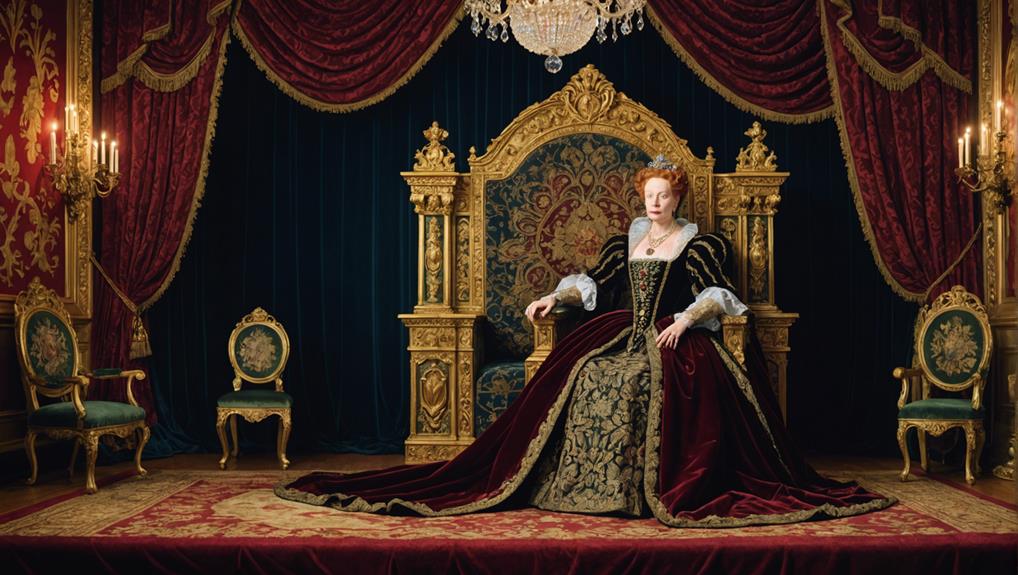
We've just experienced the thrilling culmination of the Metropolitan Opera's Tudor Queen Trilogy with the lavish production of Roberto Devereux, a fitting finale that masterfully weaves together music, drama, and history. The opera's intricate harmonies, lush strings, and soaring woodwinds created a dramatic trifecta. Sondra Radvanovsky's breathtaking soprano, Matthew Polenzani's dashing presence, and Elīna Garanča's rich mezzo showcased the cast's vocal prowess. As the curtain falls on this epic story, we're left with unforgettable memories and a deeper appreciation for Queen Elizabeth's enduring legacy. And as we reflect on this masterpiece, we're only just beginning to uncover the secrets of the Tudor court.
Lush Melodies and Vocal Acrobatics
As we settled into our seats at the Metropolitan Opera, the curtain rose on Roberto Devereux, and we were immediately enveloped in a world of lush melodies and vocal acrobatics that left us breathless. The opera's musical complexity was on full display, with intricate harmonies and ornate melodies that showcased the vocal prowess of the cast. We were struck by the harmonic innovation that composer Gaetano Donizetti brought to the score, pushing the boundaries of what was possible in bel canto opera.
The orchestra's lush strings and soaring woodwinds created a rich tapestry of sound, providing the perfect backdrop for the singers to shine. And shine they did, with vocal feats that left us gasping in awe. The title role, sung by soprano Sondra Radvanovsky, was a masterclass in vocal agility, with precision-crafted phrasing and dazzling coloratura. The supporting cast was equally impressive, with each singer bringing their own unique voice to the table.
Throughout the performance, we were struck by the way Donizetti's music seemed to elevate the drama, underscoring the emotional intensity of the story. The result was an opera that was both a feast for the ears and a deeply moving experience. As we left the opera house, we couldn't help but feel grateful for the experience, and already we're counting down the days until our next visit to the Met.
The Tudor Queen Trilogy Unfolds
The Metropolitan Opera's Tudor Queen trilogy, which includes Anna Bolena and Maria Stuarda, reaches its thrilling conclusion with Roberto Devereux, a fitting finale that showcases Donizetti's mastery of the genre. As we reflect on this trilogy, we're reminded of the historical significance of these operas. They not only entertain but also educate us about the lives of three pivotal women in England's royal history.
We’re struck by the sheer magnitude of the Tudor queens’ impact on the course of English history. Their stories are woven into the fabric of the nation’s identity, and Donizetti’s operas beautifully capture the drama, intrigue, and passion that defined their reigns. Through these works, we’re given a glimpse into the complexities of the royal legacy left behind by these powerful women. The emotional depth and intensity of these operas make them timeless masterpieces, resonating with audiences across generations. Just as a great performance can elevate a musical work, insightful critiques—such as an Anne Sophie Mutter review—can deepen our appreciation for an artist’s interpretation. Donizetti’s portrayals of the Tudor queens remind us that history is not just a collection of dates but a vivid tapestry of ambition, love, and sacrifice.
As we experience the Tudor Queen trilogy, we're treated to a rich tapestry of music, drama, and history. We're presented with multifaceted characters, each with their own strengths and weaknesses, and we're invited to contemplate the implications of their actions on the English monarchy. The trilogy is a tribute to the enduring power of opera to illuminate the human experience, and we're grateful to the Metropolitan Opera for bringing this epic story to life.
Royal Intrigue and Deceit Unravel
As we explore the world of Roberto Devereux, we're drawn into a web of palace secrets and royal scandals that threaten to upend the monarchy. We're privy to whispers of deceit and betrayal that have us questioning who can be trusted. Now, we're about to uncover the shocking truths that will shatter the illusion of royal trust forever.
Palace Secrets Exposed
We find ourselves entangled in a web of deceit as Queen Elizabeth's closest advisors conceal their true intentions behind a mask of loyalty. It's a precarious game of court politics, where alliances are forged and broken with each whispered secret. As we explore the treacherous landscape of the royal court, we begin to unravel the threads of deception that threaten to destroy the very foundations of the monarchy.
- Court Whispers spread like wildfire, fueling the flames of suspicion and mistrust.
- Hidden Agendas lurk behind every smile and every courteous gesture, waiting to strike.
- The Queen's most trusted advisors are not what they seem, hiding their true loyalties behind a veil of deceit.
As we probe deeper into the heart of the palace, we're forced to confront the dark underbelly of royal politics. The line between loyalty and treason blurs, and the consequences of betrayal hang precariously in the balance. In this world of royal intrigue, nothing is as it seems, and the truth is waiting to be uncovered.
Royal Trust Shattered
Behind the ornate doors of the palace, our faith in the royal court's integrity crumbles as deception seeps into the highest echelons of power. The once-unshakeable trust in our monarch's judgment falters, and the whispers of broken vows and court scandals spread like wildfire. We're left questioning the very fabric of our royal institution.
| Deceitful Acts | Royal Figures Involved | Consequences |
|---|---|---|
| Secret Meetings | Queen Elizabeth I, Roberto Devereux | Erosion of Trust |
| Hidden Agendas | Lord Nottingham, Sarah | Power Struggles |
| Betrayal of Trust | Queen Elizabeth I, Earl of Essex | Downfall of Favorites |
| Web of Lies | Roberto Devereux, Sarah | Fatal Consequences |
| Royal Favors | Queen Elizabeth I, Lord Nottingham | Unfair Advantages |
As the web of deceit tightens, we're forced to confront the harsh reality: our royal court is not immune to corruption. The shattered trust will have far-reaching consequences, and we can only wonder what other secrets lie hidden behind the palace doors.
A Star-Studded Cast Shines Bright
Soprano Sondra Radvanovsky, tenor Matthew Polenzani, and mezzo-soprano Elīna Garanča bring their exceptional vocal talents to the stage, setting the Metropolitan Opera ablaze with their powerful performances in Roberto Devereux. We're treated to a Red Carpet, Spotlight Moments kind of evening, where the stars align to create an unforgettable experience.
The cast's chemistry is undeniable, and their individual performances are truly standout. We're wowed by:
- Radvanovsky's breathtaking soprano, soaring through the opera's most challenging arias with ease and precision
- Polenzani's dashing good looks and charming stage presence, perfectly capturing the character's complexity
- Garanča's rich, velvety mezzo, bringing depth and nuance to her portrayal
Together, they create a dramatic trifecta that propels the story forward, drawing us into the intrigue and passion of the Tudor court. The trio's collective talent is a marvel, and we're grateful to have witnessed their combined artistry on the Met's stage. As the final curtain falls, we're left in awe of their mastery, already craving another opportunity to experience their exceptional performances.
The Metropolitan Opera's Grand Finale
As we reach the culmination of this Tudor Queen Trilogy, we're treated to opera's grandest moments at the Metropolitan Opera's grand finale. We've witnessed an unforgettable performance, and now it's time to reflect on the dramatic final bow that will leave a lasting impression. We'll explore how the opera's grand finale brings everything full circle, culminating in an unforgettable conclusion to this epic trilogy.
Opera's Grandest Moments
We've been treated to some of opera's grandest moments in the Metropolitan Opera's grand finale of the Tudor Queen trilogy. The operatic drama has been palpable, with each performance building upon the last to create a thrilling musical spectacle. As we reflect on this epic conclusion, we're reminded of the most unforgettable moments that have left us breathless.
- The grand sets and opulent costumes that transported us to 16th-century England
- The show-stopping arias that showcased the vocal prowess of the talented cast
- The dramatic plot twists that kept us on the edge of our seats, excited to see what would happen next
These grand moments have come together to create an unforgettable operatic experience. The Metropolitan Opera has truly outdone themselves with this grand finale, and we're grateful to have been a part of it. As we say goodbye to the Tudor Queen trilogy, we're left with memories that will linger long after the curtain falls.
Dramatic Final Bow
With the curtain falling on the Tudor Queen trilogy, we're left to ponder the lasting impact of this epic conclusion, and the Metropolitan Opera's grand finale has unquestionably secured a place in our collective memory.
As we take our final bow, we're reminded of the trilogy's most unforgettable moments. The drama, the passion, the music – it all comes flooding back as we reflect on this operatic masterpiece.
| Moment | Description |
|---|---|
| Curtain Call | The final farewell, where the cast takes their last bow, leaving an indelible mark on our hearts. |
| Final Exit | The poignant departure of the Tudor Queen, marking the end of an era and the beginning of a new chapter. |
| Standing Ovation | The thunderous applause that erupts as the audience rises to its feet, paying tribute to the artistic triumph. |
As the curtain falls, we're left with the knowledge that we've experienced something truly special – a reflection of the power of opera to move, to inspire, and to leave a lasting impact.
A Fitting Tribute to Queen Elizabeth
Donizetti's Roberto Devereux, the final opera in the Metropolitan Opera's Tudor Queen trilogy, pays magnificent homage to Queen Elizabeth I, capturing the essence of her formidable spirit and reign. As we explore further into the opera's portrayal of the iconic monarch, we can't help but be struck by the attention to detail and historical accuracy that brings the Elizabethan Era to life.
As we dig deeper into the opera, we're reminded of the Royal Legacy that Elizabeth I left behind. Her impact on English history is still felt today, and the opera masterfully conveys the complexity of her character. We see a queen who is both strong-willed and vulnerable, fiercely intelligent and deeply emotional.
Some of the most striking aspects of the opera include:
- The opulent costumes and sets, which transport us to the grandeur of the Elizabethan court
- The soaring vocals, which bring the characters to life with emotional depth and nuance
- The clever libretto, which weaves historical fact with dramatic flair to create a truly compelling narrative
Through Roberto Devereux, we're treated to a rich tapestry of music, drama, and history, all woven together to create a fitting tribute to one of England's most beloved monarchs. As the final curtain falls on the Tudor Queen trilogy, we're left with a deeper appreciation for the enduring legacy of Queen Elizabeth I.
Frequently Asked Questions
Is 'Roberto Devereux' a Historically Accurate Opera?
We've often wondered, is 'Roberto Devereux' a historically accurate opera? Honestly, it takes some historical liberties. The opera's creators exercised artistic license to amplify drama and emotion. While the story's framework is rooted in history, some characters and events are fictional or exaggerated. We think that's okay, though – after all, opera is meant to entertain and move us, not simply regurgitate dry facts.
How Long Does the Opera Performance Typically Last?
We're curious about the opera's length, and rightfully so! Typically, an opera performance like Roberto Devereux can last anywhere from 2 to 4 hours, including intermissions. The performance duration varies depending on the opera house, conductor, and production. We've seen some operas stretch to 5 hours, but that's less common. Generally, you can expect a 3-hour opera with a 15-20 minute intermission.
Are There Subtitles or Translations Provided for the Opera?
As we step into the opera house, the curtains draw open to a world of drama and music, a symphony of emotions waiting to unfold. But, we wonder, will language barriers hinder our experience? Fear not, dear opera enthusiasts! Many opera houses provide subtitles or translations, ensuring cultural accessibility for all. We can relax, knowing we'll grasp the nuances of the performance, no matter the language spoken.
Can I Attend a Dress Rehearsal or Backstage Tour?
We're curious about getting a peek behind the curtains, and we're in luck! Many opera houses offer behind-the-scenes experiences. We can attend a dress rehearsal or take a backstage tour to get VIP access. These opportunities give us a unique perspective on the opera's production. We'll get to see the sets, costumes, and even meet the performers. It's a fantastic way to enhance our opera experience and feel like insiders.
Are There Discounts Available for Students or Seniors?
We're on a budget, and attending the opera can be pricey! Fortunately, we've got options. We can score budget-friendly deals on tickets, especially for students and seniors. Group rates are also available, making it more affordable for us to enjoy the performance with friends or family. We just need to plan ahead, check the opera's website, and ask about these discounts to make our opera experience more accessible and enjoyable.
About the Author


