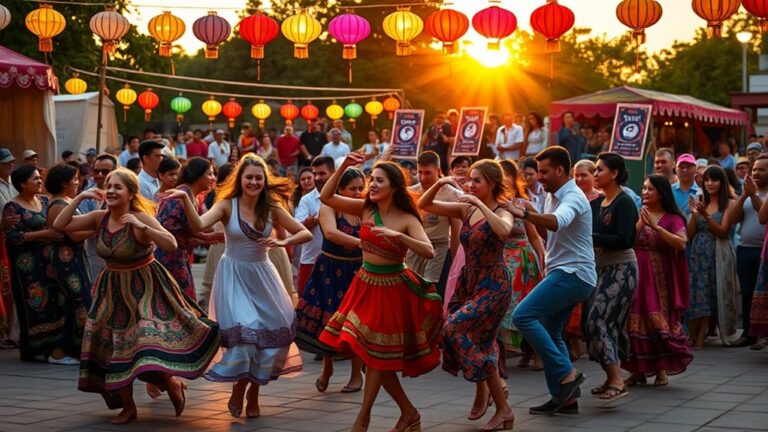
Dance has evolved considerably over the decades, mirroring social and cultural shifts. In the Roaring Twenties, jazz sparked lively Charleston dances that celebrated freedom. The Swing Era introduced energetic styles like the Lindy Hop, as rock and roll in the 1950s transformed youth culture through twisting and jiving. The disco trend of the 1970s brought colorful dances to iconic clubs. As breakdance emerged in the late 1970s, it blended folklore with urban culture. Today, technology improves creativity and connects dancers worldwide, influencing styles and trends. There's so much more to discover about these fascinating transformations!
The Roaring Twenties
The Roaring Twenties was a lively decade that transformed dance into a cultural phenomenon. This era embraced freedom and self-expression, and you could feel the energy pulsing through the streets and dance halls. With jazz music flooding the scene, the beat became infectious, encouraging people to leave their worries behind, kick off their shoes, and dance like nobody was watching.
The flapper dance emerged as a symbol of this newfound liberation. Young women, known as flappers, donned their short dresses and bobbed hair, embodying the spirit of rebellion against traditional norms. You could see them twirling and shimmying, their movements reflecting a bold, carefree attitude. The Charleston, with its lively kicks and quick footwork, became the signature dance of the era, inviting everyone to join in the fun.
Jazz influence played a vital role in shaping these dance styles. The improvisational nature of jazz music matched the spontaneity of the dances, allowing you to express yourself in ways that felt true and authentic. As jazz bands filled the air with their enchanting rhythms, people found joy in the freedom of movement. It was a time when the dance floor became a sanctuary where everyone, regardless of background, could come together to celebrate life.
The Swing Era
Following the lively spirit of the Roaring Twenties, the Swing Era burst onto the scene in the 1930s and 1940s, enchanting audiences with its energetic rhythms and lively dance styles. You could feel the freedom in the air as jazz musicians took center stage, encouraging dancers to express themselves like never before. The upbeat tempos of big bands made you want to hit the dance floor and let loose.
During this era, swing dancing became a cultural phenomenon. You'd see people of all ages participating in dance competitions, showcasing their skills and creativity. The swing revival in the late 20th century reignited this passion, bringing classic dances like the Lindy Hop back into the spotlight. Whether you were a novice or an expert, the dance floor was a place where everyone belonged.
Here are some key highlights of the Swing Era:
- The fusion of jazz and dance created a lively atmosphere.
- Iconic venues, like the Cotton Club, became hotspots for swing lovers.
- The emergence of famous dance styles, including the Charleston and Jitterbug.
- Dance marathons provided thrilling competitions that captivated audiences.
- A sense of community flourished, as swing dance clubs popped up everywhere.
As you explore this era, keep in mind that swing isn't just about the steps; it's about the joy and connection that comes with dancing. Whether you're twirling with a partner or grooving solo, the Swing Era invites you to embrace your own rhythm and celebrate the freedom of movement.
The Birth of Rock and Roll
In the mid-1950s, a cultural revolution ignited as rock and roll burst onto the music scene, transforming dance floors and youth culture across America. You could feel the energy in the air as young people flocked to clubs and sock hops, enthusiastic to express their newfound freedom through dance. The infectious beats of artists like Elvis Presley and Chuck Berry ignited a passion for movement that was both thrilling and liberating.
This era marked the beginning of a rockabilly revival, blending country and rhythm and blues into something fresh and exciting. You'd hear guitars twang and drums pound, creating a sound that made you want to jump up and dance. The music wasn't just about rhythm; it was an anthem of teenage rebellion, challenging societal norms and expectations. Young people embraced the idea of dancing like nobody was watching, breaking free from the constraints of their parents' generation.
As the music evolved, so did the dance styles. You'd find yourself twisting, turning, and jiving with friends, all during feeling the thrill of rebellion coursing through your veins. The dance floor became a space to express individuality and defy convention, a true reflection of the rock and roll spirit.
With every shake and shimmy, you celebrated your freedom, carving out a new identity for yourself and your generation. Rock and roll didn't just change the music; it transformed how you danced, how you lived, and how you viewed the world around you.
Dance in the 1970s
As rock and roll laid the groundwork for a lively dance culture, the 1970s burst onto the scene with a kaleidoscope of new styles and influences. You couldn't help but feel the energy radiating from disco balls and dance floors packed with bodies moving to the infectious beats. Disco fever swept the nation, and you found yourself drawn into a world where freedom of expression was celebrated. From the glitzy nightclubs to the colorful street scenes, dance became a crucial outlet for creativity and community.
Funk styles emerged alongside disco, blending rhythm and soul into something uniquely electrifying. You might've caught yourself grooving to the pulsating basslines, embodying the spirit of liberation that defined the decade. Whether you were the one spinning in a sequined outfit or just soaking in the atmosphere, dancing became a potent form of self-expression.
- The rise of disco music, with iconic hits that still make you want to move.
- Dance clubs like Studio 54, where everyone was welcome to let loose.
- The evolution of dance moves, from the hustle to the bump.
- The influence of funk artists, who brought a raw edge to the dance scene.
- The sense of unity and joy that dancing together created.
In this dynamic era, dance was more than just a pastime; it was a celebration of life, individuality, and the joy of being free. You embraced the rhythm and let the music guide you. With every step, you felt an unspoken connection to those who had danced before you, as if time itself paused to honor the movement. It was a dance pov tuck everlasting, where the rhythm became immortal, carrying your spirit beyond the limits of the moment. Lost in the melody, you surrendered to the freedom that only dance could provide.
The Breakdance Revolution
The Breakdance Revolution transformed the dance scene starting in the late 1970s, drawing influences from various styles like funk and martial arts. You'll see how key figures and innovators pushed the boundaries of movement, creating an electrifying culture that resonated worldwide. This movement not only shaped dance but likewise left a lasting cultural impact that still influences artists today.
Origins and Influences
Breakdance, a lively dance form that emerged in the late 1970s, transformed the way people expressed themselves through movement. It drew inspiration from various folk traditions and regional styles, blending historical context with the energy of urban culture. You can see how breakdance became a potent vehicle for cultural expressions, reflecting societal changes and the influence of music during that era.
Consider these key influences:
- Folk traditions: Roots in African and Latino dance rituals.
- Music: Hip-hop beats drove the rhythm and style.
- Community gatherings: Battles became a way to unite and showcase talent.
- Performance art: Breakdance evolved into a dynamic form of expression.
- Dance forms: It incorporated elements from martial arts and gymnastics.
This dance form not just celebrated individuality but additionally nurtured a sense of belonging within communities. As you investigate the movement, you'll realize that breakdance embodies freedom, creativity, and resilience. It's a reflection of how dance can serve as a mirror of culture as it pushes the boundaries of artistic expression, inviting everyone to join in the rhythm of life.
Key Figures and Innovators
Creativity and innovation fueled the breakdance revolution, leading to the emergence of iconic figures who shaped its evolution. Dance pioneers like Kool Herc and Afrika Bambaataa laid the groundwork for this lively culture, inspiring countless dancers to push boundaries. You'd find these influential dancers experimenting with innovative choreography, blending various styles like popping, locking, and housing into their performances.
Groundbreaking performances became a hallmark of the scene, showcasing not just individual talent but also the strength of community. Dance education played a vital role, as workshops and battles spread knowledge and techniques, nurturing a sense of cultural heritage among aspiring dancers. You'd see artistic collaborations that crossed genres, bringing together hip-hop, graffiti, and DJing to create a rich mosaic of performance art.
As you explore different choreographic styles, you'll witness the evolution of breakdance reflecting the pulse of urban life. Dance communities emerged as supportive spaces, where creativity thrived, and originality was celebrated. The passion and dedication of these key figures and innovators have left a lasting mark, ensuring that breakdance continues to inspire new generations, inviting everyone to join in the rhythm of freedom.
Cultural Impact and Legacy
As many dance styles have left their mark on culture, few have done so quite like breakdance, which has become a global phenomenon since its inception. This lively form of expression transcends mere movement; it embodies social movements, community expression, and artistic collaboration. You can see how it's shaped and reshaped gender roles, encouraging everyone to participate regardless of background.
Breakdance's cultural impact is profound, inspiring a sense of body positivity and acceptance. Its historical significance in dance education is undeniable, promoting a cross-cultural exchange that enriches societies worldwide. Here are some key aspects of its legacy:
- Cultural Preservation: Breakdance preserves elements of diverse cultures and traditions.
- Performance Art: It raises street dance to a respected art form.
- Social Movements: Breakdance often serves as a voice for marginalized communities.
- Community Expression: It brings people together, forming bonds through shared passion.
- Artistic Collaboration: Dancers from various backgrounds unite, blending styles and techniques.
Ultimately, breakdance isn't just about the moves; it's about freedom, connection, and legacy that continues to inspire future generations.
The Rise of Hip-Hop
Hip-hop emerged from the lively streets of the Bronx, blending influences from various dance styles and music genres. As you explore its origins, you'll see how it shaped and reflected cultural movements. Today, hip-hop's impact continues to resonate globally, influencing not just dance but fashion, art, and social issues.
Origins and Influences
The emergence of hip-hop dance in the late 20th century marked a revolutionary shift in the domain of dance, blending street culture with artistic expression. Rooted in historical contexts and influenced by various ethnic traditions, hip-hop reflects deep social movements and the essence of freedom. You can see how it draws from folk traditions and dance rituals, allowing you to connect with a rich mosaic of cultural exchanges.
Consider these key influences that shaped hip-hop dance:
- Folk Traditions: Incorporating elements from African, Caribbean, and Latino dance.
- Cultural Exchanges: Melding styles from different communities and backgrounds.
- Historical Contexts: Emerging from the struggles and resilience of marginalized groups.
- Social Movements: Serving as a voice and platform for change and awareness.
- Artistic Expressions: Emphasizing individuality and creativity through unique performance practices.
As you explore the domain of hip-hop, you'll discover a dance form that not merely entertains but additionally challenges societal norms, celebrates diversity, and inspires freedom. Embrace the influences that shape this lively culture, and let it ignite your own passion for movement and expression.
Cultural Impact Today
In today's cultural environment, the rise of hip-hop transcends mere entertainment, becoming a significant force for social change and community engagement. You see it everywhere—social media platforms buzzing with dance challenges that celebrate cultural diversity and artistic expression. Hip-hop serves as an influential tool for connection, allowing people from different backgrounds to collaborate globally, sharing their stories through movement.
Dance education has likewise evolved, incorporating hip-hop styles that enable individuals to explore their identity and express their emotions. In this age of digital interaction, performance art takes on new dimensions, with live-streamed events reaching audiences far and wide. This accessibility cultivates a sense of community, breaking down barriers and inviting everyone to join in.
Moreover, hip-hop's influence extends into dance therapy, where rhythmic movement becomes a healing practice, promoting mental well-being. You can witness the impact of hip-hop in every corner of society, from grassroots initiatives to professional platforms, encouraging community engagement and inspiring future generations. As you embrace this lively culture, you're not just witnessing a dance movement; you're part of a revolution that values freedom, creativity, and unity.
Contemporary Dance Movements
Contemporary dance movements have redefined expression in the dance world, blending various styles and influences. You'll find that these movements embrace postmodern techniques and improvisational practices, inviting you to investigate your own expressive movement. Whether you're performing or simply observing, the freedom to interpret and connect with the art form makes contemporary dance a unique experience.
In this lively environment, you'll notice the following key elements shaping contemporary dance:
- Dance and Identity: Dancers often express their personal narratives, addressing issues of self and community.
- Body Politics: This movement challenges societal norms, questioning how bodies are perceived and valued.
- Site-Specific Choreography: Dancers utilize unique environments, transforming spaces into dynamic performance areas.
- Dance Therapy: Engaging in dance promotes healing and self-awareness, connecting mind and body.
- Cultural Fusion: Contemporary dance melds various cultural influences, celebrating diversity and innovation.
As a participant or an audience member, you're invited to engage with these themes, allowing for a deeper connection to the art. Collaborative projects are at the forefront, where dancers and choreographers work together to create compelling narratives. The emphasis on individual expression in virtual performance spaces allows for an even wider reach, transcending traditional boundaries. Contemporary dance movements challenge you to embrace your own voice as you investigate the collective experiences of others. Immerse yourself in this liberating world, and let the dance lead you to new horizons.
The Influence of Technology
Technology has transformed the dance landscape, opening doors to new forms of creativity and expression. You're no longer limited to traditional studios; the digital world has expanded your possibilities. With digital choreography, you can create mesmerizing routines without physical constraints. Virtual performances allow you to share your art with audiences worldwide, breaking geographical barriers.
| Technology | Impact on Dance |
|---|---|
| AI Choreography | Generates unique dance sequences |
| Motion Capture | Captures movements for analysis |
| Wearable Technology | Improves performance with feedback |
| Augmented Reality | Creates immersive dance experiences |
Social media influence has likewise played a significant role. Platforms like Instagram and TikTok enable you to showcase your talent instantly, connecting you with a global community. Streaming platforms have made it easier than ever to access online dance classes, allowing you to learn from the best without leaving your home.
Interactive installations invite audiences to participate, making dance a shared experience rather than a spectator sport. You can even explore augmented reality to immerse yourself in new dance environments.
As you embrace these technologies, keep in mind that they're tools for freedom and expression. Whether you're a dancer or an enthusiast, the fusion of technology and dance offers endless possibilities. Step into this new domain, and let your creativity flourish!
Global Dance Trends
As you explore global dance trends, you'll see how cultural influences shape styles around the world. From the electrifying moves of hip-hop to the graceful steps of ballet, each dance form tells a unique story. Plus, technology's role in connecting dancers across continents can't be overlooked, as it transforms how styles evolve and spread.
Cultural Influences on Dance
Dance, influenced by cultural exchanges and global trends, reflects the dynamic nature of society. As you explore the realm of dance, you'll notice how it transcends borders, blending styles and traditions into something uniquely beautiful. This dance fusion creates a lively mosaic that celebrates diversity and freedom of expression.
Here are some key influences shaping dance today:
- Cultural Exchange: Dance thrives on the interactions between different cultures, leading to innovative movements and styles.
- Technological Advancements: Social media platforms let dancers share their art globally, inspiring new trends.
- Global Events: Festivals and competitions showcase diverse practices, promoting collaboration and learning among dancers.
- Fusion Genres: Styles like hip-hop, salsa, and traditional folk dances merge, resulting in exciting new forms of expression.
- Inclusivity and Accessibility: Dance is more accessible than ever, inviting diverse voices and bodies to participate.
These elements not just enrich your dance experience but also empower you to embrace various influences. As you move through this evolving scenery, you'll find that each step reflects the lively interplay of cultures, inviting you to celebrate the freedom that dance offers.
Popular Styles Worldwide
With the rich fabric of cultural influences shaping dance today, you'll find a lively array of popular styles emerging globally. From urban street dance that celebrates creativity and expression to traditional dances that honor heritage, you're witnessing a beautiful cultural fusion. Dance festivals across the planet bring together diverse styles, creating a melting pot of movement that invites everyone to participate.
Social dance has gained momentum, emphasizing community and connection, as dance education programs cultivate the next generation of dancers. Online dance classes have made it easier than ever to learn and share styles, breaking geographical barriers and encouraging global collaborations. As you immerse yourself in this dance renaissance, you'll see dance competitions showcasing talent and innovation, pushing the boundaries of what's possible.
Moreover, dance therapy is gaining recognition for its ability to heal and empower individuals, proving that movement can be a significant tool for personal growth. With so many avenues to explore, you're encouraged to embrace the freedom of dance, whether you're on a stage or simply moving in your living room. The realm of dance is dynamic and constantly changing, inviting you to join in the celebration of life through movement.
Impact of Technology
Though technology often seems like a backdrop to our lives, it's reshaping global dance trends in profound ways. You might've noticed how platforms like social media have turned dance into a worldwide conversation. With just a tap, you can share your moves or learn from dancers across the globe, breaking down traditional barriers.
Virtual reality takes this further, immersing you in environments where you can dance with others, no matter where they are. Envision joining a virtual dance class with people from different continents, creating a shared experience that transcends physical limitations.
Consider these key impacts of technology on dance:
- Access to Tutorials: You can learn any style, anytime, from anyone.
- Creative Collaboration: Work with dancers worldwide through online platforms.
- Live Streaming: Share your performances instantly with global audiences.
- Viral Trends: Social media allows dances to spread swiftly, influencing styles everywhere.
- Community Building: Find and connect with like-minded dancers, nurturing a sense of belonging.
Embrace this evolution! Technology isn't just a tool; it's a canvas for your unique expression in the dance world.
Dance in Popular Culture
In today's world, dance is more than just a form of expression; it's an fundamental part of popular culture. You see it everywhere—from viral TikTok challenges to electrifying performances at dance festivals. Dance trends evolve swiftly, driven by social media and the influence of dance icons. You can't help but notice how different dance styles and genres come together, creating new dance movements that resonate with people of all ages.
Consider how dance collaborations between various artists have led to fresh interpretations and broader audiences. This blending of styles enhances the art form and cultivates a sense of community and freedom. Dance competitions showcase incredible talent, pushing dancers to explore their limits and express themselves like never before.
To offer a glimpse into the lively environment of dance in popular culture, here's a table highlighting key elements:
| Element | Description |
|---|---|
| Dance Trends | Influential styles that dominate the scene |
| Dance Icons | Pioneers shaping the dance world |
| Dance Festivals | Celebrations of dance across genres and cultures |
The rise of dance education programs also plays a significant role, helping to nurture the next generation of dancers. With so much happening, it's clear that dance isn't just about movement; it's an influential vehicle for creativity, connection, and cultural exchange. So, whether you're a spectator or a participant, embrace the freedom that dance offers!
The Future of Dance
The future of dance promises to be as dynamic and diverse as the influences immersing it today. As you explore this lively world, you'll notice how technology and creativity intertwine to expand your experience. Virtual reality's emergence is set to transform how you engage with movement, providing immersive environments where you can express yourself like never before. Dance education will become more accessible through online platforms, allowing you to learn from global masters and share your expedition on social media.
Expect to witness:
- Global collaborations that break cultural barriers
- Interactive performances that invite audience participation
- Choreographic innovations that push the boundaries of movement
- Sustainability practices that honor our planet as you dance
- Health benefits of dance therapy promoting well-being and artistic expression
As these elements combine, you'll find that dance isn't just an art form; it's a significant tool for connection and healing. The dialogue between performers and spectators will deepen, nurturing a sense of community that transcends borders. As you explore new styles and techniques, keep in mind that your individual expression is essential. Embrace the freedom to create, innovate, and redefine what dance means to you. The future holds endless possibilities, and it's yours to shape. Engage with the changes, experiment with new forms, and let your passion for dance guide you into uncharted territories of artistic freedom.
Frequently Asked Questions
How Has Dance Influenced Fashion Trends Throughout the Decades?
Dance trends have always shaped fashion evolution, influencing what you wear on the dance floor and in everyday life. As you groove to the latest beats, you notice styles transforming—flared pants in the '70s, neon colors in the '80s, and grunge looks in the '90s. Each era's movements inspire designers, pushing you to express yourself through clothing that reflects your energetic spirit and love for dance. Embrace the freedom to dance and dress boldly!
What Role Does Dance Play in Social Movements?
Envision a lively dance circle forming at a protest, where each step and movement embodies the struggle for freedom. Dance plays a significant role in social movements, serving as a tool for expression and unity. Through protest choreography, activists can visually convey their messages, inspiring others to join the fight. Dance activism not just raises awareness but likewise nurtures a sense of community, reminding you that every beat can amplify the call for change.
How Do Cultural Backgrounds Affect Dance Styles?
Cultural backgrounds shape dance styles considerably. You'll notice how cultural influences manifest in movements, rhythms, and expressions unique to each tradition. For instance, African dance traditions often emphasize community and storytelling, whereas ballet reflects European elegance and discipline. When you embrace these differences, you appreciate the beauty of diversity in dance. It's an empowering way to connect with others and celebrate freedom, enabling you to express your identity through movement.
What Are the Psychological Benefits of Dancing?
Did you know that dancing can reduce anxiety by up to 20%? When you dance, you're not just moving; you're actively engaging in emotion regulation. This helps you manage your feelings and boosts your mood. Plus, dancing improves cognitive benefits, enhancing memory and focus. So, when you let loose on the dance floor, you're freeing your mind and soul, opening a world of happiness and mental clarity that's all yours to explore.
How Can Dance Education Evolve to Meet Modern Needs?
To meet modern needs, dance education's gotta embrace online classes and interdisciplinary approaches. You'll find that blending dance with technology, theater, or even fitness opens up exciting pathways for creativity. This way, you can explore various styles and techniques at your own pace, giving you the freedom to express yourself fully. Adapting curriculums to include diverse forms of movement will keep learning engaging and relevant, ensuring dance remains a lively, evolving art form.
About the Author