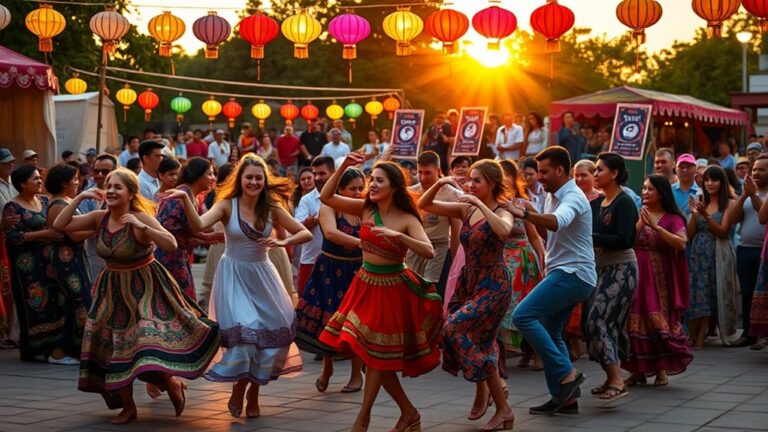
When you think of memorable dance performances, iconic moments jump to mind. The birth of ballet brought storytelling to life, as Broadway numbers like "One" from A Chorus Line showcase synchronized brilliance. Don't forget Michael Jackson's moonwalk during "Motown 25," which captivated audiences and redefined dance. Contemporary choreographers like Martha Graham and Alvin Ailey push boundaries, creating impactful connections. Dance in films like "Singin' in the Rain" and "West Side Story" leaves a lasting influence, too. Each performance tells a story, reflecting our culture and emotions, so stick around to explore even more unforgettable moments in dance history.
The Birth of Ballet
Ballet, one of the most celebrated forms of dance, has its roots in the lavish courts of Renaissance Italy during the 15th century. You'll find that this enchanting art form began as a form of entertainment for the nobility, showcasing intricate movements and elaborate costumes. Court ballet emerged as a way for royalty to display their influence and elegance, often performed at grand celebrations and royal events.
Under royal patronage, dance flourished as a means of both art and diplomacy. You can envision how the lavish performances not only entertained but also fortified alliances among the elite. The choreography was often designed to reflect the grandeur of the court, blending music, poetry, and visual spectacle. As you explore deeper into this history, you'll see how the movement evolved, laying the groundwork for what we now recognize as ballet.
As ballet spread beyond Italy, it found fertile ground in France, where it transformed into a more structured art form. The French court embraced it with open arms, further developing techniques and styles that would influence generations. You'll appreciate how this evolution wasn't just about movement; it was about freedom of expression, allowing dancers to tell stories through their bodies. So, when you think of ballet, remember its beginnings in the opulent courts, where the seeds of this beautiful dance were sown under the watchful eyes of royalty, paving the way for the expressive art form we cherish today.
Iconic Broadway Moments
When you think of Broadway, unforgettable dance numbers instantly come to mind. These performances often showcase the brilliance of legendary choreographers who shape the very essence of a show. Let's explore some of these iconic moments that leave audiences in awe.
Unforgettable Dance Numbers
The magic of Broadway often lies in its unforgettable dance numbers, where choreography transcends mere movement to create iconic moments that resonate with audiences. You can't help but feel exhilarated as you witness these electrifying performances. Here are four unforgettable dance numbers that capture the spirit of freedom and creativity:
- "One" from A Chorus Line – The synchronized swimming of dance styles brings a unique blend, showcasing the talents of each performer as well as creating a stunning visual fabric.
- "Time Warp" from The Rocky Horror Show – This infectious number invites everyone to join in, transforming the audience into a lively flash mob that dances along with the cast.
- "Dancing Queen" from Mamma Mia! – The joyous celebration of youth and love turns into an irresistible invitation to dance, making it impossible to stay seated.
- "Seasons of Love" from Rent – This poignant piece combines impactful vocals with heartwarming choreography, reminding us of the beauty of life and connection.
These moments remind us that dance is not just art; it's a celebration of freedom, joy, and togetherness.
Legendary Choreographers' Impact
Choreography shapes the essence of Broadway, turning mere performances into unforgettable spectacles. When you step into a theater, you're not just watching a show; you're witnessing the profound impact of legendary choreographers. Their innovative styles and daring visions have carved choreographer legacies that resonate through time. Think about how Bob Fosse transformed dance with his unique flair, or how Jerome Robbins merged ballet with Broadway to create something entirely new.
These artists didn't just create dance; they sparked a dance evolution, pushing boundaries and inviting performers to express themselves freely. Every leap, twist, and turn tells a story, capturing emotions and transporting you into another world. You can feel the energy of Michael Bennett's "A Chorus Line," where every dancer's expedition unfolds through movement, celebrating individuality within a collective.
As you watch, consider how these choreographers have ignited passion and creativity. They've inspired generations, reminding us that dance is a dynamic form of expression. So next time you're lost in the rhythm of a Broadway number, remember the brilliant minds behind it, shaping the art form and leaving a lasting impression on the stage.
The Moonwalk Revolution
Few dance moves have left a mark on pop culture quite like the moonwalk. When you think of this mesmerizing glide, you probably picture Michael Jackson, the King of Pop, effortlessly commanding the stage. His iconic performance during the 1983 broadcast of "Motown 25" introduced the moonwalk technique to the world, igniting a dance revolution that still resonates today.
Here are four reasons why the moonwalk remains unforgettable:
- Catchy Rhythm: The moonwalk captures a unique rhythm that's instantly recognizable. It draws you in, making you want to join in on the fun.
- Visual Illusion: The magic lies in the illusion of moving backward as you appear to glide forward. It symbolizes freedom, creativity, and the joy of dance.
- Cultural Influence: Michael Jackson didn't just perform the moonwalk; he transformed it into a cultural movement, inspiring countless dancers and artists across genres.
- Timeless Appeal: Decades later, the moonwalk still excites audiences. It's become a rite of passage for aspiring dancers, a way to express individuality and flair.
The moonwalk isn't just a dance move; it's a statement of freedom and self-expression. It invites you to break boundaries, challenge norms, and discover your rhythm. So, whether you're on stage or in your living room, channel your inner Michael Jackson and let the moonwalk take you on an expedition of unrestrained joy.
Contemporary Dance Breakthroughs
In contemporary dance, pioneering choreographers are reshaping the art form with innovative movement techniques that push boundaries. You'll see how cultural influences play a crucial role in this evolution, reflecting societal changes and diverse backgrounds. Let's explore these breakthroughs that have transformed the dance environment.
Pioneering Choreographers Impact
Contemporary dance has been shaped dramatically by pioneering choreographers who've pushed boundaries and redefined movement. Their commitment to choreographic evolution has opened doors for countless dancers to explore new domains of artistic expression. You can feel the freedom they've ignited in the dance world, inspiring you to break free from tradition and embrace your own unique style.
Here are four key figures who've made significant impacts:
- Martha Graham – Transformed the concept of contraction and release, emphasizing emotional authenticity.
- Merce Cunningham – Introduced chance operations, allowing movement to exist independently of music, broadening the possibilities of performance.
- Alvin Ailey – Blended African American cultural traditions with modern dance, creating works that resonate with deep human experience.
- Pina Bausch – Merged theater and dance, challenging conventional narrative forms and inviting raw emotional expression.
These choreographers didn't just create dances; they sparked a movement, encouraging you to find your voice in the fluidity of contemporary dance. Their legacies remind us that artistic freedom is a quest worth taking.
Innovative Movement Techniques
The impact of pioneering choreographers laid the groundwork for a wave of innovative movement techniques that continue to transform contemporary dance. You'll find that these breakthroughs emphasize experiential movement, allowing dancers to explore and express their physicality in ways that resonate deeply with their inner selves. By engaging with their bodies, performers tap into kinetic expression, breaking free from traditional confines and embracing a more organic form of storytelling.
These techniques invite you to reimagine movement, blurring the lines between dance and everyday life. You can witness how improvisation, contact improvisation, and somatic practices enable dancers to connect with one another and their environments. This connection nurtures an authentic exchange of energy, creating a visceral experience for both the performers and the audience.
As you watch these performances, you'll feel the raw emotion and freedom that innovative movement techniques can evoke. They challenge the norms, encouraging you to appreciate the beauty of spontaneity and the strength of vulnerability. In today's contemporary dance environment, these breakthroughs not only redefine what dance can be but likewise inspire you to embrace your own unique expression.
Cultural Influences Shaping Dance
Diversity enriches the scenery of contemporary dance, as various cultural influences converge to shape its evolution. You’ll find that these influences breathe life into performances, inviting audiences to experience a mosaic of movement that reflects our global society. Here are four key elements that highlight this cultural synergy: Traditional rhythms, gestures, and storytelling methods merge with modern innovations, creating performances that resonate across generations. This fusion not only celebrates artistic expression but also uncovers the hidden histories of dance, revealing the deep-rooted connections between movement and heritage. Through this interplay, dancers become storytellers, bridging past and present with every step.
- Folk Traditions: Dancers draw inspiration from age-old customs, weaving stories through movement that honor their roots.
- Global Rhythms: The beats from around the world infuse contemporary dance with lively energy, encouraging exploration and innovation.
- Cross-Cultural Collaborations: Artists collaborate across borders, merging distinct styles that create new forms of expression and comprehension.
- Cultural Storytelling: Each performance becomes a narrative, showcasing the richness of diverse backgrounds and shared human experiences.
As you engage yourself in modern dance, you'll see how these cultural influences invite freedom of expression, breaking down barriers and uniting dancers and audiences alike. Embrace the expedition, and let each performance ignite your passion for the world's myriad stories told through movement.
Cultural Significance of Dance
Dance holds a unique place in cultures around the world, serving as a dynamic medium for expression and communication. It's not just about movement; it's a reflection of identity, tradition, and social dynamics. You'll find that in many cultures, dance is interwoven with traditional rituals, marking significant life events like births, weddings, and funerals. These dances often carry profound meanings, connecting generations and preserving histories that might otherwise fade away.
When you engage in dance, you're participating in a form of social expression that transcends language barriers. It allows you to share feelings and experiences, nurturing community bonds. Whether it's a lively celebration or a solemn ceremony, dance brings people together, allowing them to express joy, sorrow, and everything in between.
In addition, dance can serve as a vehicle for social change. It has the ability to challenge norms and advocate for freedom, often reflecting the struggles and triumphs within society. You see this in various movements where dance becomes a symbol of resistance, a way to voice dissent or celebrate unity.
Ultimately, the cultural significance of dance lies in its ability to speak to the human experience. It's a colorful fabric that connects us all, reminding us of our shared desires for freedom and expression. So, the next time you see or participate in a dance, keep in mind that you're taking part in something much larger than just movement; you're engaging in a rich tradition that resonates across cultures and time.
Dance in Film History
Throughout history, dance has both shaped cultural identities and discovered a spirited place in film, enchanting audiences on the big screen. From the first flickers of cinema to today's dynamic productions, dance sequences in musical films have captivated hearts and ignited passions. You might find yourself swept away by the rhythm and storytelling that dance brings to life. Here are four memorable moments that showcase the magic of dance in film history:
- "Singin' in the Rain" (1952) – Gene Kelly's iconic performance combines charm, charisma, and undeniable talent, making it a timeless classic.
- "West Side Story" (1961) – This groundbreaking film merges dance with influential social themes, creating a stunning visual and emotional experience.
- "Dirty Dancing" (1987) – The chemistry between Patrick Swayze and Jennifer Grey brought a whole new meaning to the phrase "nobody puts Baby in a corner."
- "La La Land" (2016) – A modern tribute to classic musicals, this film captures the spirit of dreams and ambition through its breathtaking dance sequences.
Dance in film is more than just movement; it's an expression of freedom, emotion, and connection. Whether you're tapping your toes during a spirited number or feeling the weight of a poignant moment, these dance performances continue to resonate. So, the next time you watch a musical film, let the dance sequences transport you into a world where movement tells stories and ignites your spirit.
Notable Dance Competitions
With regard to showcasing talent, few platforms rival the excitement of notable dance competitions. These events not only highlight impressive skills but also cultivate a sense of community among dancers. Whether you're a fan of fierce dance battles or intricate competitive choreography, there's something electrifying about watching artists push their limits and express themselves.
Competitions like "So You Think You Can Dance" and "World of Dance" have become cultural phenomena, drawing viewers into the arena of dance with their high-energy performances. These platforms spotlight diverse styles, allowing dancers to showcase their unique flair as they compete against some of the best in the industry. The thrill of a well-executed routine can leave audiences breathless, and the tension of head-to-head battles keeps everyone's adrenaline pumping.
Here's a quick overview of some of the most notable dance competitions:
| Competition Name | Key Features |
|---|---|
| So You Think You Can Dance | Variety of dance styles, celebrity judges |
| World of Dance | Global competitors, high production value |
| Red Bull Dance Your Style | Street dance battles, real-time audience vote |
| Dance Masters | Focus on technique, educational elements |
These competitions not only highlight physical prowess but also the creativity and artistry inherent in dance. They inspire dancers to explore new boundaries, proving that within the realm of movement, freedom of expression reigns supreme. So, whether you're competing or cheering from the sidelines, the energy is palpable.
Frequently Asked Questions
Who Are the Most Influential Choreographers in Dance History?
When you think about influential choreographers, names like Martha Graham and George Balanchine come to mind. They transformed dance with their ballet innovations and contemporary techniques, pushing boundaries and inspiring countless dancers. You can see how they embraced freedom in movement, encouraging self-expression and creativity. Their legacies remind you that dance isn't just about technique; it's about telling a story and connecting with the audience in a profound way.
What Cultural Movements Have Shaped Modern Dance Styles?
You might not realize it, but cultural movements have profoundly shaped modern dance styles. From the boldness of postmodern influences to the liberation of expression, each era pushes boundaries. Think about how artists embraced freedom, breaking away from traditional forms to explore raw emotions. The fusion of diverse cultural expressions creates a lively mosaic where dance becomes a voice for change. Can you feel the energy of this evolution pulsating through every movement?
How Has Technology Impacted Dance Performances Over Time?
Technology's transformed dance performances in amazing ways. You've seen how virtual choreography allows dancers to create intricate movements without physical limitations, freeing their creativity. With immersive experiences, audiences now engage with performances like never before, feeling part of the dance. This evolution not merely expands artistic expression but additionally invites you to explore new dimensions of movement, breaking traditional boundaries and embracing the freedom that technology offers in the domain of dance.
What Are the Key Elements of a Memorable Dance Performance?
When you think of unforgettable moments, like a whisper of a breeze or the crash of a wave, the key elements of a memorable dance performance come to life. It's all about emotional expression, where every movement resonates with the audience. You create a connection, drawing them into your world. The rhythm, the energy, and the passion you share make them feel alive, reminding them that freedom lives in every beat and step you take.
Which Famous Dancers Have Revolutionized Their Respective Genres?
You'll find that famous dancers like Martha Graham transformed ballet with her innovative techniques, pushing boundaries and expressing raw emotion. In hip hop, figures like Kool Herc and Afrika Bambaataa sparked an evolution, blending street culture with artistry and creating a lively movement. These pioneers not just transformed their genres but likewise inspired countless dancers to embrace freedom of expression, showing that dance can be an impactful voice for change.
About the Author