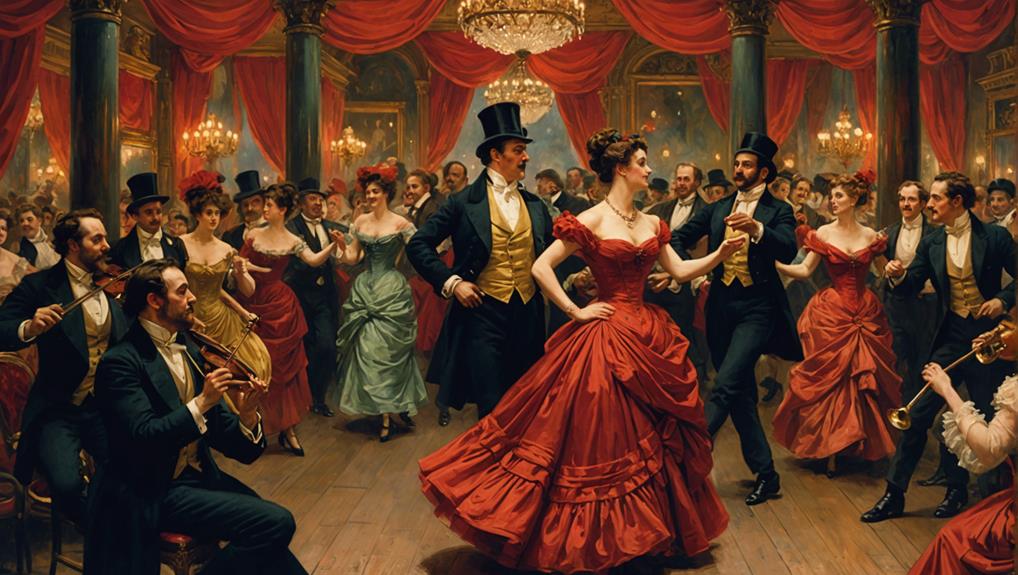
Toulouse-Lautrec’s vibrant prints and posters, housed at the Museum of Modern Art (MoMA), transport viewers to the decadent and artistic world of fin-de-siècle Paris. His art immortalized Montmartre’s vibrant nightlife, embracing the bohemian lifestyle and urban landscapes pulsing with energy and freedom. His portraits revealed the complexity of Parisian women’s lives, humanizing those of the demi-monde. MoMA’s collection showcases his mastery of lithography, innovative techniques, and iconic works like ‘La Goulue’ and ‘Jane Avril. ‘ As you explore Toulouse-Lautrec’s world, the City of Light comes alive, beckoning you to discover more of its hidden wonders. His ability to capture movement and emotion with bold lines and striking colors ensures his work remains timeless, resonating with contemporary audiences. Visitors inspired by his artistic vision may find themselves yearning for further cultural adventures, perhaps planning an itinerary as captivating as Florence in Five Days. Just as Toulouse-Lautrec immortalized Parisian nightlife, the masterpieces of Florence offer a glimpse into the artistic soul of the Renaissance.
Capturing the Essence of Montmartre
Toulouse-Lautrec's bold, expressive posters and prints captured the essence of Montmartre's vibrant nightlife, immortalizing the era's cabarets, dance halls, and brothels. His artwork didn't just depict the city's underbelly; it embodied the very spirit of the Bohemian lifestyle. In his prints, the urban landscapes of Montmartre came alive, pulsating with the energy of freedom and creativity.
Lautrec's unique perspective on the city's nightlife was shaped by his own experiences as a regular at these establishments. He'd often spend hours observing, sketching, and socializing with the dancers, musicians, and patrons. His art was an extension of his own desire for freedom, reflecting his rejection of traditional societal norms.
Through his posters and prints, Lautrec celebrated the unbridled spirit of Montmartre's artists, musicians, and performers. His artwork was a reflection of the era's unapologetic pursuit of pleasure and creativity. The city's narrow streets, winding alleys, and cramped cafes were reimagined as vibrant, pulsing scenes, teeming with life and energy.
Lautrec's artwork not only captured the essence of Montmartre but also embodied the spirit of rebellion and nonconformity that defined the Bohemian lifestyle. His prints and posters continue to inspire, inviting viewers to immerse themselves in the city's vibrant urban landscapes and revel in the freedom and creativity that defined the era.
Toulouse-Lautrec's Parisian Women
In his portraits of Parisian women, Lautrec's bold lines and vibrant colors captured the complexity of their lives, often revealing the subtle tensions between their public personas and private selves. These women, often fashion rebels, defied convention and lived life on their own terms. Lautrec's portraits humanized them, stripping away the glamour and revealing the vulnerability beneath.
From high-society matrons to brothel patrons, Lautrec's subjects were a diverse and vibrant bunch. He captured the essence of their lives, from the opulent salons of the aristocracy to the seedy underbelly of the city's brothels. His portraits of women like La Goulue, a can-can dancer, and Jane Avril, a courtesan, showcased their strength and resilience in the face of societal judgment.
Lautrec's fascination with the demi-monde, the world of brothels and courtesans, was not simply voyeuristic. Rather, he sought to humanize these women, to reveal the complex lives and emotions beneath the surface. His portraits are a tribute to the women's agency and independence, even in the face of societal oppression. Through Lautrec's lens, we see a Paris that is both beautiful and brutal, a city that is both liberating and suffocating.
The Art of French Cabaret Life
Five nights a week, the city's cabarets pulsed with life, drawing in patrons from all walks of Parisian society. The air was alive with the sound of laughter, music, and champagne glasses clinking together in a toast to freedom and creativity. It was the epicenter of bohemian lifestyle, where artists, writers, and musicians congregated to express themselves without judgment.
In this vibrant atmosphere, Henri de Toulouse-Lautrec found his muse. He captured the essence of French cabaret life in his prints and posters, showcasing the beauty and debauchery of the era. His artwork transported viewers to the heart of Montmartre, where the city's underground art scene thrived.
Café culture was at the core of this bohemian lifestyle, where intellectuals and artists gathered to discuss the latest avant-garde movements. Toulouse-Lautrec's art reflected this spirit of rebellion, as he pushed the boundaries of traditional art forms to create something entirely new and provocative.
Through his work, we glimpse the unbridled energy of Parisian nightlife, where the boundaries of social class and convention were momentarily forgotten. In the city's cabarets, people from all walks of life came together to celebrate the beauty of freedom and self-expression. Toulouse-Lautrec's art continues to inspire us, capturing the essence of a bygone era when creativity and liberation knew no bounds.
MoMA's Toulouse-Lautrec Collection Highlights
The Museum of Modern Art’s (MoMA) impressive collection of Toulouse-Lautrec prints and posters offers a unique glimpse into the artist’s fascination with the vibrant world of Parisian cabarets. This extensive collection, carefully curated by MoMA’s experts, showcases the artist’s innovative and provocative works that captured the essence of fin-de-siècle Paris. With over 300 prints and posters, MoMA’s collection is one of the largest and most all-encompassing in the world, providing an unparalleled look into Toulouse-Lautrec’s artistic vision. These works highlight Toulouse-Lautrec’s bold use of color, dynamic compositions, and keen observation of Parisian nightlife, cementing his legacy as a master of modern printmaking. His depictions of entertainers, dancers, and patrons offer an intimate perspective on the era’s social scene, much like the Obsession Nudes at The Met Breuer exhibition, which explored themes of sensuality and artistic fixation. Through these pieces, viewers can appreciate how Toulouse-Lautrec’s artistry continues to influence contemporary perceptions of beauty, movement, and expression.
The museum's curation team has carefully preserved and conserved these delicate works on paper, ensuring their longevity for future generations. Through meticulous art conservation efforts, the museum has protected the fragile prints and posters from deterioration, maintaining their vivid colors and intricate details. This dedication to preservation allows visitors to experience the artworks in their original glory, as if they were freshly printed.
MoMA's Toulouse-Lautrec collection highlights the artist's mastery of lithography, showcasing his bold and expressive use of color, line, and composition. The collection includes iconic works such as 'La Goulue' and 'Jane Avril,' which have become synonymous with the decadent and bohemian spirit of Montmartre's cabarets. With its all-encompassing collection and meticulous curation, MoMA offers a unique opportunity to explore the world of Toulouse-Lautrec, examining the intersection of art, literature, and music in fin-de-siècle Paris.
The Artist's Unique Printmaking Style
Over 100 lithographs, each a demonstration of his innovative printmaking techniques, showcase Toulouse-Lautrec's mastery of the medium. His unique style, characterized by bold lines, vibrant colors, and a mix of modernity and tradition, revolutionized the art of lithography. Toulouse-Lautrec's lithograph techniques allowed him to experiment with new ways of storytelling, often combining multiple scenes and perspectives within a single print.
One of the most striking aspects of Toulouse-Lautrec's printmaking style is his innovative typography. He often incorporated bold, expressive lettering into his designs, adding an additional layer of emotion and energy to his prints. This fusion of image and text creates a sense of dynamic movement, drawing the viewer's eye through the composition.
Toulouse-Lautrec's innovative approach to printmaking also extended to his use of color. He was a master of subtle, muted tones, but also knew how to deploy bold, vibrant hues to maximum effect. His prints often feature a mix of delicate, lace-like lines and bold, flat colors, creating a sense of tension and contrast that adds to their emotional impact.
Through his pioneering work in lithography, Toulouse-Lautrec freed the medium from its traditional constraints, creating a new language of visual expression that continues to inspire artists today. His innovative printmaking style, with its bold typography and vibrant colors, remains a tribute to his boundless creativity and artistic genius.
Frequently Asked Questions
Are Toulouse-Lautrec's Prints and Posters Available for Purchase?
She's wondering if Toulouse-Lautrec's iconic prints and posters are available for purchase. Fortunately, they are! Online marketplaces and art retailers offer high-quality reproductions with exceptional print quality. Purchase options range from affordable posters to premium art prints on various materials, including canvas and paper. With a few clicks, she can own a piece of art history, enjoying the freedom to decorate her space with the French master's enthralling works.
Can I Reproduce Toulouse-Lautrec's Work for Commercial Use?
As the vinyl record of Toulouse-Lautrec's era crackles to life, she wonders: can I reproduce his work for commercial use? Sorry, darling, but it's not that simple. Copyright laws are strict, and even the Museum of Modern Art (MoMA) can't grant permission. You'll need to prove Fair Use, a legal gray area, to avoid infringement. It's a delicate dance between inspiration and plagiarism. Tread carefully, or you might find yourself in a legal tango.
Are There Any Toulouse-Lautrec Exhibitions Currently Touring Worldwide?
She checks museum itineraries, art festivals, and travel guides to find out if there are any Toulouse-Lautrec exhibitions currently touring worldwide. According to recent exhibition reviews and cultural events listings, there's a retrospective show traveling to several cities. She's thrilled to discover it's coming to her hometown soon, giving her the freedom to explore the artist's works up close.
How Do I Properly Conserve and Store Toulouse-Lautrec Prints?
As she delicately unwrapped the Toulouse-Lautrec print, she coincidentally stumbled upon a conservation expert's article. It emphasized the importance of acid-free storage to prevent deterioration. Proper print framing with archival-quality materials and UV-filtering glass was also vital. Climate control was key, with a consistent temperature between 68-72°F and humidity below 60%. By following these conservation methods, she secured her treasured print remained vibrant, free from damage, and preserved for generations to come.
Are There Any Rare or Limited Edition Toulouse-Lautrec Prints Available?
She's on the hunt for rare Toulouse-Lautrec prints. Rarity factors like limited edition runs, unique signatures, and exceptional print provenance can make a piece truly special. Collectors seek out rare finds, and Lautrec's works are no exception. Limited edition prints, like those from his iconic 'Elles' series, are highly coveted. Print provenance, like a documented exhibition history, can have a substantial impact on a print's value and rarity.
About the Author