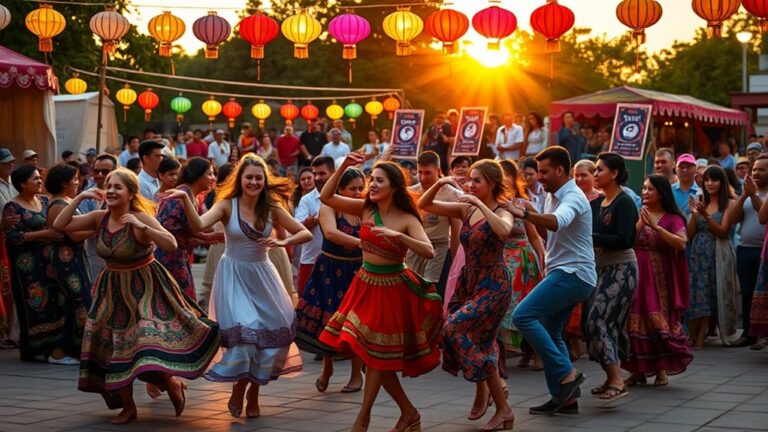
In ancient ceremonies, dance was essential for expression and connection among communities. It wasn't just about movement; it conveyed deep meanings and shared stories. Ritual dances often held spiritual significance, linking participants to the divine and their cultural roots. These movements created a sense of unity, nurturing social bonds during festivals and celebrations. Gender roles as well influenced dance styles, with male dancers showcasing strength and females embodying grace. Each step and gesture conveyed emotions and resonated with communal values. Exploring further, you'll discover how these practices shaped culture and left a lasting legacy.
Historical Overview of Dance
Throughout history, dance has served as an crucial form of expression and communication in various cultures. You'll discover that the dance evolution reflects the heartbeat of societies, revealing their values, struggles, and celebrations. Ancient techniques often blended practical movements with artistic flair, showcasing human creativity at its finest.
In many early civilizations, dance wasn't merely entertainment; it was intertwined with rituals and ceremonies. You can visualize how tribes would gather, their bodies moving together in sync, each step a prayer, a story, or a call to the gods. These performances were important for social cohesion and identity, connecting individuals to their community and heritage.
As you explore deeper, you'll notice that ancient cultures, from the Egyptians to the Greeks, utilized dance not just in religious contexts but in social gatherings as well. They demonstrated their beliefs and traditions through rhythmic movement, often breaking barriers that words couldn't convey.
The evolution of dance is a reflection of humanity's quest for freedom and self-expression. Over centuries, these ancient techniques laid the groundwork for the diverse forms of dance we see today. You'll appreciate how every style, whether it's ballet, hip-hop, or folk dance, carries echoes of its ancestors, celebrating the unique expedition of every culture.
Symbolism in Dance Movements
Dance movements often carry deep symbolism, conveying messages that words sometimes can't capture. When you watch a dancer move, you witness a form of interpretative expression that transcends language barriers. Each gesture, each turn, and each leap can tell a story rooted in cultural storytelling, rich with meaning and history.
Consider the following aspects of dance movements:
- Rhythmic Patterns: These patterns often reflect the heartbeat of a culture, embodying its joys and struggles. The rhythm can stir feelings of unity, freedom, and connection.
- Visual Symbolism: Dancers use their bodies to create images that resonate deeply. A simple arm extension can symbolize reaching for the heavens, whereas grounded footwork might express connection to the earth.
- Emotional Resonance: Dance captures raw emotions, allowing performers and viewers alike to experience a shared experience. It's a spiritual embodiment of feelings that might otherwise remain unexpressed.
As you observe these elements, you'll realize how impactful they are in evoking emotions. The dance becomes a living narrative, a conversation between the performer and the audience. Each movement, carefully crafted, resonates with the spirit of freedom we all crave. Through the lens of rhythmic patterns and visual symbolism, you can feel the pulse of a culture, its struggles, its triumphs, and its dreams. In this way, dance not only entertains but enlightens, inviting you into a world where freedom and expression dance hand in hand.
Dance in Religious Rituals
When you explore dance in religious rituals, you'll notice how sacred movements convey deep symbolism. These performances often strengthen the spiritual connection within a community, bringing individuals together in shared belief. By observing these dances, you can see how they serve as an essential expression of faith and unity.
Sacred Movements and Symbolism
Sacred movements in religious rituals have long served as a potent means of expressing devotion and connection to the divine. When you engage in these dances, you tap into a profound lineage of spiritual expression that transcends mere words. Each movement becomes a channel for divine force, allowing you to experience sacred rituals in a visceral way.
Consider how these dances can evoke strong emotions:
- Joy: The exhilaration of movement uplifts your spirit, reminding you of the freedom that faith can bring.
- Gratitude: Each step can express thankfulness, grounding you in the present moment and deepening your connection to the divine.
- Healing: Sacred movements often bring solace, allowing you to release burdens and embrace a sense of peace.
As you participate in these rituals, you embody the essence of divine expression. You become a vessel for ancient wisdom, connecting to something greater than yourself. So, let the rhythm guide you, and allow your spirit to soar through the sacred movements, celebrating both your individuality and your connection to the cosmos.
Community and Spiritual Connection
Participating in religious rituals through movement encourages a deep sense of community and spiritual connection among participants. When you join in dance, you're not just moving your body; you're engaging in a shared experience that improves spiritual bonding and strengthens communal identity. This collective act allows you to transcend individual differences, creating a space where freedom thrives.
Here's how dance cultivates this connection:
| Aspect | Description | Impact |
|---|---|---|
| Shared Experience | Everyone participates together | Builds unity |
| Cultural Heritage | Dance reflects traditions | Preserves identity |
| Emotional Release | Movement expresses feelings | Improves connection |
| Ritual Significance | Dance marks important life events | Deepens meaning |
| Spiritual Expression | Connects you to the divine | Cultivates transcendence |
In these moments, you feel a pulse of energy that binds you to others, reminding you that you're part of something much larger. The rhythm of the dance resonates in your heart, igniting a sense of liberation and belonging that nourishes both your spirit and your community.
Community Celebrations and Festivals
Community celebrations and festivals have long been lively expressions of cultural identity, where dance plays a central role in uniting people. When you participate in these festive gatherings, you're not just observing; you're becoming part of a dynamic mosaic woven from dance traditions and communal joy. The rhythmic expressions of dance echo the heartbeat of the community, creating a connection that transcends words.
Imagine the excitement as you join in the following:
- Dynamic Costumes: Each swirl of color represents a piece of cultural heritage, telling stories of ancestors and their lives.
- Celebratory Rituals: These time-honored practices bring everyone together, nurturing social bonding and a sense of belonging.
- Artistic Performances: Witnessing the skill and passion of dancers inspires freedom and creativity, reminding you of the beauty in self-expression.
As you sway to the music, you're participating in something much greater than yourself. The energy of the crowd fuels your spirit, creating a shared experience that resonates deeply. Whether it's a local festival or a grand celebration, the dance reflects the community's soul, emphasizing the importance of remembering where you come from as you embrace the present.
In these moments, you feel the pulse of your culture and the joy of togetherness. Dance becomes a celebration of life itself, a potent reminder of your roots and the unity that binds you to others. So, step onto the dance floor and let the rhythms of your heritage guide your movements!
Dance as Storytelling
Dance serves as a potent form of storytelling, weaving narratives that resonate across generations. When you step onto the dance floor, you're not just moving; you're participating in a rich fabric of dance narratives that convey emotions, histories, and experiences. Each gesture, each twist, and each turn becomes a movement metaphor, illustrating the struggles, joys, and triumphs of your ancestors.
Imagine yourself in a circle of friends, each of you expressing a story through your bodies. As you sway and leap, you're embodying the tales of love, loss, and hope that have been passed down through time. The rhythm of the music pulses through you, and with every beat, you're creating a connection to those who danced before you. This shared movement becomes a formidable language that transcends words, allowing for a profound comprehension of the human experience.
Through dance, you celebrate freedom—freedom to express, to connect, and to remember. The way you move can reflect not just individual stories but collective memories, preserving the essence of your culture. When you engage in dance, you're taking part in an age-old tradition that defies boundaries and speaks to the heart.
Cultural Variations in Dance
When you explore cultural variations in dance, you'll notice how regional styles reflect the unique history and values of different societies. Each movement often carries symbolic meanings, telling stories that resonate with their specific traditions. By comprehending these differences, you can appreciate the rich mosaic of dance across cultures.
Regional Dance Styles
Throughout history, various cultures have expressed their beliefs and traditions through unique regional dance styles. These styles not only mirror the community's history but also showcase the evolution of dance through regional influences and cultural fusions. You'll find that traditional techniques often blend with folk expressions, creating dynamic ethnic dances that resonate with the spirit of the people.
Here are three influential examples of regional variations:
- Flamenco – Originating from Spain, this passionate dance embodies the emotional depth of its cultural roots.
- Hula – A dance from Hawaii, rich in storytelling, it weaves the community's history and connection to nature into every movement.
- Kathak – A classical dance form from India, it showcases intricate footwork and gestures, reflecting both devotion and artistry.
These ritual dances serve as a bridge to the past, allowing you to connect with historical connections that shape your identity. As you explore these community styles, you'll discover how each dance tells a story of freedom, resilience, and the human experience, inviting you to celebrate the diverse expressions of life through movement.
Symbolic Movements and Meanings
In ancient cultures, movements in dance carried profound symbolism, often serving as a language of their own. Each step, twirl, or gesture you see isn't just for show; it's steeped in meaning. When you observe dancers performing, you're witnessing a rich mosaic of cultural narratives, where every symbolic gesture tells a story or conveys a message.
Take, for example, the rhythmic movements of indigenous tribes, where each dance is a tribute to nature, ancestors, or significant life events. You might notice how a swift arm movement can symbolize the flight of a bird or a grounding stomp can represent the strength of the earth. These gestures connect dancers to their heritage and community, echoing centuries of tradition.
As you explore further into various cultures, you’ll discover that the essence of dance often lies in its ability to convey emotions and beliefs without words. In this way, dance transcends language, allowing individuals to express their innermost feelings and shared histories. So, as you explore these performances, remember: every movement is a reflection of a culture’s soul, inviting you to experience its freedom and depth. Moreover, the evolution of dance styles continues to showcase the dynamic interplay between tradition and innovation. New dance star critics are buzzing about emerging artists who blend cultural elements with contemporary techniques, creating fresh narratives that resonate with diverse audiences. These performances not only entertain but also spark conversations about identity, heritage, and the universal human experience, making dance a powerful medium for connection across boundaries.
Instruments and Music in Ceremonies
While many may picture dance as the centerpiece of ancient ceremonies, instruments and music played an equally crucial role in creating an immersive experience. The combination of musical instruments and rhythmic patterns set the stage for influential expressions of culture, belief, and community. You can almost feel the energy shift as the sounds envelop you, drawing everyone into a shared moment of freedom and celebration.
Consider the following elements that made music indispensable in these ceremonies:
- Drumming: The deep, resonant beats connected participants to the earth, echoing the pulse of life itself. Each strike held the strength to awaken spirits and inspire movement.
- Flutes and Pipes: The sweet, airy sounds of woodwinds glided through the air, lifting souls and infusing the atmosphere with a sense of transcendence. They often accompanied the dance, enhancing the emotional depth of the moment.
- Chanting and Singing: Vocal expressions created a bond among participants, inviting everyone to join in harmony. The collective voice became a significant tool for reinforcing shared identities and beliefs.
Together, these musical elements created a fabric of sound that resonated within the hearts of those present. They weren't just background noise; they were the heartbeat of the ceremony, guiding the dancers and enveloping the audience in a rich auditory experience. As you explore the ancient world, keep in mind that music and instruments were just as critical as the dance itself in celebrating freedom and unity.
Dance and Social Cohesion
Dance serves as a strong catalyst for social cohesion, bringing communities together in ways that transcend language and cultural barriers. When you take part in a dance, you're not just moving to the rhythm; you're engaging in a shared experience that nurtures dance unity. This collective movement creates a bond among participants, reinforcing the sense of belonging that every individual craves.
In many ancient cultures, dance wasn't merely entertainment; it was a crucial form of communal expression. Whether you were celebrating a harvest, honoring deities, or marking life shifts, dancing together allowed you to connect with others on a deeper level. Each step, each gesture, communicated emotions and stories that words often couldn't capture. This unspoken language brought people together, creating a significant sense of community.
Imagine standing in a circle with your friends, family, or even strangers, all moving in sync. You feel the energy pulsing through the group, a reminder that you're part of something larger than yourself. In this shared space, individual differences fade away, and a collective identity emerges. It's this kind of unity that strengthens social bonds and nurtures a spirit of cooperation and comprehension.
Gender Roles in Ancient Dance
When you explore ancient dance, you'll notice distinct roles for men and women that reflect societal norms. Each gender often performed specific movements in rituals, shaping the dynamics of their cultures. Comprehending these roles reveals the deeper significance of dance beyond mere entertainment.
Masculine vs. Feminine Roles
In many ancient cultures, gender roles in dance were clearly defined, shaping the way performances were perceived and enacted. These traditional roles often confined dancers to specific expressions, limiting their potential to explore deeper emotions or identities. As masculine expression typically embodied strength and vigor, feminine grace exuded delicacy and beauty.
Consider the following emotional aspects of these roles:
- The weight of expectation: You feel the pressure to conform to cultural expectations, sacrificing your authentic self.
- The joy of movement: Envision breaking free from these constraints, reveling in the sheer joy of dance, unbound by gender.
- The influence of unity: Picture a world where dancers embrace gender fluidity, celebrating the ritual significance of movement that transcends traditional boundaries.
These ancient practices, despite being rich in history, reflect the limitations imposed by society. As you explore the past, recognize the potential for transformation and the freedom to express your individuality. By comprehending these gender dynamics, you can reclaim the dance floor, honoring both masculine and feminine energies, and in the end cultivating a more inclusive celebration of movement.
Rituals and Gender Dynamics
Ancient rituals often served as a canvas for expressing gender dynamics within dance, revealing how cultural narratives shaped performances. You might notice that these dances weren't just about movement; they communicated the roles and expectations tied to gender performance. In ritual spaces, men and women often occupied distinct yet interconnected roles, showcasing the prevailing beliefs of their time.
For instance, male dancers might have taken on strong, assertive movements, symbolizing strength and authority, whereas female dancers often expressed grace and fluidity, embodying nurturing qualities. This division wasn't merely a reflection of physical capabilities but rather a reinforcement of societal norms. Yet, within these rituals, there was likewise a fascinating interplay. You could see moments where boundaries blurred, allowing for a subversion of traditional roles.
These dynamics created a dialogue about identity and influence, inviting participants and observers alike to question the very fabric of their cultural narratives. As you engage with these ancient practices, consider how the ritual space served as both a stage for performance and a platform for challenging or reinforcing gender roles, eventually enriching the experience of dance.
Cultural Significance of Movement
During exploring the cultural significance of movement in ancient dance, you'll notice how deeply intertwined these performances were with societal expectations and gender roles. Dance served as a significant form of body language, expressing cultural identity and historical context. It was more than just rhythmic patterns; it was an expressive art that allowed individuals to connect, communicate, and heal through movement therapy.
You'll find that ancient dances often reflected the unique roles assigned to different genders, shaping kinesthetic awareness and emotional release. Here are three poignant aspects that highlight this emotional connection:
- Strengthening through Expression: Dance provided a platform for individuals to assert their identity and challenge societal norms.
- Community and Belonging: Each movement facilitated social interaction, creating bonds that transcended the individual experience.
- Cultural Preservation: Through dance, traditions were passed down, ensuring that the essence of a community remained alive.
The Influence of Dance on Art
Dance has profoundly influenced art throughout history, serving as both inspiration and subject matter for countless artists. The fluidity of movement and the emotions conveyed through dance aesthetics have found their way into various artistic forms, from painting to sculpture and beyond. You can see how artists capture the essence of dance, translating dynamic motion into visual representation that speaks to the freedom of expression.
Here's a look at some notable intersections between dance and art:
| Art Form | Influence of Dance | Notable Artists |
|---|---|---|
| Painting | Capturing movement in color | Edgar Degas, Henri Matisse |
| Sculpture | Form and posture in three dimensions | Alexander Calder, Isamu Noguchi |
| Photography | Freeze-frame moments of dance | Martha Graham, Lois Greenfield |
| Digital Art | Animation and dance choreography | Julie Taymor, Wayne McGregor |
When you explore these connections, you realize how dance transcends its physical boundaries, inspiring artists to push the limits of their own mediums. The rhythm, grace, and energy of dance resonate deeply, encouraging a dialogue between movement and artistic interpretation. By embracing the freedom that dance embodies, you invite a fresh perspective into your artistic endeavors, allowing the beauty of motion to enrich your creative expedition. So, whether you're a dancer or an artist, keep in mind that the influence of dance can ignite your imagination and raise your work to new heights.
Legacy of Ancient Dance Traditions
The legacy of ancient dance traditions continues to shape contemporary performance and cultural expressions today. As you immerse yourself in modern dance, you can feel the echoes of ancient choreography that have been passed down through generations. This connection not only enriches your experience but also carries the weight of history, culture, and emotion.
Here are three influential ways ancient dance traditions impact you today:
- Emotional Expression: Ancient dances were often tied to significant life events. When you dance, you tap into a deep well of emotions, just as your ancestors did during rituals of joy, sorrow, or celebration.
- Cultural Identity: Each dance form carries with it a unique story, a thread of culture that weaves through time. By engaging in these movements, you connect with your heritage and share it with others, nurturing a sense of belonging and pride.
- Dance Preservation: The effort to preserve ancient choreography allows you to witness the beauty and complexity of dances that have shaped communities. Participating in this preservation guarantees these traditions live on, inspiring future generations to explore their roots.
In a world craving freedom, ancient dance traditions offer you a pathway to express your individuality as you honor the collective spirit of humanity. Embrace these legacies, and let them guide your movements as you dance through life, celebrating the past as you forge your unique story.
Frequently Asked Questions
What Were the Earliest Forms of Dance in Ancient Cultures?
When you explore the earliest forms of dance in ancient cultures, you'll find they held deep ritual significance. These dances often served as cultural expressions, allowing communities to connect with spiritual beliefs and celebrate life's milestones. Movements were often synchronized with music, creating a strong communal experience. You can see how these early dances nurtured a sense of identity and belonging, reflecting the values and emotions of the people who created them.
How Did Ancient Dance Evolve Over Time?
How did dance become such a potent form of expression? As you explore ancient cultures, you'll see dance evolving from simple movements into complex forms, reflecting their cultural significance. Initially, dances served ritualistic purposes, connecting communities to their spiritual beliefs. Over time, they adapted to societal changes, blending influences and styles. This evolution highlights humanity's desire for freedom and connection, allowing dance to become a dynamic celebration of life and culture across generations.
Were There Specific Costumes Used in Ancient Dance?
Yes, ancient dance often featured specific costumes that reflected cultural significance. When you think about ceremonial attire, consider how it represented the values, beliefs, and identity of a community. These outfits weren't just for show; they helped convey messages and emotions during performances. Each detail, from colors to materials, had meaning, allowing you to appreciate the rich heritage and stories woven into the fabric of those dances. Embrace the strength of expression through these lively costumes!
Did Ancient Dance Have Any Impact on Modern Dance Forms?
Ancient dance definitely influences modern dance forms, shaping styles and techniques we see today. You'll notice the cultural significance in movements and rhythms that originated centuries ago. As you explore different dance genres, you'll find echoes of ancient practices in everything from ballet to hip-hop. These connections highlight how dance evolves, reflecting society's values and emotions, as well as celebrating the rich history that continues to inspire freedom and creativity in movement.
How Was Dance Documented in Ancient Societies?
Envision discovering a treasure chest filled with ancient dance artifacts, each piece telling a story. In societies long gone, dance was documented through historical records like hieroglyphs and pottery. These artifacts reveal how movement captured emotions and rituals, offering glimpses into lives lived freely. Just as each dancer expresses their spirit, these leftovers connect us to the past, reminding you that dance has always been an essential form of expression and communication.
About the Author