
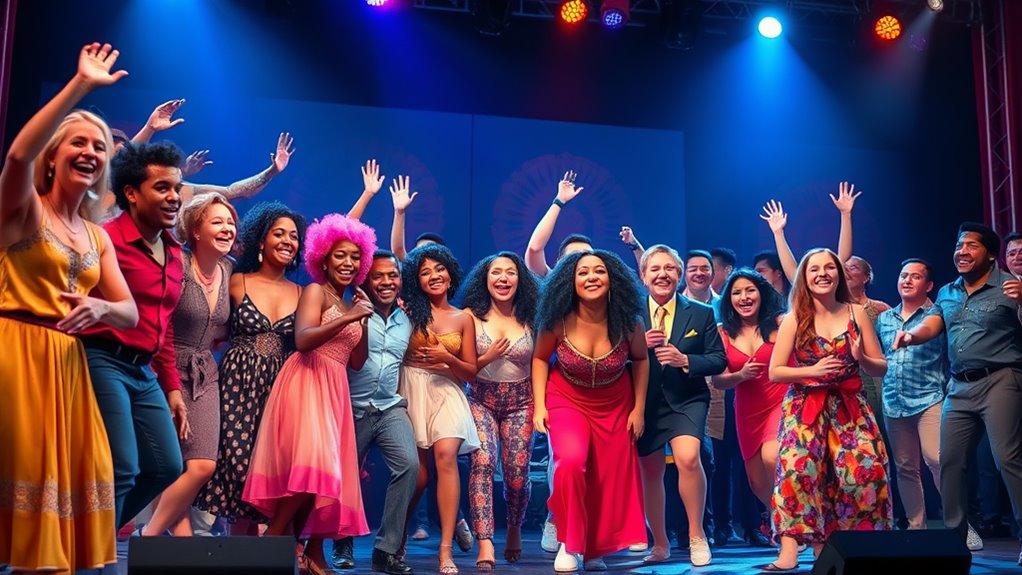
Theater has emerged as a formidable platform for celebrating diversity and inclusion, providing a unique space for marginalized voices to be amplified, cultural barriers to be broken, and social norms to be challenged. By centering diverse playwrights, directors, and performers, theater nurtures belonging among diverse audience members and promotes nuanced insight. Through cultural exchange, multilingual productions, and community outreach programs, theater encourages cross-cultural awareness and shared narratives. As a catalyst for social change, theater mobilizes community engagement, sparks critical conversations, and inspires audience impact. As we explore the multifaceted role of theater, we uncover the profound impact it has on shaping a more inclusive society.
Amplifying Marginalized Voices
Amplifying marginalized voices in theater has become a pressing concern, as the industry shifts its focus in the direction of inclusivity and representation. This shift is vital in providing a platform for underrepresented groups to share their cultural narratives and experiences. Historically, mainstream theater has been dominated by Eurocentric perspectives, often marginalizing the voices of people of color, women, and LGBTQ+ individuals.
To address this imbalance, theater practitioners and scholars are working to center marginalized voices in the creative process. This involves creating opportunities for diverse playwrights, directors, and performers to bring their unique perspectives to the stage. By doing so, theater can become a potent tool for social change, challenging dominant cultural narratives and providing a platform for marginalized communities to express themselves authentically.
In addition, historical contexts must be considered when amplifying marginalized voices. Theater has the ability to reframe and reinterpret historical events, providing a more nuanced comprehension of the past. By centering marginalized voices in these narratives, theater can help to rectify historical injustices and promote a more inclusive perception of the past. In the end, amplifying marginalized voices in theater is fundamental for creating a more diverse, inclusive, and representative cultural environment.
Breaking Down Cultural Barriers
As the theater industry shifts its focus in the direction of inclusivity and representation, the importance of breaking down cultural barriers cannot be overstated. Theater has the unique ability to bring people together from diverse backgrounds, nurturing empathy and comprehension through cultural exchange. By creating a platform for artistic collaboration, theater companies can bridge the gap between different cultures, promoting cross-cultural insight and appreciation.
Through breaking down cultural barriers, theater can:
- Celebrate diverse traditions: Incorporating traditional music, dance, and costumes from various cultures, allowing audiences to experience the richness of diverse heritages.
- Challenge stereotypes: Presenting nuanced and complex characters that defy cultural and racial stereotypes, promoting a more accurate representation of diverse communities.
- Encourage empathy and comprehension: Encouraging audiences to walk in the shoes of characters from different cultural backgrounds, facilitating a deeper grasp of their experiences and perspectives.
- Create a sense of community: Bringing people together from diverse backgrounds, creating a shared experience that transcends cultural boundaries.
Challenging Social Norms
Theater has long been a powerful medium for challenging social norms, sparking critical discussions, and inspiring positive change. By presenting alternative perspectives and experiences, theater has the ability to disrupt social expectations and encourage audiences to question their beliefs and values. This is particularly important in today's society, where diversity and inclusion are increasingly important.
| Theatrical Device | Challenging Social Norm |
|---|---|
| Non-traditional casting | Challenging traditional gender roles and racial stereotypes |
| Unconventional narrative structures | Disrupting linear and patriarchal storytelling |
| Immersive and interactive performances | Breaking down the fourth wall and challenging audience passivity |
| Satire and irony | Exposing and critiquing societal hypocrisies and injustices |
Through theatrical critique, productions can highlight the flaws and inconsistencies in social norms, encouraging audiences to think critically about the world around them. By presenting complex and nuanced portrayals of diverse experiences, theater can challenge social norms and inspire positive change. By doing so, theater can play a crucial role in promoting diversity and inclusion, and nurturing a more empathetic and equitable society.
Creating Empathy Through Storytelling
- Immersive set designs that transport audiences to unfamiliar environments, allowing them to experience the world through the eyes of the characters.
- Authentic dialogue that captures the nuances of diverse cultures, languages, and identities, creating a sense of authenticity and relatability.
- Poignant character arcs that explore the intricacies of human emotion, encouraging empathy and comprehension among audience members.
- Incorporating real-life stories and testimonies, providing a platform for marginalized voices to be heard and amplifying the importance of representation.
Diverse Representation Matters
Diverse representation in theater is vital for nurturing a sense of belonging and authenticity among audience members from diverse backgrounds. Authentic character portrayals, inclusive storytelling practices, and diverse casting choices are important in breaking down stereotypes and promoting nuanced comprehension. By prioritizing these elements, theater can become a more inclusive and empowering space for both performers and spectators.
Authentic Character Portrayals
Many productions fall short in their depiction of diverse characters, relying on stereotypes and tropes that perpetuate harmful biases. This lack of genuine representation undermines the very purpose of theater: to reflect and celebrate our collective humanity. Authentic character portrayals are crucial in breaking down these barriers and nurturing a deeper comprehension of diverse experiences.
Authenticity can be achieved through:
- Culturally specific casting: Confirming that actors from underrepresented groups are cast in roles that reflect their own cultural backgrounds.
- Research-driven character development: Immersing into the nuances of a character's cultural identity to create a rich and accurate portrayal.
- Collaboration with cultural consultants: Engaging with experts from diverse backgrounds to guarantee that representations are respectful and accurate.
- Avoiding tokenism and stereotyping: Steering clear of reductionist or simplistic portrayals that perpetuate harmful biases.
Inclusive Storytelling Practices
As authentic character portrayals lay the groundwork for meaningful representation, the stories themselves must similarly be crafted with inclusivity in mind. This necessitates a deliberate approach to storytelling, one that values diversity and promotes community engagement. By doing so, theater companies can cultivate a sense of ownership and connection among underrepresented groups, eventually enriching the artistic experience. Inclusive storytelling practices additionally encourage narrative innovation, as playwrights and directors are compelled to explore fresh perspectives and challenge dominant narratives. This, in turn, can lead to the creation of more nuanced, multidimensional stories that resonate with a broader audience. Furthermore, inclusive storytelling can facilitate the development of new theatrical forms and languages, further broadening the medium's expressive possibilities. By embracing diverse voices and experiences, theater can become a significant catalyst for social change, promoting empathy, comprehension, and collective growth.
Diverse Casting Choices
Theater's casting process serves as a vital gateway to representation, where the deliberate selection of actors can either perpetuate stereotypes or shatter them. This process is essential in promoting diversity and inclusion on stage. Diverse casting choices can greatly impact the narrative, providing a more authentic representation of the characters and their experiences.
Effective representation strategies in casting can:
- Subvert traditional racial and gendered tropes by casting actors of color in roles traditionally reserved for white actors.
- Introduce fresh perspectives through color blind casting, where actors are chosen based on their talent rather than their race or ethnicity.
- Amplify underrepresented voices by casting actors with disabilities or from marginalized communities.
- Redefine traditional character archetypes by challenging stereotypical portrayals and introducing nuance and complexity.
Encouraging Cross-Cultural Understanding
Encouraging cross-cultural comprehension is an essential aspect of nurturing diversity in theater, as it allows audiences to connect with experiences and perspectives that may be vastly different from their own. By breaking cultural barriers, theater can provide a platform for empathetic storytelling that promotes mutual respect and comprehension. Through thoughtful and nuanced representation, theater can bridge cultural divides and facilitate a deeper appreciation for the intricacies of human experience.
Breaking Cultural Barriers
- Multilingual productions, where performances are translated into multiple languages to cater to diverse audiences.
- Intercultural casting, where actors from different ethnicities are cast in roles that challenge traditional representations.
- Cultural consulting, where experts from diverse backgrounds advise on the accuracy and sensitivity of cultural representations.
- Community outreach programs, where theaters engage with local communities to develop productions that resonate with their experiences.
Theater can break down cultural barriers, promoting cross-cultural comprehension and empathy. By doing so, it can create a more inclusive and diverse environment, where audiences can come together to share in the universal language of storytelling.
Empathetic Storytelling Matters
Beyond the confines of cultural boundaries, storytelling has the profound ability to transcend linguistic and ethnic divides, speaking directly to our shared humanity. Empathetic storytelling matters as it nurtures emotional resonance, allowing audiences to connect with characters and experiences that may seem foreign, yet feel intimately familiar. Through narrative techniques such as character development, dialogue, and setting, storytellers can craft nuanced and authentic portrayals of diverse cultures, encouraging cross-cultural comprehension and empathy.
When done effectively, empathetic storytelling can dissolve stereotypes and challenge assumptions, revealing the intricacies and commonalities that exist across cultures. By presenting diverse perspectives and experiences, theater can facilitate a deeper insight into the human condition, highlighting the universal struggles, desires, and hopes that unite us all. As a result, empathetic storytelling has the influence to break down cultural barriers, promote inclusivity, and celebrate the rich mosaic of human diversity.
Fostering Inclusive Communities
In the domain of theater, nurturing inclusive communities is crucial for creating an environment where diverse voices are heard, valued, and strengthened. By encouraging a sense of belonging and social cohesion, theater can bring people together, promote cultural awareness, and celebrate the richness of diverse experiences.
Inclusive communities are built through:
- Community engagement: theater companies can engage with local communities through outreach programs, workshops, and collaborative projects, ensuring that diverse voices are represented on and off stage.
- Artistic partnerships: partnerships between theater companies and local organizations can facilitate the development of inclusive practices, promoting cultural awareness and community empowerment.
- Shared experiences: theater can provide a shared experience for audiences from diverse backgrounds, promoting empathy and comprehension through the influence of storytelling.
- Local initiatives: local initiatives can be developed to address specific community needs, promoting social cohesion and community engagement.
Giving Voice to Untold Stories
Theater has long been a potent medium for storytelling, but historically, certain voices have been silenced or marginalized. Giving voice to untold stories enables underrepresented communities to share their experiences, challenging dominant narratives and breaking free from stereotypical molds. By amplifying marginalized voices, theater can become a catalyst for social change, promoting empathy and comprehension.
Amplifying Marginalized Voices
Through the lens of marginalized communities, stories of struggle, resilience, and triumph await discovery, offering a wealth of untold narratives that can enrich the fabric of our collective human experience.
Theater has the influence to amplify these marginalized voices, providing a platform for community engagement and artistic collaboration. By doing so, it can:
- Illuminate hidden histories, shedding light on the experiences of communities that have been silenced or erased.
- Challenge dominant narratives, offering alternative perspectives that subvert stereotypes and misconceptions.
- Foster empathy and comprehension, allowing audiences to connect with characters and stories that may seem unfamiliar.
- Celebrate diversity and individuality, showcasing the unique cultural practices, traditions, and values of marginalized communities.
Breaking Stereotypical Molds
One of the most significant barriers to truly representative storytelling is the perpetuation of stereotypical characters and narratives, which can further marginalize already underrepresented communities. Theater has the influence to challenge these stereotypes, giving voice to untold stories and breaking the mold of traditional representations.
| Stereotype | Subversion | Mold Breaking |
|---|---|---|
| The "strong black woman" | Portraying vulnerability and emotion | Humanizing black female characters |
| The "nerdy Asian" | Showcasing athleticism and creativity | Diversifying Asian representation |
| The " Latinx gang member" | Depicting academic achievement and ambition | Redefining Latinx identity |
| The "elderly person" | Highlighting wisdom and experience | Challenging ageism |
| The "disabled person" | Emphasizing agency and independence | Normalizing disability representation |
Highlighting Intersectional Identities
Diverse narratives have long been absent from mainstream theater, leaving marginalized communities without a plunge of themselves on stage. This absence has led to a lack of representation, perpetuating stereotypes and further marginalizing already underrepresented groups. Nonetheless, theater has the ability to change this narrative by highlighting intersectional identities.
Intersectional narratives in theater provide a platform for identity exploration, allowing individuals to see themselves reflected in complex, multidimensional characters. This is particularly important for communities that have been historically marginalized, such as people of color, women, LGBTQ+ individuals, and people with disabilities. By showcasing intersectional identities, theater can humanize and dignify these experiences, promoting empathy and comprehension.
The following examples illustrate the impact of intersectional narratives in theater:
- A play that explores the experiences of a queer woman of color, probing into the intersections of racism, sexism, and homophobia.
- A production that centers around the story of a disabled person, highlighting the intersections of ableism, racism, and classism.
- A musical that celebrates the intersectional identity of a non-binary individual, maneuvering gender, race, and sexuality.
- A drama that portrays the experiences of a refugee, exploring the intersections of xenophobia, racism, and classism.
Impacting Social Change
By amplifying intersectional identities, theater has the potential to catalyze meaningful social change, extending its impact beyond the stage and into the broader social fabric. Theatrical activism, in particular, has been instrumental in fueling social movements, from the Civil Rights Movement to the LGBTQ+ rights movement. By leveraging the strength of performance, theater can mobilize community engagement, spark critical conversations, and inspire audience impact. Additionally, art education and performance outreach initiatives can further amplify the theatrical voice, nurturing a culture of inclusivity and diversity.
Through cultural representation and narrative change, theater can challenge dominant narratives and offer alternative perspectives, eventually contributing to a more nuanced comprehension of the human experience. Artistic collaboration and societal reflection are also vital in this process, as they facilitate a deeper exploration of the intricacies inherent in social change. By engaging with diverse communities and creating spaces for marginalized voices to be heard, theater can drive meaningful social transformation. In the end, the impact of theater on social change lies in its ability to humanize, to empathize, and to inspire collective action. By utilizing the strength of performance, theater can become a potent catalyst for a more just and equitable society.
Promoting Cultural Exchange
Through cross-cultural dialogue and artistic expression, theater nurtures a deeper insight into the world's rich cultural mosaic, dissolving boundaries and bridging gaps between communities. By facilitating cultural dialogues and artistic collaborations, theater cultivates global perspectives, encouraging diverse audiences to engage with intercultural narratives.
Theatrical festivals, which bring together artists and performers from diverse backgrounds, offer a unique platform for cultural exchange. These events provide opportunities for shared experiences, community engagement, and audience participation, dissolving cultural barriers and promoting mutual comprehension. Moreover, theatrical festivals often showcase a variety of performances that challenge conventional narratives and highlight underrepresented voices, creating an inclusive environment for all participants. As audiences experience the rich tapestry of stories and artistic expression, the festivals become a vibrant celebration of encores off center, inviting everyone to reflect on their own cultural contexts. This dynamic interaction fosters a sense of unity and appreciation, ultimately enriching the global arts landscape.
Some examples of successful cultural exchange programs in theater include:
- Traditional Practice Exchange: A program where artists from different cultural backgrounds share and learn from each other's traditional practices, such as music, dance, or puppetry.
- Performance Exchanges: A platform that enables artists to showcase their work in different cultural contexts, promoting cross-cultural insight and appreciation.
- Intercultural Collaborations: A project that brings together artists from diverse backgrounds to co-create a performance piece, blending different cultural styles and narratives.
- Community Engagement Initiatives: A program that engages local communities in the creative process, encouraging active participation and ownership of cultural exchange initiatives.
These initiatives not just promote cultural exchange but additionally enrich the theatrical experience, making it more diverse, inclusive, and engaging.
Telling Authentic Stories
In the end, genuine storytelling in theater has the strength to build bridges between communities, nurturing greater compassion and comprehension. By sharing their stories, underrepresented voices can challenge dominant narratives, encouraging a more inclusive and varied cultural environment. In this way, genuine storytelling is an essential element of theater's diversity mission, driving meaningful audience connection and social change.
Frequently Asked Questions
Can Theater Performances Be Inclusive for People With Disabilities?
As the curtains draw open, a pressing question arises: can theater performances truly be inclusive for people with disabilities? The answer lies in accessibility. By incorporating accessible performances and sensory-friendly events, theaters can bridge the gap, providing an immersive experience for all. With thoughtful accommodations, such as audio descriptions and wheelchair-accessible seating, the magic of theater can be felt by everyone, regardless of ability. Inclusivity is not a distant dream, but a tangible reality waiting to be staged.
How Can I Get Involved in Diversity-Focused Theater Initiatives?
To get involved in diversity-focused theater initiatives, consider participating in community workshops or outreach programs that prioritize underrepresented voices. Research local organizations that align with your values and reach out to their leadership to explore opportunities. Many initiatives offer training, mentorship, or volunteer roles that can help you build connections and gain experience. By immersing yourself in these programs, you can contribute to creating more inclusive and diverse theatrical experiences that resonate with a broader audience.
What Role Does Funding Play in Promoting Diverse Theater?
Significantly, 75% of theaters with diverse leadership receive less than 25% of their funding from government sources, highlighting the need for alternative funding streams. Funding plays a vital role in promoting diverse theater, enabling productions to showcase underrepresented voices and stories. Securing funding from diverse sources, such as private foundations, corporate sponsors, and grant opportunities, is fundamental for sustaining inclusive theater initiatives. By exploring these funding sources, diverse theater companies can flourish, nurturing a more representative and lively performing arts environment.
Can Theater Be Used to Address Historical Injustices?
Theater has the potential to address historical injustices by reframing dominant historical narratives and offering nuanced social commentary. Through the performance of marginalized voices and experiences, theater can humanize and give agency to those affected by past injustices. By reexamining and reinterpreting historical events, theater can cultivate empathy, spark critical dialogue, and promote a deeper comprehension of the ongoing impact of historical injustices on contemporary society.
Are Diversity and Inclusion Goals Measurable in Theater Productions?
Measuring diversity and inclusion goals in theater productions is an essential aspect of ensuring representation and equity. Key performance indicators (KPIs) can be established to track audience demographics, such as age, ethnicity, and socioeconomic status, to gauge the effectiveness of inclusive marketing strategies. Additionally, monitoring production teams' demographics and creative decision-making processes can provide valuable insights into the representation of diverse voices and perspectives. By setting measurable goals, theaters can hold themselves accountable and work towards more inclusive and diverse productions.
About the Author


