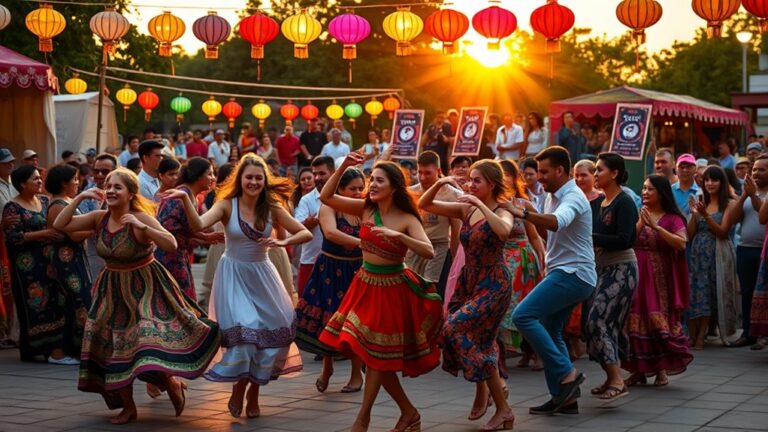

Dance boosts your mood by releasing endorphins, which trigger feelings of happiness and reduce stress. When you move, your brain increases serotonin levels, leading to sustained emotional benefits. Engaging in dance additionally improves your cardiovascular health, making you feel more energetic. Plus, dancing in a group can improve social connections, creating a sense of belonging and joy. It's not just about the physical benefits; it allows for emotional expression and mindfulness too. As you immerse yourself in the rhythm, your mood can shift dramatically. Discover how different dance styles uniquely improve your overall emotional well-being.
The Role of Endorphins
When you dance, your body releases a surge of endorphins, those incredible hormones that create feelings of happiness and euphoria. This potent endorphin release is your body's natural way of responding to movement and rhythm, tapping into a wellspring of joy that enhances your mood. As you lose yourself in the music and let your body flow, you're not just moving; you're revealing a sense of freedom that's hard to replicate in any other activity.
Every twirl, step, and beat you embrace sends signals to your brain, triggering those delightful endorphins that can make even the heaviest heart feel lighter. You might find yourself smiling without even realizing it, as the dance works its magic, seamlessly uplifting your spirits. This mood enhancement isn't just a fleeting moment; it can last long after you've stepped off the dance floor.
Imagine breaking free from the constraints of everyday life, allowing your body to express itself fully. Dance grants you that liberation, and in return, it rewards you with a rush of happiness that's both invigorating and soothing. Whether you're dancing alone in your living room or with friends at a club, the endorphins you release create an atmosphere of joy and connection.
Dance and Brain Chemistry
When you dance, your brain releases a cocktail of chemicals that can lift your mood. Endorphins flood your system, as dopamine provides that rush of pleasure, making you feel great. Plus, serotonin plays a key role in regulating your overall mood, showing just how strong dance can be for your mental well-being.
Endorphin Release Mechanism
Dancing isn't just a fun way to express yourself; it also triggers a fascinating release of endorphins in your brain. These chemicals act as natural painkillers and mood lifters, giving you that euphoric feeling after an exhilarating dance session. When you hit the dance floor, your body engages in endorphin synthesis, which sparks a strong neurochemical response.
Here's a breakdown of how it works:
| Step | Description |
|---|---|
| Movement | As you dance, your body moves rhythmically, increasing heart rate and circulation. |
| Stress Relief | Physical activity reduces stress hormones, allowing endorphins to flourish. |
| Pain Management | Endorphins help mask discomfort, enabling you to move freely and enjoy every beat. |
| Euphoria | The surge of endorphins creates a sense of happiness and well-being, making you crave more. |
Dopamine and Pleasure
Alongside the endorphin rush, dancing also stimulates the release of dopamine, a neurotransmitter closely linked to pleasure and reward. When you dance, you engage your body and mind, creating an exhilarating experience that lights up your pleasure centers. This dopamine release can boost your mood and nurture a sense of joy, making every dance session feel rewarding.
Here's how dancing boosts your dopamine levels:
- Movement: As you move to the rhythm, your body responds, triggering neurotransmitters that improve your overall sense of well-being.
- Social Connection: Dancing with others cultivates connection, which can amplify dopamine release and enrich your emotional experience.
- Creativity: Expressing yourself through dance allows for personal freedom, opening creative pathways that further stimulate dopamine production.
Serotonin and Mood Regulation
Throughout history, dance has played a crucial role in enhancing emotional well-being, and its impact on serotonin levels is significant. When you dance, your body kicks into gear, boosting serotonin production, that crucial neurotransmitter linked to happiness and emotional stability. This surge can help you shake off feelings of anxiety and depression, creating a sense of freedom and joy.
Studies reveal that regular dance can lead to lasting changes in serotonin levels, which means it's not merely a temporary fix. Engaging in this expressive movement can be particularly beneficial if you struggle with mood disorders. As you lose yourself in the rhythm, the act of dancing can lift your mood and reduce the symptoms of these disorders, letting you experience life more fully.
The beauty of dance lies in its ability to unite body and mind, tapping into feelings you might not express otherwise. So, next time you feel overwhelmed, consider dancing as your outlet. Not only will you boost your serotonin levels, but you'll likewise embrace a liberating escape that empowers you to take charge of your emotional well-being. Let the music move you and watch your mood transform!
Physical Benefits of Dancing
When you dance, you're not just having fun; you're additionally boosting your physical health. The movement increases endorphin production, improves your cardiovascular health, and augments muscle strength. So, let's explore how these benefits can transform your overall well-being.
Increases Endorphin Production
Dancing isn't just a fun way to express yourself; it's likewise a strong mood booster thanks to its ability to increase endorphin production. When you dance, your body releases these feel-good hormones, creating endorphin spikes that can raise your mood considerably. This is one reason why dance therapy is becoming increasingly popular for mental health.
So, how does dancing improve your endorphin levels? Here are three key points:
- Physical Movement: The more you move, the more endorphins you produce. Whether you're grooving at a party or taking a class, each step counts.
- Rhythmic Activity: Engaging with music and rhythm amplifies those endorphin spikes, giving you an extra boost in happiness and energy.
- Social Connection: Dancing often involves interaction with others, which can improve feelings of belonging and joy, further encouraging endorphin releases.
Improves Cardiovascular Health
One of the most significant benefits of dancing is its ability to improve cardiovascular health. When you dance, you're not just having a blast; you're additionally giving your heart a fantastic workout. The rhythmic movements raise your heart rate, promoting better circulation and strengthening your cardiovascular system. You don't need to be a professional dancer to reap these cardiovascular benefits; whether you're busting a move at a party or taking a dance class, your heart will thank you.
Regular dancing helps lower blood pressure, improve cholesterol levels, and reduce the risk of heart disease. It's a joyful way to boost your heart health as you experience the freedom of movement. Plus, dancing can be customized to your personal style—whether you prefer salsa, hip-hop, or ballroom, there's a dance for everyone.
Enhances Muscle Strength
Through the joy of movement, dance greatly improves muscle strength across various muscle groups. When you engage in dance, you're not just expressing yourself; you're also embracing a form of strength training that promotes muscle development. The rhythm and flow of dance require coordinated movements that challenge your body, leading to improved strength and stability.
Here are three key ways dance boosts your muscle strength:
- Full-Body Engagement: Dance involves almost every muscle group, from your core to your limbs, ensuring a thorough workout.
- Dynamic Resistance: The varied movements and positions in dance create natural resistance, which helps build muscle without the monotony of traditional strength training.
- Improved Balance and Coordination: As you dance, your body learns to stabilize itself, augmenting overall strength and control, which translates into your daily activities.
Social Connection Through Dance
Connecting with others on the dance floor creates a lively sense of community that can lift anyone's spirits. When you participate in dance gatherings, you're not just moving to the music; you're building connections, sharing joy, and nurturing a sense of belonging. This dynamic atmosphere encourages community engagement, allowing you to meet new people and strengthen existing friendships.
Dancing together breaks down barriers, and the shared experience can cultivate feelings of happiness and acceptance. You might find it exhilarating to move in sync with others, creating a rhythm that binds you together. This connection can be especially impactful in group settings, where everyone's energy amplifies the experience.
Here's a little breakdown of the benefits of social connection through dance:
| Benefit | Description |
|---|---|
| Emotional Support | Sharing experiences can help you feel understood. |
| Increased Confidence | Dancing with others boosts your self-esteem. |
| Sense of Belonging | Being part of a group nurtures a feeling of inclusion. |
Dance as a Form of Expression
Dance serves as a strong outlet for expressing emotions and experiences that words often can't capture. When you move your body to the rhythm, you release feelings that might be tangled inside. This freedom of expression allows you to communicate your innermost thoughts, celebrating the unique aspects of your identity and culture.
Here are three impactful ways dance serves as a form of expression:
- Emotional Release: Dance lets you channel your feelings, whether it's joy, sadness, or anger. The physical movement can transform emotional energy into art, liberating you from the confines of everyday life.
- Cultural Significance: Many dances carry historical and cultural meanings, nurturing a connection to your roots. You can honor traditions and share stories through the movements, celebrating the diversity that enriches our world.
- Personal Storytelling: Each dance you perform tells a story, reflecting your experiences, struggles, and triumphs. This personal narrative resonates not just with you but with others, creating a shared awareness that transcends language.
Ultimately, dance empowers you to embrace your individuality as you connect with others on a deeper level. It's not simply about moving to a beat; it's about expressing who you are and celebrating the beauty of human experience. So, let loose, feel the music, and let your body do the talking.
The Impact of Rhythm
There's something magical about rhythm that can instantly raise your spirits. When you feel that beat pulsing through your body, it's like an invitation to lose yourself in the moment. Rhythm perception is a dynamic element that influences how you connect with music and dance. It's that innate ability to recognize patterns and beats that gets you tapping your feet or swaying your hips, igniting a sense of freedom.
As you embrace the rhythm, you naturally engage in rhythmic synchronization with the music, aligning your movements to the tempo. This synchronization isn't just about dance; it's a gateway to feeling more alive and present. When you move in harmony with the rhythm, your mind and body unite, creating a euphoric experience that enhances your mood.
You might notice that dancing to your favorite songs can momentarily wash away stress and negativity. That's due to rhythm activating areas of your brain associated with pleasure and reward. It's a physical expression of joy, allowing you to break free from the constraints of everyday life.
Letting go and immersing yourself in rhythm can transform your mood, turning a mundane moment into a lively celebration. So next time you hear that infectious beat, don't hesitate—dance it out! Feel the rhythm take over, synchronize your moves, and watch your worries fade into the background. Embrace the magic of rhythm and let it uplift your spirit.
Mindfulness and Movement
As you lose yourself in the rhythm, consider how mindfulness can enrich that experience. Mindful movement invites you to connect deeply with your body, enhancing your awareness and allowing you to dance with intention. When you embrace this concept, you'll discover that each step, turn, and sway becomes a celebration of freedom and expression.
Here are three ways to cultivate mindfulness in your dance:
- Focus on Breath: Pay attention to your breath as you move. Inhale deeply to energize your movements, and exhale to release tension. This simple practice grounds you, helping you stay present in the moment.
- Tune Into Your Body: Be aware of how your body feels with each movement. Notice the sensations—whether it's the way your feet connect with the ground or the fluidity of your arms. This body awareness nurtures a deeper connection to the dance.
- Dance with Intention: Set an intention before you start dancing. It could be to express joy, release stress, or simply enjoy the music. By focusing on this intention, you create a more meaningful experience that resonates with your emotional state.
Dance Styles and Mood Enhancement
How do different dance styles impact your mood? Each style brings its unique flavor, inviting you to experience an emotional boost that can set you free. Let's explore how these movements can enhance your spirits.
If you're drawn to ballet, you'll find that its grace offers ballet benefits, enhancing your posture and boosting confidence. The elegance of each movement can instill a sense of discipline and beauty, making you feel uplifted. Conversely, hip hop happiness thrives on energy and rhythm. It allows you to express yourself, igniting a fire within that leaves you feeling exhilarated.
When you dance salsa, you can’t help but break into salsa smiles. The lively beats and playful interactions with partners create an atmosphere of joy and connection. Contemporary dance emphasizes emotional expression, nurturing a deep contemporary connection that resonates with your inner self. This emotional depth is what makes dance such a powerful form of communication, transcending words and touching hearts. It’s fascinating to see how critics react to dance, analyzing both the technical precision and the raw emotion that performers bring to the stage. Whether it’s the infectious energy of salsa or the introspective nature of contemporary dance, every movement tells a story that leaves a lasting impression.
Jazz joy brings a playful spirit, encouraging you to let loose and embrace spontaneity. You'll find that every step is a celebration of life. Then there's tango tranquility, where the intimate movements encourage deep connections, allowing you to lose yourself in the moment.
Folk fun invites community and tradition, wrapping you in a sense of belonging. Finally, swing satisfaction combines upbeat tempos with lively movements, filling you with energy and enthusiasm. Whatever your preferred style, dance offers a path to emotional liberation, so find your rhythm and let it lift your mood!
Overcoming Stress With Dance
Dancing provides a strong outlet for overcoming stress, allowing you to channel your emotions and release tension. When life feels overwhelming, dance can be your escape, offering a sense of freedom and joy that helps you shake off the stress. Dance therapy isn't just about moving to music; it's an influential tool that can transform your mood and well-being.
Here are three ways dance helps you find stress relief:
- Physical Expression: Movement lets you express feelings that words can't capture. By dancing, you can release pent-up emotions and feel lighter afterward.
- Mindfulness and Focus: When you dance, you immerse yourself in the rhythm, leaving worries behind. This focus on the present moment helps clear your mind, reducing anxiety and creating a sense of peace.
- Social Connection: Joining a dance class or dancing with friends nurtures a sense of community. These connections can combat loneliness and stress, reminding you that you're not alone in your struggles.
Whether you're swaying to a slow ballad or breaking a sweat to upbeat tunes, dance is an influential way to confront stress. It invites you to embrace your body and emotions, promoting healing and joy. So, the next time stress creeps in, turn on some music and let your body move. You'll discover a renewed sense of freedom and relief that only dance can provide.
Incorporating Dance Into Daily Life
Integrating dance into your daily routine can be a simple yet impactful way to improve your mood and well-being. You don't need to be a professional dancer to experience the benefits; just a little rhythm can go a long way. Start by carving out time for dance classes, whether in-person or online tutorials, that fit into your week. These sessions can infuse some excitement into your daily routines.
Home workouts can likewise be a fantastic way to break up the monotony. Create a personal playlist filled with your favorite upbeat tracks and let go! You'll find that moving to the music instantly uplifts your spirits. If you want to get the family involved, turn dance into a fun family activity. Host a dance-off or simply dance around the living room together. It's a great way to bond and share laughter, lifting everyone's mood.
Don't forget about community events! Check out local performances or dance parties where you can connect with others who share your love for movement. If you're feeling adventurous, try rhythm games that get your body moving as you challenge your coordination. The more you incorporate dance into your life, the more freedom you'll feel. So, release your inner dancer and let the rhythm guide you to a happier, healthier you. Remember, it's all about having fun and enjoying the freedom that dance brings!
Frequently Asked Questions
How Does Dance Compare to Other Physical Activities for Mood Improvement?
Envision yourself gliding across the floor, the rhythm pulsing through your veins. Dance offers unique benefits compared to other physical activities, tapping into your emotions as you move. Unlike a monotonous gym workout, dancing lets you express yourself freely, lifting your spirits and boosting your mood. The joy of creativity combined with the physical activity invigorates your soul. So, lace up those dancing shoes and feel the transformation that dance can bring to your life!
Can Dancing Help With Anxiety or Depression Symptoms?
Yes, dancing can definitely help with anxiety or depression symptoms. When you engage in dance therapy, you're not just moving; you're experiencing an emotional release that can lift your spirits. Letting loose on the dance floor allows you to express feelings you might not usually share. It's a liberating experience that nurtures joy and connection, making you feel more alive. So, go ahead and dance—it's a strong tool for healing!
What Age Groups Benefit Most From Dancing for Mood Enhancement?
You'd think only kids benefit from dancing, right? But guess what? Both children and seniors find joy in those rhythmic moves! For kids, dance aids in child development, boosting coordination and social skills. Meanwhile, seniors engage in dance to stay active, improve memory, and connect with others. So, whether you're a playful child or a lively grandparent, dancing can uplift your mood and offer a liberating escape from life's everyday stresses.
Is There a Specific Type of Dance That Boosts Mood More Effectively?
When you're looking for a dance that really lifts your spirits, salsa might just be your go-to. Its upbeat rhythm and social vibe create an exhilarating experience that can boost your mood considerably. As ballet has its own calming effects, it's the lively energy of salsa that often sparks joy and freedom in your movements. So, if you want to feel colorful and alive, immerse yourself in salsa and let the rhythm take you away!
How Often Should One Dance to Experience Mood Benefits?
Did you know that dancing just twice a week can greatly improve your mood? To truly experience mood benefits, aim for a consistent dance frequency of two to three times weekly. This rhythm helps you maintain mood consistency, allowing your spirit to soar. Don't worry about perfection; just let loose and enjoy the freedom of movement. The more you dance, the more you'll tap into those uplifting vibes that keep you feeling great!
About the Author