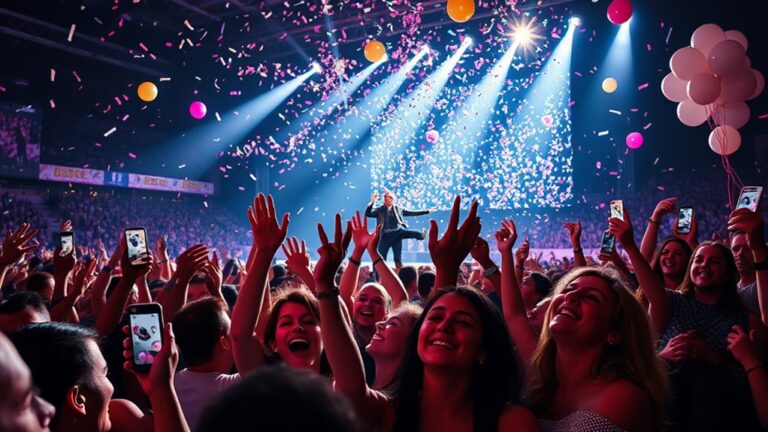
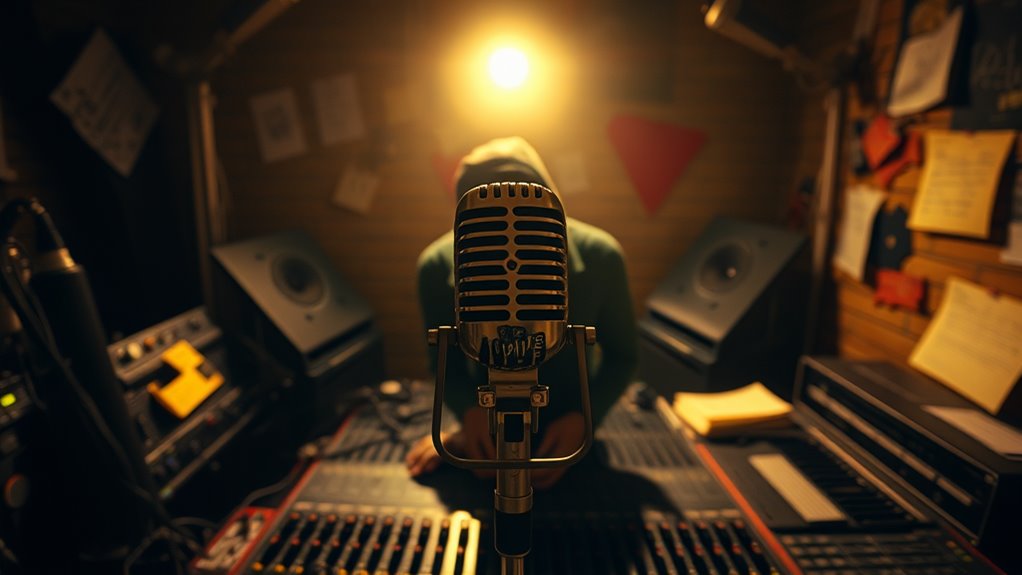
As you explore the rise of DIY pop stars, you're likely wondering what critics think about this seismic shift in the music industry. They're divided, with some celebrating the democratization of music production and the empowerment of artists to take control of their careers, whereas others raise concerns about the erosion of skill and the potential for inauthenticity. With the ease of music production tools, critics question whether artists are sacrificing quality for convenience. But as you dig deeper, you'll discover the intricacies of this movement and how it's redefining the music industry in ways both exciting and unsettling.
The Democratization of Music
With the advent of digital recording technology, many of the traditional barriers to entry in the music industry have been torn down, and the democratization of music has begun in earnest. You no longer need an extravagant recording studio or a fat record label check to produce high-quality music. You can do it all from the comfort of your own home (or garage, or basement, or wherever you set up your makeshift studio). This shift has led to a surge in artist empowerment, giving you the creative freedom to produce music that's truly yours.
You're no longer bound by the constraints of industry executives telling you what kind of music to make or how to make it. You're the boss, the artist, and the producer all rolled into one. This means you can experiment with different sounds, styles, and genres without worrying about pleasing anyone else. The result? Music that's more authentic, more innovative, and more reflective of your unique vision.
Of course, this democratization of music likewise means that you have to be your own everything – manager, marketer, and distributor, in addition to being the artist. But many musicians would argue that's a small price to pay for the freedom to create on their own terms. So go ahead, grab your laptop, and start making music. The world is waiting to hear what you've got to say.
Quality Control in Question
As you take the reins of your music production, you're faced with a new challenge: guaranteeing your music meets your own standards of quality. Gone are the days of label executives breathing down your neck, but that freedom comes with a price – quality control is now entirely up to you. It's easy to get caught up in the excitement of creating, but without a team of professionals to keep you in check, it's tempting to release music that's, well, less than stellar.
So, how do you guarantee your music meets your own standards of quality assurance? Here's a breakdown of what you should consider:
| Aspect | DIY Approach | Professional Touch |
|---|---|---|
| Mixing and Production | Using online tutorials and trial-and-error | Hiring a seasoned engineer or taking an online course |
| Lyrics and Composition | Relying on personal taste and intuition | Collaborating with other songwriters or taking feedback from peers |
| Vocal Production | Using auto-tune and hoping for the best | Taking vocal lessons and working with a producer |
| Instrumentation | Using virtual instruments or asking a friend to fill in | Hiring session musicians or learning to play yourself |
| Editing and Revisions | Trusting your gut and calling it a day | Taking a break, revisiting, and making changes based on feedback |
Authenticity in the Age
In today's digital environment, authenticity is more crucial than ever, and you're the gatekeeper of your artistic identity. As a DIY pop star, you're responsible for crafting an image, sound, and message that resonates with your audience. But with the ease of manipulation on social media, it's tempting to fake it till you make it. Don't. Your fans can sniff out a phony from a mile away, and once you've lost their trust, it's game over.
Instead, focus on building a personal brand that's rooted in musical integrity. Be true to your art, even though it's not trendy or mainstream. Your unique voice and perspective are what set you apart from the sea of wannabes. Don't try to emulate someone else's style or sound; it's exhausting and eventually, unfulfilling. Embrace your quirks and flaws – they're what make you relatable and human.
The Rise of Bedroom Producers
You're no longer bound by traditional recording studio costs or the need for specialized skills to produce high-quality music. With a laptop and software, you can create and record tracks from the comfort of your own bedroom, democratizing music production in the process. This shift has led to a new era where accessibility trumps skill, allowing you to focus on your creative vision rather than technical expertise.
Democratizing Music Production
Creativity knows no bounds, and the walls of traditional recording studios are crumbling. You're no longer bound by geographic location or financial constraints to produce high-quality music. With the rise of music technology, you can now create, record, and produce music from the comfort of your own home – or bedroom, as the case may be. This democratization of music production has opened doors for creative collaboration like never before. You can connect with other artists, producers, and musicians from around the world, all from the click of a button.
You're no longer limited by the constraints of a physical studio, where you'd have to book time and worry about expensive equipment. Now, you can experiment with different sounds, styles, and genres, all during the enjoyment of the freedom to work at your own pace. And the best part? You don't need to be a tech whiz to get started. With user-friendly software and online tutorials, you can plunge right in and start creating. The possibilities are endless, and the music world is all the better for it.
Accessibility Over Skill
Five minutes ago, you were a music enthusiast with a dream; today, you're a bedroom producer, crafting hits in the comfort of your own home. The rise of DIY pop stars has made it possible for anyone to create music, regardless of skill level. In the realm of accessibility has its perks, critics argue that it comes at the cost of skill erosion and talent dilution.
- You can release a song without ever leaving your pajamas, let alone stepping foot in a recording studio.
- Auto-tune and other software can mask your lack of vocal talent, making you sound like a pro (kind of).
- You don't need to know how to read music or play an instrument; loops and samples can do the work for you.
- Online tutorials and YouTube videos can teach you the basics of music production in no time (or so they claim).
- With social media, you can promote your music to a global audience without ever having to deal with industry gatekeepers.
Although this democratization of music production has its benefits, it's hard to deny that the ease of access has led to a watering down of talent. The question remains: is accessibility more important than skill in the arena of DIY pop stardom?
Social Media's Role in Discovery
Hundreds of aspiring musicians are taking to social media platforms every day, hoping to get discovered and catapulted to stardom. You're probably one of them, scrolling through Instagram, TikTok, or YouTube, dreaming of going viral and waking up to a record deal. And why not? Social media has democratized music discovery, making it possible for anyone to get noticed.
You're not just uploading your music and waiting for the magic to happen, though. You're creating content that sparks viral trends and encourages audience engagement. You're posting behind-the-scenes glimpses of your songwriting process, sharing snippets of new tracks, and engaging with your followers in the comments. You're building a community, and that community is crucial to getting noticed.
Social media platforms are now the go-to places for A&R reps, talent scouts, and industry insiders to find fresh talent. They're searching for that special something – a unique sound, a fascinating personality, or a viral sensation that can't be ignored. And when you combine your music with a strong online presence, you increase your chances of getting discovered. So, keep posting, keep engaging, and who knows, you might just be the next big thing.
The Impact on Industry Veterans
Many established artists are finding themselves having to adapt to this new DIY environment, where social media has become an essential tool for staying relevant. You might think, "Hey, I've been doing this for decades, why do I need to change?" But the truth is, the game has changed, and if you're not willing to evolve, you'll be left in the dust.
Legacy artists are having to rethink their strategies to stay competitive. Here's what they're facing:
- Reinventing their brand: Figuring out how to appeal to a new generation of fans who are more interested in TikTok than traditional album sales.
- Ditching the middleman: Learning to produce, record, and distribute their own music, cutting out the need for record labels and industry execs.
- Getting social media savvy: Perfecting the art of Instagram stories, Twitter threads, and Facebook Live to connect with fans directly.
- Staying current: Keeping up with the latest trends, from genre-bending sounds to viral dance challenges.
- Embracing the DIY ethos: Taking control of their own careers, from writing and producing to marketing and promoting.
It's not easy, but for those willing to put in the work, the rewards can be huge. By evolving their strategies, legacy artists can stay relevant, stay creative, and even discover new fans. So, the next time you see your favorite artist from the 90s posting a TikTok video, just remember – they're not trying to be cool, they're trying to survive in a brave new world.
Blurring the Lines Between Artist
You're about to enter a world where artistic control reigns supreme, and you'll find that DIY pop stars are no longer just musicians, but furthermore producers, mixers, and mastering specialists. By taking on these roles, they're challenging traditional industry norms and redefining what it means to be an artist. As you explore this shift, you'll see how it's allowing creatives to push boundaries and produce music that's truly authentic.
Artistic Control Reigns
Taking creative reins empowers DIY pop stars to shape their artistry, dissolving the boundaries between artist, writer, and producer. You're no longer just a singer, but a mastermind behind the music. With the reins in hand, you can finally give your art the personal touch it deserves. Creative freedom is no longer a luxury, but a necessity.
Here's what you gain when you're in the driver's seat:
- Unbridled personal expression: Your music becomes a true reflection of yourself, without any external influences diluting your vision.
- Experimentation galore: You can try out new sounds, styles, and themes, pushing the boundaries of what's considered "pop."
- No more middlemen: You're not beholden to producers or writers who might not share your artistic vision.
- Total control over your brand: You dictate the visual aesthetic, tone, and message behind your music.
- Authenticity shines through: Your music becomes a genuine representation of who you are as an artist, without any pretenses or compromises.
Industry Norms Challenged
By dissolving the traditional hierarchies, DIY pop stars are rewriting the rules of the music industry, where the lines between artist, writer, and producer are becoming increasingly blurred. You're no longer just a singer; you're a jack-of-all-trades, handling everything from songwriting to production. This DIY innovation is disrupting the mainstream music scene, challenging the long-held notion that you need a team of experts to create a hit song. With the rise of accessible technology and social media platforms, you can now produce, record, and distribute your music without the need for a traditional record label.
As a result, the traditional roles within the music industry are becoming obsolete. You're seeing artists take on multiple roles, from writing and producing their own music to designing their album artwork and directing their music videos. This mainstream disruption is forcing industry professionals to rethink their approach and adapt to the changing environment. With DIY pop stars leading the charge, the music industry is becoming a more democratized and inclusive space. So, buckle up and get ready for a wild ride, as the future of music has never looked more exciting!
The Business of DIY Music
The music industry's shift in the direction of digital distribution has created an unprecedented opportunity for artists to take control of their own careers, and the business of DIY music is booming as a result. You're no longer at the mercy of record labels and industry bigwigs; you're the boss, calling the shots, and making the decisions. And it's not merely about the music itself – it's about the entire brand you're building around it.
As a DIY pop star, you're not just an artist, you're an entrepreneur. You're responsible for your own DIY marketing strategies, which can be as creative as they are effective. You're likewise in charge of finding independent label collaborations that align with your vision and values. It's a lot of work, but the payoff is worth it – you get to keep creative control, and a bigger slice of the profit pie.
Here are just a few ways the business of DIY music is changing the game:
- You can release music on your own schedule, rather than waiting for a label to greenlight it.
- You can connect directly with your fans, building a loyal following that will support you through thick and thin.
- You can experiment with new sounds and styles, without worrying about pleasing a label executive.
- You can keep your artistic vision intact, without compromising to fit someone else's mold.
- You can make a living doing what you love, without having to sacrifice your artistic integrity.
It's a brave new world, and you're at the helm. So what are you waiting for? Take the reins, and let your DIY pop star shine!
Is Mainstream Success Possible
Can you really make it big as a DIY pop star, or is mainstream success just a pipe dream? Well, the answer is a resounding maybe. Although it's true that the internet has democratized music distribution, making it easier for you to get your tunes out there, it's still a tough slog to achieve mainstream appeal.
You see, mainstream success isn't just about making great music (although that's a solid start). It's about having a team behind you, pushing your brand and getting your face (and voice) in front of the right people. As a DIY pop star, you're basically a one-person team, juggling songwriting, production, marketing, and more. That's a lot of hats to wear, and it's easy to get overwhelmed.
That being said, it's not impossible. With the right strategy, a dash of creativity, and a whole lot of hard work, you can increase your chances of chart success. You need to be willing to take risks, experiment with different sounds and styles, and engage with your audience in a way that feels authentic and relatable. Oh, and don't forget to have a solid social media game – it's 2023, after all!
Frequently Asked Questions
Can Anyone Become a DIY Pop Star With Minimal Talent?
Can anyone become a DIY pop star with minimal talent? You bet! But let's get real, having some talent doesn't hurt. It's like trying to bake a cake without flour – you might get a sweet mess, but it's not gonna win any awards. Talent evaluation is key, but it's not the only success factor. You gotta have the drive, style, and social media savvy to make it big. So, if you're willing to put in the work, even a tone-deaf tune can become a viral sensation!
How Do DIY Artists Handle Copyright and Royalty Issues?
You're about to release your inner pop sensation on the world, but wait, what about those pesky copyright and royalty issues? Don't let them harsh your mellow! As a DIY artist, you'll need to navigate music licensing and royalty distribution, but it's not as scary as it sounds. Think of it as inviting your music to a party, where everyone gets a fair share of the fun (and the cash). Just make sure to do your homework, and you'll be singing all the way to the bank!
Do DIY Pop Stars Make a Sustainable Living From Their Music?
You're wondering if DIY pop stars can actually make a living off their tunes? Well, it's not all sunshine and rainbows, but it's definitely possible. You see, these indie artists are masters of exploring their revenue streams. They're not just relying on album sales; they're making bank from merch, touring, and even YouTube ad revenue. And let's not forget about audience engagement – they're building loyal fanbases that'll support them till the end of time (or at least until the next album drops).
Can DIY Artists Maintain Creative Control With Industry Involvement?
You're stuck between a rock and a hard place regarding maintaining creative control with industry involvement. Conversely, you want to keep your artistic vision intact, but you need the industry's resources to reach a wider audience. Don't let industry pressures suffocate your creative freedom! Remember, it's your art, and you shouldn't compromise on your vision just to fit into someone else's mold.
Do DIY Pop Stars Face More Scrutiny Than Traditionally Signed Artists?
You're wondering if DIY pop stars get picked apart more than traditionally signed artists, huh? Well, let's face it, you're under a microscope! With social media, every move you make is magnified, and audience expectations are sky-high. One wrong note, and the Twitterverse is ready to pounce. But, on the flip side, that same social media scrutiny can likewise be your biggest ally, helping you build a loyal fanbase that's got your back. So, it's a double-edged sword, really!
About the Author