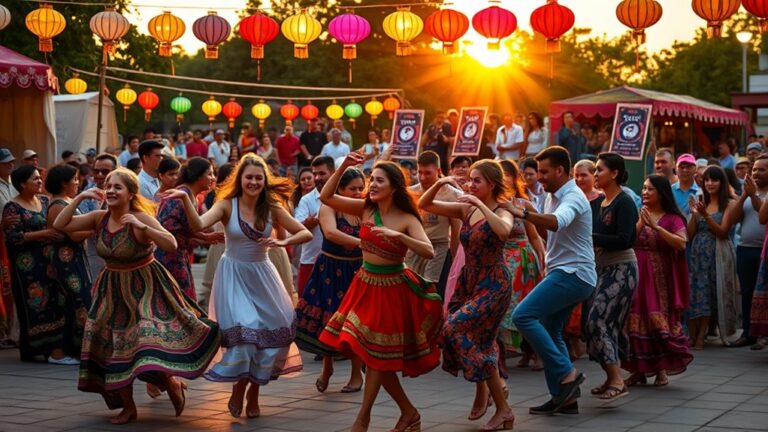

Each dance genre showcases its unique flair through technique, expression, and cultural roots. Ballet combines grace with precise movements, whereas hip-hop celebrates individuality and rhythm. Salsa invites you to join its lively community spirit, and contemporary dance emphasizes emotional storytelling. Folk dance reflects cultural heritage, connecting participants with shared history. Tap dance uses feet as instruments to convey stories, and African dance's polyrhythms encourage unity. Ballroom dancing emphasizes elegance, and jazz opens the door to personal creativity and rhythm play. Each genre offers a fascinating perspective on movement, inviting you to explore their distinctive qualities and histories further.
Ballet's Graceful Precision
Ballet captivates with its graceful precision, showcasing a blend of strength and artistry that few other dance forms can match. When you step into the realm of ballet, you're embracing a voyage that demands dedication and passion. Ballerina training isn't just about learning steps; it's about immersing yourself in a rich tradition that emphasizes classical technique. Each plié and relevé becomes a demonstration of your commitment to perfecting your craft.
As you progress through your training, you'll find that the beauty of ballet lies in its intricate movements and the discipline required to execute them flawlessly. You'll learn to express your emotions through the sharp lines of your body, transforming each performance into a story that resonates with your audience. This isn't merely about physicality; it's about cultivating an inner strength that encourages freedom of expression.
Ballet offers you a unique opportunity to explore your artistic voice as you refine your body's capabilities. You'll develop flexibility, balance, and poise, which are fundamental for mastering classical technique. With every grand jeté and pirouette, you'll feel the exhilarating combination of strength and finesse, freeing your spirit through movement.
The Energy of Hip-Hop
As ballet embodies elegance and precision, hip-hop bursts onto the scene with an infectious energy that invites you to express yourself freely. This dance genre thrives on the dynamic pulse of street culture, where urban expression flows like a river of creativity. Hip-hop isn't just about the moves; it's a celebration of individuality, where each dancer showcases their unique flavor through freestyle techniques and lyrical improvisation.
Picture yourself in a dance battle, surrounded by a community that's all about connection and support. Here, rhythm variation reigns supreme, allowing you to play with tempos and beats, making every performance fresh and exhilarating. The music you choose is a canvas for your self-expression, as hip-hop embraces musical fusion, blending genres to create something entirely new and exciting.
Beyond the dance floor, hip-hop serves as a voice for social movements, channeling the struggles and triumphs of a generation. It's a potent medium that connects people, breaking down barriers and inviting everyone to join in. When you dance hip-hop, you're not just moving your body; you're part of a larger narrative, a story that speaks to resilience and empowerment.
Cultural Roots of Salsa
Salsa's lively rhythms and passionate movements stem from a rich fabric of cultural influences, primarily rooted in Afro-Caribbean traditions. You can trace its origins back to the lively Cuban heritage, where African rhythms blended with Spanish melodies to create an infectious sound that invites you to dance. This unique fusion emerged from the social gatherings in Cuba, where people came together to celebrate life, love, and community.
As you step onto the dance floor, you'll feel the spirit of those gatherings, where dance improvisation allowed individuals to express their emotions and personalities freely. Each dancer contributes their unique style, making every performance a personal expression of joy and passion. Salsa embodies the idea that dance is not just about following steps; it's about connecting with others, sharing energy, and celebrating the moment.
In essence, salsa is more than just a dance; it's a cultural celebration. It invites you to break away from the mundane and immerse yourself in a world filled with rhythm and life. Whether you're twirling with a partner or moving solo, you're part of a larger narrative—a story woven from the threads of history, community, and love. So, let yourself go, embrace the music, and release your inner dancer; the rich cultural roots of salsa are calling you to join in the joyous expression of life.
Expressive Movements in Contemporary
In the domain of contemporary dance, expressive movements serve as a strong means of storytelling and emotional connection. You'll find that this genre thrives on the fluidity and spontaneity of movement, allowing you to explore deep into your emotions as you share your unique narrative. Contemporary dance encourages you to investigate improvisational techniques, which can lead to unexpected and impactful moments on stage.
The beauty of expressive movements lies in their ability to convey complex feelings without the need for words. You'll experience a liberating sense of freedom as you embody these expressions, connecting not just with yourself but with your audience. Certainly, the raw emotional expression in contemporary dance can evoke profound responses, creating a shared experience that transcends verbal communication.
Here are some key aspects of expressive movements in contemporary dance:
- Fluidity: Movements often blend together, creating a seamless flow that mirrors the complexity of human emotions.
- Physicality: Every gesture and posture is intentional, serving as a strong reflection of your inner state.
- Connection: Dancers often interact with one another, highlighting the importance of relationships and shared experiences.
- Improvisation: This genre invites spontaneous creativity, allowing you to respond to your emotions and surroundings in real time.
Traditional Elements of Folk Dance
Folk dance encompasses a rich fabric of traditional elements that reflect the cultural heritage and communal spirit of various communities. When you step into a folk dance, you're not just moving to a rhythm; you're joining others in a celebration of shared history and identity. These dances often require community participation, inviting everyone to join in, regardless of skill level. This inclusivity nurtures a sense of belonging and connection, strengthening bonds between dancers.
Regional variations play a significant role in folk dance, as each area brings its unique flavor and style. You might find lively jigs in one region, whereas another showcases graceful waltzes. The music, costumes, and even the stories told through movements differ widely, painting a vivid picture of the local customs and traditions. This diversity allows you to experience the essence of different cultures, as every step tells a story of its own.
Additionally, folk dances often celebrate significant events such as weddings, harvests, or seasonal changes, giving you the chance to participate in meaningful communal experiences. You'll find that these dances are often passed down through generations, keeping traditions alive and allowing you to connect with your roots. As you engage in folk dance, you're not just a spectator; you're an active participant in a lively mosaic of culture and community, embracing freedom through the joy of movement. So, gather your friends, learn those steps, and immerse yourself in the rich traditions of folk dance!
The Storytelling of Tap Dance
Tap dance isn't just about the steps; it's a lively expression of rhythm and sound that tells a story. You can trace its roots through historical influences, revealing how different cultures have shaped this dynamic dance form. As you explore tap, you'll see how each tap can convey emotions and narratives that resonate with audiences.
Rhythm and Sound
Rhythm and sound intertwine beautifully in the art of tap dance, creating a dynamic storytelling medium that captivates audiences. When you step onto the stage, each tap resonates with syncopated beats and melodic patterns, allowing you to express emotions that words can't capture. The distinct sounds of your shoes connect with the music, crafting a dialogue between the dancer and the audience.
- The use of syncopated beats adds an unexpected twist, keeping viewers engaged and on their toes.
- Melodic patterns emerge through your footwork, creating a musical fabric that's uniquely yours.
- Each performance tells a story, where every tap becomes a word, and every rhythm forms a sentence.
- As you dance, you invite the audience to feel the tempo of your voyage, creating an intimate connection.
In tap dance, you hold the influence to communicate joy, sorrow, and everything in between. Your feet become instruments, delivering a message that transcends spoken language. So, embrace the rhythm and sound, and let your dance tell your story in a way that only you can.
Historical Influences
The enchanting sounds you create with your feet in tap dance have deep roots in a rich historical fabric. This dance form embodies a lively narrative shaped by cultural evolution and dance migration. Tap dance emerged from the blending of African rhythms, Irish jigs, and British clogging, illustrating how diverse traditions can intertwine to create something beautiful.
As you tap your feet, you're not just making music; you're participating in a story that spans generations. The expedition of tap began in the 19th century, when enslaved Africans brought their rhythmic footwork to America. This melded with European influences, leading to the unique style we recognize today. Each step you take echoes the struggles, triumphs, and celebrations of those who came before you.
Unique Rhythms of African Dance
African dance embodies a rich fabric of unique rhythms that reflect the continent's diverse cultures and histories. When you immerse yourself in the rhythms, you'll discover pulse variations that create a lively soundscape, inviting you to join in the movement. Each dance form carries its distinct rhythms, celebrating life events, communal expression, and storytelling. You can feel the energy as dancers synchronize their bodies to the drums, creating a strong connection to their roots.
Here's what makes African dance rhythms truly unique:
- Syncopation: Unexpected accents in the music that keep you on your toes.
- Call and Response: A dialogue between the dancer and musicians, nurturing a sense of community.
- Polyrhythms: Multiple overlapping rhythms that create a complex mosaic of sound.
- Emphasis on Footwork: Intricate steps that resonate with the earth, grounding the dancer.
As you engage with these rhythms, you'll experience a sense of freedom and unity. The communal expression seen in African dance invites everyone to participate, breaking down barriers and celebrating togetherness. You're not just a spectator; you're part of a living tradition that pulses with life and energy. The beats resonate within you, urging you to move, connect, and celebrate the essence of being human. So, let the rhythm take over, and embrace the unique beauty of African dance!
Elegance in Ballroom Dancing
In ballroom dancing, you express elegance through graceful posture and movement that captivates the audience. Your connection with your partner is just as essential, as it improves the fluidity and beauty of each step. Together, you create a mesmerizing experience that showcases the art of dance.
Graceful Posture and Movement
Ballroom dancing embodies elegance through its emphasis on graceful posture and fluid movement. As you glide across the floor, your body tells a story, showcasing the beauty of each step. Mastering effective posture techniques is vital; they not only improve your appearance but also bolster your movement fluidity. You'll find that a straight spine, relaxed shoulders, and an open chest allow you to move with confidence and grace.
To raise your ballroom experience, focus on the following aspects:
- Core Strength: Engaging your core stabilizes your movements and adds control.
- Arm Placement: Your arms should frame your body, complementing your movements as you maintain elegance.
- Footwork: Precision in foot placement guarantees smooth shifts and improves your overall flow.
- Facial Expression: A soft, inviting expression communicates joy and captivates your audience.
Connection With Partner
Connection is the heartbeat of elegance in ballroom dancing, transforming a simple routine into an enchanting experience. When you step onto the dance floor with your partner, it's all about the partner dynamics that create magic. You're not just executing steps; you're engaging in a dance dialogue, where every movement and glance speaks volumes.
To truly shine, you need to cultivate an emotional connection with your partner. This bond allows for fluidity and spontaneity, making each dance feel fresh and alive. As you sway and twirl, let your body communicate what words can't express. Feel the rhythm pulse between you, guiding your movements and igniting a shared passion for the dance.
Embrace the freedom that comes from trusting your partner. When you both align, the elegance flows effortlessly. You support each other, anticipating each other's next move, creating a unified front that captivates the audience. Remember, it's not just about the steps; it's about how you connect. So let go of inhibitions and immerse yourself in the experience, allowing your emotional connection to enhance your ballroom dancing to new heights of elegance.
The Freedom of Jazz Dance
Since its emergence in the early 20th century, jazz dance has celebrated the joy of personal expression and improvisation. This lively genre invites you to break free from the constraints of structured movement, allowing your body to speak in rhythm and style. In jazz dance, every step is an opportunity to showcase your individuality, encouraging you to embrace your unique flair. You'll find that the focus is not just on technique, but on utilizing your improvisational expression and tapping into your individual creativity.
When you step onto the dance floor, you're not just following a routine. Instead, you're engaging in a conversation with the music, interpreting its nuances in your own way. This freedom cultivates an environment where you can explore your emotions and instincts, leading to a deeper connection with yourself and the art form.
Consider these aspects of jazz dance that highlight its liberating nature:
- Improvisational Elements: Each performance can be a unique experience, shaped by your mood and inspiration.
- Personal Style: Jazz encourages you to infuse your personality into every movement.
- Rhythmic Play: You can experiment with syncopation and beats, making each dance moment your own.
- Cultural Fusion: Jazz embraces various influences, allowing you to incorporate diverse elements into your dance.
In embracing jazz dance, you reveal a world where your creativity knows no bounds, and every movement is a celebration of who you are.
Frequently Asked Questions
How Do Dance Genres Influence Each Other Over Time?
Dance genres influence each other through fusion evolution and stylistic exchanges, creating a lively fabric of movement. As you explore different styles, you'll notice how they borrow and adapt elements, pushing boundaries and inspiring creativity. This constant interplay encourages freedom of expression, allowing you to blend techniques and rhythms. Embracing these influences not just enriches your dance but additionally nurtures a sense of community among diverse cultures and traditions.
What Role Does Improvisation Play in Various Dance Styles?
You might think improvisation stifles structure, but it actually breathes life into dance. In various styles, improvisation techniques spark creative expression, allowing you to explore emotions and ideas in ways choreography can't. You're not just following steps; you're embracing freedom, letting instinct guide your movements. This spontaneous dance invites you to connect deeper with the music, yourself, and your audience, transforming every performance into a unique experience that reflects your individuality.
How Can Someone Choose the Right Dance Genre for Them?
Choosing the right dance genre for you starts with comprehending your personal preferences and physical abilities. Think about what moves excite you and how your body feels during different styles. Whether you crave the freedom of hip-hop or the grace of ballet, trust your instincts. Experiment with various genres to see which resonates most. Remember, dancing should feel liberating, so embrace what brings you joy and confidence on the dance floor!
What Health Benefits Are Associated With Different Dance Genres?
Different dance genres offer fantastic health benefits. When you dance, you get cardiovascular benefits that boost your heart health. Styles like ballet or hip-hop help with strength building, toning your muscles. Plus, many genres improve flexibility enhancement, making your body more agile. Don't forget about mental wellness—dancing is a joyful escape that lifts your spirits and reduces stress. So, pick a genre that resonates with you, and enjoy the freedom it brings!
How Do Cultural Influences Shape Modern Dance Interpretations?
You’ll notice how cultural influences intertwine with modern dance interpretations, often by coincidence. This dance evolution flourishes through cultural exchange, where diverse traditions blend, creating fresh expressions. As you explore various styles, you’ll see how movements borrow from global influences, reflecting societal changes and personal stories. Embracing this freedom allows dancers to communicate deeper emotions, pushing boundaries and enriching the art form. It’s a lively fabric woven from many threads, each adding unique flavor. This ever-evolving nature highlights the role of dance in cultures, showcasing how history, identity, and emotions are intricately expressed through movement. From traditional rituals to contemporary performances, dance serves as both a storytelling medium and a bridge between generations. By appreciating these influences, we gain a deeper understanding of how dance unites communities while preserving their rich heritage.
About the Author