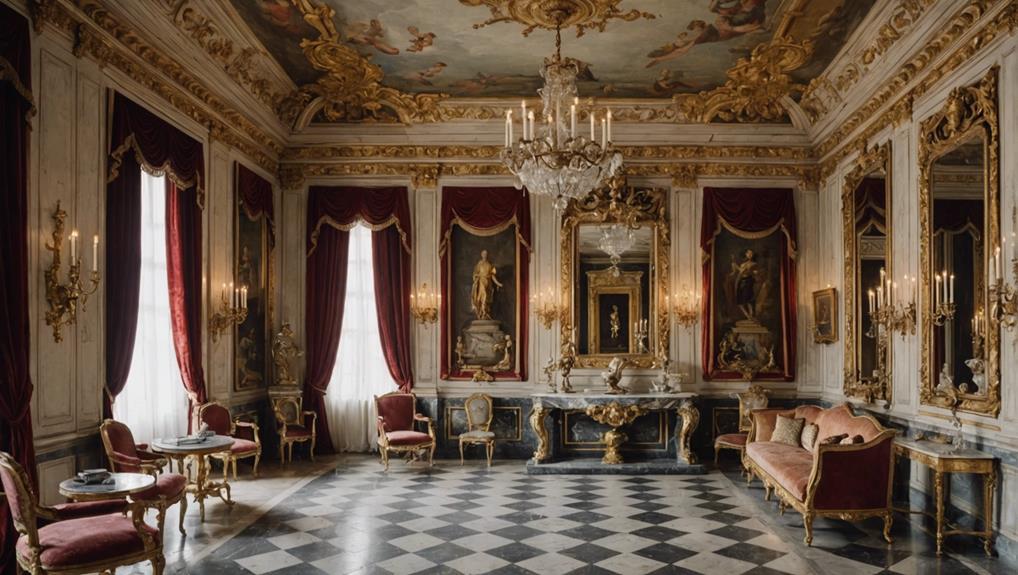
Luigi Valadier, a renowned Roman silversmith, mastered ornate designs with luxury craftsmanship in 18th-century Rome. With a strong family background in goldsmithing, Valadier developed innovative techniques like metal fusion and gilding. He collaborated with prominent artists and architects, receiving patronage from aristocratic families. Rome's vibrant cultural landscape, marked by Baroque Revival and papal influence, fueled Valadier's creative genius. His legacy propelled Rome into artistic excellence, leaving a lasting impact on art history. Now, his rediscovered work, including pieces in the Frick Collection, showcases his innovative techniques, sparking a renewed appreciation for his contributions to the art world and inspiring new discoveries.
Luigi Valadier's Early Life and Training
Born in Rome in 1726, Luigi Valadier began his apprenticeship in goldsmithing at a young age, learning the intricacies of the trade from his father, Andrea Valadier. This early start laid the foundation for his future success, as he honed his skills under the guidance of his father, a renowned goldsmith in his own right. The family ties that bound them were strong, and Luigi's artistic roots ran deep, nurtured by his father's expertise.
Growing up surrounded by the sights and sounds of Rome, Luigi was immersed in a world of beauty and creativity. His father's workshop was a hub of activity, filled with the sound of hammering, filing, and the glow of molten metal. It was here that Luigi learned the value of hard work, attention to detail, and the importance of precision. As he grew in skill and confidence, Luigi began to develop his own unique style, one that would eventually earn him recognition as a master craftsman.
Luigi's family ties and artistic roots proved to be a powerful combination, providing him with a solid foundation upon which to build his career. His father's influence was instrumental in shaping his early years, and the lessons he learned during this period would stay with him throughout his life. As Luigi continued to grow and develop as an artist, he would go on to create works of breathtaking beauty, leaving an indelible mark on the world of goldsmithing.
Master of Ornate Silverwork Designs
With his skills honed and reputation growing, Luigi Valadier masterfully crafted ornate silverwork designs that dazzled the Roman elite, showcasing his exceptional talent for marrying intricate details with elegant simplicity. His silversmith techniques were unparalleled, blending traditional methods with innovative flair. Valadier's design inspirations drew from the opulent aesthetics of 18th-century Rome, where luxury craftsmanship was paramount.
Some of the key elements that defined Valadier's masterful approach include:
- Artisanal mastery: His precise attention to detail and dedication to perfecting his craft earned him recognition as a master silversmith.
- Decorative flair: Valadier's ornate designs often featured intricate patterns, foliage, and figurative motifs, showcasing his exceptional skill in metalwork mastery.
- Luxury craftsmanship: His work embodied the epitome of luxury, with each piece meticulously crafted to exude opulence and refinement.
- Ornate precision: Valadier's ability to balance intricate details with elegant simplicity resulted in truly breathtaking creations that captivated the Roman elite.
As a master of ornate silverwork designs, Valadier's work continues to inspire awe, embodying the essence of 18th-century Rome's luxury and refinement.
Rome's Artistic Landscape in 1700s
During the 1700s, Rome's artistic landscape was a vibrant tapestry of creative innovation, where master craftsmen like Luigi Valadier thrived amidst a city teeming with architectural wonders, ornate fountains, and majestic monuments. This era witnessed a Baroque Revival, characterized by grandiose structures, sweeping curves, and intricate ornamentation. Amidst this artistic renaissance, cultural fusion flourished, as artists and artisans blended diverse styles to create something uniquely Roman.
The city's urban development was marked by the construction of Architectural Marvels, such as the Trevi Fountain and the Spanish Steps, which became iconic symbols of Rome's grandeur. Aristocratic tastes dictated the pace of artistic production, with patrons like the Pope and noble families commissioning works that reflected their refined sensibilities. Papal influence was pervasive, with the Catholic Church playing a significant role in shaping the city's cultural and artistic identity.
Rome's Historical Significance was palpable, as the city became a hub for artistic innovation, attracting talents from across Europe. Artistic patrons, including aristocratic courts, fueled the creative fervor, encouraging artists to push boundaries and experiment with new forms and techniques. In this fertile ground, master craftsmen like Valadier flourished, producing works that would be cherished for centuries to come.
The Emergence of Neoclassicism Style
As the 18th century progressed, a new aesthetic emerged in Rome, one that rejected the dramatic flourishes of the Baroque Revival and instead sought to revive the classical ideals of ancient Greece and Rome. This marked the dawn of Neoclassicism, a style characterized by simplicity, restraint, and a deep reverence for the past. In Rome, artists and architects sought to recreate the grandeur of antiquity, abandoning the ornate and the excessive for a more austere, classical beauty. This movement influenced not only architecture and sculpture but also painting, where artists depicted scenes from mythology and history with a renewed emphasis on harmony and proportion. Museums and galleries in Rome began to showcase works that embodied these ideals, including the Dangerous Beauty Medusa Exhibit, which explored the timeless allure and symbolism of classical mythology. Through these efforts, Neoclassicism solidified its place as a defining artistic movement of the era, shaping the cultural landscape of Rome for generations to come.
This shift towards Neoclassicism was driven by a desire for Artistic Purism, a reaction against the perceived excesses of the Baroque era. Artists and patrons alike yearned for a return to the timeless, universal principles of classical art, which they saw as a beacon of freedom and enlightenment.
Key features of Neoclassicism in Rome included:
- Classical Revival: a renewed focus on classical forms and motifs, often incorporating elements from ancient Greek and Roman architecture and art.
- Simplicity and restraint: a rejection of excessive ornamentation and a emphasis on clean lines, minimal decoration, and harmonious proportions.
- Rationalism: a commitment to reason, logic, and intellectual rigor, reflected in the use of geometric shapes and precise, calculated compositions.
- Historical authenticity: a zeal for historical accuracy, with artists and architects striving to recreate the look and feel of ancient Rome.
As Neoclassicism took hold in Rome, artists like Luigi Valadier were poised to benefit from this new aesthetic landscape, one that celebrated simplicity, elegance, and a deep reverence for the classical past.
Valadier's Famous Patrons and Collaborations
Luigi Valadier's remarkable talent and innovative designs quickly earned him the patronage of Rome's elite, including prominent families like the Borghese and the Chigi. His aristocratic ties led to numerous Royal Commissions, solidifying his reputation as a master goldsmith. Valadier's patronage networks extended to the Vatican, where he collaborated with prominent artists and architects, further expanding his influence.
| Patron/Family | Notable Commissions | Collaborations |
|---|---|---|
| Borghese Family | Ornate silverware for the family's palace | Collaborated with architect Luigi Vanvitelli |
| Chigi Family | Designed and crafted a golden reliquary | Worked with artist Anton Raphael Mengs |
| Vatican | Created elaborate liturgical objects | Collaborated with architect Bernini's workshop |
Valadier's success was not without its challenges, as he faced Artistic Rivalries from other prominent goldsmiths. Despite these challenges, his exceptional talent and innovative designs allowed him to maintain his position as the premier goldsmith in Rome. His ability to navigate the complex web of Aristocratic Ties and Patronage Networks solidified his position as a master craftsman. Through his collaborations and commissions, Valadier's work continues to inspire and showcase the splendor of eighteenth-century Rome.
Innovative Techniques in Metalwork
How did Luigi Valadier revolutionize metalwork in eighteenth-century Rome by pioneering innovative techniques that showcased his mastery of the craft? Valadier's contributions to metalwork were groundbreaking, and his innovative techniques continue to inspire artists and artisans to this day.
One of the most significant innovations Valadier introduced was metal fusion, a technique that allowed him to combine different metals to create complex and intricate designs. This technique enabled him to push the boundaries of what was possible in metalwork, creating pieces that were both beautiful and functional.
Valadier was also an early adopter of electroplating, a technique that allowed him to apply a thin layer of precious metal to a base metal, creating a durable and luxurious finish. This technique allowed him to create pieces that were both affordable and visually stunning.
Some of Valadier's most innovative techniques include:
- Metal fusion: combining different metals to create complex designs
- Electroplating: applying a thin layer of precious metal to a base metal
- Inlay work: using small pieces of metal to create intricate designs
- Gilding: applying a thin layer of gold to create a luxurious finish
Valadier's innovative techniques allowed him to create pieces that were both beautiful and functional, and his contributions to metalwork continue to inspire artists and artisans today. His work is a demonstration of the power of innovation and creativity, and a reminder that even in the eighteenth century, artists were pushing the boundaries of what was possible.
Drawings and Designs on Display
As Valadier's designs and drawings go on display, it becomes clear that his creative process was deeply rooted in his Roman surroundings. The intricate details and ornate decorations that characterize his work are a reflection of the city's influence on his style. A closer examination of his designs reveals the meticulous care he took in crafting each piece, from concept to completion.
Valadier's Design Process
Valadier's meticulous design process unfolded through a series of detailed drawings and designs, carefully crafted to bring his innovative visions to life. This process allowed him to experiment with different materials, techniques, and aesthetic principles, giving him the creative freedom to push boundaries and challenge conventional norms. Through his designs, Valadier's artistic intuition shines, as he skillfully balanced functionality with beauty, often incorporating inspirational sources from nature and classical architecture.
Here are some key aspects of Valadier's design process:
- Design evolution: Valadier's designs underwent multiple iterations, with each version refining his original concept.
- Material experimentation: He explored various materials, such as silver, gold, and bronze, to create unique and intricate designs.
- Craftsmanship techniques: Valadier mastered various techniques, including chasing, gilding, and engraving, to achieve exceptional craftsmanship.
- Sketching methods: His sketches reveal a meticulous attention to detail, with each line and curve carefully considered to bring his artistic vision to life.
Throughout his design process, Valadier remained committed to his artistic vision, never compromising on quality or aesthetics. His dedication to craftsmanship and creativity resulted in exquisite pieces that continue to inspire and awe art lovers to this day.
Roman Influences on Style
Roman antiquity's majestic architecture and ornate decorative arts deeply influenced Valadier's style, as evidenced by his meticulously crafted drawings and designs on display. The Baroque Revival movement's grandiose spirit is palpable in his works, which often blend Classical Revival elements with innovative Architectural Fusion. This cultural synthesis is reflective of Rome's rich Imperial Legacy, where ancient traditions merged with modern sensibilities. Valadier's aristocratic patrons demanded opulence, which he delivered through intricate designs that showcased Ancient Iconography. His Urban Aesthetic was shaped by Rome's historic landscape, where artisanal heritage and cultural treasures inspired his creations. As a result, his designs embody the essence of Rome's splendor, where the past and present converge. Through his work, Valadier pays homage to Rome's glorious heritage, reinterpreting it for an aristocratic elite that prized refinement and elegance. His designs continue to inspire, offering a glimpse into the splendor of eighteenth-century Rome.
Ornate Decoration Details
Intricate drawings and designs on display reveal Valadier's meticulous attention to ornate decoration details, where every flourish and motif serves to elevate the overall opulence of his creations. His designs showcase a mastery of ornate decoration, where gilded accents and floral motifs intertwine with intricate patterns to create opulent finishes.
Some notable features of his designs include:
- Elaborate carvings that add depth and texture to his creations.
- Delicate filigree that showcases his exquisite craftsmanship.
- Precious materials that elevate the luxury of his pieces.
- Intricate patterns that demonstrate his attention to detail.
Valadier's dedication to ornate decoration details is a confirmation of his commitment to creating truly exceptional pieces. His designs are a reflection of his passion for beauty and his desire to create works of art that inspire and delight. Through his meticulous attention to detail, Valadier's creations continue to inspire and captivate audiences, offering a glimpse into the splendor of eighteenth-century Rome.
The Frick Collection's Curatorial Vision
Curators at The Frick Collection carefully crafted an exhibition that would transport visitors back to 18th-century Rome, immersing them in the opulent world of Luigi Valadier's designs. This curatorial demonstration was not only a reflection of the museum's commitment to showcasing exceptional art but also a manifestation of its dedication to preserving cultural heritage.
The Frick Collection's curatorial intent was to create an immersive experience, allowing visitors to step into the lavish world of 18th-century Rome. By carefully selecting and displaying Valadier's intricate designs, the curators aimed to recreate the splendor of the era. This intention is evident in the meticulous attention to detail, from the ornate decoration to the opulent materials used in the exhibition's design.
Museum politics often play a significant role in shaping the narrative of an exhibition. In this case, The Frick Collection's curatorial vision was guided by a desire to celebrate the artistic genius of Luigi Valadier, rather than perpetuate a particular ideology. This approach allowed the curators to focus on the artistic merit of the works on display, rather than being swayed by external influences. As a result, the exhibition presents a nuanced and balanced portrayal of 18th-century Rome, one that is both beautiful and thought-provoking.
Eighteenth Century Rome's Cultural Hub
During the 18th century, Rome emerged as a vibrant cultural hub, attracting artists, intellectuals, and aristocrats from across Europe who sought to indulge in the city's rich cultural landscape. This period marked a significant Renaissance Revival, characterized by an Artistic Awakening that revitalized the city's artistic and cultural scene.
As a hub of intellectual and artistic activity, Rome witnessed a Cultural Renaissance, with creatives from across the continent flocking to the city to experience its Historical Significance firsthand. This influx of talent led to a Roman Renaissance, marked by innovative artistic expression and architectural innovations.
Key features of 18th century Rome's cultural landscape include:
- Urban Development: The city's infrastructure underwent significant transformations, with the construction of grand boulevards, piazzas, and monumental architecture.
- Patronage of the Arts: Aristocrats and clergy commissioned works from prominent artists, fueling a golden age of artistic innovation.
- Intellectual Ferment: Philosophers, writers, and thinkers gathered in Rome's salons and coffeehouses, engaging in lively debates and exchanges of ideas.
- Cultural Exchange: The city became a crossroads of international cultural exchange, with artists, intellectuals, and travelers from across Europe sharing ideas and influences.
As a result, 18th century Rome became a beacon of creative expression, intellectual curiosity, and artistic innovation, earning its place as a cultural hub of European significance.
Valadier's Legacy in Art History
Valadier's legacy in art history is multifaceted, with his innovative designs and masterful craftsmanship leaving an indelible mark on the art world. As a pioneer of Rome's ornate Renaissance, his work ushered in a golden era of craftsmanship, elevating the city's cultural landscape. His artistic innovations, in particular, paved the way for future generations of artists and craftsmen, solidifying his position as a trailblazer in the world of art.
Artistic Innovation Ahead
With his innovative designs and masterful fusion of artistic mediums, Luigi Valadier propelled 18th-century Rome into an era of unparalleled artistic excellence. His artistic genius knew no bounds, and he pioneered a design revolution that broke free from traditional creative boundaries. Valadier's work embodied the essence of artistic freedom, where bold expressions and innovative minds converged to create something truly remarkable.
Here are four ways Valadier's legacy continues to inspire artistic innovation:
- Cultural Fusion: Valadier's work seamlessly blended different cultural influences, giving birth to a unique aesthetic that continues to influence artistic trends.
- Design Revolution: His innovative designs pushed the boundaries of what was thought possible, inspiring future generations to experiment and innovate.
- Artistic Genius: Valadier's masterpieces continue to inspire artistic brilliance, encouraging artists to pursue excellence and push the limits of their creativity.
- Bold Expressions: His bold and daring expressions of art continue to inspire artists to take risks and challenge traditional norms, fostering an environment of artistic freedom and creative experimentation.
Rome's Ornate Renaissance
Rome's ornate Renaissance flourished under the creative genius of Luigi Valadier, whose masterpieces continue to adorn the Eternal City's iconic landmarks and opulent interiors, perpetuating his enduring legacy in art history. As a master of Baroque Architecture, Valadier's designs embodied the Renaissance Revival, blending classical elements with innovative flair. His work was heavily influenced by the Papal Influence, which sought to revitalize Rome's cultural heritage. This artistic fusion resulted in grand scale architectural wonders, showcasing Valadier's mastery of ornate interiors. His creations, such as the stunning altar at St. Peter's Basilica, exemplify the Cultural Renaissance that swept through Rome during the 18th century. Valadier's contributions to Rome's architectural landscape have left an indelible mark, solidifying his position as a pioneer of ornate Renaissance design. His work continues to inspire awe, reflecting the Eternal City's eternal pursuit of beauty and artistic excellence.
Golden Era of Craftsmanship
As the 18th century's cultural landscape continued to flourish, Luigi Valadier's masterpieces emerged as evidence of an unprecedented golden era of craftsmanship, where artistic innovation and technical precision converged in breathtaking harmony. This period marked a Craftsmanship Revival, where master craftsmen like Valadier perfected their Artisanal Mastery, creating Luxury Goods that showcased Precision Engineering and Exquisite Detail.
Valadier's opulent designs, characterized by intricate ornamentation and precision, redefined the boundaries of craftsmanship. His work inspired a new generation of Skilled Artisans, who sought to emulate his mastery of materials and techniques.
Here are a few key aspects that defined this golden era of craftsmanship:
- Unparalleled attention to detail: Valadier's pieces were renowned for their intricate designs and precision engineering.
- Luxury goods for the elite: His craftsmanship catered to the aristocracy, who sought opulent designs that reflected their status.
- Apprenticeships and skill transfer: Valadier's mastery inspired a new wave of artisans, who learned from him and perpetuated his legacy.
- Innovative techniques and materials: Valadier experimented with novel materials and techniques, pushing the boundaries of craftsmanship.
Preserving Historical Artistic Traditions
How did 18th-century Roman artisans like Luigi Valadier manage to uphold the historical artistic traditions of their predecessors while still innovating within their craft? This delicate balance between honoring the past and pushing the boundaries of artisanship is a tribute to their skill and dedication.
The artisanal revival of the 18th century was characterized by a deep respect for traditional techniques and a commitment to cultural conservation. Artisans like Valadier studied the masterpieces of their predecessors, from Bernini to Borromini, to understand the intricacies of their craft. They learned from the masters, incorporating time-honored techniques into their own work while introducing innovative twists.
Valadier's own work exemplifies this balance between tradition and innovation. His intricate silverwork, adorned with ornate details and symbolic motifs, showcases his mastery of traditional techniques. At the same time, his use of new materials and techniques, such as the incorporation of precious stones and enamelwork, demonstrates his willingness to experiment and push the boundaries of his craft.
Through their work, artisans like Valadier upheld the preservation of historical artistic traditions while injecting new life into the art forms of their time. This delicate balance between tradition and innovation is a hallmark of 18th-century Roman artisanship, and one that continues to inspire artists and artisans to this day.
Rediscovering a Forgotten Master
As historians and art enthusiasts revisit the life and work of Luigi Valadier, they're struck by the sheer brilliance of this eighteenth-century Roman master. Valadier's intricate designs and ornate creations, once admired by European royalty, have languished in relative obscurity – until now. As the veil of forgetfulness lifts, his forgotten treasures are finally getting the recognition they deserve.
Valadier's Life and Work
Luigi Valadier spent most of his life honing his craft in the Eternal City, where his exceptional talent and innovative designs earned him a reputation as one of Rome's most sought-after silversmiths. His artistic ego and passion for creative freedom drove him to push the boundaries of traditional silverwork, blending Baroque Renaissance flair with modern techniques. As a member of the esteemed artisan guilds, Valadier received prestigious royal commissions, solidifying his family legacy in the Eternal City.
Here are four key aspects of Valadier's remarkable career:
- Papal Influence: Valadier's work was highly sought after by the Vatican, with many of his pieces adorning the tables of high-ranking clergy.
- Aristocratic Ties: His connections to Rome's elite earned him commissions from noble families, further cementing his reputation.
- Creative Freedom: Valadier's innovative approach to silverwork allowed him to express himself freely, unburdened by traditional constraints.
- Family Legacy: His dedication to his craft ensured the continuation of his family's legacy in Rome, solidifying their position among the city's most respected artisans.
Through his remarkable body of work, Valadier left an indelible mark on the world of silverwork, securing his place as one of Rome's most celebrated masters.
Uncovering Forgotten Treasures
Valadier's remarkable body of work lay hidden for centuries, waiting for art historians and enthusiasts to rediscover the master silversmith's forgotten treasures. As they explored the secret archives, they unearthed hidden relics that told the story of a forgotten master. This artistic archaeology led to a historical revival, breathing new life into Valadier's overlooked genius. The lost heritage of eighteenth-century Rome slowly began to resurface, revealing the buried riches of a bygone era.
Through meticulous research and dedication, art historians have managed to excavate the remnants of Valadier's impressive oeuvre. They have painstakingly pieced together the fragments of his life's work, shedding light on the master's innovative techniques and artistic vision. As the dust settles, the world is once again treated to the splendor of Valadier's creations, a tribute to the power of rediscovery and the importance of preserving our cultural heritage.
Frequently Asked Questions
What Inspired Luigi Valadier's Transition to Neoclassicism?
As Luigi Valadier's artistic evolution unfolded, he was drawn to the Roman Revival movement, which inspired his shift towards Neoclassicism. This stylistic change was likely sparked by his fascination with ancient Roman architecture and art. Valadier's desire for creative freedom led him to break away from ornate Baroque designs, embracing instead the clean lines, simplicity, and classical ideals that defined Neoclassicism, ultimately shaping his unique artistic voice.
How Did Valadier's Work Influence 18th-Century European Art?
Imagine a canvas of 18th-century Europe, where artistic revolution was the brushstroke of the time. Valadier's work was the masterful stroke that sparked an Artistic Revival, as aristocratic patrons clamored for his neoclassical designs. His influence was the wind that swept across the continent, inspiring a new wave of artists to ditch the ornate for the elegant. As a result, European art was reborn, and the aristocracy had Valadier to thank for their refined taste.
Were Valadier's Designs Limited to Silverwork and Metal?
Valadier's designs didn't stop at silverwork and metal. He explored other mediums, blending Catholic iconography with aristocratic flair. His work extended to ornate decorations, intricate wood carvings, and lavish furnishings, catering to the tastes of his aristocratic patrons. By pushing boundaries, Valadier's artistry embodied the essence of freedom, breaking free from traditional constraints to create something truly remarkable.
Are There Any Surviving Examples of Valadier's Furniture Designs?
She explores the existence of surviving examples of Valadier's furniture designs. Fortunately, many museum collections and furniture archives preserve his creations. Although rare, some pieces are on public display, offering a glimpse into his mastery of design. Valadier's furniture designs are highly sought after, and institutions worldwide work diligently to acquire and showcase them. His work continues to inspire, reflecting the essence of freedom and creativity.
How Did Valadier's Work Impact the Development of Roman Art?
Valadier's work had a profound impact on the development of Roman art, shaping the city's Roman Renaissance. His innovative designs and masterful craftsmanship raised the bar for Roman artisans, influencing generations to come. As a result, his artistic legacy continues to inspire, promoting a sense of freedom and creativity in the art world. Valadier's contributions didn't just reflect the era's grandeur, but also left an enduring mark on Rome's cultural heritage.
About the Author