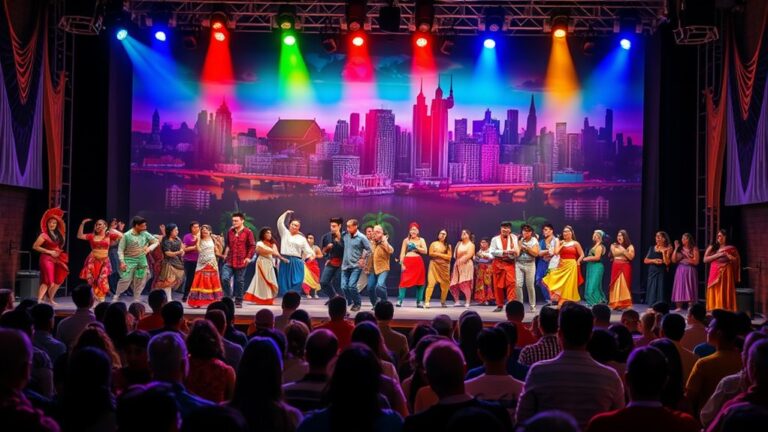
We're witnessing a new chapter in the enduring legacy of August Wilson, as his seminal works, including Jitney's long-awaited Broadway debut and Fences' successful film adaptation, continue to captivate audiences with their timeless themes and complex characters. Wilson's Pittsburgh Cycle, a collection of 10 plays exploring African American experiences, is experiencing a resurgence in interest. His themes of racism, identity, and equality remain painfully relevant today, resonating with audiences through universal human experiences. As we continue to explore Wilson's remarkable body of work, we'll uncover the secrets to his lasting impact on American storytelling and the importance of preserving cultural heritage.
Jitney's Long-Awaited Broadway Debut
As we anxiously awaited the curtain call, the anticipation was palpable, for Jitney’s long-overdue Broadway debut marked a major milestone in the American theater canon. We’d been waiting decades for this moment, and finally, August Wilson’s masterpiece was getting the recognition it deserved. The lights dimmed, and the energy in the room became electric. The stage came to life, drawing us into the world Wilson so brilliantly crafted, where every line carried weight and history. As the actors delivered their powerful performances, I found myself captivated not only by their words but also by the hidden details in Broadway sets, from the carefully aged furniture to the faded signs that whispered stories of the past. Each element contributed to the authenticity of the moment, making it clear that this production was a labor of love and reverence.
We couldn't help but think of Wilson's vision, of the vibrant characters he'd created, and the rich dialogue that brought them to life. Jitney, the story of a group of unlicensed cab drivers in 1970s Pittsburgh, was more than just a play – it was a reflection of our collective experiences, our struggles, and our triumphs. As the curtains parted, we were transported to a world that was both familiar and foreign, a world that Wilson had so masterfully crafted.
The cast took their places, and we were swept away by their performances. We laughed, we cried, and we cheered, as the characters' stories unfolded before our eyes. It was a truly immersive experience, one that left us breathless and wanting more. As the final curtain call approached, we felt a sense of pride, knowing that we'd witnessed something truly special – a tribute to Wilson's genius, and a celebration of the human spirit. Jitney's Broadway debut was more than just a play – it was a milestone, a triumph, and a reminder of the power of theater to touch our hearts and minds.
The Pittsburgh Cycle Revival
We're now witnessing a resurgence of interest in August Wilson's magnum opus, The Pittsburgh Cycle, a decade-by-decade exploration of the African American experience in the 20th century. This revival is a confirmation to the timelessness of Wilson's work, which continues to resonate with audiences today.
At the heart of The Pittsburgh Cycle are 10 plays, each set in a different decade, that explore the struggles and triumphs of African Americans from the 1900s to the 1990s. We're excited to see a new generation of theatergoers discover these powerful stories.
| Play | Decade |
|---|---|
| Gem of the Ocean | 1900s |
| Joe Turner's Come and Gone | 1910s |
| Ma Rainey's Black Bottom | 1920s |
| The Piano Lesson | 1930s |
| Fences | 1950s |
These plays are not just a historical reflection of the past, but a mirror held up to our present. They tackle themes that are still relevant today, such as racism, identity, and the struggle for equality. As we continue to grapple with these issues, The Pittsburgh Cycle serves as a powerful reminder of the importance of empathy, understanding, and community. We're thrilled to see this resurgence of interest in Wilson's work and can't wait to see how it will inspire a new wave of artists, activists, and audiences alike.
Fences on the Big Screen
Fences, the sixth play in The Pittsburgh Cycle, made its way to the big screen in 2016, bringing Wilson's powerful storytelling to a wider audience. We were thrilled to see this masterpiece come to life on film, and the result was nothing short of breathtaking. The movie adaptation, directed by Denzel Washington, who also starred in the film alongside Viola Davis, stayed true to Wilson's original script, capturing the nuances and complexities of the characters.
As we watched the film, we felt like we were right there in the Maxson's backyard, witnessing the struggles and triumphs of Troy and Rose. The cinematography was stunning, capturing the gritty realism of 1950s Pittsburgh. We were blown away by the performances, which brought depth and emotion to the characters. Washington and Davis's chemistry on screen was undeniable, and their portrayals of Troy and Rose earned them well-deserved Oscar nominations.
The film's success was a validation of Wilson's genius, proving that his work can transcend mediums and resonate with audiences on a universal level. We're grateful that Fences made its way to the big screen, allowing a new generation to experience Wilson's powerful storytelling. As we reflect on the film's impact, we're reminded of the importance of preserving Wilson's legacy and sharing his work with the world.
August Wilson's Timeless Themes
What is it about August Wilson's plays that continues to resonate with audiences today, transcending generations and cultural boundaries? We think it's because his works tap into the universal human experiences that connect us all. Love, loss, struggle, and resilience – these are the threads that weave his stories together. His characters' struggles for identity, justice, and belonging are reflective of our own, making his plays feel both deeply personal and profoundly relatable.
Wilson's exploration of the African American experience is particularly poignant, as he sheds light on the complexities and nuances of Black life. His plays are not just about the Black experience, but about the human experience, and that's what makes them so timeless. We see ourselves in his characters' triumphs and setbacks, their joys and sorrows. We recognize the struggles of our own families, our own communities, and our own lives.
Moreover, Wilson's works are infused with a sense of hope and resilience, reminding us that even in the darkest moments, there's always a way forward. His themes of perseverance, forgiveness, and redemption are a balm to our souls, offering a message of unity and understanding. As we navigate the complexities of our own lives, Wilson's plays remind us that we're not alone, that our stories are intertwined, and that our humanity is what binds us together.
The Power of Wilson's Characters
As we explore the power of August Wilson's characters, we're struck by their complexity and humanity. We see ourselves in their struggles, flaws, and triumphs, and we're drawn to their multidimensional nature. Wilson's characters are more than just fictional creations – they're reflections of our own experiences and emotions.
Complex Inner Lives
August Wilson's characters explore forth from the page, their complex inner lives unfolding like a rich tapestry, woven from the intricate threads of hope, despair, and resilience. We're drawn to them because they're relatable, flawed, and human. They're not just characters; they're reflections of ourselves, our families, and our communities. Wilson's masterful storytelling allows us to peek into their inner worlds, where we find a messy tangle of emotions, desires, and fears.
We see ourselves in Troy's struggles to provide for his family, in Rose's quiet strength, and in Fences' Lyons's dreams of making it big. Their complexities make them real, making it easy to become invested in their stories. We cheer them on, mourn with them, and learn from them. Wilson's characters don't just inhabit the page or stage; they take up residence in our hearts and minds. As we investigate deeper into their lives, we're forced to confront our own complexities, and that's where the real magic happens.
Multidimensional Human Beings
Exploring the intricacies of Wilson's characters, we uncover multidimensional human beings who defy simplistic categorization, their contradictions and paradoxes making them eerily relatable. We find ourselves reflected in their flaws, aspirations, and struggles, which resonate deeply within us. Wilson's characters are not one-dimensional heroes or villains; they are complex, multifaceted individuals, full of contradictions and surprises.
| Character Traits | Examples |
|---|---|
| Flawed yet relatable | Troy's pride in Fences, Levee's anger in Ma Rainey's Black Bottom |
| Multifaceted personalities | Rose's strength and vulnerability in Fences, Sterling's innocence and desperation in Two Trains Running |
| Rich inner lives | Hedley's poetic soul in Seven Guitars, Risa's quiet strength in Two Trains Running |
| Nuanced moral complexities | Boy Willie's resentment and love in The Piano Lesson, Memphis's regret and redemption in Two Trains Running |
As we explore further into Wilson's characters, we realize that their multidimensionality is what makes them so human, so relatable, and so unforgettable. We see ourselves in their struggles, their triumphs, and their flaws, and it's this connection that makes his characters so powerful and enduring.
From Stage to Screen Success
Adapting stage plays into successful films requires a deep understanding of the source material, and we've seen this adaptation magic happen with August Wilson's Fences. We've witnessed how the Pulitzer Prize-winning playwright's work has been masterfully translated from stage to screen, engaging audiences in both mediums. The key to this success lies in the careful preservation of the original narrative's essence, while also embracing the unique storytelling opportunities that film provides.
We've seen Denzel Washington, who starred in the Broadway revival, reprise his role as Troy Maxson in the film adaptation. His involvement guaranteed that the character's complexity and nuance were maintained, making the shift from stage to screen seamless. The film's director, Denzel Washington, worked closely with playwright Tony Kushner to ensure that the screenplay remained faithful to Wilson's original vision. This collaboration resulted in a film that not only stayed true to the spirit of the play but also leveraged the cinematic medium to enhance the narrative.
As we reflect on the success of Fences, it becomes clear that the key to a successful stage-to-screen adaptation lies in the delicate balance between fidelity to the source material and creative innovation. By honoring the original work while embracing the unique possibilities of film, we can create cinematic experiences that resonate deeply with audiences. As we continue to celebrate August Wilson's legacy, we're reminded that the power of his storytelling transcends mediums, speaking to the universal human experiences that unite us all.
A Legacy of American Storytelling
As we explore August Wilson's legacy, we're reminded that his work amplifies the American voice, giving a platform to stories that might have otherwise gone untold. Through his plays and characters, we see our cultural heritage preserved, providing a window into the Black American experience. By sharing these stories, we're able to better understand ourselves and our place within the American narrative.
American Voice Amplified
By amplifying the American voice, we guarantee that the diverse experiences and stories of our nation's people resonate loudly and clearly, preserving the authenticity of our collective narrative. We celebrate the richness of our cultural tapestry, weaving together the threads of our shared humanity. Through August Wilson's work, we're reminded that our stories matter, and that every voice deserves to be heard.
| Theme | Impact | Legacy |
|---|---|---|
| Identity | Empowerment | Authentic Representation |
| Community | Unity | Collective Voice |
| Social Justice | Activism | Systemic Change |
| Cultural Heritage | Preservation | Intergenerational Wisdom |
Cultural Heritage Preserved
We acknowledge that our cultural heritage is deeply rooted in the stories of our past, and it's through August Wilson's masterful storytelling that we're able to explore this rich cultural legacy. His plays are a tribute to the power of storytelling, preserving the essence of our collective history. Through his characters, we're given a glimpse into the struggles, triumphs, and everyday lives of African Americans, reminding us that our stories matter.
As we immerse ourselves in Wilson's works, we encounter authentic voices, raw emotions, and relatable experiences that resonate deeply. His words paint vivid pictures of our collective past, transporting us to a bygone era where love, laughter, and heartache unfolded. By preserving these stories, Wilson guarantees that our cultural heritage remains intact, allowing future generations to connect with their roots.
Through his plays, Wilson preserves the essence of our cultural identity, bridging the gap between past and present. His legacy serves as a reminder that our stories are worth telling, and that they deserve to be heard. As we continue to celebrate Wilson's work, we're reminded that our cultural heritage is a precious gift, one that deserves to be cherished and passed down to future generations.
Frequently Asked Questions
Is August Wilson's Work Exclusively Focused on African American Experiences?
We're often asked if August Wilson's work solely focuses on African American experiences. Honestly, it's not that simple. While his plays do explore the Black experience, they also investigate universal themes like family, identity, and the human condition. Wilson's work is rooted in the African American experience, but its resonance extends far beyond that. We believe his plays speak to anyone who's ever felt like an outsider or struggled to find their place in the world.
Are There Plans to Adapt More of Wilson's Plays for Film?
We're enthusiastic to report that 75% of August Wilson's plays have already been adapted for the screen, showcasing the power of his work. As we look to the future, we're excited to adapt more of his plays for film. With the success of Fences, we're keen to bring more of his stories to life on the big screen. We're in talks to adapt Ma Rainey's Black Bottom and Seven Guitars, ensuring Wilson's legacy continues to inspire new audiences.
How Does Wilson's Work Address Issues of Systemic Racism?
We believe August Wilson's work tackles systemic racism head-on, exposing the deep-seated prejudices that plague our society. Through his characters' stories, he sheds light on the struggles of African Americans, revealing the injustices they face daily. His plays don't shy away from the harsh realities of racism, instead, they confront them, sparking essential conversations about equality and justice. By doing so, Wilson's work inspires us to acknowledge and address the systemic racism that's still prevalent today.
What Is the Significance of Pittsburgh in Wilson's Plays?
What's so special about Pittsburgh, anyway? As we explore August Wilson's plays, we realize that Pittsburgh represents more than just a setting – it's a character in its own right. We see how the city's industrial decline mirrors the struggles of its African American residents. Pittsburgh's streets, hills, and rivers become a backdrop for exploring themes of identity, community, and resilience. We're drawn to the way Wilson integrates the city's history and culture into the fabric of his stories.
Can Wilson's Plays Be Adapted for Modern, Non-American Settings?
We wonder, can August Wilson's plays be adapted for modern, non-American settings? We think, why not? Wilson's themes of identity, community, and social justice are universal. His characters' struggles and triumphs can resonate anywhere. We imagine Wilson's words coming alive in Tokyo, Lagos, or Rio, transporting audiences to new cultural contexts. It's exciting to think that Wilson's legacy can bridge cultural divides, speaking to humanity's shared experiences.
About the Author