
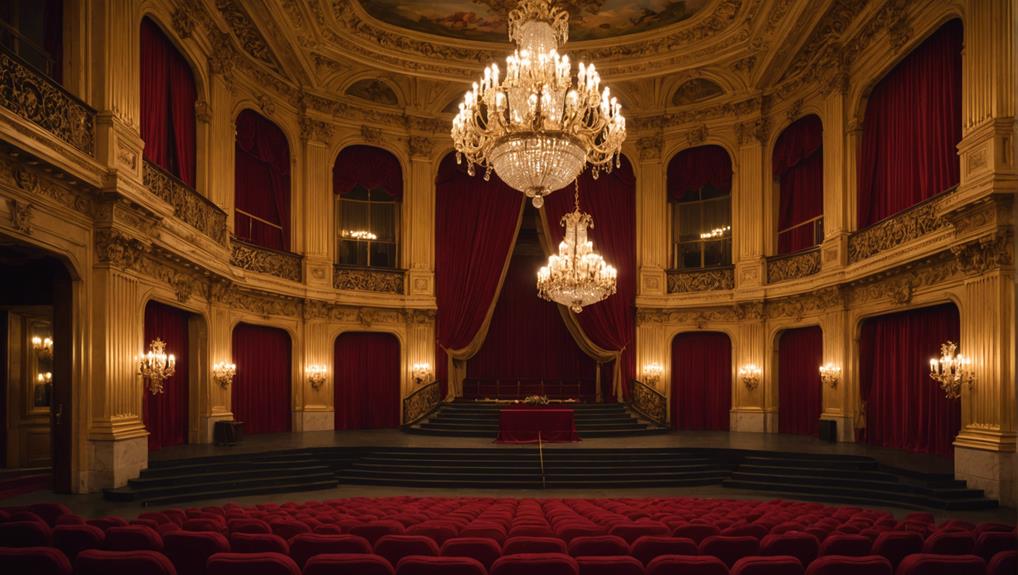
We're about to uncover the fascinating story of how Giacomo Puccini's Turandot, a revolutionary opera, came to be. This groundbreaking masterpiece would go on to shape the cultural landscape and leave a lasting impact on the world of opera. With its innovative fusion of exotic instruments and melodies, Turandot pushed the boundaries of traditional opera. Puccini's meticulous attention to detail and innovative spirit are just the beginning of this remarkable journey. As we explore the birth of this 20th-century operatic masterpiece, we'll discover the twists and turns that led to its premiere – and uncover the secrets that continue to captivate audiences to this day.
Puccini's Turandot: A Risky Venture
As we explore the creation of Turandot, we find Puccini undertaking a perilous artistic journey, one that would test his creative mettle and push the boundaries of opera as an art form. This risky venture would ultimately yield a masterpiece that would redefine the cultural significance of opera in the twentieth century.
Puccini's vision for Turandot was nothing short of revolutionary. He sought to create an opera that would not only showcase his musical innovation but also challenge the traditional norms of the art form. By incorporating exotic instruments and melodies, Puccini aimed to transport his audience to the mystical land of ancient China. This bold move would not only expand the operatic repertoire but also pave the way for future generations of composers.
The composer's willingness to take risks paid off, as Turandot went on to become a cultural phenomenon. Its premier in 1926 marked a turning point in the history of opera, as it introduced a new level of musical sophistication and dramatic intensity. Puccini's masterpiece has since become a staple of the operatic canon, with its iconic arias and choruses continuing to captivate audiences worldwide. As we reflect on the creation of Turandot, we are reminded of the power of artistic innovation to shape our cultural landscape.
The Maestro's Vision Takes Shape
We investigate the composer's creative process, where Puccini's meticulous attention to detail and innovative spirit converge, bringing forth a work of unprecedented scope and complexity. As we explore further, we find that Puccini's vision takes shape through a harmonious blend of creative freedom and artistic expression.
| Element | Description |
|---|---|
| Libretto | Carefully crafted to evoke emotions and convey themes |
| Melody | Innovative and memorable, blending Eastern and Western influences |
| Harmony | Rich and complex, featuring bold chord progressions |
| Orchestration | Masterful use of instruments to evoke atmosphere and mood |
| Vocal Writing | Demanding yet rewarding, pushing singers to new heights |
Through this fusion of creative elements, Puccini's Turandot begins to take shape. We see the composer's meticulous attention to detail in every aspect of the opera, from the intricate harmonies to the carefully crafted libretto. This attention to detail, combined with his innovative spirit, allows Puccini to push the boundaries of opera, creating a work that is both a masterpiece of artistic expression and a tribute to his creative freedom. As we continue to explore Puccini's vision, we gain a deeper appreciation for the complexity and scope of Turandot, and the artistic genius that brought it to life.
Unfinished Business: Puccini's Legacy
As we reflect on Puccini's remarkable career, we're reminded that his legacy is a complex tapestry of triumphs and what-ifs. We're left wondering what could've been if he'd had more time to refine Turandot, and how his artistic vision might've evolved. Now, let's explore the lasting impact of Puccini's work, the incomplete score of Turandot, and the unfulfilled aspects of his artistic vision.
Puccini's Lasting Impact
Puccini's untimely passing in 1924 left an enduring legacy, with his operas continuing to captivate audiences and inspire new generations of composers. As we reflect on his lasting impact, we're reminded of his innovative spirit, which revolutionized opera with musical innovations that still influence the art form today. Puccini's cultural icon status was solidified through his ability to weave complex harmonies, orchestration, and vocal writing into a unique sonic tapestry. His operas not only revitalized the genre but also sparked an opera revival, inspiring a new wave of composers to push the boundaries of the art form. We see echoes of his artistic genius in the works of contemporary composers, who continue to draw inspiration from his groundbreaking scores. As we celebrate Puccini's legacy, we're reminded of the profound influence he's had on the world of opera. His music continues to transport us to new emotional landscapes, a tribute to the timelessness of his artistic vision.
Turandot's Incomplete Score
Turandot's incomplete score, a reflection of the master's unfinished business, beckons us to explore the creative turmoil that defined its composition. As we investigate the fragments of Puccini's final opera, we're met with a puzzle of musical fragments, each one a glimpse into the composer's intentions. It's as if we're sifting through the master's notes, searching for clues to complete the narrative he envisioned. The scattered pages of Turandot's score reveal a work in progress, with Puccini's scribbled notes and corrections a tribute to his relentless pursuit of perfection. We find ourselves wondering what could've been, had the maestro been granted more time to refine his creation. The composer's intentions, though incomplete, remain palpable, a tribute to the artistic genius that drove him. As we piece together the remnants of Turandot, we're reminded that even in its unfinished state, Puccini's masterpiece continues to captivate and inspire.
Artistic Vision Unfulfilled
We're left pondering the tantalizing possibilities of what could've been, had Puccini been granted the time to fulfill his artistic vision. Turandot's incomplete score is a poignant reminder of the creative dissonance that often accompanies unrealized dreams. As we explore the fragments of Puccini's final masterpiece, we can't help but wonder what could've been if only he had more time. The notes and melodies that remain are a tribute to his genius, but they also serve as a bittersweet reminder of what could've been.
We're forced to confront the reality that, despite his tireless efforts, Puccini's artistic vision remained unfulfilled. The unrealized dreams of his final opera linger, a haunting echo of what could've been. It's a painful reminder that even the greatest creative minds are not immune to the cruel hand of fate. As we reflect on Puccini's legacy, we're left to ponder the what-ifs and the maybes, and to mourn the loss of a masterpiece that could've been.
The Premiere: A Night to Remember
As we step into the world of opera, we're about to relive the magic of that unforgettable night when Turandot premiered at La Scala in Milan. We're going to experience the electric atmosphere that filled the opera house, where the who's who of Milan's elite gathered to witness history in the making. It's a night that will forever be etched in our memories, and we're about to relive every moment of it.
Electric Atmosphere Prevails
On the evening of April 25, 1926, we took our seats amidst an electric atmosphere at La Scala, the anticipation palpable as the crowd awaited the premiere of Giacomo Puccini's Turandot. The vibrant crowds buzzed with excitement, their chatter and laughter filling the air as they waited for the curtain to rise. We could feel the energy building, the air thick with expectation. As the lights dimmed, the sonic landscape shifted, and the orchestra began to play the iconic opening notes of Turandot. The crowd's anticipation reached a fever pitch, and we were swept up in the collective excitement. We felt the weight of history in the making, as if we were witnessing something truly special. The electric atmosphere was palpable, and we were honored to be a part of it. As the music swelled, we were transported to a world of beauty and drama, and we knew that we were about to experience something truly unforgettable.
Curtain Rises on History
Every eye in the opera house was glued to the stage as the curtain rose, revealing a sumptuous set that transported us to ancient China. We were about to witness history unfold, as the opera's premiere marked a significant milestone in opera origins. The air was electric with anticipation, as we waited to experience the culmination of artistic vision and creative genius. This was more than just a performance – it was a cultural phenomenon, poised to leave a lasting impact on the world of opera. As the music began, we were struck by the sheer innovation of the production, which blended traditional and modern elements to create a truly unique experience. This was not just a night to remember, but a moment that would go down in history as a milestone in the evolution of opera. The cultural significance of this production was palpable, and we felt privileged to be a part of it. As the curtain rose, we knew that we were witnessing something truly special – a masterpiece that would inspire a new era of artistic revival and theatrical innovation.
Turandot's Evolution: A Collaborative Effort
We explore the intricate process of shaping Turandot, a masterpiece born from the creative synergy of Giacomo Puccini, Giuseppe Adami, and Renato Simoni. This collaborative effort was a testament to the power of artistic synergy, where individual talents merged to create something truly remarkable.
The creative dynamics between Puccini, Adami, and Simoni were instrumental in shaping Turandot's narrative, music, and characters. As we investigate the evolution of Turandot, it becomes clear that this operatic masterpiece was a true team effort.
| Collaborator | Role | Contribution |
|---|---|---|
| Giacomo Puccini | Composer | Score, musical themes, and orchestration |
| Giuseppe Adami | Librettist | Original libretto, character development |
| Renato Simoni | Librettist | Revised libretto, dialogue refinement |
Through their collective efforts, Turandot's story, music, and characters began to take shape. Puccini's musical genius blended seamlessly with Adami and Simoni's literary expertise, resulting in a rich tapestry of sound and drama. As we examine the evolution of Turandot, it's clear that this collaborative effort was the driving force behind the opera's enduring success.
A New Era in Opera Emerges
As the curtain rose on Turandot, a groundbreaking fusion of music and drama heralded a new era in opera, where traditional boundaries were pushed and innovative storytelling took center stage. We witnessed a seismic shift in the art form, as composers and librettists collaborated to create a fresh, avant-garde sound that captivated audiences worldwide. The opera's premiere marked a turning point in the evolution of the art form, signaling a new era of creative experimentation and artistic innovation.
This Opera Revival, sparked by Turandot's success, paved the way for a Musical Renaissance. Opera houses, once seen as stuffy and elitist, were suddenly vibrant hubs of artistic expression, pushing the boundaries of storytelling, music, and drama.
Here are three key aspects that defined this new era:
- Innovative Storytelling: Librettists and composers explored new narratives, often drawing from myth, folklore, and contemporary themes, to create complex, multidimensional characters and storylines.
- Experimentation in Music: Composers pushed the boundaries of traditional opera music, incorporating new harmonies, rhythms, and instrumental textures to create a rich, eclectic sound.
- Collaborative Spirit: The era saw a renewed emphasis on collaboration between composers, librettists, directors, and designers, resulting in a more cohesive, multidisciplinary approach to opera production.
As we reflect on this pivotal moment in opera's history, it's clear that Turandot's premiere marked a watershed moment, ushering in a new era of artistic innovation and creative experimentation that continues to shape the art form today.
Enduring Legacy of a Masterpiece
Turandot's lasting legacy is woven into the fabric of opera, its influence palpable in the countless productions, adaptations, and inspirations that have followed in its footsteps. As we reflect on this masterpiece, we're reminded of its profound cultural significance, which continues to captivate audiences worldwide. The opera's timeless appeal lies in its ability to balance artistic innovation with traditional musical heritage, making it a staple of the operatic canon.
We've witnessed a symphony revival of sorts, as Turandot's iconic arias and orchestral pieces have inspired new generations of composers and musicians. This, in turn, has contributed to an opera revival, with productions popping up globally, each offering a fresh interpretation of Puccini's vision. The opera's influence extends beyond the opera house, with its themes and motifs permeating popular culture, from film to fashion.
As we look back on Turandot's legacy, we're struck by its ability to transcend time and cultural boundaries. It's a tribute to the power of opera to move, inspire, and challenge us. As we continue to celebrate this masterpiece, we're reminded of the importance of preserving our musical heritage, while also embracing innovation and creative expression. Turandot's lasting legacy serves as a beacon, guiding us towards a future where opera remains a vibrant, thriving art form.
Frequently Asked Questions
Was Puccini's Turandot Initially Intended as a Comedy?
We often wonder, was Puccini's Turandot initially intended as a comedy? Surprisingly, yes! The operatic evolution of Turandot reveals comedic roots, with Puccini drawing inspiration from musical satire. Theatrical irony is evident in the Princess's ice-queen persona, which was meant to be humorous. However, as Puccini's work progressed, the tone shifted, and Turandot became the iconic, dramatic opera it is today.
Did Puccini Compose Music for Any Other Fairy Tales?
We're excited to explore the whimsical world of Puccini's fairy adaptations! Did he compose music for other fairy tales, you ask? Absolutely! Puccini's fascination with musical fantasies led him to investigate enchanting stories beyond Turandot. In fact, he even penned music for a few fairy tales, showcasing his versatility and imagination. Though Turandot remains his most iconic adaptation, his other works reveal a composer who reveled in the magic of fantasy.
How Did Franco Alfano Complete Puccini's Unfinished Opera?
We're curious about how Franco Alfano completed Puccini's unfinished opera. When Puccini passed away, Alfano was tasked with finishing Turandot. He took creative liberties to uphold Puccini's artistic vision, while also adding his own flair. Alfano carefully studied Puccini's notes and sketches to guarantee a cohesive finish. His efforts paid off, and the opera premiered in 1926, showcasing Alfano's skill in blending his style with Puccini's.
Were There Any Notable Changes to Turandot After Its Premiere?
We've often wondered, after Turandot's premiere, were there any significant changes made to this iconic opera? Indeed, there were. Following its debut, Puccini's publisher, Ricordi, worked with conductor Arturo Toscanini to implement orchestral revisions, refining the score's balance and clarity. Additionally, vocal adjustments were made to better suit the singers' ranges and styles. These tweaks have since become the standard, enriching the opera's overall impact and cementing Turandot's status as a timeless masterpiece.
Can Turandot Be Considered a True Representation of Chinese Culture?
We wonder if Turandot truly represents Chinese culture. Honestly, we think it's a stretch. Puccini's opera is rooted in Orientalism, which often romanticizes and stereotypes Eastern cultures. While the opera's exotic setting and characters might seem intriguing, they lack cultural sensitivity. We can't help but feel that Turandot perpetuates a Westernized, fantasized view of China, rather than an authentic representation.
About the Author


