
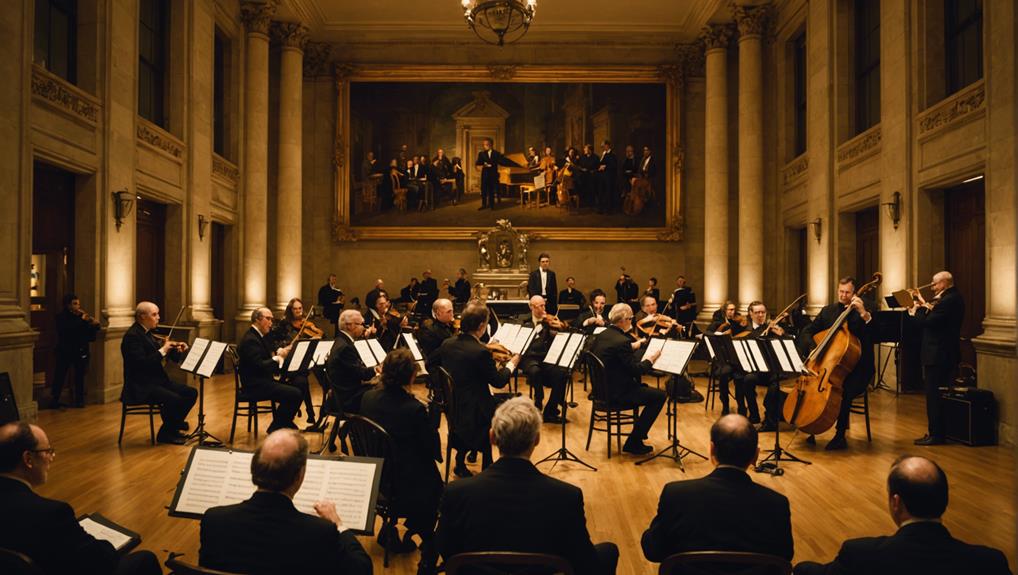
We recently had the privilege of witnessing the St. Luke’s Chamber Ensemble bring the masterpieces of Bach and Vivaldi to life at the Brooklyn Museum. The ensemble’s technical mastery, emotional depth, and cohesive musicality amazed us. From the elegant setting to the virtuosic performance, every aspect of the concert was breathtaking. The harmony and balance in the performance were palpable, making the ancient instruments shine. We felt transported to a bygone era, reliving the classical music heritage. It was a magical winter evening – and there’s still more to uncover about this unforgettable night. The evening’s brilliance reminded us of the awe-inspiring performances we’ve read about, such as the Royal Concertgebouw Mahler review, which praised the orchestra’s unparalleled interpretation of classical masterpieces. The St. Luke’s Chamber Ensemble delivered a similarly transcendent experience, leaving the audience in silent admiration. As the final notes resonated through the grand hall, we were left with a profound appreciation for the timeless power of music.
Elegant Setting for Timeless Classics
As we stepped into the Brooklyn Museum's majestic Beaux-Arts Court, we were enveloped in an atmosphere of refined sophistication, perfectly setting the tone for the St. Luke's Chamber Ensemble to transport us through an evening of timeless classical masterpieces. The museum's ambiance, steeped in historical significance, provided the ideal backdrop for an evening of cultural preservation. The fusion of art and music was palpable as we settled in for an unforgettable experience.
The grandeur of the Beaux-Arts Court, with its soaring ceiling and ornate details, created a sense of reverence, reminding us of the importance of preserving our cultural heritage. As we took our seats, the anticipation was palpable, and the Ensemble's presence only added to the excitement. The stage, set against the backdrop of the museum's impressive staircase, seemed to meld seamlessly into the sonic landscapes that were about to unfold.
As the music began, the museum's ambiance transformed, becoming an integral part of the performance. The Ensemble's masterful playing wove a sonic tapestry that resonated deeply with the surroundings, creating a truly immersive experience. We felt transported to a bygone era, one where art and music converged to create something sublime. The St. Luke's Chamber Ensemble had truly found the perfect setting to bring these timeless classics to life.
Virtuosic Performance of Bach's Suites
As we sat in the Brooklyn Museum, we were treated to a truly virtuosic performance of Bach’s Suites, which showcased the ensemble’s mastery of these timeless classics. We were struck by the level of technical skill and musicality on display, which brought new life to these iconic works. The ensemble’s execution was nothing short of breathtaking, and we couldn’t help but be drawn in by the sheer beauty of the music. The experience reminded us of the rich cultural tapestry that surrounds us, from the grand concert halls to the intimate settings of New York theatres. York Theatres Bar Mitzvah Boy might tell a different kind of story, but the same dedication to artistry and emotional depth was evident in this performance. Each note resonated with passion, leaving us in awe of the ensemble’s ability to connect with the audience on such a profound level.
Bach's Suites Revisited
We were mesmerized by the Chamber Ensemble's virtuosic performance of Bach's Suites, which breathed new life into these timeless masterpieces. As we listened, we felt the Baroque revival spirit, connecting us to the rich musical heritage of the past. The Ensemble's nuanced understanding of the historical context and artistic evolution of Bach's work was palpable, conveying the composer's intent with precision and elegance. The Suites, written for the solo cello, unfolded as a musical narrative, telling a story of joy, sorrow, and beauty. We were struck by the Ensemble's ability to balance the intricate counterpoint, showcasing the intricate relationships between the melodies. As the music swirled around us, we felt transported to a bygone era, yet simultaneously, the performance felt modern and fresh, a reflection of the timelessness of Bach's genius. The Ensemble's dedication to the music was evident in every note, and we were grateful to be a part of this unforgettable experience.
Cello Mastery on Display
Witnessing cellist Eric Jacobsen's impassioned performance of Bach's Suites, we were struck by the sheer technical mastery that elevated these iconic pieces to sublime heights. Jacobsen's command of cello techniques was awe-inspiring, as he effortlessly navigated the intricate melodies and complex harmonies. His expressive ranges were on full display, conjuring sonic landscapes that transported us to a world of profound beauty.
As he wove together the instrumental voices, Jacobsen told a musical story that was both deeply personal and universally relatable. His artistic nuances added layers of depth and emotion, inviting us to immerse ourselves in the music. We were captivated by the way he coaxed a kaleidoscope of tones from his instrument, from the softest whispers to the most thunderous declarations. Throughout the performance, Jacobsen's mastery of the cello shone like a beacon, illuminating the timeless genius of Bach's Suites.
Elegant Music Execution
Eric Jacobsen's virtuosic performance of Bach's Suites showcased an elegant music execution, where every note, phrase, and movement was carefully crafted to evoke a profound emotional response. As we listened, we were struck by the masterful way Jacobsen wove together the intricate musical threads, creating a rich tapestry of sound. The silent pauses between movements were just as important as the notes themselves, allowing the audience to absorb the beauty of the music. Jacobsen's musical nuance was on full display, as he coaxed a range of sonic textures from his instrument, from the softest whisper to the most dramatic declaration. His rhythmic precision was flawless, and his expressive phrasing brought an emotional depth to the performance. But what truly impressed us was Jacobsen's artistic restraint, his ability to balance passion with control, creating a performance that was both powerful and subtle. The result was a truly transcendent experience, one that left us in awe of Jacobsen's mastery of Bach's iconic Suites.
Vivaldi's Four Seasons Shine Bright
As we explore Vivaldi's Four Seasons, we're struck by the vibrant violin solos that bring each concerto to life. The programmatic music masterfully evokes the essence of each season, transporting us to a world of warmth, cold, bloom, and harvest. Through elegant string arrangements, we experience the full range of human emotions, from joy to melancholy, in this beloved masterpiece.
Vibrant Violin Solos
We were immediately captivated by the solo violinist's technical mastery as she brought Vivaldi's Four Seasons to life with breathtaking precision and passion. Her violin mastery was on full display, as she effortlessly navigated the intricate melodies and harmonies with a level of technical precision that was truly awe-inspiring.
In the solo spotlight, the violinist's melodic expressiveness shone bright, conveying the emotional depth and complexity of Vivaldi's iconic work. We were struck by the subtlety and nuance of her playing, as she coaxed a wide range of sonic nuances from her instrument.
Some highlights of her performance included:
- Virtuosic passages: The violinist tackled the most demanding technical passages with ease, never sacrificing musicality for showmanship.
- Expressive phrasing: Her phrasing was always thoughtful and expressive, bringing out the emotional heart of the music.
- Artistic flair: Throughout the performance, the violinist brought a sense of artistic flair, imbuing the music with a sense of spontaneity and joy.
Seasonal Programmatic Music
Vivaldi's Four Seasons, a quintessential example of seasonal programmatic music, transported us to a world of vivid imagery and poetic expression. As we listened, we were swept away by the evocative power of music to conjure up winter landscapes, summer breezes, and autumnal harvests. The Seasons, with its iconic violin solos and orchestral accompaniment, is a showcase in storytelling through sound.
Through Vivaldi's composition, we experienced the changing seasons as if we were witnessing them firsthand. The harsh, biting winds of winter gave way to the warmth and vitality of spring, followed by the languid heat of summer and the rustic beauty of autumn. The music was a demonstration of the power of seasonal narratives to evoke emotions and spark the imagination.
As we sat in the Brooklyn Museum, surrounded by the beauty of art and architecture, the music of Vivaldi's Four Seasons brought the seasons to life in a way that was both timeless and relevant. It was a truly transcendent experience, one that left us in awe of the composer's genius and the St. Luke's Chamber Ensemble's masterful performance.
Elegant String Arrangements
The intricate string arrangements in Vivaldi's Four Seasons shine bright, masterfully woven together to evoke the distinct characters of each season. We were transported to a world of beauty and elegance as the St. Luke's Chamber Ensemble brought this iconic work to life at the Brooklyn Museum. The Ensemble's stirring performance was a tribute to the enduring power of Vivaldi's music, which continues to captivate audiences to this day.
Here are just a few ways the Ensemble's performance excelled:
- String Theory in Action: The Ensemble's masterful execution of Vivaldi's complex string arrangements was a perfect illustration of String Theory in action, where the interplay of individual strings creates a rich tapestry of sound.
- Sonic Landscapes: The Ensemble's performance painted vivid sonic landscapes, evoking the warmth of summer, the melancholy of autumn, and the icy chill of winter.
- Emotional Depth: The Ensemble's nuanced interpretation of Vivaldi's score added emotional depth to the music, drawing the audience into the emotional narrative of each season.
Throughout the performance, the Ensemble's technical mastery and emotional commitment to the music created a truly unforgettable experience.
Ensemble's Cohesive Musicality Shines
With every note, the ensemble's cohesion shone brightly, as if each musician were an extension of the others. As we listened, it became clear that this group of talented individuals had achieved something truly special – a level of musical chemistry that elevated their performance to new heights. The way they blended their sounds, anticipating and responding to each other with ease, was a reflection of their artistic synthesis.
We were struck by the ensemble's ability to balance individual expression with collective unity. Each musician brought their unique voice to the forefront, yet always remained attuned to the collective sound. This delicate balance allowed the music to breathe, as if the ensemble were a single, multi-faceted instrument. The result was a rich tapestry of sound, woven from the threads of Bach and Vivaldi's masterworks.
As we savored each piece, we felt the ensemble's connection growing stronger, their musical communication a symphony of nods, glances, and subtle cues. It was as if they were having a conversation, one that transcended words and spoke directly to the soul. In that moment, we were reminded that music, at its core, is a language of connection, and the St Luke's Chamber Ensemble spoke it fluently.
Orchestral Mastery on Display
As we reflect on the St Luke's Chamber Ensemble's performance at the Brooklyn Museum, it's clear that the group's technical prowess was on full display. We were struck by the seamless harmonies in the string sections, the show-stopping virtuosity of the soloists, and the ensemble's ability to navigate subtle shifts in dynamics with ease. These impressive displays of orchestral mastery left an indelible mark on the evening's program.
Harmonious String Sections
We witnessed orchestral mastery unfold during the St Lukes Chamber Ensemble Concert at the Brooklyn Museum, where the harmonious string sections mesmerized the audience with their technical precision and emotive resonance. The ensemble’s string quintets, in particular, showcased the musicians’ ability to weave together intricate harmonies, creating a rich tapestry of sound. The chamber sonatas, with their intimate and expressive nature, allowed the musicians to shine as individual artists while still blending seamlessly together. The evening reached a crescendo of excitement when the ensemble performed a captivating arrangement that left the audience in awe. As the notes lingered in the air, one could not help but think of the future, especially with the upcoming concert where Malkki conducts New York Philharmonic, promising to bring a similar level of artistry to the stage. This blend of individual expression and collective harmony is what truly defines a memorable musical experience, and it was clear that the St Lukes Chamber Ensemble had achieved that in spades.
The string sections demonstrated exceptional cohesion, with each musician playing off the others to create a unified whole. This was evident in the way the violins danced together in perfect harmony, the violas provided a sonorous depth, and the cellos added a sense of gravitas.
Some notable aspects of the harmonious string sections included:
- Expressive phrasing: The musicians' attention to dynamic contrasts and phrasing created a sense of narrative in the music.
- Tonal balance: The ensemble achieved a perfect balance of tone, with no single instrument overpowering the others.
- Emotional depth: The string sections conveyed a deep emotional understanding of the music, drawing the audience into the performance.
Virtuosic Solo Moments
Throughout the performance, exceptional solo moments punctuated the ensemble's harmonious string sections, showcasing the individual musicians' virtuosity and elevating the overall orchestral mastery on display. As we listened, we were treated to a series of breathtaking solo spotlights that highlighted the ensemble's remarkable talent. Each musician took their turn in the spotlight, weaving intricate musical narratives that captivated the audience. The violinist's soaring melodies, the cellist's rich tones, and the violist's subtle nuances all blended together to create a rich tapestry of sound.
These solo moments were more than just technical displays of skill; they were integral to the musical storytelling. Each musician brought their own unique voice to the performance, adding depth and complexity to the overall narrative. As we watched, we felt like we were part of a dynamic conversation, with each soloist adding their own chapter to the story. The result was a truly immersive experience, with the ensemble's collective virtuosity painting a vivid picture that lingered long after the final notes faded away.
Nuanced Dynamic Shifts
The ensemble's mastery of nuanced dynamic shifts allowed them to conjure an astonishing range of tonal colors, from the softest whispers to the loudest declarations, drawing us in with an uncanny sense of emotional authenticity. We were completely absorbed in the performance, as the musicians' expressive contrasts and subtle dynamic shifts transported us to vivid sonic landscapes.
The ensemble's skillful manipulation of volume, tone, and phrasing created a rich tapestry of sound, with each musician working in perfect harmony to craft a cohesive and engaging performance. This mastery of dynamic range was particularly evident in the Vivaldi concerto, where the ensemble's ability to move seamlessly from delicate, lacy passages to bold, driving rhythms was truly breathtaking.
Some highlights of their dynamic control include:
- The hushed, whisper-soft opening of the Bach suite, which set the tone for the entire performance.
- The dramatic crescendo in the Vivaldi concerto, which left the audience gasping in awe.
- The delicate, lace-like passage work in the slow movement of the Bach concerto, which showcased the ensemble's ability to craft intricate, interlocking patterns.
Brooklyn Museum's Acoustic Delight
As we settled into our seats, the Brooklyn Museum's Beaux-Arts Court, with its soaring ceilings and elegant archways, transformed into an intimate setting, its natural acoustics primed to amplify the Chamber Ensemble's nuanced performance. The museum's stunning architecture, a blend of neoclassical and art nouveau styles, provided a unique backdrop for the evening's cultural affirmation. As the music began, the space was bathed in a warm, golden light, transporting us to an urban oasis, where the sounds of Bach and Vivaldi merged in perfect harmony.
The ensemble's masterful performance wove a sonic tapestry, transporting us through a kaleidoscope of emotions. The museum's acoustic delight was on full display, as the notes resonated and reverberated, filling every corner of the court. The fusion of art and music was palpable, as the musicians drew inspiration from the museum's rich cultural heritage. The evening's artistic fusion was a confirmation of the power of music to bring people together, creating a sense of community and shared experience. In this iconic setting, the St. Luke's Chamber Ensemble brought the masters to life, crafting a sonic landscape that will linger in our memories forever.
Maestro's Skilled Baton Guidance
Under the maestro's skilled baton guidance, the ensemble's cohesive performance was elevated, every nuance and phrase meticulously shaped to evoke the emotional depth of the masterworks. We were struck by the conductor's vision, which brought a new level of sophistication to the performance. As we listened, it became clear that the maestro's expertise was not limited to technical precision, but also extended to a deep understanding of the musical nuances that make these masterpieces timeless.
The conductor's ability to coax a wide range of dynamics, from the softest whispers to the loudest declarations, added depth and complexity to the performance. We were particularly impressed by the way the maestro brought out the intricate dialogues between the instruments, creating a sense of conversation and collaboration that was truly enthralling.
Some highlights of the maestro's guidance included:
- Delicate phrasing: The conductor's attention to phrasing brought out the subtle emotional shifts in the music, creating a sense of narrative that drew us in.
- Textural clarity: The maestro's skill in balancing the different instrumental textures added a richness and variety to the performance that was truly engaging.
- Emotional intensity: The conductor's ability to convey the emotional intensity of the music was breathtaking, leaving us on the edge of our seats.
Harmony and Balance in Abundance
We reveled in the ensemble's rich harmonies, which blossomed into a kaleidoscope of sound that was at once lush and refined. As we immersed ourselves in the performance, we discovered a world of melodic textures woven together with precision and care. The musical geometry of the compositions unfolded before us, with each note and phrase carefully crafted to create a sense of aesthetic proportions. The result was a sonic landscape of breathtaking beauty, where every element worked in harmony to create a sense of balance and proportion.
As we listened, we became acutely aware of the harmonic resonance that permeated every aspect of the performance. The ensemble's mastery of tone and timbre created a sense of artistic symmetry, where every element seemed to fit together seamlessly. The music swelled and ebbed, creating a sense of dynamic tension that was both exhilarating and beautiful. Throughout the performance, we were struck by the sense of balance and harmony that pervaded every aspect of the music. It was as if the ensemble had tapped into a deeper truth, one that spoke to the very essence of music itself. As we left the concert, we couldn't help but feel grateful for the experience, and the sense of harmony and balance that lingered long after the final notes had faded away.
Ancient Instruments Brought to Life
Five ancient instruments, each with its own unique character, were resurrected on stage, transporting us to a bygone era where music was an integral part of communal life. As we listened, we felt the Historic Revival of a forgotten era, where music was woven into the fabric of daily life. The St Luke's Chamber Ensemble's masterful performance brought Forgotten Sounds to life, awakening a deep connection within us.
The ensemble's choice of instruments was a deliberate attempt to recreate the sonic tapestry of the past. We were mesmerized by the:
- Theorbo, with its extended neck and intricate fretwork, adding a subtle yet distinctive timbre to the overall sound.
- Viola da gamba, whose rich, mellow tones evoked the grandeur of a bygone era.
- Recorder, with its airy, bird-like melodies, transported us to a world of rustic simplicity.
As the music swirled around us, we felt the boundaries of time and space dissolve, and we were one with the music. The ancient instruments, so carefully chosen and beautifully played, conjured up a world where music was an integral part of communal life. In that moment, we were part of a Historic Revival, where the Forgotten Sounds of the past came alive, and we were forever changed.
Revitalizing Classical Music Heritage
As we immerse ourselves in the St Luke's Chamber Ensemble's performance, the rich tapestry of classical music heritage unfolds before us, revitalized by the ensemble's masterful interpretation. The ensemble's dedication to preserving the classical music legacy is evident in their meticulous attention to detail, transporting us to an era of elegance and refinement.
| Composer | Composition |
|---|---|
| Bach | Suite for Solo Cello No. 1 in G Major, BWV 1007 |
| Vivaldi | Concerto for Lute and Orchestra in D Major, RV 93 |
| Bach | Brandenburg Concerto No. 3 in G Major, BWV 1048 |
| Vivaldi | Concerto for Violin and Orchestra in E Major, RV 271 |
As we delve deeper into the performance, we're struck by the ensemble's ability to breathe new life into these timeless masterpieces. Their interpretation is not merely a recreation of the past, but a reimagining that resonates with contemporary audiences. This classical revival is not about nostalgia, but about celebrating the musical legacy that has shaped our cultural heritage.
Through their performance, the St Luke's Chamber Ensemble reminds us that classical music is not a relic of the past, but a living, breathing art form that continues to inspire and uplift us. As we experience the beauty and complexity of Bach and Vivaldi's works, we're reminded of the power of music to transcend time and connect us across generations.
A Memorable Winter Evening
On that winter evening, the Brooklyn Museum's stately halls were set aglow by the warm, golden light of the St Luke's Chamber Ensemble's performance. As we settled into our seats, the anticipation was palpable, and the frosty atmosphere outside seemed to fade away, replaced by the promise of a winter wonderland within.
As the musicians took their places, the air was electric with expectation. The ensemble's masterful rendition of Bach's Suite for Solo Cello No. 1 in G Major, BWV 1007, transported us to a domain of elegance and refinement. The intricate notes danced across the hall, weaving a tapestry of sound that was both intimate and expansive.
The highlights of the evening included:
- Vivaldi's Concerto for Lute and Orchestra in D Major, RV 93: The lute's gentle, plucked notes added a touch of whimsy to the evening, evoking the image of a winter's night by the fireside.
- Bach's Brandenburg Concerto No. 3 in G Major, BWV 1048: The ensemble's spirited performance of this beloved concerto was a tribute to the enduring power of Baroque music.
- The ensemble's chemistry: The musicians' evident camaraderie and mutual respect added a layer of warmth to the performance, making the evening feel all the more special.
As the final notes faded away, we felt grateful to have been a part of this unforgettable winter evening, surrounded by the beauty of music, art, and the Brooklyn Museum's stately halls.
Frequently Asked Questions
Can I Attend St Luke's Chamber Ensemble Performances With Young Children?
'Can we attend St Luke's Chamber Ensemble performances with young children? We've wondered the same thing! While there aren't any specific age restrictions, we believe it's important to take into account the kid-friendly atmosphere. If your little ones can sit through a 60-minute classical music performance without getting restless, then go for it! Otherwise, you might want to leave the tiny tots at home and make it a date night instead.'
Are the Brooklyn Museum's Concert Halls Wheelchair Accessible?
Did you know that nearly 1 in 5 people in the US have a disability? We're thrilled to report that the Brooklyn Museum's concert halls are wheelchair accessible! The museum prioritizes inclusivity, offering various Accessibility Options to make sure everyone can enjoy the performances. From wheelchair ramps to accessible seating, the museum's commitment to Museum Inclusivity shines through. We're excited to experience the beautiful music of St Luke's Chamber Ensemble in an environment that welcomes all.
Can I Purchase Tickets for Individual Ensemble Members' Solo Performances?
We're excited to attend individual ensemble members' solo performances! As fans, we want to support our favorite solo artists. Unfortunately, tickets are not sold separately for individual ensemble members' solo performances. We can, however, experience their unique talents within the ensemble's performances. This way, we get to enjoy their individual spotlight moments while appreciating the collective magic of the ensemble.
Are Food and Drinks Allowed Inside the Brooklyn Museum's Concert Halls?
Having awareness that sipping coffee and indulging in snacks is a norm for us, we understand better than to assume the same for the Brooklyn Museum's concert halls. We've checked the Museum Rules, and it's clear: food and drinks are not allowed inside the halls. It's all about respecting the Event Etiquette and preserving the venue's integrity. We comprehend it, and so should you – let's keep the music sacred and the space clean!
Can I Request a Specific Seating Arrangement for the Concert?
When we attend concerts, we often wonder if we can request a specific seating arrangement. The answer is yes! Most concert halls, including the Brooklyn Museum's, allow us to make seat preferences known in advance. If we're looking for VIP access, some venues even offer personalized seating options. We can simply contact the venue or check their website to inquire about their seating policies and make our preferences known.
About the Author


