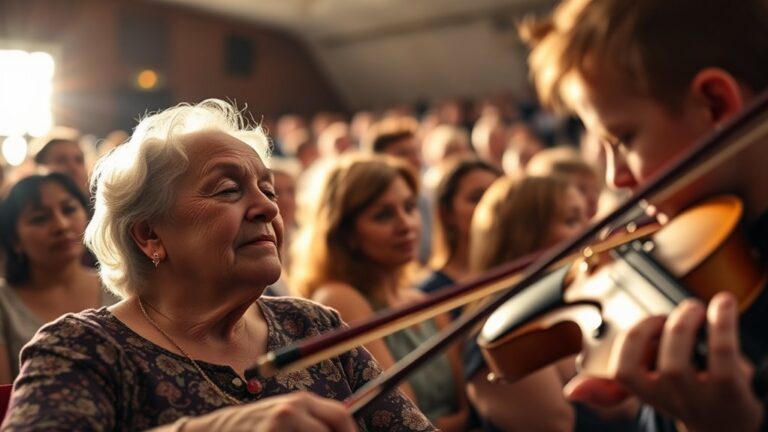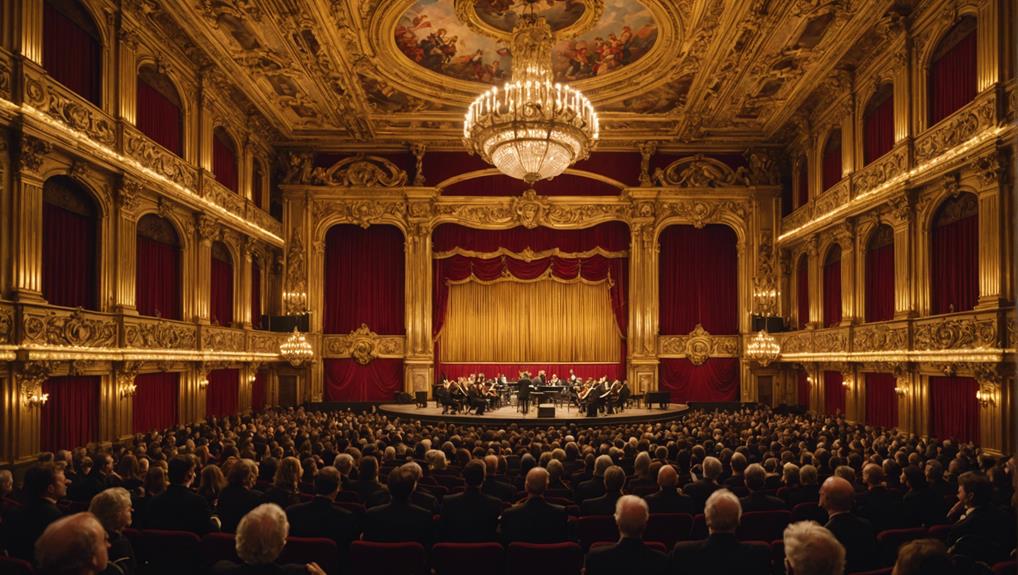
We were blown away by the Venice Baroque Orchestra's electrifying performance of Vivaldi's Juditha Triumphans at Carnegie Hall. Conductor Marcon's visionary leadership and the orchestra's technical mastery brought this Baroque treasure to life. The vocal soloists shone brightly, and the score's dramatic flair and lush harmonies transported us to a world of ancient grandeur. It was a night to remember, with the orchestra's period authenticity and attention to historical context adding depth to the performance. As we immersed ourselves in Vivaldi's masterpiece, we discovered a timeless allure that transcended time – and there's still more to uncover.
Vivaldi's Masterpiece Takes Center Stage
As we settled into our seats at Carnegie Hall, the anticipation was palpable, and Vivaldi's masterpiece, Juditha Triumphans, took center stage, ready to transport us to a world of Baroque majesty. The Venice Baroque Orchestra's performance promised to breathe new life into this 18th-century opera, and we were excited to experience the innovative spirit of Vivaldi's Baroque innovations.
As the music began, we were struck by the orchestra's ability to weave a narrative tapestry, transporting us to a domain of musical storytelling. The opera's revival was a demonstration of the power of art to transcend time, speaking to our shared humanity across the centuries. The artistic vision of the orchestra shone through in every note, as they coaxed out the rich cultural significance of Vivaldi's work.
Within the historical context of the opera's original composition, we saw the echoes of a bygone era, where art and culture were intertwined with the fabric of society. Yet, in this performance, we witnessed the timelessness of Vivaldi's masterpiece, speaking to us in a language that transcended the ages. As we listened, entranced, we knew that we were part of something greater – a celebration of the human spirit, expressed through the universal language of music.
Conductor Marcon's Visionary Leadership
As we explore Conductor Marcon's visionary leadership, we're struck by the way he brings Vivaldi's masterpiece to life. Marcon's unique interpretive genius is on full display, and it's clear that his artistic vision is what sets the tone for the entire performance. With his expert guidance, the Venice Baroque Orchestra reaches new heights of excellence, creating a truly unforgettable experience.
Marcon's Interpretive Genius
Conductor Marcon's visionary leadership breathed new life into Vivaldi's Juditha Triumphans, elevating the already-dramatic oratorio to unprecedented heights with his bold, insightful interpretations. We witnessed an artist who fully grasped the musical nuances of this Baroque masterpiece, bringing forth depths of emotion previously unexplored. Marcon's artistic vision was palpable, as he masterfully guided the Venice Baroque Orchestra through the intricate score, revealing hidden textures and subtleties. His conductor's charm was undeniable, as he coaxed performances that were at once innovative and authentic. The orchestra responded to his leadership with a sense of creative freedom, resulting in a truly collaborative effort. Marcon's innovative style infused the performance with an emotional depth that resonated deeply with the audience. His ability to balance grandeur and intimacy created a sense of drama that was nothing short of mesmerizing. As we listened, we felt the weight of Marcon's interpretive genius, shaping our experience of this beloved oratorio in ways both unexpected and sublime.
Orchestral Excellence Achieved
With Marcon's masterful guidance, the Venice Baroque Orchestra transformed into a finely tuned machine, its every section and soloist working in harmony to produce a rich, velvety sound that enveloped the Carnegie Hall audience. As we sat in awe, we couldn't help but marvel at the conductor's visionary leadership. Under his direction, the orchestra achieved a level of orchestral excellence that was truly breathtaking.
| Aspect of Excellence | Achievement |
|---|---|
| Musical Depth | Rich, nuanced soundscapes |
| Artistic Unity | Seamless collaboration between sections |
| Sonic Cohesion | Harmonious blend of instruments |
| Cultural Significance | Revival of Baroque-era grandeur |
| Technical Mastery | Flawless execution of complex scores |
As we listened, we were struck by the orchestra's technical mastery, which allowed the music to shine with unparalleled brilliance. Marcon's visionary leadership brought forth a level of artistic unity, resulting in a performance that was at once cohesive and sublime. The Venice Baroque Orchestra's success was a demonstration of the power of music to transport and inspire – and we felt privileged to have been a part of it.
The Orchestra's Sonic Splendor
As we savor the Venice Baroque Orchestra's performance, we're struck by the orchestra's sonic splendor, which stems from a perfect blend of virtuosic instrumental balance, rich harmonic texture, and dynamic rhythmic pulse. Each element enhances the others, creating a mesmerizing sound that draws us in. Throughout the evening, we're treated to a masterclass in orchestral cohesion, with each musician seamlessly contributing to the overall sonic tapestry.
Virtuosic Instrumental Balance
The Venice Baroque Orchestra's virtuosic instrumental balance was on full display, its sonic splendor weaving a rich tapestry of sound that enveloped us from the first notes. We were treated to innovative arrangements that crafted sonic landscapes of breathtaking beauty, with each instrument adding its unique voice to the dialogue. The strings sang with expressive nuances, their subtle vibrato and dynamic shifts painting a kaleidoscope of emotions. Meanwhile, the woodwinds and brass added bursts of rhythmic intensity, their harmonic contrasts and textural variety thrilling us with every note. Throughout the performance, the orchestra's artistic fusion was palpable, as if each musician was an extension of the others, working in perfect harmony to create a unified whole. The result was a sound that was both epic in scope and intimate in feeling, a true masterpiece of instrumental balance that left us awestruck.
Rich Harmonic Texture
We reveled in the orchestra's rich harmonic texture, where every chord and progression unfolded like a masterfully woven tapestry, each thread of sound meticulously intertwined to create a profound sense of depth and complexity.
The Venice Baroque Orchestra's sonic atmosphere was nothing short of breathtaking, as the musicians coaxed a kaleidoscope of colors from their instruments. The melodic contours of Vivaldi's score danced across the stage, weaving in and out of the harmonic nuance that underscored the entire performance. Meanwhile, the timbral balance was nothing short of perfect, with each section blending seamlessly into the next to create a rich tapestry of sound.
- The orchestra's polyphonic complexity was on full display, as intricate lines intertwined to create a sense of textural depth that drew us in and refused to let go.
- The way the musicians navigated the score's many dramatic shifts in mood and dynamics was a confirmation of their mastery of Vivaldi's idiom.
- From the soaring highs of the violins to the sonorous lows of the cellos, every section of the orchestra brought its A-game to the performance.
- The overall effect was one of effortless elegance, as if the music were unfolding of its own accord.
- As the final notes of the performance faded away, we were left in stunned silence, the orchestra's rich harmonic texture still resonating in our minds.
Dynamic Rhythmic Pulse
With the rich harmonic texture still resonating in our minds, we were swept up in the orchestra's dynamic rhythmic pulse, which propelled the music forward with an irresistible energy. This sonic splendor was a demonstration of the Venice Baroque Orchestra's mastery of Vivaldi's Juditha. The energetic beats that drove the music forward were expertly woven into intricate pulse patterns, creating a sense of tension and release that kept us on the edge of our seats. As the orchestra navigated the complex rhythms, it was clear that every musician was fully attuned to the dynamic pulse, creating a unified and electrifying performance. The dynamic rhythmic pulse was the backbone of the performance, providing the foundation for the soaring vocals and virtuosic instrumental solos. It was a true marvel to experience the orchestra's dynamic rhythmic pulse, which breathed new life into Vivaldi's masterpiece.
Vocal Soloists Shine Brightly
During the performance, soprano Susanna Hurrell's radiant voice soared above the orchestra, setting the tone for a thrilling night of virtuosic singing. We were treated to a showcase of Vocal Powerhouses, each soloist delivering a masterclass in vocal agility and emotional depth.
The Vocal Soloists truly shone brightly, their voices intertwining in intricate harmonies that left us breathless. From the moment they took the stage, it was clear that these Soloist Showcases would be a highlight of the evening.
Here are just a few standout moments that still resonate with us:
- Mezzo-soprano Luciana Mancini's rich, velvety tone brought depth and nuance to the role of Juditha.
- Countertenor Jakub Józef Orliński's soaring vocals pierced the night air, his precision and control a marvel to behold.
- Tenor Francesco Araiza's bright, agile voice danced effortlessly through the intricate melodies, his stage presence commanding attention.
- Bass-baritone Krzysztof Baczyk's rich, sonorous voice brought gravity and authority to the role of Ozias.
- Soprano Hurrell's show-stopping aria, "Quanto magis generosa," left the audience gasping in awe.
These Vocal Powerhouses, each a master of their craft, came together to create a truly unforgettable night of music.
The Triumph of Juditha's Score
Vivaldi's masterful score, a true Baroque treasure, came alive in the capable hands of the Venice Baroque Orchestra, its intricate harmonies and soaring melodies transporting the audience to ancient Bethulia. We were struck by the way the orchestra brought to life the musical narrative, weaving a rich tapestry of sound that perfectly captured the drama and emotion of the story.
As we listened, we were struck by the historical context in which Vivaldi wrote Juditha. Composed in 1716, this oratorio was a demonstration of the power of the Venetian Republic's cultural and artistic flourishing. Vivaldi's score reflects this cultural richness, drawing on the musical traditions of the time to create a work that is both of its era and timeless.
The Venice Baroque Orchestra's performance was a confirmation of the power of Vivaldi's music to transcend time and place. Under the skillful direction of Andrea Marcon, the orchestra brought a level of nuance and sensitivity to the score, expertly balancing the dramatic and lyrical elements to create a truly compelling performance. We were particularly impressed by the way the orchestra's period instruments added a layer of authenticity to the performance, transporting us to a bygone era.
Throughout the performance, we were struck by the way Vivaldi's score seemed to pulse with life, its intricate harmonies and soaring melodies conjuring up the drama and passion of the story. It was a truly unforgettable experience, one that left us in awe of Vivaldi's genius and the Venice Baroque Orchestra's mastery.
A Night to Remember at Carnegie
As we reflect on the unforgettable evening at Carnegie Hall, we're reminded of the Venice Baroque Orchestra's masterful performance. From the first notes, it was clear that this night would be one for the books, with orchestral harmony shining brighter than the hall's iconic chandeliers. As we relive the magic, we're struck by the vocalists who commanded the stage, and the majestic Baroque splendor that filled the legendary venue.
Orchestral Harmony Shines
We were treated to a sublime display of orchestral harmony, as the Venice Baroque Orchestra's precise and nuanced playing brought Vivaldi's Juditha Triumphans to life at Carnegie Hall. The orchestra's mastery of Vivaldi's score was evident in the way they wove together intricate melodies, creating a rich tapestry of sound that enveloped the audience.
- The orchestra's attention to orchestral nuances allowed for a depth of expression that drew us in, evoking a sense of drama and tension.
- The way they crafted sonic landscapes transported us to a world of beauty and wonder.
- The harmonic resonance was palpable, as if the notes themselves were vibrating with energy.
- The musical cohesion was stunning, with each section blending seamlessly together.
- The artistic fusion of Vivaldi's vision with the orchestra's skill resulted in a truly transcendent experience.
Vocalists Take Center
Four exceptional vocalists stole the spotlight, their powerful voices soaring through Carnegie Hall as they brought the story of Juditha Triumphans to vivid life. We were mesmerized by their vocal range exploration, effortlessly maneuvering through the complexities of Vivaldi's score. The soprano's crystal-clear tones and the mezzo-soprano's rich, velvety timbre blended in perfect harmony, creating an operatic storytelling experience like no other.
As we listened, we were transported to ancient Bethulia, where the courageous Juditha outwitted the Assyrian general Holofernes. The vocalists' mastery of dynamics and phrasing brought the drama to life, their voices painting a vivid picture of the biblical heroine's bravery. The tenor's bright, agile voice added a touch of elegance, while the bass's deep, resonant tones provided a sense of gravitas. Together, the quartet created a sonic tapestry that was both beautiful and haunting, drawing us deeper into the world of Juditha Triumphans.
Baroque Majesty Returns
The Venice Baroque Orchestra’s masterful performance of Vivaldi’s Juditha Triumphans at Carnegie Hall was a demonstration of the enduring power of Baroque music to transport and transform. As we sat in the iconic concert hall, we were swept away by the majestic sounds of the 18th century, transported to a bygone era of grandeur and elegance. The orchestra’s Historically Informed Performance (HIP) brought a level of authenticity to the performance, making it feel like a true Historical Revival. The musicians’ virtuosity and passion were evident in every nuanced phrase, bringing Vivaldi’s composition to life with remarkable clarity and depth. Much like how the American Classical Orchestra excels in its commitment to historical accuracy, the Venice Baroque Orchestra demonstrated an unparalleled dedication to period-specific performance techniques. The result was a mesmerizing concert that not only honored the composer’s original intent but also captivated the audience with its expressive intensity.
- The intricate nuances of the Baroque period were brought to life through the orchestra's precise and expressive playing.
- The ornate decorations of Carnegie Hall seemed to fade into the background as the music took center stage.
- It was a night that truly embodied the spirit of Cultural Renaissance, as the past and present collided in perfect harmony.
- The audience was treated to a truly immersive experience, with the music enveloping us in a cocoon of beauty and emotion.
- As the final notes faded away, we were left in awe of the enduring power of Baroque music to inspire and uplift.
Venice Baroque Orchestra's Flair
With every note, the Venice Baroque Orchestra's flair for period authenticity shone brightly, transporting the Carnegie Hall audience to 18th-century Venice. We were enchanted by the orchestra's Italian elegance, which permeated every aspect of their performance. The musical nuances were exquisite, with each musician bringing a deep understanding of Baroque precision to their playing.
As we listened, we felt a strong connection to the cultural heritage of Venice, where Vivaldi's music was born. The orchestra's artistic fusion of historical context and modern energy created a truly immersive experience. We were struck by the ensemble synergy, as each musician seemed to anticipate and respond to the others with ease.
The Venice Baroque Orchestra's attention to historical context added depth and richness to the performance. We felt as though we were witnessing a recreation of a 18th-century Venetian concert, with all the opulence and grandeur that entailed. And yet, the orchestra's playing was never stuffy or academic; instead, it was infused with a sense of joy and spontaneity that was utterly infectious. As we listened, we couldn't help but feel grateful for the chance to experience Vivaldi's music in such a vibrant and authentic way.
Unleashing the Power of Vivaldi
As we explored further into Vivaldi's Juditha Triumphans, we uncovered a rich tapestry of emotions, expertly woven by the composer's masterful hand. The Venice Baroque Orchestra's performance at Carnegie Hall was a demonstration of Vivaldi's evolution as a composer, showcasing his ability to craft music that transcends time and space.
As we investigated deeper into the concert, we discovered the following aspects that made Vivaldi's music truly innovative:
- Vivaldi's use of contrast: The composer's clever use of contrasting dynamics, tempos, and harmonies created a sense of drama and tension, drawing the audience into the emotional narrative.
- Innovative instrumentation: Vivaldi's choice of instruments, such as the virtuosic violin solos, added a new dimension to the music, pushing the boundaries of what was possible in Baroque music.
- Experimentation with form: Vivaldi's use of unconventional musical structures and forms, such as the concerto grosso, demonstrated his willingness to challenge traditional norms.
- Emphasis on storytelling: The libretto's emotional intensity was matched by Vivaldi's masterful scoring, creating a sense of drama and tension that kept the audience engaged.
- Musical innovation through ornamentation: Vivaldi's use of ornamentation and embellishments added a level of sophistication and elegance to the music, showcasing his mastery of musical innovation.
Through Vivaldi's Juditha Triumphans, we experienced a true masterclass in musical innovation, showcasing the composer's ability to push boundaries and create something truly remarkable.
Dramatic Flair and Lush Harmonies
In the midst of Vivaldi's Juditha Triumphans, we found ourselves swept away by dramatic flair and lush harmonies that poured forth from the Venice Baroque Orchestra's performance at Carnegie Hall. As the orchestra's strings danced across the stage, their melodic contours weaving in and out of harmony, we felt the music's emotional resonance deep within our chests. The ensemble's harmonic depth was stunning, with each note and chord progression expertly crafted to evoke the drama and tension of the biblical story.
The sonic landscapes created by the orchestra were nothing short of breathtaking, transporting us to a world of ancient grandeur and mythic proportions. The artistic nuance of the performance was evident in every phrase, every gesture, and every note. The expressive range of the musicians was on full display, as they navigated the complexities of Vivaldi's score with ease and precision. We were struck by the way the music seemed to swell and surge, like a great wave crashing against the shores of our souls.
Throughout the performance, we felt the orchestra's deep connection to the music, their passion and commitment evident in every note. It was a truly transcendent experience, one that left us breathless and yearning for more. As we sat in the hushed silence of Carnegie Hall, we knew that we had just witnessed something truly special – a performance that would stay with us long after the last note had faded away.
A Performance of Precision and Passion
We marveled at the Venice Baroque Orchestra's precision, as every note and gesture was honed to perfection, conveying the passion and intensity of Vivaldi's score. The orchestra's meticulous attention to detail was evident in every aspect of the performance, from the subtle nuances of the strings to the bold declarations of the brass. This precision was not just about technical accuracy, but about conveying the emotional intensity of the music. The orchestra's artistic vision was palpable, as they brought Vivaldi's masterpiece to life with a sense of drama and urgency.
Some highlights of the performance included:
- The soaring vocals of the soloists, who brought a sense of vulnerability and strength to their characters
- The virtuosic solos of the violinist, whose playing was both dazzling and expressive
- The dramatic flair of the conductor, who coaxed a wide range of dynamics and textures from the orchestra
- The sumptuous sound of the orchestra, which was both rich and transparent
- The sense of community and collaboration among the musicians, who seemed to be fully invested in the music
Throughout the performance, we were struck by the orchestra's ability to balance precision and passion, creating a truly unforgettable experience.
Rediscovering a Baroque Treasure
Vivaldi's Juditha Triumphans, a Baroque oratorio written in 1716, has long been overshadowed by his more famous works, but the Venice Baroque Orchestra's performance brought this treasure back into the spotlight. As we listened to the lush harmonies and intricate instrumental arrangements, we felt like we were part of a long-overdue Baroque Revival. This forgotten masterpiece, hidden away for centuries, was finally getting the recognition it deserved.
We've been guilty of taking Vivaldi's genius for granted, assuming that his iconic Four Seasons was the pinnacle of his creativity. But Juditha Triumphans is a testimony to the composer's innovative spirit and mastery of the oratorio form. The Venice Baroque Orchestra's performance was a passionate plea to rediscover the beauty of the Baroque era. Under the guidance of conductor Andrea Marcon, the musicians coaxed out the intricate textures and emotional depth of Vivaldi's score, revealing a work that's both timeless and timely.
As we revel in the splendor of this Forgotten Masterpiece, we're reminded that there's still so much to explore in the vast expanse of classical music. The Venice Baroque Orchestra's performance was a clarion call to revisit the neglected corners of the Baroque repertoire, to uncover the hidden gems that await our discovery. With Juditha Triumphans, we're given a rare opportunity to experience the thrill of discovery, to hear a masterpiece that's been hiding in plain sight for centuries.
The Timeless Allure of Vivaldi
As we explore the world of Baroque music, one thing becomes clear: Antonio Vivaldi's music has a way of surpassing time, speaking to us across centuries with an emotional intimacy that's nothing short of astonishing. It's as if his compositions have a profound understanding of human emotion, conveying the full spectrum of feelings with a depth that resonates deeply within us.
But what makes Vivaldi's music so timeless? Here are a few reasons why his art continues to captivate audiences today:
- Musical innovation: Vivaldi's groundbreaking use of harmony, rhythm, and melody expanded the possibilities of classical music, influencing generations of composers to come.
- Cultural significance: His music reflects the cultural and historical context of 18th-century Venice, offering a unique window into the city's rich cultural heritage.
- Emotional resonance: Vivaldi's compositions evoke powerful emotions, tapping into universal human experiences that continue to resonate with listeners today.
- Historical context: His music is deeply rooted in the Baroque period, yet simultaneously transcends its historical context, speaking to fundamental aspects of the human experience.
- Artistic genius: Vivaldi's masterful command of his craft, combined with his innovative spirit, has left an indelible mark on the world of classical music.
As we explore further into Vivaldi's oeuvre, it becomes increasingly clear that his music is more than just a product of its time – it's a tribute to the power of artistic genius to transcend the boundaries of time and space.
Frequently Asked Questions
What Is the Historical Context of Vivaldi's Juditha Triumphans?
We explore the historical context of Vivaldi's Juditha Triumphans, a product of the Baroque Era's musical innovation. Written in 1716, this oratorio was composed for the Ospedale della Pietà, a Venetian orphanage and music school where Vivaldi taught. This Ospedale connection influenced the work's unique blend of piety and drama, showcasing Vivaldi's mastery of orchestration and vocal writing.
How Does the Venice Baroque Orchestra Typically Prepare for Performances?
It is widely understood that intense preparation is key to a flawless show. Take, for instance, our violinist who practiced Vivaldi's intricate harmonies for hours to perfect that one tricky solo. Typically, preparations for performances involve rehearsing in sections, focusing on tricky passages, and running the entire program multiple times. To combat performance anxiety, we also practice mindfulness and breathing exercises. Our rehearsal techniques are designed to build confidence, ensuring a mesmerizing show that leaves the audience in awe.
Are Vivaldi's Operas Commonly Performed in Modern Times?
We're curious about Vivaldi's operas in modern times. Unfortunately, they've suffered from neglect, overshadowed by his popular instrumental works. However, there's an opera revival underway, sparking renewed interest in his vocal compositions. As a result, we're seeing more frequent performances, and we couldn't be more thrilled! It's about time Vivaldi's operas take center stage, showcasing his mastery of drama and music.
What Role Does the Conductor Play in Interpreting Vivaldi's Score?
As we explore Vivaldi's score, we coincidentally stumble upon the conductor's pivotal role in shaping the performance. It's striking how a conductor's vision can breathe new life into a centuries-old composition. With artistic license, they skillfully balance the orchestra, choir, and soloists, injecting their unique perspective while staying true to Vivaldi's intent. This delicate equilibrium is essential in revealing the composer's masterpiece, and we're thrilled to experience it.
Can Juditha Triumphans Be Adapted Into Other Musical Genres?
We believe Juditha Triumphans can be adapted into other musical genres, and we're enthusiastic to imagine the possibilities! What if we transformed it into an Electronic Opera, blending Vivaldi's score with modern beats and synths? Or, we could create a Folk Fusion, incorporating traditional instruments with modern twists. Alternatively, a Jazz Rendition could bring a sultry, improvisational vibe. We could even envision a Pop Revamp, updating the opera for a mainstream audience, or a Rock Adaptation, amplifying the drama and energy. The possibilities are endless, and we're keen to explore them!
About the Author