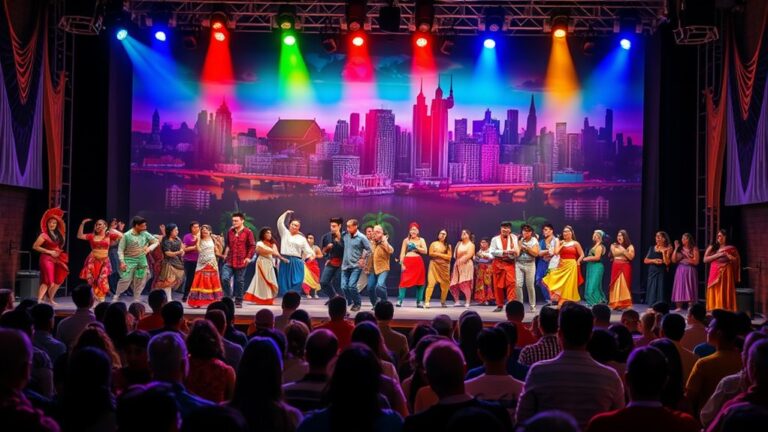
The evolution of Broadway vocal styles reflects a dynamic blend of historical influences and cultural shifts. Beginning with roots in ancient performance art, the genre emerged with operetta and minstrel shows. The Golden Age, from the 1940s to 1960s, emphasized strong vocal techniques that conveyed emotion through belting and lyrical phrasing. The late 1960s introduced rock and pop elements, appealing to younger audiences. Today, contemporary artists experiment with diverse genres and vocal techniques, promoting authenticity and inclusivity on stage. This ongoing transformation offers an exciting plunge into Broadway's future, inviting exploration of its rich narrative.
The Birth of Musical Theatre
The emergence of musical theatre marked a significant moment in the evolution of performance art, blending storytelling with song and dance in a way that captivated audiences. This innovative form arose from a confluence of musical origins and theatrical influences, transforming the environment of entertainment. The roots of musical theatre can be traced back to ancient rituals and celebrations where music played an essential role in storytelling, laying the groundwork for more complex narratives.
As the 19th century progressed, various theatrical traditions began to merge, particularly in Europe and America. The operetta, with its melodic charm and lighthearted storytelling, set the stage for a new genre that would appeal to a broader audience. Concurrently, minstrel shows and vaudeville introduced a variety of performance styles, infusing humor and social commentary into the mix. These influences coalesced into a distinct art form that emphasized not just the narrative but also the emotional depth of characters through song.
The advent of Broadway in the early 20th century solidified musical theatre's place in the cultural zeitgeist. Productions such as "Show Boat" and "Oklahoma!" showcased the potential of integrating music with complex themes, elevating the genre to new heights. This era heralded a golden age for musical theatre, characterized by its bold storytelling and the dynamic emotions conveyed through song. The ongoing evolution of musical theatre continues to reflect societal changes, demonstrating its enduring relevance and influence in contemporary performance art.
Golden Age Vocal Characteristics
During the Golden Age of Broadway, which spanned from the 1940s to the 1960s, vocal characteristics became a defining element of musical theatre performances. This era witnessed the emergence of strong vocal techniques that were fundamental for conveying the emotional intensity of the narratives. Remarkably, belting techniques gained prominence, allowing performers to project their voices with impressive strength and clarity, effectively reaching audiences without the aid of microphones.
Lyrical phrasing additionally evolved during this period, emphasizing the importance of storytelling through song. Performers mastered the art of interpreting lyrics, infusing each note with depth and authenticity. The ability to seamlessly blend belting with nuanced lyrical delivery set a new standard for musical theatre, enchanting audiences with both strength and emotion.
| Vocal Technique | Definition | Distinguished Performers |
|---|---|---|
| Belting Techniques | A strong singing method that emphasizes projection | Ethel Merman, Mary Martin |
| Lyrical Phrasing | The ability to convey emotion through melodic line | Julie Andrews, Barbara Cook |
| Mix Voice | A balanced blend of chest and head voice | Elaine Stritch, Carol Channing |
| Vocal Resonance | The richness and fullness of tone | Robert Goulet, Chita Rivera |
The Golden Age of Broadway established a formidable foundation for contemporary vocal styles, emphasizing the necessity of technical mastery and emotional connection in musical theatre. These vocal characteristics continue to influence performers, ensuring the legacy of this lively era endures.
The Rise of Rock and Pop
A revolution in musical expression marked the rise of rock and pop in Broadway, transforming the scenery of musical theatre from the late 1960s onward. This seismic shift not merely redefined the sonic environment but empowered a new generation of artists to challenge traditional norms. Rock influences permeated the fabric of Broadway, introducing electric guitar riffs, driving percussion, and a raw emotionality that resonated deeply with audiences. The once-staid conventions of melodic structure gave way to a more liberated form of storytelling, reflecting the cultural upheaval of the era.
As rock steadily carved its niche, pop integration became a crucial element of the Broadway experience. This fusion allowed for a broader appeal, enchanting younger audiences who were drawn to the infectious rhythms and relatable themes often found in pop music. Landmark productions like "Hair" and "Rent" exemplified this trend, showcasing characters and narratives that spoke directly to contemporary societal issues, thereby forging a significant connection with viewers.
The impact of rock and pop on Broadway was not merely stylistic; it was transformative. It dismantled the barriers that had long segregated musical theatre from mainstream music, creating a new paradigm where commercial viability and artistic expression coalesced. This evolution paved the way for a spectrum of genres to flourish on stage, solidifying Broadway's place as a dynamic platform for innovative vocal styles and diverse storytelling. In the end, the rise of rock and pop on Broadway signifies a bold assertion of creative influence, heralding an era where musical expression knows no bounds.
Influential Broadway Artists
Influential Broadway artists have shaped the scenery of musical theater through their unique vocal styles and performances. From legendary leading ladies who redefined the role of women on stage to groundbreaking male performers who challenged traditional norms, each artist has left a lasting imprint on the genre. Furthermore, contemporary vocal innovators continue to push boundaries, blending diverse musical influences to create new and exciting forms of expression within Broadway.
Legendary Leading Ladies
The enchanting world of Broadway has been shaped and enriched by a myriad of legendary leading ladies whose talent and charisma have left a lasting mark on the stage. These formidable artists have not merely captivated audiences with their iconic performances but have additionally redefined the parameters of vocal range, pushing the boundaries of what is possible in musical theater.
From the soaring heights of Ethel Merman's mighty belt to the ethereal sweetness of Julie Andrews' soprano, each leading lady has brought her unique artistry to the forefront of Broadway. Their influence extends beyond individual roles; they have inspired generations of performers to embrace their own vocal strengths and artistic identities. The likes of Patti LuPone, Audra McDonald, and Liza Minnelli have demonstrated the strength of vulnerability and resilience in their performances, creating an unforgettable connection with their audiences.
As we examine the evolution of Broadway vocal styles, it becomes evident that these legendary leading ladies have not only shaped musical theater but have furthermore enhanced the art form itself, ensuring that their legacies resonate through the ages, inspiring both current and future generations of artists.
Groundbreaking Male Performers
Broadway's scenery has been profoundly shaped by groundbreaking male performers who have redefined the standards of excellence in musical theater. These artists have not merely pushed the boundaries of vocal techniques but have additionally transformed performance styles, enchanting audiences with their unparalleled talent and charisma.
- The soaring tenor of *Roger Bart*, who envelops his roles with emotional depth and technical virtuosity.
- The magnetic presence of *Brian Stokes Mitchell*, whose rich baritone commands the stage with both strength and grace.
- The transformative artistry of *Lin-Manuel Miranda*, whose innovative fusion of hip-hop and traditional musical forms has created a new paradigm for storytelling.
Each of these performers has contributed uniquely to the evolution of Broadway, showcasing not just their vocal prowess but likewise their ability to connect with audiences on a visceral level. Their distinct performance styles have encouraged a generation of artists to explore new horizons, embracing authenticity and vulnerability. As they continue to inspire, these groundbreaking male figures remind us that the heart of musical theater lies in the courage to express one's truth, in the end enriching the cultural fabric of Broadway.
Contemporary Vocal Innovators
As the legacy of groundbreaking male performers continues to shape the scenery of musical theater, contemporary vocal innovators are emerging with fresh perspectives and techniques. These artists are redefining the Broadway soundscape through vocal experimentation and genre blending, pushing the boundaries of traditional vocal styles.
One of the hallmarks of this new wave is the willingness to draw influences from a myriad of musical genres, including pop, rock, and R&B. Artists like Ariana DeBose and Lin-Manuel Miranda exemplify this trend, seamlessly integrating diverse musical elements into their performances. Their ability to navigate different styles not just showcases their technical prowess but additionally resonates with a broader audience, inviting them to experience the emotional depth of contemporary narratives.
Furthermore, the advent of technology has provided these innovators with new tools for vocal improvement and storytelling. By utilizing effects like looping and pitch modulation, they create a dynamic auditory experience that captivates and inspires. This era of vocal innovation on Broadway not just reflects the evolution of the art form but signifies a strong shift in the direction of inclusivity and artistic freedom, ensuring that the stage remains a lively platform for diverse voices.
The Role of Technology
In recent years, technology has increasingly transformed the realm of Broadway vocal styles, enabling performers to refine their artistry in unprecedented ways. The integration of state-of-the-art innovations has not just improved vocal delivery but has also redefined audience engagement and the parameters of live performances.
- Digital amplification has empowered singers to project their voices with clarity, allowing for nuanced expressions that resonate deeply with audiences.
- Recording technology enables artists to create polished renditions of their performances, facilitating the distribution of their work across diverse streaming platforms.
- Vocal effects, enhanced by sophisticated sound engineering, provide an arsenal of tools for performers to explore new stylistic territories, elevating their artistry beyond traditional confines.
The auto tuning impact has stirred debate, yet it remains a significant ally for many, enabling singers to achieve a level of precision that was once unattainable. Furthermore, the influence of social media cannot be overstated; it serves as a crucial platform for performers to showcase their talent, engage with their audience, and cultivate a dedicated following. As virtual productions gain traction, the possibilities for vocal expression continue to expand, blending artistry with technology in ways that captivate and enthrall.
Together, these elements contribute to a dynamic environment where Broadway vocal styles can flourish, driven by innovation and a relentless pursuit of excellence. The future of Broadway is not just bright but also infinitely versatile, promising a thrilling evolution that will continue to captivate the hearts of audiences worldwide.
Diversity in Vocal Styles
The diversity in vocal styles on Broadway reflects a rich fabric of genre fusion, where various musical influences converge to create unique performances. Cultural backgrounds play a significant role in shaping these vocal expressions, infusing traditional techniques with contemporary flair. Furthermore, the evolution of vocal techniques continues to expand the possibilities for performers, allowing for a dynamic range of interpretations that resonate with diverse audiences.
Genre Fusion in Broadway
Amidst the lively fabric of Broadway, genre fusion has emerged as a defining characteristic of contemporary vocal styles. This intriguing amalgamation showcases the strength of genre blending and invites audiences to experience a rich mosaic of sound that transcends traditional boundaries. Today's performers engage in stylistic experimentation that reflects a dynamic interplay of influences, creating a theatrical experience that resonates deeply.
Consider three vivid examples of this genre fusion:
- Rock-infused ballads that evoke raw emotion during the retention of the dramatic flair of musical theatre.
- Hip-hop rhythms intertwined with classic Broadway melodies, energizing the stage and enchanting diverse audiences.
- Jazz elements seamlessly integrated into storytelling, enhancing character depth through improvisational flair.
Such innovative approaches not only redefine vocal techniques but likewise broaden the emotional spectrum of the narratives presented. As Broadway continues to evolve, the embrace of genre fusion stands as a reflection of the resilience and creativity of the art form, empowering artists to push boundaries and redefine what musical theatre can achieve. The fusion of genres enriches the storytelling, elevating the experience to unprecedented heights.
Cultural Influences on Performance
Cultural influences play a pivotal role in shaping the diversity of vocal styles on Broadway, with performers drawing from a rich fabric of traditions and backgrounds. The contemporary stage is a lively mosaic of cultural exchange, where global influences converge to create unique theatrical traditions. This diversity is not merely aesthetic; it embodies the narratives of countless immigrants whose stories are woven into the fabric of American society.
Regional styles contribute greatly to this vocal diversity, as performers integrate folk elements from their heritage, enriching the overall performance aesthetic. From the soulful rhythms of African American spirituals to the intricate melodies of Eastern European folk songs, these musical heritages infuse Broadway with authenticity and emotional depth.
Moreover, the intersection of various cultural narratives nurtures a profound connection between performers and audiences, transcending geographic and social boundaries. As Broadway continues to evolve, it remains a stage for the celebration of these rich cultural legacies, ensuring that the voices of diverse communities resonate forcefully. This ongoing dialogue between past and present cultivates a dynamic environment where innovation thrives, reflecting the true essence of America's multicultural identity.
Evolution of Vocal Techniques
Broadway's rich fabric of vocal styles has evolved considerably, influenced by both historical context and the diverse backgrounds of its performers. Today's vocal techniques reflect a fusion of traditional training and contemporary innovations, emphasizing the importance of breath control and vocal warm ups. This evolution has birthed a dynamic spectrum of styles, each wielding its own unique strength.
- Belting: A technique that commands attention, allowing performers to project strength and emotion, resonating through the theater.
- Mix Voice: A blending of chest and head voice, empowering singers to achieve both strength and agility, crucial for conveying complex characters.
- Speech-Level Singing: A method that maintains the natural speaking voice, offering authenticity during maximization of vocal health and longevity.
These diverse approaches not only improve individual performances but also enrich the collective experience of Broadway. As performers master these techniques, they become formidable storytellers, able to evoke deep emotions and transport audiences to new domains. The ongoing evolution of vocal techniques continues to shape the Broadway environment, making it a significant platform for artistic expression and connection.
Contemporary Trends and Innovations
The scenery of Broadway vocal styles has undergone significant transformation in recent years, reflecting broader shifts in musical tastes and audience expectations. This evolution is characterized by a marked emphasis on vocal experimentation and stylistic blending, as artists seek to forge new pathways in musical expression. Contemporary productions increasingly showcase a diverse array of influences, drawing from genres such as pop, rock, hip-hop, and even folk music. This blending not only enriches the theatrical experience but also resonates deeply with a modern audience that craves authenticity and innovation.
| Trend | Description |
|---|---|
| Vocal Experimentation | Artists explore unconventional techniques and sounds, pushing the boundaries of traditional singing styles. |
| Stylistic Blending | Merging genres creates a unique sound palette, appealing to a wider audience. |
| Digital Integration | Technology amplifies vocal performances, incorporating effects and backing tracks for dynamic presentations. |
| Global Influences | Broadway increasingly reflects international styles, adding multicultural dimensions to productions. |
| Emphasis on Authenticity | Performers prioritize emotional honesty, nurturing a deeper connection with audiences. |
These trends signal a significant shift in the Broadway environment, where the vigor of innovation meets the rich tradition of musical theater. The industry continues to adapt, ensuring that the art form remains relevant and compelling. As these contemporary vocal styles evolve, they redefine performance standards and challenge the very essence of what it means to be a vocalist on Broadway. The future promises to be an exhilarating era of creativity and artistic risk-taking.
Future of Broadway Vocals
As the scenery of musical theater continues to evolve, the future of Broadway vocals appears poised for groundbreaking developments. The intersection of technology, artistry, and diverse influences will redefine the soundscape of the Great White Way. Emerging trends indicate a shift in the direction of a more inclusive and dynamic vocal approach, further emphasizing the importance of rigorous vocal training and innovative techniques.
Key elements shaping the future of Broadway vocals include:
- Technological Integration: The incorporation of digital tools and effects will allow vocalists to explore new sonic domains, enhancing emotional delivery and broadening their range.
- Cross-Genre Collaborations: Future collaborations between Broadway artists and musicians from varied genres—such as hip-hop, pop, and world music—will cultivate a rich mosaic of sound, infusing traditional narratives with contemporary flair.
- Focus on Authenticity: A growing emphasis on authenticity will guide vocalists to embrace their unique voices and experiences, nurturing a deeper connection with audiences seeking genuine representation.
The evolution of Broadway vocals will not merely be an adaptation to the changing scenery; it will be a potent reawakening. As vocalists utilize advanced training techniques and engage in meaningful collaborations, they will forge pathways that resonate deeply with diverse audiences. This transformative expedition promises to uplift Broadway into a domain where every note is a bold declaration of artistry and connection, paving the way for a future where the stage becomes a vivid canvas of human expression.
Frequently Asked Questions
How Do Vocal Techniques Differ Between Broadway and Opera?
Vocal techniques in Broadway and opera exhibit notable differences, particularly in vocal resonance and stylistic nuances. Broadway performers often prioritize a more conversational tone, allowing for emotional expression and connection with the audience. Conversely, opera singers utilize a more forceful, projected sound to fill larger venues, emphasizing vocal resonance and technical precision. These distinctions reflect the varied demands of each genre, shaping the unique artistry inherent in Broadway and opera performances.
What Is the Significance of Vocal Training for Broadway Performers?
Vocal training for Broadway performers is crucial, as it directly influences both vocal health and performance stamina. A solid foundation in vocal techniques enables artists to project their voices effectively as well as minimizing strain, thereby preserving their instrument for demanding schedules. In addition, rigorous training improves the ability to convey emotion and character, allowing performers to connect deeply with audiences. In the end, proficient vocal training is vital for achieving excellence in the competitive environment of Broadway theater.
How Has Audience Preference Influenced Broadway Vocal Styles?
Audience preference has markedly shaped Broadway vocal styles, with evolving expectations mirroring musical trends over time. As theatrical productions increasingly cater to diverse audiences, performers adapt their techniques to resonate with prevailing tastes, ensuring engagement and connection. The rise of contemporary genres has prompted vocalists to embrace a wider stylistic range, blending traditional methods with modern sensibilities. As a result, this dynamic interplay not only improves performances but likewise reinforces the cultural relevance of Broadway as an art form.
Are There Regional Variations in Broadway Vocal Styles Across the U.S.?
Yes, there are notable regional variations in Broadway vocal styles across the United States. These distinctions often arise from local cultural influences, which shape performers' techniques and interpretations. For instance, Southern stylistic elements may infuse warmth and storytelling into performances, whereas urban centers might emphasize a more contemporary, dynamic approach. Such regional influences not just reflect the diverse cultural scenery of the nation but further enrich the richness of the Broadway experience as a whole.
What Role Do Vocal Coaches Play in a Broadway Production?
In a recent survey, 85% of Broadway performers attribute their success to the guidance of vocal coaches. Vocal coaches play a pivotal role in a Broadway production, ensuring that cast members develop robust vocal techniques and character-specific performance styles. Their responsibilities encompass vocal assessments, personalized coaching techniques, and ongoing support during rehearsals. By enhancing vocal resilience and artistry, these professionals enable performers to deliver impactful, unforgettable musical experiences on stage.
About the Author