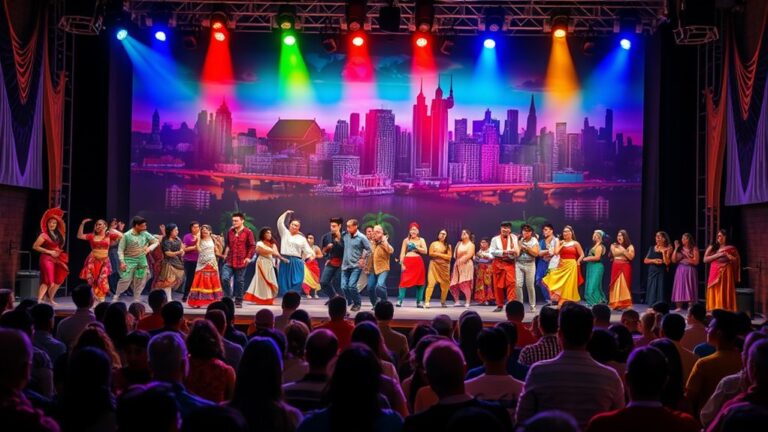

The subtle art of Broadway makeup transformations is crucial in theatrical storytelling. Makeup not only improves an actor's visual appeal but additionally deepens the emotional connection to their character. Through techniques such as contouring and color theory, artists create multi-dimensional looks that reflect the character's backstory and personality. Special effects and fast application methods enable swift changes during performances, showcasing an actor's transformation. Collaborating closely with directors and costume designers, makeup artists guarantee a cohesive visual narrative. This intricate process opens a window into the characters' worlds, offering insights that bring the performance to life. Discover more about these techniques and their impact.
The Importance of Makeup in Theater
Though often overlooked, makeup plays an crucial role in theater by enhancing character portrayal and ensuring actors are visually compelling from the audience's perspective. The history of makeup in theater is rich and multifaceted, with theatrical influences dating back to ancient civilizations, where performers utilized natural pigments and elaborate techniques to embody deities and archetypes. This tradition has evolved, yet the core principle remains: makeup serves as a transformative tool that enables actors to transcend their physical identities, forging a deeper connection with the characters they portray.
In contemporary theater, the application of makeup is carefully planned and executed, often requiring the expertise of skilled makeup artists who understand both the artistic and technical aspects of their craft. The strategic use of colors, textures, and techniques allows for a nuanced representation of emotions, age, and even supernatural elements, helping to convey the narrative's underlying themes with immediacy and impact.
Furthermore, makeup acts as a visual narrative device, enriching the storytelling by providing cues to the audience regarding a character's social status, psychological state, or experience throughout the play. The significance of makeup extends beyond mere aesthetics; it is a crucial component of the overall production, contributing to the immersive experience that theater promises.
In an industry driven by the desire for authenticity and connection, the mastery of theatrical makeup is not just an art form but an influential means of storytelling that persists across generations.
Understanding Character Development
Character development is fundamentally rooted in comprehension a character's backstory, which informs their motivations and behaviors on stage. Makeup serves as a influential tool for visual representation, allowing performers to embody the nuances of their roles by accentuating specific traits. By aligning makeup choices with a character's narrative, the audience gains deeper insight into the intricacies of the story being told.
Importance of Character Backstory
Frequently overlooked, the importance of character backstory in theater cannot be understated, as it serves as the foundation for grasping a character's motivations, behaviors, and emotional depth. A well-crafted backstory influences not just the narrative arc but also the actor's portrayal, bridging the gap between script and performance.
Character motivation is profoundly shaped by the events and experiences that precede the moment the audience encounters the character. Comprehending a character's history empowers actors to embody their roles with authenticity, allowing for a richer, more compelling performance. This depth resonates with the audience, forging a connection that transcends mere storytelling.
Moreover, backstory influence extends beyond the individual character; it enriches the entire ensemble's dynamic. When actors embody characters with fully realized histories, their interactions become more nuanced, creating a strong synergy that enhances the production as a whole.
In the domain of Broadway, where every detail matters, recognizing and utilizing the significance of character backstory is crucial. It transforms superficial portrayals into profound explorations of the human experience, ensuring that performances are not merely seen but felt, leaving a lasting impact on all who witness them.
Visual Representation of Traits
The visual representation of traits plays a pivotal role in comprehending character development within theater, as it enables audiences to grasp the essence of a character at first glance. Through careful makeup techniques and strategic use of visual cues, actors can convey complex emotional environments and nuanced personalities, enhancing the storytelling experience.
Facial expressions, accentuated by expertly applied makeup, serve as influential indicators of a character's internal state. For instance, the intensity of a character's struggle can be depicted through shadowing techniques that evoke a sense of weariness or conflict. Conversely, lively colors and bold lines can manifest a character's strength and confidence, making their presence felt on stage.
Moreover, the subtleties of makeup transformations allow for the exploration of dualities within characters, revealing layers that may not be immediately apparent through dialogue alone. This visual language becomes a crucial tool for actors, empowering them to command the narrative and engage the audience on a visceral level. In the end, the synergy of makeup artistry and character portrayal cultivates a profound insight into human complexity, reinforcing the transformative influence of theater itself.
Essential Tools for Makeup Artists
As a makeup artist, having the right tools at your disposal is fundamental for achieving the stunning alterations that define Broadway productions. The strength of makeup lies not just in the artistry but also in the quality of the tools employed. Ideal brush types, such as flat, round, and angled brushes, are indispensable for precise application and seamless blending. Complementing these brushes, a diverse array of makeup palettes offers endless possibilities, allowing artists to create unique looks customized to each character's essence.
Equally important are blending sponges, which guarantee flawless shifts between products, enhancing the overall aesthetic. To lock in these carefully crafted looks, setting sprays are a must, providing longevity under the intense stage lights. Adhesive products play an important role as well, securing elements such as false eyelashes or prosthetics that contribute to dramatic transformations.
Furthermore, contour kits equipped with various shades enable artists to sculpt and define facial structures, while highlighter options add that coveted glow, vital for capturing the audience's gaze. Eyeliner styles can dramatically alter perceptions, enabling the portrayal of both fierce and delicate characters. Finally, lip products, from bold pigments to soft glosses, serve as the concluding touch, completing the transformation with striking color.
In essence, the right tools—coupled with a profound comprehension of foundation choices—lay the groundwork for breathtaking Broadway makeup artistry, allowing artists to wield their craft with authority and precision.
Techniques for Transformative Looks
Transformation in makeup artistry hinges on a mastery of techniques that can dramatically alter an actor's appearance and embody their character. The essence of creating transformative looks lies in the strategic application of makeup layering and the art of color blending. These techniques enable makeup artists to sculpt facial features, improve or diminish characteristics, and evoke profound emotions through visual storytelling.
Makeup layering is a fundamental technique that involves the careful application of products in a structured sequence. By building layers, artists can achieve depth and dimension, allowing for the creation of intricate textures and the manipulation of light and shadow. This method not only improves the natural features of the actor but additionally facilitates the shift into various roles, making the transformation seamless and impactful.
Color blending, in contrast, is vital for achieving a harmonious and realistic finish. An influential blend of hues allows for the seamless shift between shades, erasing harsh lines and creating a cohesive look that complements the character's essence. The subtle interplay of colors can evoke specific moods, making it an invaluable tool in the makeup artist's arsenal.
Together, makeup layering and color blending form the backbone of transformative looks on Broadway. These techniques not only improve the visual narrative but additionally raise the performance, ensuring that the actor's portrayal resonates with the audience. Mastery of these techniques is fundamental for any makeup artist aspiring to leave a lasting impression on stage.
Color Theory in Stage Makeup
A thorough grasp of color theory is essential for makeup artists working in the dynamic environment of stage productions. Mastering this discipline allows artists to create compelling character palettes that resonate with the audience, improving visual storytelling and driving emotional impact. Color harmony serves as the foundation for these transformations, enabling makeup that not only complements the characters but also enriches the narrative arc.
Utilizing contrasting colors strategically can evoke distinct emotional responses, whether it be tension, joy, or sorrow. For instance, a lively palette may symbolize exuberance, while muted tones can signify melancholy. Each choice in color reflects makeup symbolism, creating connections between the character's emotional state and the audience's perception.
Color psychology plays an integral role in conveying the essence of a character. By comprehending the psychological effects of different hues—such as red for passion or blue for tranquility—makeup artists wield the ability to manipulate mood enhancement effectively. This capability allows them to craft not just looks but experiences that linger in the minds of the audience.
Ultimately, the application of color theory in stage makeup transcends mere aesthetics; it is a powerful tool for storytelling. By skillfully balancing color harmony and emotional impact, makeup artists guarantee that every performance resonates deeply, transforming actors into dynamic characters that captivate and inspire. This careful attention to color can raise a production from ordinary to extraordinary, making it an indispensable element of theatrical artistry.
The Role of Lighting in Makeup
Understanding color theory is only part of the equation for effective stage makeup; lighting plays a vital role in how those colors are perceived by the audience. It is imperative for makeup artists to grasp the interplay between light sources and the makeup applied to achieve ideal stage visibility and improve actor expressions. The right lighting effects can transform the intended look, guiding audience emotions and responses through visual storytelling.
Color temperature greatly impacts how makeup shadows play on the actor's face. Warm lighting may soften harsh lines, while cooler tones can emphasize contours, thereby affecting how character traits are conveyed. This dynamic requires artists to evaluate not just the colors used but also the ambient lighting conditions during scene changes.
Moreover, the durability of makeup becomes significant when faced with varying light intensities and angles. Illumination can either improve or detract from the makeup's intended impact, making it vital to select products that withstand these challenges. A well-prepared makeup artist must anticipate how different light sources will interact with their work, guaranteeing that the transformations remain effective throughout the performance.
Ultimately, the synergy between lighting and makeup is fundamental in creating strong, resonant performances. By mastering this relationship, makeup artists can guarantee that their creations achieve the desired intensity and realism, effectively supporting the narrative and raising the overall theatrical experience.
Special Effects Makeup on Broadway
Special effects makeup on Broadway plays a vital role in creating stunningly realistic transformations that bring iconic characters to life. Techniques such as prosthetics, airbrushing, and intricate detailing are employed to guarantee authenticity and improve the storytelling experience. Moreover, successful collaborations between makeup artists and designers are fundamental for achieving a cohesive vision that captivates audiences.
Techniques for Realism
Frequently, Broadway productions rely on accurate special effects makeup techniques to create a striking sense of realism that captivates audiences. The mastery of these techniques is crucial for conveying the depth of character nuances that define a performance. Artists utilize a plethora of materials and methods to achieve realistic textures that simulate skin imperfections, aging, or even fantastical elements.
Silicone prosthetics, for instance, allow for the careful crafting of features that improve the actor's portrayal, while airbrushing techniques guarantee seamless blending with the actor's natural complexion. Moreover, the application of specialized pigments can mimic the effects of lighting, adding dimension and authenticity to the character's appearance.
Furthermore, the use of layering techniques enables makeup artists to build complexity, revealing the character's emotional state through subtle shifts in coloration or texture. Every brushstroke is a reflection of the artist's commitment to realism, forging an immersive experience for the audience.
Ultimately, the ability to translate character nuances into visual elements through exceptional makeup artistry not merely raises the narrative but also empowers the actors to fully inhabit their roles on stage.
Iconic Character Transformations
The artistry of special effects makeup on Broadway has given rise to some of the most memorable character transformations in theatrical history. These iconic transformations not only raise the narrative but also empower performers, allowing them to inhabit their roles with unparalleled depth. Character makeup serves as a strong tool, enabling the audience to suspend disbelief and engage with the dramatic arc fully.
The following table highlights some of the most revolutionary character transformations achieved through special effects makeup:
| Character | Show | Transformation |
|---|---|---|
| The Beast | Beauty and the Beast | From Prince to Beastly Creature |
| Elphaba | Wicked | From Ordinary Girl to Wicked Witch |
| The Phantom | The Phantom of the Opera | From Man to Masked Mystery |
| Dorian Gray | Dorian Gray | From Youth to Decaying Portrait |
| Frankenstein's Monster | Frankenstein | From Man to Monstrous Creation |
These transformations demonstrate the exceptional capabilities of special effects makeup, showcasing how it can redefine character perception and improve storytelling. The strength of character makeup lies in its ability to resonate deeply with audiences, making each performance unforgettable.
Collaboration With Designers
Collaboration between makeup artists and costume designers is essential in creating cohesive and impactful visual narratives on Broadway. This designer collaboration nurtures a creative synergy that raises the theatrical experience, ensuring that every element—from costumes to makeup—achieves aesthetic alignment. The integration of special effects makeup is particularly significant; it amplifies character cohesion and improves the storytelling through visual cues.
Effective artistic communication between these creative professionals allows for a seamless blend of makeup vision and costume design. Each choice made in makeup application directly influences the design narrative, contributing to the overall impact of the production. As makeup artists carefully craft transformations, they must remain attuned to the designers' intentions, ensuring that every hue and texture harmonizes with the fabric of the costumes.
This partnership not only enriches the characters' visual storytelling but equally reinforces the emotional undertones of the performance. The result is a striking portrayal that resonates with audiences, showcasing the pinnacle of theatrical artistry. In the end, this collaboration is not merely about aesthetics; it is about forging a unified creative force that captivates and empowers the audience through the magic of Broadway.
Quick Changes: Makeup in a Flash
Quick changes in makeup are a fundamental component of the fast-paced world of Broadway, where performers often shift between multiple characters in a single show. Mastering the art of quick application and removal not only improves the visual storytelling but also guarantees seamless shifts that keep the audience captivated. Makeup efficiency becomes paramount, necessitating a careful approach to backstage organization and time management.
To achieve rapid application and swift transformations, makeup artists employ streamlined processes, enabling them to make quick assessments of an actor's needs. This often involves emergency fixes, where a portable kit stocked with multi-use products is significant. The collaboration between actors and makeup teams is vital, guaranteeing that each character's look is executed flawlessly, even under pressure.
Here's a breakdown of fundamental elements for quick makeup changes:
| Element | Description | Importance |
|---|---|---|
| Makeup Efficiency | Techniques that maximize speed and effectiveness | Essential for rapid changes |
| Portable Kits | Compact, easily transportable makeup supplies | Vital for on-the-go fixes |
| Multi-use Products | Versatile items that serve multiple purposes | Saves time and space |
Iconic Broadway Makeup Looks
Iconic Broadway makeup looks play an essential role in bringing characters to life, showcasing classic transformations that define memorable performances. From signature stage styles that set the tone for productions to innovative techniques that push the boundaries of theatrical makeup, these elements contribute greatly to the storytelling process. Exploring these aspects reveals the artistry and creativity that make Broadway truly unique.
Classic Character Transformations
Broadway is renowned for its ability to transport audiences into fantastical worlds, and the transformative influence of makeup plays a fundamental role in this experience. Classic roles such as Elphaba from *Wicked* or the Phantom from *The Phantom of the Opera* exemplify how makeup serves as an influential tool for storytelling. Through the careful application of transformative artistry, performers embody these iconic characters, allowing the audience to suspend disbelief and engage fully with the narrative.
The artistry behind these transformations is not solely cosmetic; it is a strategic fusion of color, texture, and technique that enriches character depth and emotional resonance. For instance, the striking green visage of Elphaba not merely signifies her otherness but likewise encapsulates her struggle and defiance. Meanwhile, the Phantom's haunting pallor evokes sympathy and intrigue, drawing the audience into his tragic world.
Each makeup design is a calculated choice, elevating the character beyond mere performance to an unforgettable embodiment of complex themes. In this domain, the influence of makeup transcends aesthetics, forging a lasting connection between the character and the audience, ultimately solidifying the legacy of these classic roles in Broadway history.
Signature Stage Styles
The magic of signature stage styles in Broadway productions is evident in the striking makeup looks that define characters and uplift storytelling. These signature looks are crafted with care, showcasing timeless styles that resonate with audiences during enriching the narrative's emotional depth. Each character's evolution is carefully portrayed through bold expressions and subtle nuances, allowing performers to fully inhabit their roles.
Makeup innovations play a significant role in creating iconic transformations that enchant viewers. The artistry involved often draws from cultural influences and historical inspirations, enriching the visual experience and grounding the characters in authenticity. For instance, the fierce glamour of "Chicago" exemplifies how makeup can convey both strength and vulnerability, allowing characters to express their inner turmoil and aspirations.
Moreover, signature stage styles serve to improve individual performances and contribute to the collective identity of a production. As makeup artists push boundaries and redefine conventions, they create looks that become synonymous with Broadway's rich legacy. Ultimately, these enchanting makeup designs are essential in forging an unforgettable connection between the audience and the characters on stage.
Innovative Makeup Techniques
Utilizing innovative makeup techniques, Broadway productions have redefined the art of character transformation, creating striking visuals that resonate with audiences. The convergence of creativity and technology has birthed makeup trends that raise performances to unprecedented heights. The use of theatrical pigments plays an essential role in this metamorphosis, allowing artists to convey emotion and depth through their characters.
The following are three iconic innovative makeup techniques that exemplify this artistry:
- Airbrush Makeup: This technique delivers a flawless finish, enabling seamless blending of colors and textures. The fine mist allows for precision in detailing, vital for characters requiring a hyper-realistic appearance.
- Face Projections: Combining makeup with digital technology, performers can embody multiple personas within a single scene. This groundbreaking method improves storytelling, engaging the audience's attention.
- 3D Prosthetics: Utilizing sculpted materials, characters can be transformed into fantastical beings. These dramatic alterations challenge traditional beauty norms, showcasing the strength of imaginative expression.
Behind the Scenes With Makeup Artists
Behind the lively lights and enchanting performances of Broadway lies a team of dedicated makeup artists whose skill and creativity are vital to the storytelling process. Their expertise in makeup artistry transforms actors into characters, enabling a deep character immersion that captivates audiences. The creative process involves careful planning and execution, as these artists wield the transformative strength of makeup to improve not just the visual impact but also the emotional resonance of each performance.
Behind the scenes, this collaborative vision unfolds as makeup artists work closely with directors and costume designers. Design collaboration is crucial, ensuring that each layer of artistry aligns perfectly with the overall aesthetic of the production. From the selection of makeup materials to the application of artistry techniques, every decision is deliberate and purposeful.
The makeup artist's role extends beyond mere application; they are pivotal in performance improvement. They possess a sharp awareness of how lighting interacts with makeup, allowing them to create effects that are not just striking under the stage lights but also authentic to the character's narrative arc. Each brushstroke contributes to a larger mosaic of storytelling, where the makeup serves as a silent partner in the performance.
As the curtain rises, the audience witnesses the culmination of countless hours of preparation and artistic expression. It is through the deft hands of these professionals that Broadway productions achieve their revered status, merging art with the raw strength of human emotion.
The Future of Makeup in Theater
Innovative advancements in technology are poised to reshape the terrain of makeup in theater, offering new tools and techniques that amplify the artistry of productions. As the industry evolves, stakeholders must embrace these developments to improve audience engagement and create dynamic, immersive experiences. The future of theater makeup will be defined by several key trends:
- Digital Advancements: The integration of augmented reality (AR) and virtual reality (VR) will transform the way makeup is applied and perceived on stage. Actors could undergo real-time transformations, allowing for compelling storytelling that captivates audiences.
- Eco-Friendly Products: As sustainability becomes a priority, the demand for eco-friendly makeup options will grow. The industry will likely see a rise in brands that prioritize biodegradable materials, cruelty-free practices, and organic ingredients, appealing to environmentally-conscious theatergoers.
- Interactive Experiences: The future of theater will increasingly involve the audience in the narrative. Makeup artists might utilize projection techniques or interactive displays, creating a dialogue between performers and viewers, thereby heightening emotional investment and connection.
Frequently Asked Questions
How Do Actors Prepare Their Skin Before Applying Stage Makeup?
Approximately 80% of actors report that proper skin preparation greatly improves the longevity of their makeup during performances. To achieve ideal results, actors prioritize skin hydration, applying moisturizers suited to their skin type. This foundational step creates a smooth canvas for makeup layering, ensuring that each layer adheres effectively and withstands the rigors of the stage. By committing to a careful skincare routine, performers raise their aesthetic as they maintain skin health under demanding conditions.
What Are Common Makeup Mistakes to Avoid in Theater?
In theater, common makeup mistakes can greatly impact an actor's performance and visual presence. One critical error is inadequate foundation blending, which can result in an unnatural appearance under stage lights. Moreover, improper eyeliner application can lead to uneven lines or smudging, detracting from the character's expression. To maintain a commanding presence on stage, it is crucial to master these techniques, ensuring a polished and cohesive look that resonates with the audience.
How Often Do Makeup Artists Update Their Techniques?
Research indicates that approximately 65% of makeup artists update their techniques annually to align with evolving industry standards. This technique evolution is essential for maintaining relevance and ensuring peak performance results. As trends shift and new products emerge, professionals must adapt their skills to meet contemporary demands. Staying current not merely improves artistic expression but additionally nurtures client trust and satisfaction, finally empowering makeup artists to excel in an increasingly competitive environment.
Can Makeup Be Harmful to Actors' Skin Over Time?
Makeup can certainly have long-term effects on actors' skin, particularly with prolonged exposure to heavy products. Continuous application can lead to skin sensitivity, resulting in irritations, breakouts, or allergic reactions. The cumulative nature of this exposure necessitates that actors prioritize skin health by using high-quality, hypoallergenic products and incorporating regular skincare routines. Being proactive in managing these risks not just preserves the integrity of the skin but also improves overall performance on stage.
What Are the Best Ways to Remove Stage Makeup Safely?
Removing stage makeup is akin to shedding a second skin, revealing the true self beneath. To guarantee a safe changeover, utilize high-quality makeup removers tailored for heavy theatrical products. Incorporating gentle cleansers into an all-encompassing skincare routine can further fortify the skin against potential damage. Emphasizing hydration and nourishment post-removal not merely restores the skin's liveliness but additionally empowers the individual, transforming the daily ritual into an act of self-care and resilience.
About the Author