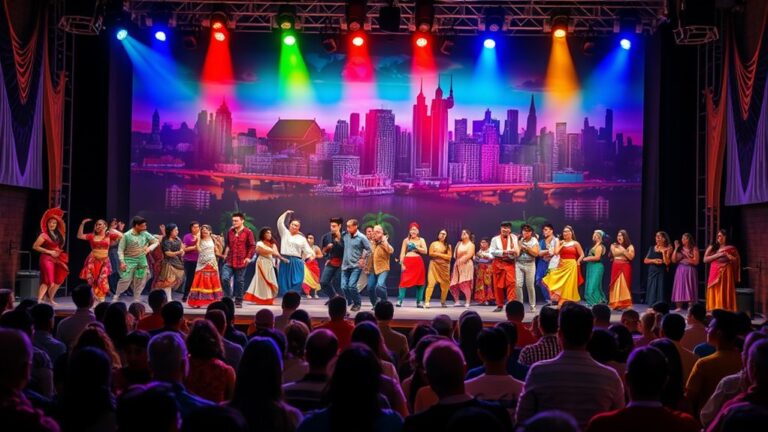

The art of Broadway lighting is a complex and highly technical field, evolving from candles to LED technology. Strategic use of illumination, color, and shadow transforms storytelling on stage. Collaborative efforts between designers, directors, and stakeholders shape lighting vision. With advances in technology, lighting schemes improve emotional depth and create immersive audience experiences. As the intersection of art and technology continues to advance, the magic of Broadway lighting becomes even more enthralling, revealing new dimensions of this intricate craft, and inviting a closer look at its innovative and ever-changing world. These innovations allow productions to push creative boundaries, enhancing iconic performances with breathtaking visual effects. Even as shows evolve, classic productions maintain their grandeur—when Phantom of the Opera ends its run, its haunting lighting design remains a testament to the artistry behind Broadway’s stagecraft. The legacy of such masterpieces inspires future generations to explore new possibilities in theatrical illumination.
History of Stage Lighting
The evolution of stage lighting has been a gradual process, unfolding over centuries to become the sophisticated art form it is today. This stage evolution has been marked by significant historical milestones, transforming the way performances are presented and perceived. From the early use of candles and lanterns to the current era of state-of-the-art LED technology, stage lighting has undergone a remarkable transformation.
The introduction of gas lighting in the 19th century transformed the industry, enabling more complex and nuanced lighting designs. The advent of electricity further accelerated this progress, allowing for greater control and precision. Historical milestones, such as the development of the first practical incandescent lamp by Thomas Edison, have played an essential role in shaping the course of stage evolution. The introduction of new lighting instruments, such as the Fresnel lens and the ellipsoidal reflector, has additionally expanded the creative possibilities for lighting designers.
Throughout its history, stage lighting has been driven by a quest for greater expressiveness and technical sophistication. As technology continues to advance, the art of stage lighting remains a dynamic and evolving field, with new innovations and techniques emerging all the time. By grasping the historical milestones that have shaped the industry, lighting designers can build upon the foundations laid by their predecessors, pushing the boundaries of what is possible and creating truly breathtaking performances. This legacy of innovation continues to inspire and empower lighting designers today.
Lighting Design Process
Lighting designers' creative vision is shaped by a careful process that transforms their ideas into tangible, immersive experiences for audiences. This process begins with conceptual development, where designers collaborate with directors and other stakeholders to distill the essence of the production. Through a deep comprehension of the narrative, characters, and themes, designers develop a clear vision for the lighting, considering factors such as mood, atmosphere, and emotional resonance.
As the design takes shape, the focus shifts to design execution, where the creative vision is translated into a physical reality. This involves selecting and specifying lighting fixtures, determining their placement and focus, and programming the lighting console to create a dynamic and engaging visual environment. Designers must balance artistic expression with technical considerations, ensuring that the lighting design is both aesthetically pleasing and functional.
Effective lighting design requires a mastery of both the creative and technical aspects of the process. By combining conceptual development with skilled design execution, lighting designers can craft impactful and enthralling experiences that draw audiences into the realm of the production. Through their expertise and attention to detail, designers can enhance the entire theatrical experience, creating a rich and immersive environment that engages and inspires the audience.
Technical Lighting Systems
Typically, technical lighting systems serve as the backbone of a successful Broadway production, providing the infrastructure necessary to support the creative vision of the lighting designer. These systems encompass a wide range of components, including lighting fixtures, control systems, and distribution networks. The integration of LED innovations has transformed the field, offering increased energy efficiency, flexibility, and precision.
| Component | Function | Benefit |
|---|---|---|
| Lighting Fixtures | Provide illumination | Improved visual experience |
| Control Systems | Regulate lighting levels | Increased flexibility and precision |
| Distribution Networks | Manage energy delivery | Reliable and efficient energy distribution |
| Dimming Systems | Adjust lighting intensity | Smooth changes and nuanced lighting effects |
Control systems play a vital role in technical lighting systems, enabling the precise manipulation of lighting levels, colors, and effects. By leveraging advanced control systems, lighting designers can create complex, dynamic lighting environments that raise the overall production. The incorporation of LED innovations has further expanded the possibilities, allowing for the creation of highly customized and sophisticated lighting designs. With the ability to precisely control and manipulate light, technical lighting systems grant lighting designers the ability to bring their creative vision to life, resulting in a more immersive and engaging experience for the audience. Effective technical lighting systems are fundamental for a successful Broadway production.
Collaborative Art Form
Broadway lighting is a fundamental example of a collaborative art form, where teamwork plays a vital role in bringing a production to life. The success of a Broadway show relies heavily on the coordination and cooperation of various teams, including lighting designers, directors, and stage managers, to create a cohesive and engaging visual experience. By examining the intersection of teamwork and art form, it becomes clear that the collaborative process is important to the creation of a mesmerizing and effective Broadway lighting design.
Team Work
Collaborating with numerous individuals from diverse disciplines is vital to creating a cohesive and engaging theatrical experience, making teamwork a foundational aspect of the Broadway production process. Effective communication strategies are fundamental in ensuring that all team members are aligned and working toward a common goal. This involves clearly defining role responsibilities, establishing open lines of communication, and nurturing a culture of collaboration and respect.
In a Broadway production, each team member has distinct role responsibilities, from lighting and sound designers to stage managers and performers. By comprehending these roles and how they intersect, team members can develop targeted communication strategies to facilitate seamless execution. This enables the team to work efficiently, troubleshoot issues, and deliver a polished performance. In the end, the success of a Broadway production relies on the ability of its team to work cohesively, leveraging their collective expertise to create an unforgettable experience for the audience.
Art Form
Embracing the dynamic interplay of multiple artistic disciplines, the art form of Broadway lighting emerges as a lively, collaborative entity. This synergy of creative forces enables the crafting of immersive experiences that captivate and inspire audiences. By masterfully applying principles of color theory, lighting designers can raise the visual environment of a production, infusing each scene with depth and emotion.
The art form of Broadway lighting is a potent tool for narrative improvement, as it can subtly guide the audience's attention, evoke emotional responses, and underscore key themes. Through the strategic use of light and shadow, designers can create an atmosphere that draws the audience into the realm of the play, heightening their emotional investment in the story. By leveraging the transformative influence of light, Broadway lighting designers can shape the audience's experience, crafting a rich and nuanced narrative that lingers long after the curtain falls. Effective lighting design is crucial to the overall impact of a Broadway production.
Lighting Technology Advances
Quickly evolving technological innovations have greatly impacted the field of lighting design, particularly in recent years. The integration of LED innovations has transformed the way lighting designers approach their craft, offering unparalleled flexibility and precision. With the ability to produce a wide range of colors and intensities, LEDs have become the go-to choice for many Broadway productions. Additionally, smart controls have enabled designers to exert precise control over their lighting schemes, allowing for seamless shifts and nuanced expressions of emotion.
The incorporation of LED innovations and smart controls has likewise led to significant advancements in energy efficiency and sustainability. By reducing energy consumption and minimizing waste, Broadway productions can now minimize their environmental footprint whilst maintaining the highest standards of artistic excellence. This synergy between technology and artistry has strengthened lighting designers to push the boundaries of their craft, exploring new ways to engage and captivate audiences.
As lighting technology continues to evolve, it is likely that we will see even more innovative applications of LED innovations and smart controls on Broadway. With the ability to create complex, dynamic lighting schemes that are both aesthetically stunning and environmentally sustainable, the future of Broadway lighting looks brighter than ever. By utilizing the capabilities of technology, lighting designers can access new levels of creative expression and artistic innovation.
Creating Emotional Impact
The evolving environment of Broadway lighting has given rise to new opportunities for designers to craft immersive experiences that resonate with audiences on a deeper level. By leveraging innovative technologies and techniques, lighting designers can now create complex, dynamic environments that evoke strong emotions and heighten the overall theatrical experience. This is particularly evident in the area of mood enhancement, where carefully calibrated lighting schemes can dramatically alter the audience's emotional state and draw them deeper into the performance.
Through the strategic application of color psychology, designers can tap into the subconscious associations and emotional triggers that colors evoke, using this knowledge to inform their lighting decisions and create a richer, more nuanced visual setting. By combining these elements, designers can craft lighting schemes that not just enhance the mood and atmosphere of a production but also amplify its emotional impact, creating a more intense and unforgettable experience for the audience. The effective use of lighting in this way can elevate a production from mere entertainment to a truly transformative event, one that lingers in the minds and hearts of audience members long after the curtain falls. This level of emotional resonance is the ultimate goal of Broadway lighting design.
Frequently Asked Questions
What Is a Typical Lighting Budget?
Let's delicately approach the elephant in the room: a typical lighting budget. A substantial investment, it entails a thorough lighting cost breakdown. Effective budget allocation is essential, as it can make or break a production. A well-crafted plan guarantees a harmonious balance of aesthetics and finances, in the end yielding unparalleled visual experiences that command attention and inspire awe.
How Long Is Lighting Setup?
The lighting setup duration can vary greatly, depending on the complexity of lighting techniques employed. Typically, setup can take several hours to several days. Experienced technicians work efficiently to guarantee a smooth installation, often completing the process within 2-5 days, leveraging advanced lighting techniques to deliver high-impact results within a tight timeframe.
Can Lights Be Rented or Bought?
"Verily, a query of great import arises. Can lights be rented or bought? Certainly, producers wield the authority to choose between rental options and purchasing equipment types, tailoring their approach to suit their needs and budgets, thereby yielding unparalleled control over their productions. This strategic decision ultimately enhances their creative strength."
Who Operates the Lights?
Who operates the lights is a critical aspect of production. Lighting designers create the visual concept, whereas stage electricians execute the plan. These skilled professionals work together to bring the production to life, leveraging their expertise to deliver a strong and enchanting experience, driving the narrative forward with precision and artistry. Their collaboration yields impressive results.
Are Lighting Classes Available?
Burning the midnight oil, aspiring lighting designers seek knowledge. Lighting classes are available, offering in-depth training on advanced lighting techniques and adherence to industry standards, empowering students to take center stage and wield significant creative control, driving innovation and shaping the visual scenery with precision and expertise.
About the Author