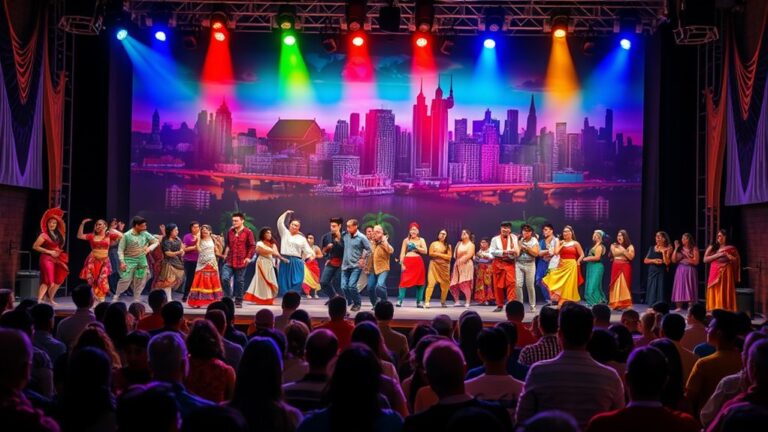
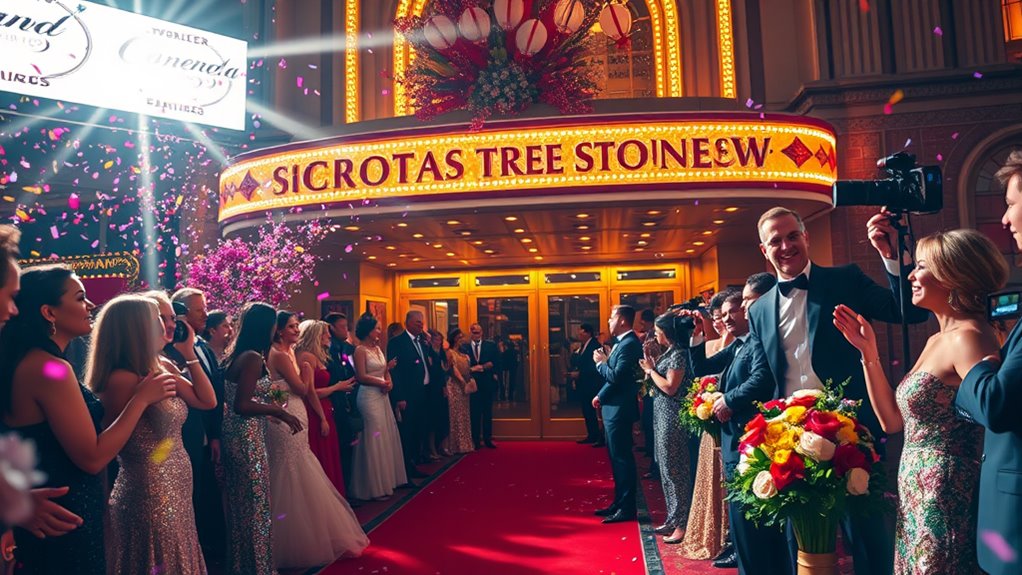
Broadway's opening nights are special for several reasons. They represent the culmination of months of hard work for playwrights, actors, and crew, signaling a significant milestone. The atmosphere is electric, with audience anticipation enhancing the emotional impact of the performance. Glamorous red carpet events attract media coverage, showcasing fashion and generating buzz, as critics' reviews can shape a production's future success. Opening nights promote a unique connection between audiences and performers, reflected in enthusiastic reactions. Each premiere additionally contributes to Broadway's rich legacy, influencing future productions and encouraging cultural dialogues. Discover more about what makes these occasions unforgettable.
The Excitement of Anticipation
The excitement of anticipation surrounding Broadway's opening nights is palpable, drawing audiences and performers alike into a whirlwind of emotion and expectation. As the curtain prepares to rise for the inaugural performance, an intensity builds within the theater, uniting everyone present in a shared experience of hope and ambition. This moment marks not just the revelation of a production, but also a pivotal juncture for artists and creatives whose aspirations are poised to take flight.
The excitement builds up long before the first notes echo through the theater. Pre-show rituals play a critical role in this transformative process, allowing performers to channel their energy into focused preparation. From vocal warm-ups to backstage pep talks, each ritual serves as a psychological anchor, helping artists align their thoughts and emotions with the high stakes of the evening. For some, these rituals may involve personal talismans or affirmations, whereas others may engage in collective activities that nurture camaraderie and solidarity among the cast and crew.
In the audience, the air is charged with an electric fervor, as theatergoers keenly await the first glimpse of the fresh narrative unfolding before them. The convergence of these anticipatory energies creates an atmosphere that is both exhilarating and tense, encapsulating the essence of what makes Broadway's opening nights so extraordinary. It is a celebration of artistry, ambition, and the relentless pursuit of excellence, where dreams are realized and legacies are born.
The Glamour of the Red Carpet
Glistening under the bright lights, the red carpet serves as a dazzling backdrop for Broadway's opening nights, transforming the event into a spectacle of glamour and style. This iconic pathway is not merely a physical space but a prominent symbol of prestige, where red carpet fashion sets the tone for the evening and captivates the audience's attention. As celebrities make their grand entrances, the red carpet becomes a stage in itself, showcasing the artistry and creativity of designers who understand the significance of image in the theatrical domain.
Celebrity appearances are a defining element of this glamorous affair. Each star, adorned in carefully crafted attire, embodies the allure and sophistication that Broadway represents. The exchange of glances from photographers and fans alike amplifies the excitement, as every moment is captured for posterity, immortalizing the night's elegance. The red carpet effectively blurs the lines between the performers and their audience, creating a shared experience steeped in admiration and aspiration.
Beyond the extravagance, the red carpet functions as an essential networking platform, where industry titans and emerging talents converge. The conversations that unfold amidst the flash of cameras often lead to collaborations that can shape the future of Broadway. Consequently, the glamour of the red carpet is not just about fashion; it is a significant nexus where creativity, influence, and ambition collide, underscoring the importance of opening nights in the theater community.
The Significance of Opening Night Speeches
Opening night speeches hold immense significance in the Broadway experience, serving as a poignant moment that encapsulates the essence of the production and its creators. These speeches are not mere formalities; they are influential declarations that set the tone for the evening and resonate deeply with the audience. Through carefully crafted speech themes, the creators articulate their vision, intentions, and the expedition that led to this momentous occasion.
The emotional connections forged during these speeches are profound. As the cast and crew take the stage, they share personal anecdotes, express gratitude, and honor the collaborative spirit that brought the production to life. This is a moment where vulnerability meets strength, allowing the audience to engage with the shared humanity behind the art. The resonance of these speeches often transcends the theatrical experience, inviting spectators to reflect on their own lives and aspirations.
Moreover, opening night speeches serve as a rallying cry, galvanizing the audience's support as they solidify the production's place within the cultural terrain. They create a sense of community among attendees, uniting them in a shared emotional expedition. In a world where the theatrical experience can feel ephemeral, these moments become touchstones, reminding everyone present of the influence of storytelling and the artistry involved. Consequently, the significance of opening night speeches extends far beyond the theatrical space; they echo within the hearts of those who witness them, inspiring a lasting impact that can shape perceptions long after the curtain falls.
Audience Reactions and Reviews
Audience reactions and reviews play a significant role in shaping the success and legacy of a Broadway production. The opening night is not merely a celebration; it serves as a litmus test for the artistic merit and commercial viability of the show. This initial engagement with the audience is essential, as their responses can resonate through social media, critical reviews, and word-of-mouth, influencing potential ticket sales and future performances.
When the lights dim and the curtain rises, the energy within the theater is palpable. Audience engagement at this moment is a formidable force that can enhance a performance. Enthusiastic applause, gasps of surprise, and moments of laughter serve as indicators of the emotional resonance the production has achieved. Conversely, tepid reactions can spell trouble, prompting critical responses that may deter audiences in the weeks to come.
Critics, too, wield significant influence in shaping public perception. Their reviews can either validate the production's artistic ambitions or highlight shortcomings that echo with potential patrons. A glowing review can propel a show into the cultural zeitgeist, whereas a scathing critique can lead to swift declines in ticket sales.
Ultimately, the symbiotic relationship between audience reactions and critical reviews forms the bedrock of Broadway's dynamic environment. As productions navigate the complex interplay of audience engagement and expert evaluation, the outcomes of opening nights can determine not just immediate success, but also the enduring legacy of the theatrical work itself.
The Legacy of Broadway Debuts
Though the immediate reactions on opening night are crucial, the legacy of Broadway debuts extends far beyond that initial performance. Each debut performance serves as a pivotal moment in Broadway history, often setting the stage for cultural movements, artistic innovations, and the progression of theatrical storytelling. The echoes of these moments resonate through time, influencing generations of artists, audiences, and future productions.
Consider the profound impact of these debut performances:
- Cultural Reflection: Many Broadway shows encapsulate the societal issues of their time, offering audiences a mirror to reflect upon their own lives and challenges.
- Artistic Innovation: Groundbreaking works introduce new techniques, styles, and narratives, pushing the boundaries of what theater can achieve and inspiring future creators.
- Legacy of Talent: Debuts often launch the careers of exceptional talents, from actors to composers, whose contributions shape the terrain of Broadway for years to come.
Thus, the legacies of Broadway debuts are not merely confined to reviews or box office success. They forge connections between artists and audiences, igniting a shared passion for the transformative influence of theater. These performances become the bedrock upon which future productions are built, ensuring that the art form remains lively, relevant, and constantly changing. In comprehending these legacies, we likewise recognize our role as part of Broadway's ongoing narrative, one that demands our engagement and appreciation for the influence of storytelling in this remarkable arena.
Frequently Asked Questions
What Happens if a Show Doesn't Receive Good Reviews on Opening Night?
When audience reactions turn unfavorable on opening night, the ramifications can be profound. Critical reviews often shape public perception, leveraging media influence to sway potential ticket sales. A poor reception may lead to dwindling attendance and financial losses, prompting producers to evaluate swift adjustments. In some cases, shows close prematurely, reflecting the delicate balance between artistic ambition and audience expectations. Ultimately, the initial response can dictate a production's trajectory in the competitive theatrical environment.
How Do Cast Members Prepare Emotionally for Opening Night?
Cast members prepare emotionally for opening night by embracing a blend of nervous excitement and camaraderie. They often engage in group rituals to cultivate a sense of unity, providing essential emotional support to one another. This collective energy can transform anxiety into motivation, empowering performers to deliver their best. Moreover, individuals may employ personal techniques such as visualization and breathing exercises to channel their emotions productively, ensuring they are mentally primed for the momentous occasion.
Are There Any Traditions Specific to Opening Night Performances?
Opening night performances are steeped in rich traditions that enhance the experience beyond mere entertainment. Critics might argue that such rituals are outdated; nevertheless, they serve to unify cast and crew. Curtain speeches are made to acknowledge the hard work of everyone involved, nurturing a sense of camaraderie. Following these speeches, champagne toasts are shared, symbolizing celebration and new beginnings. These traditions reinforce the significance of the occasion, creating an impactful atmosphere of triumph.
How Do Ticket Prices Vary for Opening Nights Compared to Regular Performances?
Ticket prices for opening nights on Broadway typically reflect premium pricing strategies, markedly surpassing those of regular performances. This increase is attributed to the heightened demand and the unique allure of the inaugural event. Attendees often gain access to exclusive VIP experiences, such as post-show receptions and meet-and-greet opportunities with the cast. As a result, these factors contribute to the raised cost, positioning opening nights as a coveted experience for discerning theatergoers.
What Role Do Critics Play During the Opening Night Event?
Critics play a pivotal role during the opening night event by shaping the narrative surrounding a production. Their reviews can greatly influence public perception and ticket sales, as they synthesize audience reactions and provide authoritative assessments. A favorable critique can enhance a show's status, whereas negative reviews may hinder its success. Consequently, the interplay between critic reviews and audience reactions creates a dynamic that can determine a production's trajectory in the competitive theater environment.
About the Author