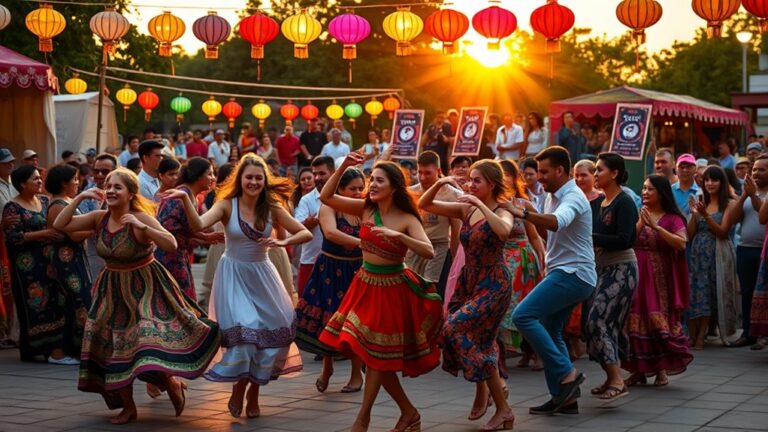

Dance is a universal form of expression since it transcends language and cultural barriers. It taps into our emotions, allowing you to convey joy, sorrow, and everything in between through movement. Each dance form tells a story, reflecting the values and traditions of its culture. When you dance, you connect not just with yourself but likewise with others, nurturing a sense of community. Whether it's a folk dance or a modern routine, it's all about shared experiences and emotions. There's so much more to discover about the strength of dance and what it can reveal about humanity's collective soul.
The History of Dance
Dance has evolved over centuries, pulling from various cultures and traditions around the world. You’re stepping into a rich fabric of history where every move tells a story. From the earliest days, ancient rituals have played a vital role in shaping dance. Envision the communal gatherings where tribes expressed their beliefs, celebrating life, death, and everything in between through rhythmic movements. Each step was a link to their ancestors, a way to honor the past as they forged a path to the future. As time progressed, these ancient dance rituals and traditions began to blend with regional influences, giving birth to diverse styles that reflect the unique identities of different societies. From the vibrant celebrations of African drum dances to the intricate footwork of classical ballet, each form carries the essence of its origin, creating a tapestry of expression that transcends borders. Today, dance continues to be a powerful means of storytelling, connecting generations and highlighting the universal language of movement.
As you've likely observed, dance evolution doesn't just reflect societal changes; it likewise mirrors the desire for freedom. In various cultures, dance has served as an outlet for self-expression and rebellion against repression. Think about how the lively movements of the Charleston in the 1920s broke away from Victorian constraints. Or consider the mighty dances emerging from social movements, where the body becomes a canvas for protest and liberation.
You can see how these historical threads weave together, creating a dynamic form of expression that transcends language and barriers. Each era and culture adds layers, making dance not just an art form but a reflection of humanity's collective experience. So, as you move and sway, remember you're part of this ongoing dance evolution—an ever-expanding narrative that celebrates individuality, community, and the freedom to express oneself. Your dance steps are echoes of ancient traditions, reshaped for today's world.
Dance as Emotional Expression
Even though you may not always have the words to express your feelings, the movements of your body can convey emotions more forcefully than language ever could. When you dance, you're tapping into a primal form of communication that transcends barriers. Your body becomes a canvas, painting your inner world and creating a significant emotional release that words often can't achieve.
Each twirl, jump, and sway reflects your state of mind. It's a visceral experience, where your body language speaks volumes about joy, sorrow, or even frustration. Envision feeling overwhelmed and letting it all pour out through rhythmic movements. That's the beauty of dance—it allows you to channel emotions that might otherwise get bottled up inside.
When you embrace dance, you're giving yourself permission to feel and express without judgment. Whether you're breaking free in a lively celebration or surrendering to a slow, contemplative tune, your body communicates what your heart can't articulate. You might find that the more you move, the more liberated you feel, as if each step sheds layers of tension and doubt.
Dance isn't just about technique; it's about authenticity. It's your chance to let go of inhibitions and connect with your true self. So, whether you're dancing alone in your room or with others in a lively space, keep in mind that every movement is a reflection of the richness of your emotions, a celebration of the freedom that comes from expressing who you really are.
Cultural Significance of Dance
Cultural expression often finds its most colorful form in dance, revealing the rich weave of human experience across different societies. When you engage in dance, you're not just moving; you're stepping into a story that echoes the values and traditions of your culture. Folk dance, for instance, serves as a lively medium for preserving cultural identity, showcasing customs and narratives that define a community. As you watch or participate in these dances, you connect with a legacy that transcends time and place.
The significance of dance goes beyond mere entertainment; it acts as a bridge between generations, allowing you to share your heritage with others. Each movement embodies the essence of a culture, whether it's the rhythmic stomping of feet in a traditional folk dance or the fluid motions of a contemporary piece.
Here's a brief overview of the cultural significance of various dance forms:
| Dance Form | Cultural Significance |
|---|---|
| Folk Dance | Preserves traditions, tells stories of the past |
| Contemporary Dance | Reflects current societal issues, explores identity |
| Traditional Dance | Celebrates rituals, marks celebrations and events |
| Urban Dance | cultivates community, expresses individuality and freedom |
Ultimately, when you dance, you assert your cultural identity, celebrating your roots as you invite others to explore the beautiful weave of human expression. Dance is where freedom and tradition intertwine, allowing you to express who you are in the most authentic way.
Dance and Community Connection
How does dance promote a sense of community? When you step onto the dance floor, you enter a domain where barriers dissolve, and shared experiences unite you with others. Dance creates an electric atmosphere that nurtures community bonding, as each movement becomes a thread woven into the fabric of collective expression. Whether you're at a local festival, a dance class, or a spontaneous gathering, the rhythm pulls you together, igniting a sense of belonging.
Imagine the joy of participating in a traditional dance that has been passed down through generations. You're not just performing; you're connecting with your culture and the people around you. This shared action creates impactful memories and bonds that strengthen the ties within your community. The laughter, the missteps, and the triumphs are all part of a larger narrative that you contribute to alongside your fellow dancers.
Moreover, dance provides an outlet for emotions that words often can't capture. In those moments of movement, you express joy, pain, and everything in between, allowing others to feel and understand your experience. This shared vulnerability deepens connections and cultivates empathy among participants.
In essence, dance transforms individual expression into a communal experience. You celebrate not just your own story but the collective story of those around you. By engaging in dance, you embrace freedom, connection, and the unbreakable bonds that form when people come together to move, share, and celebrate life.
Dance in Religious Practices
When you explore dance in religious practices, you'll find it serves as an influential form of sacred expression. The movements and rituals often carry deep cultural significance, connecting communities and individuals to their spiritual roots. Through dance, you can experience a profound sense of connection to the divine, making it an essential part of many faith traditions.
Sacred Movements and Rituals
Dance's role in religious practices transcends mere entertainment; it serves as a profound means of spiritual expression and connection to the divine. When you witness sacred rituals, you can feel the energy of the movements, each step imbued with deep meaning and intention. These dances often reflect the beliefs and values of a community, allowing you to participate in a shared experience that transcends words.
The symbolism inherent in movement can evoke significant emotions and insights. Every gesture you make during these rituals can represent a prayer or a tribute, connecting you with something greater than yourself. Whether it's the rhythmic swaying of a body in worship or the intricate footwork representing life's voyage, each movement acts as a medium for spiritual communication.
In many cultures, these sacred movements create a bridge between the earthly and the divine. They invite you to embrace your freedom of expression during your connection to tradition. By participating in these rituals, you not only honor your ancestors but likewise nurture a sense of unity and belonging within your community. This dance becomes a sacred dialogue, celebrating the human spirit and its quest for connection.
Cultural Significance of Dance
Throughout history, cultures around the world have recognized dance as an fundamental form of expression that carries deep significance in religious practices. You'll find that many folk traditions incorporate dance as a way to connect with the divine and celebrate cultural identity. In various societies, dance isn't just a performance; it's a crucial part of social rituals that bond communities and nurture a sense of belonging.
When you participate in these dances, you're not just moving your body; you're engaging in a form of artistic expression that transcends words. Each step, rhythm, and gesture tells a story, reflecting the beliefs and values of a culture. Whether it's the rhythmic drumming of African tribal dances or the elegant movements of Indian classical dance, every style carries its own significance, echoing the spiritual essence of its people.
Spiritual Connection Through Dance
Many cultures incorporate dance as an fundamental way to connect with the divine, allowing participants to express their spirituality through movement. When you engage in dance as a form of spiritual embodiment, you tap into a deeper part of yourself. It's not just about the steps; it's about feeling the rhythm of your spirit and the energy that flows through you.
In various religious practices, dance serves as a influential tool for transcendental movement. You'll find that many traditions use dance to celebrate sacred moments, invite blessings, or invoke the presence of the divine. Whether it's the ecstatic whirling of Sufis, the lively energy of African tribal dances, or the graceful movements in Hindu rituals, each dance becomes a pathway to higher consciousness.
As you participate, you might feel a sense of freedom that transcends the physical world. This connection liberates your spirit, allowing you to express emotions that words can't capture. Ultimately, dance becomes a sacred dialogue between you and the universe, a celebration of life's mysteries, and a profound way to honor your spiritual expedition.
The Role of Rhythm
How does rhythm shape our experience of dance? Rhythm's heartbeat pulses through every movement, creating a foundation that guides your body. When you feel the music flow, your rhythm perception kicks in, allowing you to connect deeply with the beat. It's not just about moving; it's about immersing yourself in the sonic scenery that invites you to express your inner self.
As you dance, you discover rhythmic patterns that resonate with your spirit. These patterns draw you in, weaving a fabric of emotions and letting you explore your personal freedom. Each step becomes a conversation between your body and the music, where you can either surrender to the rhythm or break free from its constraints. This dance is your expression, a celebration of individuality that invites others to join in.
The beauty of rhythm lies in its universality. No matter where you are in the world, the pulsing beats and flowing melodies beckon you to move. You don't need to speak the same language to understand the call of rhythm; it transcends barriers, allowing you to share in a communal experience.
Dance and Storytelling
Dance brings stories to life, weaving narratives that resonate on a profound level. When you step onto the floor, you're not just moving; you're embodying a tale. Each gesture, each spin, and each leap serves as a brushstroke on the canvas of expressive choreography. You have the ability to connect, to share emotions, and to convey experiences that words sometimes fail to capture.
Imagine the thrill of telling a story through dance narratives that transcend language. You can express joy, sorrow, love, or conflict simply through movements. Your body becomes an instrument, reflecting the nuances of the tale you wish to tell. Whether you're performing a passionate duet or a solo that explores inner turmoil, each motion invites onlookers to feel, understand, and even relate to the narrative you're sharing.
As you dance, you create an atmosphere where others can lose themselves in the moment. The rhythm pulses through you, guiding your movements and enhancing the emotional depth of your story. Your audience isn't just watching; they're experiencing the expedition alongside you, feeling the highs and lows as if they're part of the narrative.
In this way, dance becomes a dynamic form of storytelling that breaks down barriers. It allows you to express your unique voice and share universal truths, nurturing a sense of connection among all who witness your expressive choreography. So, let your body tell the story, and embrace the freedom that dance offers in sharing your truth.
Movement Across Cultures
When you explore dance, you'll find it's more than just movement; it's a reflection of cultural values and traditions worldwide. Each community uses dance to express its identity, celebrating rituals, history, and emotions unique to their heritage. By grasping these diverse practices, you can appreciate how dance connects people across cultures.
Cultural Significance of Dance
Throughout history, various cultures have embraced movement as an fundamental form of expression, reflecting their unique identities and shared experiences. Dance is more than mere entertainment; it often plays a crucial role in cultural rituals, celebrating significant milestones and nurturing community bonds. When you watch a dance performance, you're witnessing a fabric woven from tradition and emotion.
Take a moment to explore how different elements come together in dance:
| Element | Example | Cultural Significance |
|---|---|---|
| Dance Style | Salsa | Represents passion and unity |
| Traditional Costumes | Kimono (Japan) | Symbolizes heritage and artistry |
| Cultural Rituals | Hula (Hawaii) | Tells stories of ancestors and nature |
Through these movements, dancers convey their heritage, beliefs, and aspirations. Each twist and turn tells a story, inviting you to share in the joy or sorrow of a culture. So, the next time you see a dance, keep in mind it's a celebration of freedom, identity, and the human spirit, bridging gaps and uniting people across the globe.
Dance Traditions Worldwide
Many people might not realize how diverse and rich dance traditions are across the globe. Each culture boasts its unique folk dances that tell stories, celebrate life, and preserve heritage. You'll find that traditional movements vary considerably, showcasing the history and values of different regions. From the lively jigs of Ireland to the intricate steps of Indian classical dance, every style invites you to explore.
In urban settings, you'll notice a blend of contemporary expressions emerging from cultural fusions. Styles like hip-hop and street dance reflect the dynamic energy of city life, creating a lively mosaic of movement. Dance festivals worldwide highlight these regional variations, allowing you to witness the beauty of diverse forms coming together in celebration.
As you explore further into dance, you'll see how these traditions contribute to heritage preservation. They keep alive the stories, rhythms, and emotions that define us. So whether you're participating in a local folk dance or watching a contemporary performance, keep in mind that every step connects you to a broader narrative that transcends borders and unites us all through the universal language of dance.
Dance Therapy and Healing
Dance therapy's unique ability to engage both mind and body makes it a potent tool for healing. It offers you a pathway to emotional release, allowing you to express feelings that might be too difficult to articulate. Through movement improvisation, you can explore new ways of self-expression, nurturing body awareness and reconnecting with your physical self. This therapeutic technique can be particularly beneficial for those in trauma recovery, helping you process experiences as it promotes healing benefits.
Incorporating elements of mindfulness practice, dance therapy encourages you to stay present in the moment. You'll find that each movement can serve as a creative outlet, providing a sense of freedom that can be liberating. As you engage in this dance, you'll notice shifts within yourself, both emotionally and physically.
Here's a quick overview of the key aspects of dance therapy:
| Aspect | Description |
|---|---|
| Emotional Release | Allows expression of feelings through dance |
| Body Awareness | Encourages connection with your physical self |
| Trauma Recovery | Facilitates processing of traumatic experiences |
| Mindfulness Practice | Promotes presence and awareness in the moment |
The Evolution of Dance Styles
Over the centuries, various dance styles have emerged and evolved, each reflecting the cultural and social dynamics of their time. You can see this evolution in the way people express themselves through movement, from the structured elegance of ballet to the spontaneous joy of hip-hop. Each style carries its own historical influences, telling a story that connects generations and communities.
As you explore dance, you'll notice how contemporary fusion plays a crucial role in this evolution. It's all about blending different styles and cultural elements, creating something fresh and lively. This freedom to mix and match allows dancers to break boundaries, celebrating their individuality as they honor their roots. You're not just witnessing a performance; you're experiencing a living mosaic of human expression.
Historical influences are essential in shaping these styles. For instance, African dance traditions have greatly impacted jazz and hip-hop, as European classical ballet laid the groundwork for modern dance. You can appreciate how each culture's unique experiences and struggles have contributed to the rich diversity in dance.
Every new movement or trend reflects the desires and values of its time, whether it's the rebellion of punk dance or the fluidity of contemporary styles. So, as you engage with dance, keep in mind that it's a formidable form of expression, one that evolves just like society itself. Embrace the beauty of this transformation and let it inspire you to find your own voice through movement.
Dance in Modern Society
In today's world, dance plays an essential role in connecting cultures and communities, allowing you to experience global traditions through movement. Whether it's a viral TikTok challenge or a local dance festival, you see how dance nurtures social bonds and shared experiences. With the rise of digital platforms, you can now explore diverse dance forms from the comfort of your home, making it more accessible than ever.
Global Cultural Significance
Throughout the world, dance serves as a potent medium for cultural expression, bridging gaps between diverse communities. It's a lively fabric woven from various threads of cultural diversity, reflecting the global influences that shape our lives. Whether you're in a thriving city or a remote village, dance resonates with the universal desire for connection and insight.
Here's a snapshot of how dance manifests across cultures:
| Cultural Aspect | Example of Dance | Global Influence |
|---|---|---|
| Celebration | Brazilian Samba | Afro-Brazilian heritage |
| Storytelling | Indian Bharatanatyam | Ancient epics and myths |
| Spirituality | Native American Powwow dances | Rituals and community ties |
Social Connectivity Through Movement
Embracing movement, dance has evolved into a crucial tool for social connectivity in modern society. It's not just about rhythm; it's a potent form of body language that nurtures emotional connections and shared experiences. Through dance, you engage in a movement language that transcends words, enabling deeper interactions within your community.
Here are three ways dance amplifies social bonding:
- Community Celebration: Dance brings people together during festivals and gatherings, creating a lively atmosphere of collective expression.
- Cultural Exchange: When you dance, you participate in a rich fabric of traditions, learning from diverse backgrounds and forging connections across cultures.
- Emotional Release: Whether it's through joyous celebration or cathartic expression, dance offers a way to share feelings and experiences, strengthening bonds among participants.
As you move together, you cultivate a sense of belonging and camaraderie that enriches your life. In a world often divided, dance serves as a unifying force, reminding you that, through movement, you can celebrate life and connect with others on a profound level.
Dance in Digital Age
Revolutionizing how you experience movement, the digital age has transformed dance into an accessible and interactive art form. You can now explore dance like never before, thanks to virtual performances and online tutorials that empower you to learn at your own pace. Social media platforms have turned into lively spaces where you can share your passion, connect with fellow dancers, and engage in exciting dance challenges that span continents.
With the rise of digital choreography, you can experiment with different styles and techniques, pushing your creativity to new heights. Interactive platforms allow you to collaborate with artists from around the globe, nurturing a sense of community and shared experience. Live streaming has made it possible for you to attend performances you might have never experienced otherwise, breaking down the barriers of location and accessibility.
Augmented reality tools add an incredible layer to your dance expedition, merging physical and digital worlds. You can practice with virtual instructors, enhancing your skills in ways previously unimaginable. In this digital age, dance isn't just an art form; it's a global movement, inviting you to express yourself freely and connect with others who share your passion.
Frequently Asked Questions
What Are Some Famous Dance Styles From Different Cultures?
When you explore famous dance styles from different cultures, you'll discover a lively world of movement. Ballet techniques showcase grace and precision, as Salsa rhythms invite you to feel the heat of Latin dance. Immerse yourself in Hip hop culture, where street styles express creativity and individuality. Don't forget Indian classical dance, rich in storytelling and tradition. Each style offers a unique way to express yourself and connect with the world around you.
How Do Personal Experiences Influence Individual Dance Expression?
Your personal experiences shape how you express yourself through dance. When you connect emotionally to your movements, you draw from your cultural background and life events, creating a unique style. Each step you take carries your story, reflecting joy, pain, or freedom. This blend of feelings and influences allows you to communicate in a way that feels authentic and liberating, making your dance a potent outlet for your individuality and emotions.
Can Anyone Learn to Dance, Regardless of Age?
Dance accessibility guarantees that everyone can join in, no matter their age. Age inclusivity is all about breaking barriers, so you're never too young or too old to embrace the joy of movement. Whether you're a sprightly child or a seasoned senior, you've got the freedom to express yourself through dance. Just step onto the floor, feel the rhythm, and let your body celebrate—everyone's got the potential to shine!
What Role Does Dance Play in Popular Music Today?
Dance plays an essential role in popular music today, shaping how you experience various music genres. You're likely influenced by dance trends that emerge alongside hits, making the music feel more alive and engaging. When you see artists dance, it connects you to their message, inviting you to express yourself too. Whether it's hip-hop, pop, or electronic, each genre brings fresh moves, encouraging you to join in and celebrate the rhythm.
Are There Specific Benefits to Dancing Regularly?
You might be surprised to learn that dancing regularly boosts your physical health and emotional well-being. As you move to the rhythm, you're not just having fun; you're enhancing your cardiovascular fitness and building strength. Plus, the joy of dancing can lift your spirits, reducing stress and anxiety. It's a liberating experience that connects your body and mind, giving you a sense of freedom and self-expression. So, why not dance your heart out?
About the Author