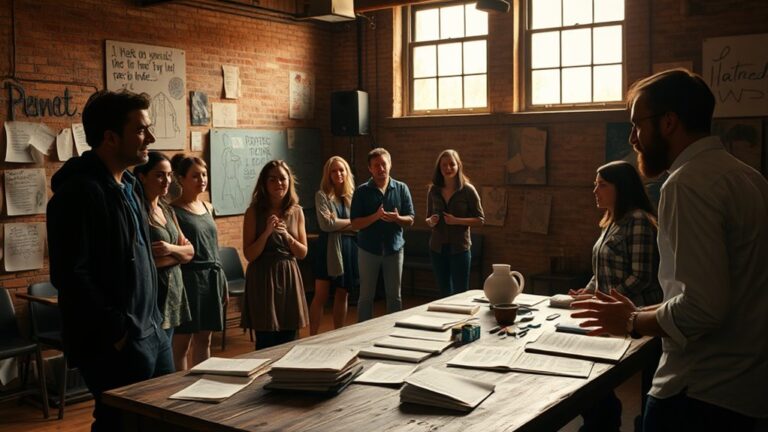
Behind the scenes of a hit Off-Broadway production lies a complex interplay of creativity and collaboration. The director plays an essential role, setting the artistic vision as well as promoting teamwork among cast and crew. Set and costume designs are carefully crafted to improve storytelling and character authenticity, with careful attention to materials and symbolism. Innovative lighting and sound design techniques create immersive experiences, capturing audience attention. Stage managers guarantee seamless operation on performance days. Coupled with strategic marketing and audience engagement initiatives, every element works harmoniously to raise the show. Explore further to uncover even more fascinating insights into this lively world.
The Role of the Director
Guiding the creative vision of an Off-Broadway production, the director plays a vital role in shaping the overall aesthetic and narrative. This leadership position requires a unique blend of artistic insight and collaborative spirit, as the director navigates the nuances of production pacing while nurturing an environment of creative collaboration.
A director's vision is not solely a unilateral dictate; it thrives through active engagement with the cast and crew. Through thorough actor guidance and rehearsal strategies, the director cultivates performances that resonate with authenticity and emotional depth. The selection of artistic choices—from dialogue delivery to movement—demands a sharp eye for detail, ensuring that each element aligns with the overarching narrative.
Effective decision making is essential in this dynamic environment, as the director must balance creative ambitions with practical constraints. Conflict resolution becomes a necessary skill, enabling the director to address differing perspectives and maintain a cohesive vision. Feedback sessions are integral to this process, allowing for constructive dialogue that improves both performance and production quality.
Ultimately, a director's leadership style greatly influences the collaborative atmosphere. By nurturing trust and encouraging innovative ideas, the director not only shapes the production but empowers the creative team to explore new artistic horizons. In this way, the role of the director transcends mere oversight; it becomes a catalyst for transformative storytelling in the lively realm of Off-Broadway theatre.
Set Design and Construction
Set design and construction are fundamental components in creating the immersive realm of an Off-Broadway production. The synergy between innovative design concepts and practical construction techniques serves as the backbone for enchanting theatrical experiences. Designers utilize a variety of set materials, from traditional wood and fabric to state-of-the-art sustainable options, to construct visually striking environments that transport audiences into the narrative.
Effective budget management is critical in this process, allowing creative teams to maximize their resources during the maintenance of high artistic standards. This requires a thoughtful approach to space optimization, ensuring that every inch of the stage is utilized effectively to improve storytelling. Collaboration among designers, directors, and technical staff is paramount, promoting a creative atmosphere that encourages bold ideas and unique solutions.
Throughout the production timeline, installation processes play a crucial role, transforming conceptual sketches into tangible realities. This phase often necessitates design revisions to accommodate unforeseen challenges or improve the overall aesthetic. Flexibility and open communication within the team are key, as they facilitate a seamless shift from design to execution.
Ultimately, the interplay of set design and construction shapes the visual terrain and influences the emotional resonance of a performance. By embracing innovation and encouraging creative collaboration, Off-Broadway productions can continue to push boundaries and redefine audience engagement, making the realm of theater a constantly changing art form. These dynamic elements not only enhance storytelling but also provide a platform for offbroadway untold stories to be brought to life in compelling ways. As designers and directors experiment with unconventional materials and immersive staging, they create transformative experiences that captivate audiences. This ongoing evolution ensures that Off-Broadway remains a hub for fresh perspectives and groundbreaking theatrical artistry. Moreover, the collaboration between artists, from playwrights to set designers, fosters an environment ripe for exploration and risk-taking. By prioritizing offbroadway and innovative storytelling, productions can delve into themes that resonate deeply with diverse audiences, often reflecting social issues and personal narratives that are overlooked in mainstream theater. This commitment to bold experimentation not only enriches the artistic landscape but also invites audiences to engage with the stories in profound and meaningful ways.
Costuming and Wardrobe Choices
In the domain of Off-Broadway productions, costuming and wardrobe choices are fundamental elements that not just define characters but furthermore improve the narrative's authenticity. The intricate process begins with fabric selection, where designers carefully choose materials that resonate with the play's themes and the characters' backgrounds. Each texture choice plays a significant role in conveying emotion and era, guaranteeing historical accuracy whilst also aligning with the character's path.
Costume fittings are imperative as they allow for adjustments that improve character alignment and comfort, enabling actors to fully embody their roles. The wardrobe maintenance team guarantees that costumes remain in pristine condition throughout the run, preserving the integrity of each piece. This attention to detail supports the overall artistry of the production.
Color symbolism in costuming can subtly influence audience perception and emotional response. Designers often employ specific hues to evoke certain feelings or highlight character traits, further enriching the narrative. Ensemble coordination is equally significant, as it harmonizes individual costumes into a cohesive visual story, reflecting stylistic influences that resonate with the production's vision.
Moreover, cultural representation within costuming invites a diverse array of influences, allowing for a more authentic portrayal of characters and their environments. This thoughtful approach to costuming not just improves the visual appeal of the production but also deepens the audience's engagement with the story. In the end, the careful interplay of these elements establishes a lively, immersive experience that is emblematic of Off-Broadway's innovative spirit.
Lighting Design Techniques
Even though the visual impact of a production is often heavily influenced by set design and costumes, lighting design techniques play an integral role in shaping the overall atmosphere and guiding audience perception. Innovative lighting can transform a simple stage into an enchanting environment, utilizing various methods such as color temperature adjustments to evoke specific emotions and improve storytelling.
Shadow manipulation is vital in creating depth and dimension, allowing designers to craft compelling visual narratives. By employing intensity control, lighting designers can accentuate key moments, guiding the audience's focus during the establishment of mood settings that resonate with the production's themes. The seamless changes between lighting states further enrich the experience, maintaining engagement throughout the performance.
Gobo effects and practical effects are instrumental in adding texture and visual intrigue, creating patterns that can transport viewers into different worlds. The use of automated lighting systems has transformed stagecraft, permitting dynamic changes and precise positioning that were once labor-intensive. Moreover, LED applications offer both versatility and energy efficiency, enabling designers to explore a broader spectrum of color and effects as they uphold safety protocols.
Safety protocols must remain paramount in the implementation of these techniques, ensuring that equipment is installed and operated correctly to prevent hazards. As lighting design continues to evolve, the fusion of technology and artistry will push the boundaries of what is possible, inviting audiences to experience theater in a wholly immersive manner. These techniques are not merely functional; they are the pulse of the production, resonating with every heartbeat of the performance.
Sound Design and Effects
Sound design and effects play a crucial role in improving the auditory experience of an Off-Broadway production, often unnoticed yet profoundly impactful. The art of sound design transcends mere amplification; it involves the careful crafting of soundscapes that evoke emotion, set the mood, and transport the audience into the domain of the narrative.
In the sphere of Off-Broadway, where innovation is key, sound designers employ advanced techniques in soundscapes creation to complement the visual elements on stage. This process begins with the thoughtful selection of sound elements that resonate with the themes and characters, allowing for a seamless integration into the storytelling. By utilizing audio layering, sound designers can build a rich fabric of sound that adds depth and nuance to each scene. The interplay of dialogue, ambient noise, and musical scores creates an immersive environment that captivates the audience's senses.
Moreover, technology has expanded the horizons of sound design, enabling the integration of spatial audio and dynamic sound effects that react to the performers' movements. This level of innovation not only improves the overall experience but invites the audience to engage with the production on a deeper level. As Off-Broadway continues to push boundaries, sound design remains a crucial component in crafting unforgettable theatrical experiences, inviting the audience to listen closely and appreciate the artistry behind the scenes.
Rehearsal Process Insights
The rehearsal process serves as the backbone of any Off-Broadway production, where the synergy between actors, directors, and the creative team unfolds. Effective rehearsal schedules are carefully crafted to maximize collaboration and creativity. Each session is an opportunity for actors to explore deeply into character development, examining motivations and relationships within the narrative.
Actor feedback is integral, cultivating an environment where performers feel empowered to share insights and suggestions. This collaborative spirit improves ensemble dynamics, allowing the cast to build trust and chemistry, which ultimately translates to a more compelling performance. Directors employ various pacing techniques to guarantee that the rhythm of the play is both engaging and dynamic, keeping audiences on the edge of their seats.
Scene shifts are another critical aspect of the rehearsal process. Smooth changes not only maintain the narrative flow but heighten emotional resonance. To prepare actors for these shifts, emotional preparation is paramount. Engaging in improvisation exercises can facilitate this readiness, enabling actors to react authentically to unpredictable moments on stage.
Innovation in rehearsals often stems from the willingness to experiment. By embracing a flexible approach, the creative team can uncover new dimensions in the material, allowing the production to evolve organically. This iterative process culminates in a cohesive artistic vision, where every element harmonizes to create a memorable theatrical experience. In the end, the rehearsal process is not just about memorizing lines; it is a transformative expedition that shapes the heart of an Off-Broadway production.
Stage Management Responsibilities
Stage management plays an essential role in the success of an Off-Broadway production, encompassing both pre-production coordination and performance day duties. From organizing rehearsal schedules to ensuring seamless shifts during performances, stage managers are the backbone of the production team. Their careful attention to detail and effective communication skills are critical for maintaining the overall flow and integrity of the show.
Pre-Production Coordination
Effective pre-production coordination is critical for a successful Off-Broadway production, and the stage manager plays a pivotal role in this process. This role encompasses a variety of responsibilities that guarantee the project runs smoothly from inception to performance. Beginning with casting calls, the stage manager oversees the selection of talent, cultivating an environment where creativity thrives through effective team building.
Budget planning is another important aspect, as the stage manager collaborates with producers to allocate resources wisely, balancing artistic vision with financial constraints. Scheduling meetings is indispensable for maintaining open lines of communication among the creative team, allowing for productive discussions on script revisions and production timelines.
Location scouting is likewise integral, as the stage manager coordinates site visits to evaluate venues that align with the production's vision. Establishing strong vendor relationships is crucial; the stage manager negotiates with suppliers to secure necessary resources such as costumes, set pieces, and technical equipment. By carefully managing these elements, the stage manager guarantees a cohesive and innovative foundation for the Off-Broadway production, paving the way for an engaging theatrical experience.
Performance Day Duties
On the day of performance, the stage manager's responsibilities shift into high gear, ensuring every detail aligns for a seamless presentation. The day begins with pre-show meetings, where the team unites to discuss the flow of the evening, addressing any potential challenges. Backstage routines are carefully orchestrated, creating a well-oiled machine that operates smoothly under pressure.
As the actors engage in their warm-up exercises, the stage manager monitors energy management, ensuring that performers are both focused and relaxed. Technical run-throughs occur early in the day, allowing for adjustments to lighting and sound, essential to enhancing audience interactions. Final checks are executed with precision, confirming that every prop is in place and every cue is memorized.
During this time, emotional preparation becomes vital. The stage manager supports actors in finding their center, facilitating performance rituals that cultivate confidence and camaraderie. As the curtain approaches, last-minute adjustments are made, with the stage manager serving as the central communicator among the cast and crew. This orchestration of diverse elements transforms a mere performance into a cohesive artistic experience that resonates profoundly with the audience.
Marketing and Promotion Strategies
Effective marketing and promotion strategies are crucial for the success of any Off-Broadway production. Utilizing social media engagement tactics, targeted advertising campaigns, and community outreach initiatives can greatly improve visibility and audience engagement. By strategically combining these approaches, productions can create a robust marketing plan that resonates with diverse audiences.
Social Media Engagement Tactics
In today's digital environment, utilizing the strength of social media is vital for the marketing and promotion of Off-Broadway productions. Innovative engagement tactics can greatly improve audience interaction, nurturing a lively community around the production.
Leveraging platforms such as Instagram, Facebook, and Twitter not only allows for real-time updates but furthermore creates opportunities for meaningful dialogue with potential patrons. Engaging content, including behind-the-scenes glimpses, cast interviews, and interactive polls, invites audiences to participate actively in the narrative of the production.
Moreover, employing social media analytics is critical for grasping audience preferences and behaviors. By analyzing engagement metrics, producers can tailor their content to resonate with specific demographics, ensuring that marketing efforts are both impactful and relevant.
Additionally, user-generated content campaigns can broaden reach and authenticity. Encouraging attendees to share their experiences improves community feeling and promotes organic word-of-mouth marketing.
Ultimately, embracing innovative social media engagement tactics not only widens the audience base but also nurtures a loyal following, vital for the enduring success of Off-Broadway productions in a competitive environment.
Targeted Advertising Campaigns
Targeted advertising campaigns have emerged as an essential strategy for maximizing the reach and impact of Off-Broadway productions. By honing in on specific target demographics, these campaigns guarantee that marketing efforts resonate deeply with potential audiences. Comprehending the interests, behaviors, and preferences of these groups allows producers to craft more effective messages that heighten engagement and drive ticket sales.
Innovative ad creative plays a significant role in this process. By utilizing eye-catching visuals, compelling narratives, and customized messaging, productions can capture attention in an increasingly crowded marketplace. For instance, a campaign designed for young adults may leverage social media platforms with dynamic video content, whereas an initiative aimed at older audiences might prioritize traditional print or email marketing with a focus on nostalgia and emotional connection.
Data analytics further improve the influence of targeted advertising. By analyzing audience responses and conversion rates, producers can refine their strategies in real-time, guaranteeing that resources are allocated efficiently for maximum impact. In the end, targeted advertising campaigns represent a forward-thinking approach that not just boosts visibility but also cultivates a deeper connection between productions and their audiences.
Community Outreach Initiatives
Community outreach initiatives play a pivotal role in the marketing and promotion strategies of Off-Broadway productions. By nurturing community partnerships, these initiatives create a dynamic bridge between the theater and the local populace. Outreach programs are designed to engage diverse audiences through innovative audience workshops, allowing participants to explore the art form as they provide invaluable community feedback.
Successful productions often leverage local collaborations, working alongside schools and nonprofits to develop educational initiatives that enrich the cultural environment. These partnerships not only expand audience reach but additionally cultivate an appreciation for the arts among younger generations. By involving volunteers in various aspects of production, theaters can utilize local talent and passion, further deepening community ties.
Moreover, feedback gathered from these outreach endeavors informs marketing strategies, ensuring alignment with community interests and values. This iterative process encourages inclusivity, inviting voices from all walks of life to contribute to the narrative. Fundamentally, community outreach initiatives are not merely promotional tools; they are foundational elements that improve the vibrancy and sustainability of Off-Broadway productions, promoting a symbiotic relationship between the theater and its audience.
Audience Engagement Methods
Utilizing innovative strategies, Off-Broadway productions have increasingly prioritized audience engagement as an vital component of their success. By cultivating interactive experiences, these productions not merely improve the theatrical expedition but additionally create lasting connections between performers and spectators. This shift in the direction of engagement reflects a broader awareness of the audience's role in the storytelling process.
One approach that has gained traction is the incorporation of immersive elements into performances. Audiences are invited to participate not just as passive spectators but as active contributors to the narrative. This might involve moving through different areas of the venue, interacting with characters, or even influencing the storyline through collective decision-making. Such experiences break the fourth wall, allowing for a more profound emotional investment in the unfolding drama.
Moreover, audience feedback has become a vital tool in refining production quality. Many Off-Broadway shows actively solicit input through post-performance discussions, surveys, or social media interactions. This feedback loop empowers audiences, making them feel valued during providing invaluable insights for creators. It allows for a dynamic response to audience preferences, leading to continuous improvement and adaptation.
Lessons Learned From Performances
In the domain of off-Broadway productions, performances often reveal invaluable lessons about embracing spontaneity and the critical role of team communication. The unpredictability of live theater encourages performers to adapt swiftly, cultivating a creative environment where surprises can improve the overall experience. Furthermore, effective communication among cast and crew is crucial for steering through challenges and ensuring a cohesive performance.
Embracing Spontaneity in Performances
Embracing spontaneity in performances often reveals the true nature of theater, transforming scripted moments into lively exchanges between actors and audiences. The beauty of live theater lies not just in its predictability but likewise in the unpredictable, where improvisational techniques can lead to unexpected moments that fascinate and engage.
The integration of spontaneity nurtures a dynamic environment that encourages creativity and authenticity. There are several key lessons learned from embracing this approach:
- Enhanced Connection: Actors develop a deeper bond with each other and the audience, cultivating a shared experience that transcends the written script.
- Increased Adaptability: Responding to unforeseen circumstances—be it an audience reaction or a technical hiccup—strengthens performers' ability to think on their feet.
- Memorable Experiences: Unique, unscripted moments often become the highlights of a performance, leaving lasting impressions on both the cast and audience.
Incorporating spontaneity not only invigorates performances but invites innovation, enabling artists to breathe new life into their craft. As theater continues to evolve, the willingness to embrace the unexpected will remain vital for enchanting modern audiences.
Importance of Team Communication
Effective communication among team members serves as the backbone of any successful theater production. In an environment where creativity thrives, cultivating a culture of open dialogue is crucial. This not only improves the artistic vision but also guarantees that each member feels valued, which ultimately translates into a more cohesive performance.
The significance of effective feedback cannot be overstated. It allows for continuous improvement and encourages innovative ideas through collaborative brainstorming. By creating a space where suggestions and critiques are welcomed, teams can adapt and refine their work dynamically.
| Communication Method | Benefits | Impact on Production |
|---|---|---|
| Effective Feedback | Improves performance quality | Promotes growth and learning |
| Collaborative Brainstorming | Sparks innovative ideas | Cultivates creative solutions |
| Regular Check-ins | Builds team cohesion | Guarantees alignment of vision |
Frequently Asked Questions
How Do Actors Prepare Mentally for Their Roles in the Production?
As the stage lights dim, actors commence a transformative expedition, delving deep into their characters' psyches. Mental preparation begins with emotional grounding, allowing performers to connect authentically with their roles. Through techniques such as character immersion, they explore motivations and backstories, creating a vivid fabric of emotions. This innovative approach not only improves their performance but likewise captivates audiences, drawing them into a world where every nuance resonates with truth and vulnerability.
What Challenges Arise During the Initial Stages of Rehearsals?
During the initial stages of rehearsals, several challenges may arise, particularly in establishing effective rehearsal dynamics. Actors and directors must navigate varying interpretations of the script, which can lead to friction within the creative collaboration. Moreover, balancing individual artistic visions with the collective goal can prove difficult. As innovation thrives in an environment of open communication and trust, addressing these challenges early is essential for nurturing a cohesive and productive rehearsal process.
How Are Audience Reactions Monitored During Performances?
Monitoring audience reactions during performances is essential for comprehending the emotional response elicited by a production. This can be achieved through various methods, including post-show surveys, social media analysis, and real-time feedback tools. Audience feedback provides invaluable insights that inform future performances and creative decisions. By actively engaging with these reactions, creators can innovate and adapt their work, ensuring a more resonant and impactful experience for viewers, eventually enhancing the overall theatrical offering.
What Is the Process for Selecting a Production's Music Playlist?
The process for selecting a production's music playlist involves precise music genre selection and playlist curation, ensuring alignment with thematic elements and emotional resonance of the performance. Collaborating closely with composers, sound designers, and directors, the team carefully evaluates various genres to improve the narrative. This innovative approach not just raises the audience's experience but additionally cultivates a dynamic atmosphere that captivates and engages, finally contributing to the production's overall success.
How Do Cast and Crew Handle Unexpected Technical Difficulties?
When unexpected technical difficulties arise, the cast and crew navigate these challenges like seasoned sailors adjusting their sails in a storm. Employing effective technical troubleshooting, they swiftly identify the source of the issue, ensuring minimal disruption. Crew communication is paramount, with real-time updates enabling quick resolutions. This collaborative approach not only mitigates crises but additionally nurtures an environment of innovation, allowing the production to adapt and thrive under pressure, in the end enhancing the audience's experience.
About the Author