
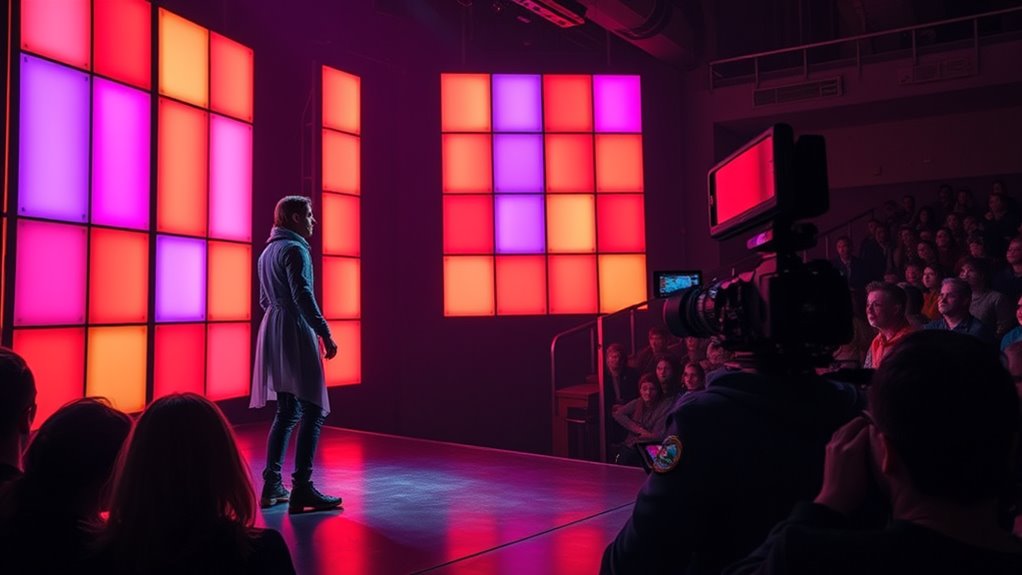
Technology is reshaping Off-Broadway theater through innovative storytelling and improved audience experiences. Virtual Reality (VR) and Augmented Reality (AR) immerse spectators, allowing them to engage with narratives interactively. Advanced sound design and dynamic lighting raise production quality, creating emotional depth. Furthermore, digital ticketing and online platforms extend accessibility, attracting diverse demographics. Interactive elements transform passive viewers into active participants, strengthening emotional connections. Collaborations with tech companies promote the integration of digital techniques, boosting artistic innovation. The ongoing commitment to technological advancements reveals a setting ripe for exploration and growth, highlighting opportunities for creativity and engagement in future productions.
The Evolution of Off-Broadway
The evolution of Off-Broadway theater has greatly shaped the terrain of American performing arts since its inception in the mid-20th century. Emerging as a response to the constraints of Broadway, Off-Broadway has nurtured a unique artistic environment characterized by innovative playwrights and diverse stories. Its cultural significance lies in the exploration of themes often overlooked by mainstream theater, reflecting the intricacies of contemporary society and resonating with evolving audience demographics.
As audience evolution occurred, Off-Broadway adapted through creative production techniques and the development of intimate performance spaces that encourage connection between actors and spectators. This intimacy cultivates a dynamic atmosphere where artistic collaborations flourish, allowing for the cross-pollination of ideas among emerging talent. Particularly, many celebrated productions have originated in Off-Broadway venues, indicating a significant trend where innovative works often precede their Broadway adaptations.
However, the path has not been without challenges. Funding challenges persist, often limiting production capabilities and forcing companies to navigate an uneven financial environment. Regional influences, too, have shaped the Off-Broadway scene, with varying local cultures inspiring unique narratives and performance styles. Additionally, industry trends aimed at inclusivity have prompted Off-Broadway to embrace underrepresented voices, enriching the fabric of American theater history.
Virtual Reality in Theater
Virtual reality (VR) is emerging as a transformative force in the field of theater, offering immersive experiences that engage audiences in unprecedented ways. Through the integration of VR technology, theater practitioners are redefining the boundaries of traditional storytelling, allowing viewers to step into narratives that were once confined to the proscenium stage. Virtual reality storytelling enables audiences to experience plots from multiple perspectives, creating a more personal and intimate connection with the characters and settings.
As the lines between theater and immersive gaming experiences blur, creators are experimenting with VR to improve emotional engagement and narrative depth. This technology allows for the construction of expansive virtual worlds where viewers can interact with the story, making choices that influence the outcome. Such interactivity transforms passive spectators into active participants, cultivating a deeper comprehension of the themes and emotions being portrayed.
Moreover, VR has the potential to reach wider audiences beyond geographical limitations. By democratizing access to theatrical productions, VR can transport individuals to performances they may never attend in person, broadening the reach of artistic expression. This innovation invites a new generation of theatergoers who are accustomed to the immersive nature of digital experiences, thereby revitalizing interest in the performing arts.
Interactive Audience Engagement
Interactive audience engagement in Off-Broadway theater is transforming the spectator experience through immersive experience design and innovative techniques. By incorporating real-time polling and mobile app integration, productions can promote a dynamic dialogue between performers and their audience. This evolution not merely improves viewer involvement but likewise redefines the boundaries of traditional theater.
Immersive Experience Design
Amid the evolving terrain of theater, immersive experience design has emerged as a potent tool for engaging audiences in Off-Broadway productions. By blending technology with traditional performance, creators are pioneering immersive storytelling that captivates and envelops viewers in sensory experiences. This innovative approach transforms the passive act of watching into an interactive exploration where the audience becomes an integral part of the narrative.
The table below highlights key elements of immersive experience design:
| Element | Description | Impact on Audience |
|---|---|---|
| Spatial Design | The use of unconventional spaces and layouts | Encourages exploration and interaction |
| Multisensory Elements | Incorporation of sound, visuals, and tactile components | Heightens emotional engagement |
| Audience Agency | Opportunities for audience participation | Cultivates a personal connection to the story |
As Off-Broadway theaters continue to embrace these innovative techniques, the potential for enhancing audience engagement grows exponentially, inviting attendees to not only witness but actively participate in the art of storytelling. This evolution not just reinvigorates the theatrical experience but additionally sets the stage for future creative possibilities.
Real-Time Polling Techniques
As Off-Broadway theaters increasingly adopt immersive experience design, they are moreover exploring real-time polling techniques to further improve audience engagement. By integrating these innovative methods, theaters can utilize audience feedback in a dynamic and interactive manner, allowing attendees to influence the narrative or thematic elements of a performance in real-time.
Real-time polling techniques utilize live data collection to gauge audience reactions and preferences, providing invaluable insights into their collective experience. This approach transforms the traditional spectator role into one of active participation, nurturing a sense of community and shared investment in the production. For instance, audiences may vote on plot developments or character arcs during a show, making each performance a unique event shaped by those present.
The implementation of such polling techniques not only improves the overall theater experience but also offers creators immediate feedback that can inform future performances. By prioritizing audience input, Off-Broadway theaters can cultivate a culture of experimentation and adaptability, ensuring that they remain at the forefront of theatrical innovation. As this trend continues to evolve, the fusion of technology and art presents exciting possibilities for redefining the live performance environment.
Mobile App Integration
With the rise of mobile technology, Off-Broadway theaters are increasingly integrating apps to improve audience engagement and streamline interactions during performances. These mobile applications improve the overall mobile user experience by providing interactive features that promote a deeper connection between the audience and the performance.
Through app-driven engagement, theaters can facilitate real-time feedback, allowing attendees to voice their opinions and participate in the storytelling process. For instance, audiences may vote on plot developments or choose among multiple endings, transforming passive spectators into active participants. This not only improves enjoyment but additionally cultivates a community atmosphere where collective choices shape the narrative.
Moreover, mobile apps can serve as crucial tools for delivering supplementary content, such as actor interviews, behind-the-scenes footage, and thematic discussions, enriching the viewing experience. Notifications about upcoming shows, special events, and exclusive offers can likewise be communicated directly to patrons, ensuring they remain engaged beyond the curtain call.
Incorporating these technological advancements into Off-Broadway theater aligns with evolving audience expectations, positioning theaters as innovative venues that embrace new forms of storytelling and connection. Consequently, mobile app integration represents a significant step toward the future of theater.
Digital Ticketing Innovations
Even though traditional ticketing methods have long dominated the scenery of Off-Broadway theater, recent digital innovations are transforming how audiences engage with performances. Digital ticketing systems are at the forefront of this transformation, offering a streamlined and efficient way for patrons to secure their seats. These advancements not only simplify the purchasing process but also improve audience convenience by allowing theatergoers to buy tickets from the comfort of their homes or on-the-go via mobile devices.
The integration of digital ticketing platforms has additionally addressed common challenges faced by theaters, such as long lines at the box office and the risk of counterfeit tickets. With the use of secure QR codes and mobile e-tickets, patrons can easily access their tickets without the need for physical printouts. This shift not only minimizes waste but also aligns with the growing emphasis on sustainability within the arts community.
Moreover, digital ticketing enables theaters to implement dynamic pricing strategies, adjusting ticket prices in real time based on demand. This flexibility can lead to increased revenue and improved attendance rates, ensuring that more audiences can experience the magic of Off-Broadway productions.
Augmented Reality Experiences
Augmented reality (AR) experiences are transforming Off-Broadway theater by creating immersive audience engagement that blurs the lines between performance and participation. This innovative technology improves storytelling techniques, allowing narratives to unfold in dynamic and interactive ways. As a result, performers can incorporate interactive elements that invite audience members to become active participants in the theatrical experience.
Immersive Audience Engagement
The rise of immersive audience engagement has transformed the environment of Off-Broadway theater, allowing patrons to step into the narrative in ways previously unimaginable. By leveraging augmented reality (AR) technologies, productions have lifted audience immersion, creating interactive experiences that captivate the senses and draw viewers into the heart of the story.
These AR experiences utilize sensory stimuli such as visuals, sounds, and haptic feedback to craft an enveloping atmosphere that transcends traditional theatrical boundaries. As audiences don AR devices or engage with mobile applications, they find themselves not merely spectators but active participants in the unfolding drama. This engagement nurtures a profound connection between the audience and the performers, blurring the lines of conventional theater.
Innovative productions are embracing this trend, utilizing spatial audio and dynamic visual elements to enrich the narrative experience. As a result, the audience becomes an integral part of the storytelling process, leading to a deeper emotional investment and a memorable theatrical expedition. Immersive audience engagement represents a bold step toward the future of Off-Broadway, where technology and artistry converge to create a unique, transformative experience for all involved.
Enhanced Storytelling Techniques
Frequently, Off-Broadway productions are utilizing augmented reality (AR) to improve storytelling techniques, creating a richer narrative environment for audiences. This innovative approach to digital storytelling allows for the integration of visual elements that enrich the plot, providing viewers with an immersive experience that transcends traditional stagecraft. By layering AR onto live performances, creators can explore new narrative innovations that engage the audience in ways previously unimagined.
The following table highlights key aspects of AR's role in enriching storytelling:
| Aspect | Description |
|---|---|
| Visual Enhancement | AR overlays visuals that complement stage action. |
| Audience Interaction | Engages viewers by allowing them to explore content. |
| Emotional Depth | Adds layers of meaning through dynamic imagery. |
| Accessibility | Makes complex narratives easier to grasp. |
| Immersive Experience | Transports audiences into the universe of the play. |
The implementation of AR not just boosts the artistic quality of Off-Broadway productions but also nurtures a deeper connection between the audience and the narrative, pushing the boundaries of conventional theater into the domain of interactive and engaging storytelling.
Interactive Performance Elements
Off-Broadway theater's embrace of interactive performance elements, particularly through augmented reality experiences, represents a significant evolution in audience engagement. By integrating state-of-the-art technology, productions are transforming traditional narratives into immersive adventures that actively involve attendees. This innovative approach cultivates a unique form of audience participation, blurring the lines between performer and spectator.
Augmented reality (AR) allows audiences to interact with the story in real-time, improving their emotional connection to the performance. Viewers can use their smartphones or AR glasses to access supplementary content, such as character backstories or visual effects that enrich the narrative depth. This technology integration not just enriches the theatrical experience but encourages audience members to become co-creators, providing them with a sense of agency within the performance.
As Off-Broadway continues to explore these interactive elements, it sets a precedent for other theatrical forms, demonstrating that innovation can breathe new life into the arts. The blend of performance and technology invites a fresh dialogue about the future of theater, where the boundaries of storytelling are continuously expanded, paving the way for a more dynamic and participatory cultural environment.
Social Media and Marketing
In today's digital environment, social media has emerged as a crucial tool for marketing Off-Broadway productions, enabling theaters to reach diverse audiences with unprecedented speed and efficiency. By leveraging innovative social media strategies, theaters can improve audience engagement, cultivate community, and nurture meaningful connections with potential patrons.
Here are three effective social media strategies that Off-Broadway productions can implement:
- Targeted Content Creation: By tailoring content to specific demographics, theaters can guarantee their messaging resonates with intended audiences. Engaging visuals and compelling narratives about the production can capture attention and generate interest.
- Interactive Campaigns: Encouraging audience participation through contests, polls, and behind-the-scenes insights creates a sense of ownership among followers. These interactive elements not only improve audience engagement but additionally encourage sharing, broadening the reach of marketing efforts organically.
- Influencer Collaborations: Partnering with social media influencers who align with the theater's ethos can amplify promotional efforts. Influencers can introduce productions to their established audiences, thereby increasing visibility and credibility.
Streaming Performances and Accessibility
Many theaters are embracing streaming performances as a means to improve accessibility and reach wider audiences. This shift toward digital platforms not only expands the geographical boundaries of theater attendance but also democratizes access for those who may face barriers to in-person viewing. By integrating streaming capabilities, off-Broadway productions are redefining the traditional theater experience, making it more inclusive and adaptable to diverse audience needs.
Streaming accessibility is a significant aspect of this evolution. Audiences can now enjoy performances from the comfort of their homes, which is particularly beneficial for individuals with disabilities, those living in remote areas, or anyone facing time constraints. The use of digital platforms allows theaters to break away from the limitations of physical space, enabling them to showcase a broader range of works and invite a more varied demographic to engage with the art form.
Furthermore, streaming performances offer an opportunity for innovative storytelling. Creators can experiment with new formats and interactive elements that improve viewer engagement, pushing the boundaries of what a theatrical experience can entail. The potential for recorded performances to be revisited also allows audiences to connect with the material in ways that live performances cannot replicate.
As off-Broadway theaters continue to navigate this digital environment, the integration of streaming accessibility will certainly play a vital role in shaping the future of theater, ensuring that the arts remain lively, inclusive, and relevant in a constantly changing cultural environment.
Sound and Lighting Technology
Sound and lighting technology plays an essential role in enhancing the overall theatrical experience in Off-Broadway productions. With advancements in dynamic stage lighting and innovative sound design, artists can create immersive environments that captivate audiences. This evolution not merely enriches the auditory experience but additionally raises the emotional impact of performances.
Enhanced Auditory Experience
The integration of advanced sound and lighting technology has transformed the auditory experience in Off-Broadway theater, allowing productions to create immersive environments that improve storytelling. By employing innovative techniques such as soundscapes integration and real-time auditory feedback, these productions engage audiences on a deeper level.
Key elements enhancing the auditory experience include:
- Spatial Audio: Utilizing advanced sound systems to create a three-dimensional auditory environment, drawing the audience into the narrative.
- Dynamic Soundscapes: Crafting layered soundscapes that evolve with the storyline, making each performance unique and enthralling.
- Interactive Sound Design: Incorporating audience interaction with sound elements, allowing for a personalized experience that resonates with individual viewers.
These advancements not only boost the artistic value of Off-Broadway productions but likewise reflect the industry's commitment to innovation. As technology continues to evolve, the potential for more engaging auditory experiences expands, promising to reshape the way stories are told on stage. With the right blend of creativity and technology, Off-Broadway theater is poised to enchant a new generation of theatergoers, enhancing their connection to live performances.
Dynamic Stage Lighting
Dynamic stage lighting has emerged as a pivotal element in Off-Broadway theater, elevating productions by improving mood, focus, and narrative shifts. This innovative approach to lighting design employs a sophisticated manipulation of color temperature and dynamic shadows, allowing creators to craft immersive environments that profoundly affect audience perception.
Lighting innovation has transformed how stories are visually told on stage. By utilizing programmable LED fixtures and advanced control systems, designers can execute intricate lighting cues during technical rehearsals, ensuring that each moment resonates with emotional depth. The ability to adjust lighting in real time improves mood and reinforces plot developments, making the audience an integral part of the performance experience.
Moreover, dynamic lighting serves aesthetic purposes but plays a critical role in visual storytelling. It guides the audience's attention, drawing them into pivotal scenes while concurrently establishing atmosphere. As Off-Broadway theaters continue to embrace these advancements, the integration of dynamic stage lighting stands as a proof of the continually changing environment of theatrical production, where innovation meets artistry to create compelling narratives that leave lasting impressions.
Innovative Sound Design
Within the domain of Off-Broadway theater, innovative sound design has become an essential component that complements and improves the overall performance. This evolution in sound technology allows for the creation of intricate soundscapes that elevate the storytelling experience and engage audiences on a deeper level, encouraging auditory immersion.
Key elements of innovative sound design in Off-Broadway include:
- Spatial Audio Techniques: Utilizing advanced audio systems that create a 3D sound environment, allowing audiences to feel as if they are part of the narrative.
- Interactive Sound Elements: Integrating real-time sound manipulation that responds to the actors' movements or audience reactions, nurturing a dynamic relationship between performers and spectators.
- Layered Soundscapes Creation: Designing complex auditory layers that evoke emotions and set the atmosphere, enriching the narrative without overwhelming the dialogue.
Script Development and AI
Emerging technologies are transforming the terrain of script development in Off-Broadway theater, with artificial intelligence playing a pivotal role in the creative process. AI-driven storytelling tools offer playwrights sophisticated script analysis capabilities, enabling deeper insights into narrative structure and character development. These innovations facilitate thematic exploration, allowing writers to craft more nuanced narratives that resonate with contemporary audiences.
Through genre blending, playwrights can experiment with unique combinations of styles, driven by AI's ability to identify successful tropes and trends in existing works. The integration of audience feedback mechanisms improves this process, providing real-time insights into viewer preferences and emotional responses. This data-driven approach empowers creators to refine their scripts, ensuring that the final product is both compelling and relevant.
Collaborative writing has likewise evolved with the advent of digital workshops, where writers can share ideas and receive instant input from peers and mentors. AI tools can assist in plot optimization, suggesting alterations that improve pacing and tension, thereby elevating the overall storytelling experience. As companies embrace these technological advancements, the role of the playwright is broadening, merging artistic intuition with state-of-the-art tools to push narrative boundaries.
The fusion of AI in script development heralds a new era for Off-Broadway theater, where creativity is augmented, and innovation flourishes. As this synergy continues to evolve, audiences can expect richer, more dynamic theatrical experiences that reflect the intricacies of modern life.
Set Design and Digital Projections
Revolutionizing the aesthetic scenery of Off-Broadway theater, set design is increasingly incorporating digital projections to create immersive environments that improve storytelling. This evolution not solely augments visual appeal but likewise enables artists to explore complex narratives through innovative set innovation techniques. Projection artistry is now at the forefront, transforming traditional stagecraft into a dynamic experience that resonates with contemporary audiences.
The integration of digital projections offers several advantages:
- Dynamic Environments: Unlike static backdrops, projections allow for real-time changes in scenery, creating a fluid atmosphere that adapts to the narrative's emotional shifts. This fluidity can evoke a range of settings, from vibrant cityscapes to serene natural vistas.
- Augmented Storytelling: By utilizing projections, designers can convey themes and motifs that may be challenging to express through physical sets alone. Visual metaphors can unfold seamlessly, enriching the audience's comprehension of the characters' emotional odysseys.
- Cost-Effectiveness: Digital projections can reduce the need for elaborate physical sets, which often require extensive time and resources to construct. This efficiency allows smaller productions to allocate funding to other creative areas, such as talent and marketing.
As Off-Broadway continues to embrace these advancements, the marriage of set innovation and projection artistry is setting a new standard for theatrical experiences, making performances more engaging and accessible than ever before. This transformative approach not only captivates audiences but likewise inspires future generations of theater-makers to push creative boundaries.
Collaborations With Tech Companies
Collaborations with tech companies are reshaping the environment of Off-Broadway theater, nurturing innovative partnerships that improve the creative process. These tech partnerships enable artistic teams to leverage digital innovation, resulting in transformative experiences for both creators and audiences alike. By integrating performance technology into productions, Off-Broadway theaters are breaking new ground in storytelling and engaging audience interaction.
The emergence of creative collaborations with tech firms has led to significant theatrical advancements, allowing productions to incorporate elements like augmented reality, interactive soundscapes, and immersive lighting design. This artistic synergy not only improves the visual and auditory experience but also provides new avenues for narrative exploration. As a result, actors and directors can push the boundaries of traditional theater, creating a more dynamic and engaging environment.
Moreover, production improvements through technology have streamlined various aspects of staging and performance management. Advanced software solutions for lighting and sound design enable precise control and adaptability, ensuring that each performance is finely tuned to the moment. This level of refinement allows for a more polished presentation, elevating the overall quality of Off-Broadway productions.
In this swiftly evolving environment, the synergy between theater artists and technology firms is vital. By nurturing these collaborations, Off-Broadway continues to thrive as a space for innovation, where the fusion of artistic vision and technological prowess leads to unparalleled theatrical experiences that resonate with contemporary audiences. As these partnerships grow, they pave the way for a new era of creativity in the performing arts.
Future Trends in Off-Broadway
As Off-Broadway theater continues to evolve, several key trends are shaping its future environment. These trends not only mirror the changing scenery of performance art but likewise respond to the shifting audience demographics and the ever-important aspect of ticket pricing.
- Diverse Storytelling: As audiences become increasingly diverse, Off-Broadway productions are embracing narratives that reflect a variety of cultures, identities, and experiences. This inclusivity not only enriches the theater scenery but likewise attracts a broader audience base, nurturing community engagement.
- Dynamic Pricing Models: With the rising costs of production and changes in audience behavior, innovative ticket pricing strategies are gaining traction. The introduction of dynamic pricing allows theaters to adjust ticket prices based on demand, ensuring accessibility during maximizing revenue. This flexibility can attract younger patrons who may be more price-sensitive.
- Integration of Digital Experiences: As technology continues to permeate everyday life, Off-Broadway is exploring hybrid models that blend live performances with digital content. This trend not only improves the audience experience but likewise expands reach beyond traditional geographical boundaries, allowing for a more global engagement.
Frequently Asked Questions
How Can I Get Involved in Off-Broadway Theater Technology Projects?
To get involved in off-Broadway theater technology projects, consider exploring networking opportunities within local theater communities. Attend industry events and workshops to connect with professionals and fellow enthusiasts. Furthermore, seek out volunteer programs that focus on technical aspects, such as lighting, sound design, or stage management. Engaging with these initiatives not merely improves your skills but likewise nurtures relationships that can lead to innovative collaborations in the dynamic off-Broadway scene.
What Are the Costs Associated With Implementing New Technology in Productions?
Implementing new technology in productions entails various costs, including equipment acquisition, software licenses, and potential training for staff. Budget considerations must address both initial investments and ongoing maintenance expenses. Furthermore, securing funding sources such as grants, sponsorships, or crowdfunding can alleviate financial burdens. Organizations should strategically plan their budgets to incorporate innovative solutions during ensuring financial sustainability, ultimately enhancing the production's quality and audience engagement through advanced technological integration.
Are There Any Off-Broadway Theaters That Exclusively Use Technology?
Although no off-Broadway theaters exclusively utilize technology, some, like the Hypothetical "Digital Stage," exemplify the trend. This innovative venue transforms traditional performances into immersive experiences through virtual reality and interactive elements. By leveraging digital performance spaces, it engages audiences in unique storytelling, blurring the lines between performer and spectator. Such approaches illustrate a growing movement where technology is not merely an adjunct but a core component of the theatrical experience, nurturing creativity and redefining engagement.
How Does Technology Impact the Creative Process for Playwrights?
Technology greatly impacts the creative process for playwrights by facilitating digital storytelling and creating immersive experiences. It allows for innovative narrative structures, enabling playwrights to engage audiences in new ways. By integrating multimedia elements, such as projections and interactive components, writers can improve their storytelling and evoke emotional responses. This evolution not merely enriches the theatrical experience but further expands the boundaries of traditional playwriting, inviting fresh perspectives and collaborations within the creative community.
What Skills Are Needed for Tech Roles in Off-Broadway Theater?
In the colorful fabric of theater, where creativity intertwines with precision, crucial skills for tech roles include both technical expertise and collaborative skills. Much like a conductor harmonizing an orchestra, technicians must adeptly navigate lighting, sound, and set design as they nurture teamwork across diverse departments. This synergy not solely improves the artistic vision but likewise paves the way for innovative storytelling, ensuring that each performance resonates with audiences in profound and imaginative ways.
About the Author