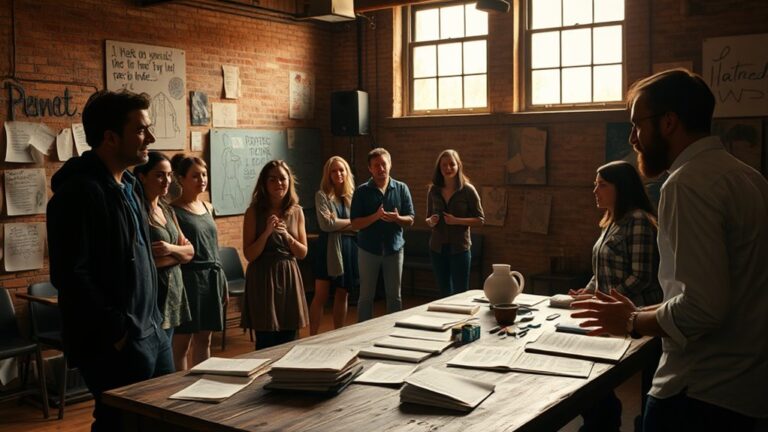
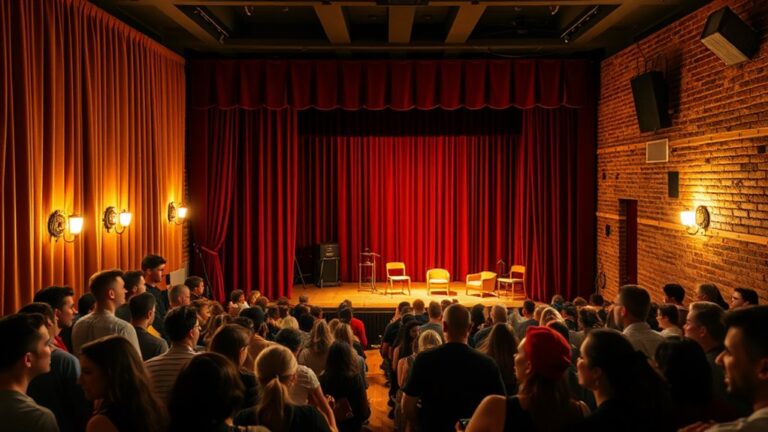
Off-Broadway theater champions diverse voices by providing a crucial platform for authentic narratives that reflect various cultural identities. Emerging as an alternative to Broadway's commercialism, it prioritizes innovative storytelling and representation of marginalized communities. Playwrights like Lin-Manuel Miranda and Lynn Nottage bring personal experiences to the forefront, nurturing empathy and dismantling stereotypes. Collaborative efforts guarantee that production teams reflect these diverse perspectives, enhancing narrative authenticity. Additionally, audience engagement through interactive formats and feedback mechanisms cultivates an inclusive atmosphere. As Off-Broadway continues evolving, its commitment to diversity shapes the future of theater in significant ways. Discover more about its impact.
Historical Context of Off-Broadway
The evolution of Off-Broadway theater can be traced back to the mid-20th century, when it emerged as a lively alternative to the commercialism of Broadway. Initially, Off-Broadway origins were rooted in the desire for artistic freedom and experimentation, responding to the increasingly formulaic and profit-driven nature of mainstream productions. The term "Off-Broadway" began to signify not just a geographical distinction but also a philosophical departure from the conventions that dominated Broadway.
During the 1950s and 1960s, Off-Broadway theaters provided a platform for innovative storytelling and unconventional narratives, often showcasing works that challenged societal norms and explored underrepresented themes. These alternative performances catered to a more diverse audience, who sought authenticity and originality over spectacle. The growing popularity of small theaters and the intimate settings they offered nurtured a unique rapport between actors and audiences, allowing for a shared exploration of contemporary issues.
The Off-Broadway movement was instrumental in cultivating a rich fabric of theatrical voices, paving the way for future generations of playwrights, directors, and performers. This era likewise marked a significant shift in the theatrical environment, as it encouraged a broader exploration of themes related to identity, culture, and social justice. As Off-Broadway continues to evolve, its historical context remains an essential proof of the influence of alternative performance, serving as a catalyst for change within the theatrical canon and amplifying diverse voices in the arts.
Diverse Playwrights and Their Stories
A lively fabric of voices characterizes the scenery of Off-Broadway theater, where diverse playwrights have emerged to share their unique narratives and perspectives. This colorful platform serves as a crucible for emerging voices, allowing them to express stories that reflect their cultural identities and lived experiences. These playwrights are not merely contributors to the theatrical environment; they are catalysts for innovation, pushing boundaries and reshaping the narrative environment.
The commitment to narrative authenticity is paramount in Off-Broadway productions. Playwrights like Lin-Manuel Miranda, Suzan-Lori Parks, and Lynn Nottage exemplify how personal stories can resonate universally, bridging divides and encouraging empathy among audiences. Their works explore the intricacies of identity, race, and societal challenges, providing a voice to those often unheard in mainstream narratives.
Moreover, the Off-Broadway space allows for experimental storytelling techniques, inviting playwrights to investigate various forms and genres. This experimentation nurtures a rich dialogue around contemporary issues, encouraging audiences to engage with stories that reflect the intricacies of modern life.
Representation of Marginalized Communities
Noteworthy strides have been made in the representation of marginalized communities within Off-Broadway theater, as creators increasingly prioritize authentic narratives that resonate with diverse audiences. This evolution reflects a growing recognition that theater must not just entertain but serve as a platform for underrepresented voices. The infusion of marginalized narratives into Off-Broadway productions has transformed the environment, offering audiences a richer mosaic of experiences and perspectives.
Off-Broadway has emerged as an essential space where community representation flourishes, allowing playwrights from various backgrounds to weave their stories into the fabric of theatrical performance. This focus on inclusivity not merely enriches the artistic dialogue but also nurtures empathy and comprehension among audiences. The commitment to showcasing diverse characters and storylines helps dismantle stereotypes and challenges dominant cultural narratives, creating a more equitable stage for all voices.
Moreover, the engagement with marginalized communities extends beyond the playwrights themselves. Directors, actors, and production teams increasingly reflect this diversity, ensuring that the narratives are not just told but are authentically represented. This collaborative approach cultivates a creative environment that values innovation and risks, encouraging experimentation with form and content.
The growing emphasis on marginalized narratives in Off-Broadway theater ultimately serves to illuminate the richness of human experience. By championing community representation, these productions pave the way for a new era of storytelling that is inclusive, dynamic, and profoundly impactful, enriching both the theater community and society at large.
Impact of Cultural Collaborations
Through the lens of cultural collaborations, Off-Broadway theater has witnessed a profound transformation that enriches storytelling and improves community engagement. These partnerships nurture cultural exchange, allowing diverse narratives to flourish and resonate within the broader theatrical environment. As artists and creators from varied backgrounds come together, they bring unique perspectives that challenge conventional storytelling methods, promoting innovation in both form and content.
Collaborative productions serve as a platform for emerging voices, providing opportunities for playwrights, directors, and performers who might otherwise remain on the periphery of the theater community. By integrating different cultural elements, these collaborations not only amplify artistic expression but also reflect the multifaceted nature of contemporary society. The intersection of diverse traditions and practices results in performances that are not just entertaining but also educational, inviting audiences to engage with narratives they may not have previously encountered.
Moreover, such partnerships can expand the audience base, attracting individuals who seek authentic representations of their experiences. This inclusivity is vital in a world where comprehension and empathy are paramount. Through cultural collaborations, Off-Broadway theater becomes a lively mosaic that celebrates differences and builds bridges between communities.
Ultimately, the impact of cultural collaborations within Off-Broadway theater extends beyond the stage, influencing societal perceptions and encouraging dialogue. As these innovative alliances continue to evolve, they pave the way for a richer, more dynamic theatrical experience that reflects the intricacies of our world.
Audience Engagement and Feedback
As Off-Broadway theater continues to embrace diverse voices through cultural collaborations, audience engagement and feedback play a crucial role in shaping the theatrical immersion. Recognizing that the audience is an fundamental partner in the artistic process, Off-Broadway productions are increasingly employing innovative methods to promote interaction and gather insights.
Audience surveys, both digital and in-person, are becoming standard practice, allowing theaters to capture the sentiments of attendees immediately following a performance. These surveys not only assess audience satisfaction but also explore the nuances of representation, thematic resonance, and cultural authenticity within the narratives presented. The feedback garnered serves as a significant resource for playwrights and directors, enabling them to refine their work and better resonate with diverse community voices.
Moreover, the establishment of feedback loops guarantees that audience insights are integrated into future productions. This iterative process encourages a dialogue between creators and attendees, making the audience feel valued and invested in the artistic experience. By actively seeking and responding to feedback, Off-Broadway theaters cultivate an inclusive atmosphere where diverse perspectives are not only welcomed but actively shape the storytelling environment.
Ultimately, this commitment to audience engagement through surveys and feedback loops improves the overall theater experience, nurturing a sense of community and shared ownership. As Off-Broadway continues to prioritize these practices, it reaffirms its dedication to championing diverse voices while concurrently redefining the boundaries of contemporary theater.
Innovative Staging and Storytelling
Frequently, Off-Broadway theaters are at the forefront of innovative staging and storytelling techniques that reflect the diverse narratives they aim to immerse. These venues often embrace experimental formats that challenge conventional theatrical norms, providing audiences with dynamic and transformative experiences. This commitment to innovation not just improves the storytelling but invites a deeper connection between the performers and the audience.
One notable approach is the use of immersive experiences, where the boundaries between the stage and the spectator dissolve. In these productions, audiences are often encouraged to navigate the performance space, interact with the actors, and engage with the story on a more personal level. This participatory model allows for a multiplicity of interpretations and cultivates a sense of ownership among viewers, making the narrative's themes resonate more profoundly.
Additionally, Off-Broadway productions frequently employ non-linear storytelling techniques, such as fragmented narratives and multimedia elements, to reflect the complexity of contemporary issues. By weaving together diverse voices and perspectives, these experimental formats can address societal challenges, identity struggles, and cultural intersections in ways that traditional storytelling often fails to capture.
The result is a lively mosaic of narratives that entertains while provoking thought and inspiring dialogue. Off-Broadway's dedication to innovative staging and storytelling exemplifies its role as a catalyst for change, encouraging a richer comprehension of the diverse human experience through the lens of theater.
Funding and Support for Diversity
Consistently, the success of Off-Broadway theaters in amplifying diverse voices hinges on adequate funding and support. Fundamental to this endeavor is the access to grant opportunities that particularly target underrepresented artists and stories. These grants not only provide necessary financial backing but also validate the artistic contributions of diverse communities, nurturing an environment where innovation thrives. Organizations such as the National Endowment for the Arts and various private foundations are increasingly recognizing the importance of inclusivity, offering funds that empower Off-Broadway productions to explore groundbreaking narratives.
Moreover, community partnerships play a significant role in enhancing funding avenues and resources. By collaborating with local businesses, educational institutions, and cultural organizations, Off-Broadway theaters can tap into a broader network of support. These partnerships often lead to shared resources, such as rehearsal spaces and promotional platforms, which can greatly alleviate financial burdens. Furthermore, they cultivate a sense of ownership within the community, encouraging local audiences to engage with and champion diverse storytelling.
The integration of these funding strategies not only strengthens the financial foundation of Off-Broadway theaters but also enriches the cultural fabric of the theater scene. As these theaters continue to innovate, the commitment to diversity must remain a priority, ensuring that the voices of all artists are heard and celebrated. Therefore, sustained investment in grant opportunities and community partnerships is fundamental for the future importance of Off-Broadway as a beacon of diverse artistic expression.
Future Trends in Off-Broadway Theater
The ongoing commitment to diversity in Off-Broadway theater is not merely reshaping the present environment but similarly setting the stage for future innovations. As the theater scene evolves, we can anticipate transformative trends that embrace digital adaptations and promote audience expansion. These trends are vital in engaging a broader demographic, ensuring that diverse narratives are not confined to the stage but reach wider audiences through various platforms.
One significant trend is the integration of technology in storytelling. With the rise of streaming services, Off-Broadway productions are beginning to explore digital adaptations, allowing them to transcend geographical limitations. This approach not only maintains the essence of live performance but additionally introduces theater to those who may not have traditionally engaged with it.
Moreover, audience expansion is becoming a central focus. Productions are now aiming to attract younger and more diverse demographics through interactive experiences and community engagement initiatives. This shift encourages a collaborative atmosphere where voices from varied backgrounds find representation.
Below is a summary of anticipated future trends in Off-Broadway theater:
| Trend | Description |
|---|---|
| Digital Adaptations | Streaming of live performances to reach wider audiences |
| Interactive Experiences | Engaging audiences through immersive and participatory events |
| Community Collaborations | Partnering with local groups to improve representation |
| Cultural Storytelling | Highlighting narratives from diverse perspectives |
| Youth Engagement | Targeting younger audiences through innovative outreach |
Frequently Asked Questions
How Can I Get Involved With Off-Broadway Theater Productions?
To get involved with Off-Broadway theater productions, start by researching local companies and their upcoming auditions. Utilize audition tips, such as preparing a strong monologue and being familiar with the production's theme. Moreover, consider exploring various production roles, from acting to stage management, to broaden your experience. Networking with industry professionals and attending workshops can further improve your skills and increase your chances of securing a position in this innovative theater environment.
What Are the Ticket Prices for Off-Broadway Shows?
Ticket pricing for Off-Broadway shows typically ranges from $30 to $100, depending on the venue and production. This financial accessibility encourages a broader audience to engage with innovative performances. Many theaters likewise offer discounted rates for students, seniors, and groups, further enhancing inclusivity. By maintaining reasonable ticket prices, Off-Broadway productions nurture a diverse cultural environment, allowing emerging artists to present their work as they ensure that theater remains an accessible art form for all.
Are There Age Restrictions for Attending Off-Broadway Performances?
In a world where creativity knows no bounds, age restrictions for attending Off-Broadway performances are often minimal, encouraging an inclusive environment. Most theaters aim for youth accessibility, welcoming audiences of all ages, even if some productions may implement specific age guidelines because of content. This approach not just broadens the audience base but likewise nurtures the next generation of theater enthusiasts, ensuring that innovation in the arts thrives across diverse demographics.
How Often Do New Off-Broadway Productions Open?
New Off-Broadway productions frequently debut throughout the year, contributing to a dynamic Off-Broadway schedule that showcases emerging talent and innovative storytelling. Typically, numerous productions open each season, reflecting the lively artistic environment and the industry's commitment to experimentation. This continual influx of new works not just enriches the theater experience but additionally offers audiences diverse narratives that challenge conventional perspectives, ensuring that Off-Broadway remains an essential platform for creative expression.
Can I Volunteer for Off-Broadway Theater Companies?
Yes, there are numerous volunteer opportunities available with Off-Broadway theater companies. Engaging with these organizations not just enriches your experience but additionally nurtures community engagement. Many theaters welcome volunteers for various roles, including ushering, marketing, and production assistance, allowing individuals to contribute to the lively arts scene. By volunteering, you can support innovative theatrical endeavors as you connect with fellow enthusiasts and gain valuable insights into the creative process.
About the Author