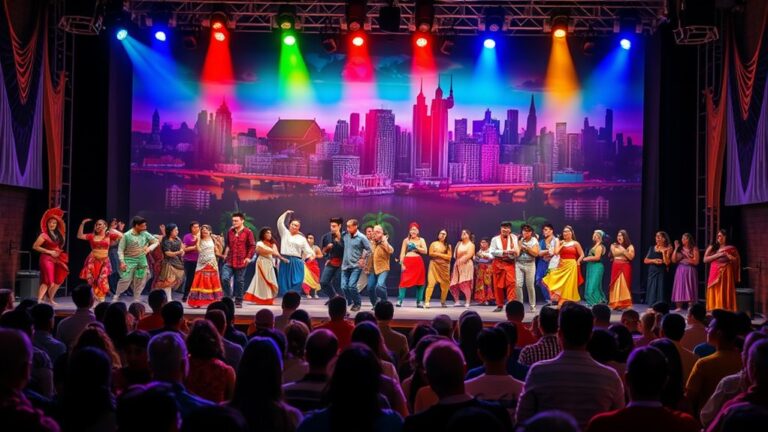
The evolution of Broadway spectacles has been marked by significant technological advancements and innovative storytelling. From early vaudeville influences to the Golden Age of musicals, the genre has transformed over time. Advances in lighting, sound, and stage mechanics have created more immersive experiences. Modern musicals incorporate diverse styles and tackle complex themes. As the industry continues to plunge into boundaries, the future of Broadway productions holds much promise, with emerging technologies poised to redefine the art form and reshape the audience experience, leading to new and exciting developments.
Early Broadway Shows
The early Broadway shows, which emerged in the late 18th century, laid the groundwork for the lively and varied theatrical scene that exists today. These early performances were largely influenced by European theater traditions, with many productions being direct imports from London's West End. As the 19th century progressed, American theater began to develop its own unique identity, with the introduction of vaudeville influences. Vaudeville, a genre characterized by its eclectic mix of music, dance, and comedy, had a profound impact on the development of early Broadway shows.
The incorporation of vaudeville influences into early performances helped to create a more dynamic and engaging theatrical experience. Producers began to experiment with new formats, combining music, dance, and drama to create a unique form of entertainment. The early 20th century saw a surge in popularity of these hybrid productions, with many shows featuring a mix of vaudeville-style acts and more traditional theatrical elements. The success of these early performances paved the way for the development of more complex and sophisticated productions, ultimately contributing to the rich and diverse theatrical scenery that exists on Broadway today. The evolution of early Broadway shows was marked by a willingness to innovate and experiment, laying the foundation for the lively and dynamic theatrical scene that continues to thrive.
Golden Age Musicals
During the mid-20th century, amidst a cultural and artistic renaissance, musical theater underwent a transformative period, often referred to as the Golden Age of Broadway. This era, spanning from the 1940s to the 1960s, saw the emergence of groundbreaking shows that redefined the genre. Golden age themes, such as social commentary and personal struggle, became prevalent, resonating with audiences and cementing the musical's place in American culture.
The Golden Age of Broadway was marked by iconic performances that continue to inspire and influence contemporary theater. Some notable aspects of this era include:
- Innovative storytelling and character development
- Integration of music and dance into the narrative
- Collaborations between renowned composers, lyricists, and directors
- Introduction of complex, multi-dimensional characters
- Exploration of mature themes and social issues
These elements combined to create a new standard for musical theater, elevating the art form and paving the way for future generations of creators. The golden age themes and iconic performances of this period continue to be celebrated and studied, offering valuable insights into the craft of musical theater. As a result, the Golden Age of Broadway remains a pivotal moment in the evolution of the medium, shaping the course of American musical theater and leaving a lasting legacy. This enduring influence can be seen in contemporary productions that draw inspiration from the storytelling and musical innovations of the past. Modern critiques, such as an Angels in America Broadway review, often highlight how the themes and artistic approaches of the Golden Age continue to inform and shape present-day theater. By examining these connections, scholars and audiences alike gain a deeper appreciation for the evolution of musical theater and its ongoing cultural impact.
Theater Technology Advances
The evolution of Broadway spectacles has been notably influenced by advances in theater technology, particularly in the areas of lighting systems, sound design, and stage mechanics. These technological developments have enabled the creation of more complex and immersive productions, enhancing the overall audience experience. The integration of sophisticated lighting systems, sound design, and stage mechanics has become an essential aspect of modern Broadway productions, allowing for greater creativity and innovation in storytelling and spectacle.
Lighting Systems
Within the domain of theater technology, lighting systems have undergone considerable transformations, playing a pivotal role in shaping the overall aesthetic and ambiance of Broadway spectacles. The evolution of lighting systems has been driven by LED advancements, which have transformed lighting aesthetics. These advancements have enabled the creation of complex and dynamic lighting designs that improve the overall visual experience.
Key developments in lighting systems include:
- Improved color rendering and accuracy
- Increased energy efficiency and reduced heat emission
- Greater flexibility and control over lighting designs
- Smaller and more compact lighting fixtures
- Greater durability and longer lifespan of lighting equipment
The incorporation of LED advancements has greatly impacted lighting aesthetics, allowing for more nuanced and sophisticated lighting designs. This has enabled lighting designers to create immersive and engaging environments that captivate audiences and raise the overall spectacle. As a result, lighting systems have become an integral component of Broadway productions, driving the evolution of theater technology and redefining the boundaries of live performance.
Sound Design
Numerous advancements in sound design have transformed the auditory experience of Broadway spectacles, elevating the overall production quality and emotional impact on audiences. The integration of sophisticated audio engineering techniques has enabled the creation of complex soundscapes, drawing spectators into the realm of the performance. Sound designers now have the capability to craft and manipulate audio elements with precision, resulting in a more immersive experience.
The art of soundscapes creation has become a vital aspect of Broadway productions, with designers leveraging advanced audio engineering tools to produce rich, layered sound environments. This has allowed for greater creative expression and a more engaging audience experience. By combining technical expertise with artistic vision, sound designers can transport audiences to new and imaginative realms, heightening the emotional resonance of the performance. Through the strategic application of sound design principles, Broadway spectacles continue to evolve, pushing the boundaries of artistic expression and technical innovation.
Stage Mechanics
Advances in stage mechanics have transformed the visual and spatial aspects of Broadway spectacles, enabling designers to create complex, dynamic sets that improve the overall production value. The integration of stage machinery and mechanical innovations has raised the art of storytelling, allowing for seamless scene shifts and immersive experiences.
- Stage machinery provides precision and control over set movements
- Mechanical innovations enable the creation of intricate and elaborate sets
- Automated systems streamline production workflows
- Advanced materials and construction techniques improve set durability
- Integrated technology allows for real-time adjustments and effects. By utilizing the strength of stage mechanics, Broadway productions can now deliver high-impact, engaging experiences that captivate audiences and leave lasting impressions. The strategic use of stage machinery and mechanical innovations has become a key factor in shaping the success of modern Broadway spectacles.
Stage Design Evolution
The evolution of stage design has been a pivotal aspect of Broadway's transformation over the years, driven by innovative technologies and artistic visions. The incorporation of minimalist design elements has enabled the creation of versatile and dynamic sets, allowing for seamless shifts between scenes. This approach has likewise facilitated the development of immersive environments, drawing audiences into the realm of the performance. By combining these elements, stage designers have been able to craft engaging and enthralling experiences that leave a lasting impression on spectators.
| Design Element | Description |
|---|---|
| Minimalist Sets | Simple, versatile sets that facilitate scene changes |
| Immersive Lighting | Strategic lighting design to create immersive environments |
| Dynamic Props | Props that serve multiple purposes, augmenting the overall narrative |
| Interactive Backdrops | Backdrops that respond to the performance, creating a dynamic atmosphere |
The strategic use of stage design elements has transformed the Broadway experience, empowering designers to push the boundaries of creativity and innovation. By leveraging state-of-the-art technologies and artistic expertise, stage designers can now create complex, engaging, and immersive environments that transport audiences to new and exciting realms. As the art form continues to evolve, it will be exciting to see how stage design innovators incorporate new technologies and design principles to further elevate the Broadway spectacle.
Special Effects Development
Special effects development has become an significant component of Broadway spectacles, with sound design and visual effects playing a key role in improving the overall audience experience. The integration of state-of-the-art technology has enabled the creation of immersive experiences that enchant and mesmerize audiences. Pyrotechnic effects, for instance, add a dynamic layer to performances, as holographic projections transport viewers to new dimensions. The incorporation of virtual reality elements further boosts the sensory experience, drawing spectators into the heart of the spectacle.
To create these impactful experiences, Broadway productions employ a range of innovative techniques, including:
- Utilizing advanced lighting systems to create dynamic atmospheres
- Incorporating 3D projections to improve set designs
- Implementing sophisticated sound systems for crystal-clear audio
- Employing skilled pyrotechnicians to design and execute complex effects
- Integrating virtual reality elements to create interactive experiences
The strategic deployment of these special effects enables producers to craft immersive experiences that leave lasting impressions on audiences. By utilizing the strength of technology, Broadway spectacles can now transport viewers to new worlds, evoke intense emotions, and inspire profound connections. As the industry continues to evolve, the development of special effects will remain a significant aspect of creating enchanting and unforgettable performances. The seamless fusion of technology and artistry has redefined the boundaries of live entertainment, empowering producers to push the limits of creativity and innovation.
Choreography Innovations
Fresh perspectives on choreography have emerged as a natural extension of the technological advancements seen in special effects development, as producers now have the ability to seamlessly merge movement and visual elements. This synergy has enabled the creation of innovative dance styles and choreography techniques that captivate audiences. By pushing the boundaries of traditional choreography, producers can now craft immersive experiences that combine stunning visuals with potent movement.
The evolution of choreography innovations can be seen in the following examples:
| Choreography Technique | Dance Style |
|---|---|
| Contemporary Fusion | Ballet and Modern |
| Hip-Hop Storytelling | Breakdancing and Jazz |
| Musical Theater Revival | Tap and Ballroom |
| Experimental Expression | Aerial and Acrobatic |
These advancements in choreography have transformed the way stories are told on Broadway, enabling producers to convey complex emotions and themes through dynamic movement. By incorporating diverse dance styles and choreography techniques, productions can now appeal to a broader audience, cementing Broadway's position as a hub of artistic innovation. As technology continues to advance, it is likely that choreography innovations will play an increasingly important role in shaping the future of Broadway spectacles, driving the creation of new and exciting productions that showcase the strength of human movement and expression.
Costume Design Progress
Costume design has undergone significant transformations in recent years, driven by advancements in materials science and digital technologies. The integration of innovative fabric materials and color theory has enabled designers to create complex, visually stunning costumes that improve character representation and cultural significance. Historical influences continue to play a vital role in shaping costume design, with many productions aiming for period accuracy to transport audiences to bygone eras.
Key considerations in costume design progress include:
- Designer collaborations with fashion trends to create unique and enchanting costumes
- Incorporating costume symbolism to convey character traits and emotions
- Balancing cultural significance with practical functionality to guarantee seamless performances
- Utilizing digital technologies to create intricate, detailed designs
- Merging historical influences with modern elements to create fresh, engaging narratives
The evolution of costume design has raised the overall impact of Broadway spectacles, drawing audiences into immersive realms of drama, music, and dance. By combining artistic vision with technical expertise, costume designers have become integral to the creative process, driving the cultural significance and timelessness of iconic productions. As the art form continues to evolve, the fusion of traditional craftsmanship with state-of-the-art technologies will remain fundamental in shaping the future of costume design and the realm of Broadway spectacles.
Modern Musical Trends
The impact of evolving costume design on Broadway spectacles is closely tied to the shifting terrain of modern musical trends, where the boundaries between traditional and contemporary styles are continually being redefined. This evolution has led to the emergence of innovative musical fusion, where different genres and styles are combined to create unique soundscapes. The result is a more diverse and dynamic theatrical experience, with productions that blend elements of rock, pop, jazz, and classical music to create a distinctive sound.
Modern musical trends are characterized by genre blending, where artists and composers experiment with different styles to push the boundaries of traditional musical theater. This approach has given rise to a new generation of musicals that are edgy, provocative, and unapologetic. Productions such as Hamilton and Hadestown have successfully incorporated hip-hop, R&B, and folk music into their scores, attracting a new and diverse audience to Broadway.
The fusion of different musical styles has additionally enabled composers to tackle complex themes and issues, such as social justice, identity, and politics. The resulting productions are often bold, daring, and unafraid to challenge conventional norms. As modern musical trends continue to evolve, it is likely that we will see even more innovative and groundbreaking productions that showcase the strength and versatility of musical theater. By embracing musical fusion and genre blending, Broadway spectacles will remain a lively and dynamic force in the realm of entertainment.
Digital Stage Enhancements
Numerous digital technologies are being integrated into Broadway productions, greatly improving the overall spectacle and audience experience. This shift in direction to digital stage enhancements has transformed the way stories are told and presented on stage. By leveraging state-of-the-art technologies, producers can create immersive and engaging experiences that captivate audiences and leave a lasting impact. The incorporation of digital elements has furthermore enabled the creation of complex and dynamic sets, allowing for greater flexibility and creativity in production design.
Digital stage enhancements have opened up new possibilities for storytelling and audience engagement. Some key features of digital stage enhancements include:
- Virtual reality experiences that transport audiences into the realm of the performance
- Augmented performances that combine physical and digital elements to create a unique spectacle
- Interactive projections that respond to the actors' movements and actions
- Advanced lighting systems that create dynamic and immersive environments
- Real-time video processing that enables seamless shifts and effects
The integration of virtual reality and augmented performances has been particularly significant, allowing producers to push the boundaries of what is possible on stage. By combining digital technologies with traditional performance elements, Broadway productions can now offer a more immersive and engaging experience that appeals to a wide range of audiences. As digital stage enhancements continue to evolve, it is likely that we will see even more innovative and groundbreaking productions in the future.
Contemporary Spectacles
The contemporary spectacles on Broadway are characterized by modern musicals that push the boundaries of storytelling and technical innovation. Modern musicals, such as those incorporating experimental narrative structures and genres, have become a hallmark of contemporary Broadway productions. Technical advances, including sophisticated lighting and sound systems, have additionally played a vital role in shaping the contemporary spectacles that continue to captivate audiences on the Great White Way.
Modern Musicals
Frequently, modern musicals push the boundaries of storytelling, often incorporating innovative stage designs, special effects, and diverse musical genres to enthrall audiences. This evolution has enabled musicals to explore complex themes and emotions, driving character development and narrative structure. Modern musicals now probe deeper into the human experience, making them more relatable and impactful.
Key elements of modern musicals include:
- Innovative storytelling methods
- Diverse musical genres and scores
- Complex character development
- Non-linear narrative structure
- Experimental stage designs
These elements combine to create a unique and mesmerizing experience, drawing audiences into the realm of the musical. By pushing the boundaries of storytelling, modern musicals have become a dynamic force in the entertainment industry, offering a fresh and exciting experience for audiences. The emphasis on character development and narrative structure has enhanced the art form, making modern musicals a staple of contemporary theatre.
Technical Advances
Numbers of modern musicals have capitalized on advancements in stage technology, integrating sophisticated lighting, sound systems, and projection mapping to improve the overall production quality. This has enabled the creation of immersive experiences that captivate audiences and leave a lasting impression. The incorporation of stage automation has allowed for seamless scene changes and precise control over set movements, further elevating the production's overall impact.
The integration of state-of-the-art technologies, such as virtual reality, is additionally being explored in contemporary Broadway spectacles. This innovative approach enables producers to push the boundaries of storytelling and create unprecedented experiences for the audience. By utilizing the strength of technology, Broadway productions can now transport viewers to new and unexplored worlds, redefining the art of storytelling and setting a new standard for theatrical productions. As technology continues to advance, it will be exciting to see how Broadway spectacles evolve and incorporate new innovations to captivate and inspire audiences.
Frequently Asked Questions
What Is Broadway's Longest Running Show?
A phoenix rises, symbolizing enduring success. Broadway's longest running show is The Phantom of the Opera, a masterpiece of theater history, enchanting audience engagement with its timeless tale, showcasing the strength of drama to enthrall and inspire, solidifying its reign as an iconic benchmark of theatrical excellence.
How Much Are Broadway Show Tickets?
Regarding ticket pricing, Broadway show tickets vary greatly. To maximize value, consider show discounts and premium seating options. Ticket prices range from $50 to over $200. Strategic planning and research can yield substantial savings, allowing discerning patrons to experience top-tier productions during exercising fiscal control over their entertainment expenditures. Exclusive discounts are available.
Who Attends Broadway Shows Most?
Lively curtains draw open, revealing a diverse crowd. Who attends Broadway shows most? Research indicates affluent professionals and tourists dominate theater demographics. Audience trends show a strong presence of women and older adults, yielding significant purchasing influence. These influential individuals propel the Broadway scene, shaping its cultural and economic environment.
Can I Tour Broadway Theaters?
Regarding theater accessibility, patrons can certainly tour Broadway theaters, gaining exclusive insights. Theater tours often provide backstage access, offering a glimpse into the inner workings of these iconic venues. This unique experience allows attendees to witness the intricate details and history of the theaters, catering to those who crave a deeper comprehension of the performing arts.
Are Broadway Shows Kid Friendly?
Similarly, many shows cater to diverse audiences, and simultaneously, offer family friendly productions. Broadway shows often feature age appropriate content, making them suitable for younger viewers. Ultimately, selecting a show with considerate themes guarantees a enjoyable experience for the entire family, empowering parents to make informed decisions about entertainment choices.
About the Author