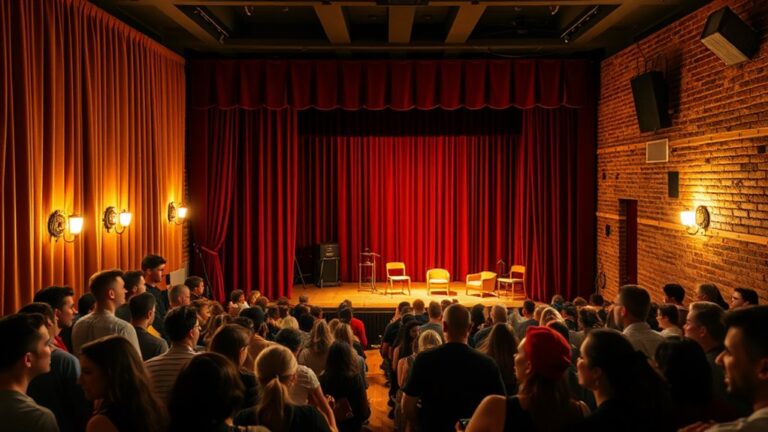
Audience feedback plays an essential role in shaping Off-Broadway shows, serving as a barometer for storytelling effectiveness and character development. It allows creators to make real-time adjustments based on audience reactions, enhancing the overall performance experience. Moreover, insights from audience surveys and discussions inform script revisions, promoting innovative narratives. The feedback loop encourages deeper character engagement and empowers performers to adapt their choices dynamically. In addition, strong audience loyalty cultivates an environment conducive to experimentation and growth. By comprehending the intricate relationship between feedback and production, one can appreciate how it influences every aspect of theater.
Importance of Audience Feedback
Acknowledging the dynamic nature of Off-Broadway productions, audience feedback emerges as a crucial element in shaping the success and evolution of theatrical performances. The interplay between creative vision and audience engagement cultivates a unique environment where the nuances of spectator response can inform and refine the artistic endeavor. In this situation, feedback loops serve as fundamental mechanisms that allow for a continuous dialogue between performers and their audience, ultimately enhancing the overall experience.
The importance of audience feedback cannot be overstated. It acts as a barometer for gauging the effectiveness of storytelling, character development, and thematic resonance. By actively soliciting and integrating feedback, Off-Broadway productions can tap into the collective insights of diverse audience members, creating a more inclusive and responsive artistic atmosphere. This iterative process empowers creators to explore innovative concepts while remaining attuned to the preferences and emotions of their viewers.
Moreover, audience feedback contributes to a culture of transparency and collaboration within the theater community. Engaging audiences not just cultivates loyalty but invites them to become co-creators in the theatrical experience. As productions evolve, the insights gained from audience interactions can inspire fresh interpretations, ultimately driving the artistic vision forward.
Real-Time Adjustments
Real-time adjustments in Off-Broadway shows are greatly influenced by instant audience reactions, which provide immediate feedback on the performance. This responsiveness allows actors and directors to employ adaptive performance techniques, enhancing the overall experience. Such dynamic interaction not only enriches the production but additionally cultivates a unique connection between the cast and the audience.
Instant Audience Reactions
Capturing instant audience reactions during Off-Broadway performances allows creators to make real-time adjustments that improve the overall theatrical experience. By leveraging audience engagement and emotional response, performers can adapt their delivery, pacing, and even narrative elements to resonate more deeply with viewers. This dynamic interaction nurtures a creative environment where innovation thrives.
| Audience Reaction | Real-Time Adjustment | Impact on Performance |
|---|---|---|
| Laughter | Increase comedic timing | Heightened engagement |
| Silence | Adjust emotional tone | Intensified connection |
| Applause | Extend impactful moments | Amplified energy flow |
Incorporating technology, such as audience feedback apps or instant polling, further improves this process, providing insights into what captivates the audience. These tools enable creators to gauge the crowd's emotional atmosphere, nurturing a more immersive experience. In the end, instant audience reactions empower Off-Broadway shows to evolve continuously, ensuring that each performance is uniquely customized to its audience, thereby enriching the theatrical environment and elevating the art form.
Adaptive Performance Techniques
Adaptive performance techniques are essential for optimizing audience engagement in Off-Broadway shows, with a significant focus on real-time adjustments based on audience feedback. These innovative methods empower performers to respond dynamically to the audience's emotional and intellectual reactions, nurturing a more immersive theatrical experience.
Performance flexibility is at the heart of this approach, allowing actors and directors to modify their delivery, pacing, and even dialogue to improve resonance with viewers. By closely observing audience cues, such as laughter, silence, or engagement levels, artists can pivot their performances mid-show, creating a unique synergy that uplifts the overall experience.
Furthermore, incorporating technology—such as live polling or interactive elements—can further improve adaptive performance techniques. These tools provide immediate insights into audience preferences, enabling creators to refine their narratives and staging in real time. This responsiveness not merely deepens audience engagement but also cultivates a lively, collaborative atmosphere that transcends traditional boundaries of theater.
Ultimately, the integration of adaptive performance techniques underscores the significance of audience feedback in shaping Off-Broadway productions, paving the way for innovative storytelling and more personalized theatrical experiences.
Script Revisions
Script revisions are a critical aspect of Off-Broadway productions, as they allow playwrights to incorporate valuable audience insights. By engaging with viewer feedback, creators can refine their narratives and characters, leading to a more resonant and impactful performance. This iterative script development process not solely improves the quality of the production but likewise nurtures a collaborative relationship between artists and their audience.
Incorporating Audience Insights
In the dynamic environment of Off-Broadway theatre, incorporating audience insights into script revisions is crucial for enhancing the overall impact of a production. By utilizing audience surveys and focus groups, playwrights can glean valuable feedback that informs their creative decisions. This iterative process allows for a nuanced comprehension of audience preferences and emotional responses, promoting innovation and relevance in storytelling.
The following table illustrates the various methods of gathering audience insights and their potential impact on script revisions:
| Method | Description | Impact on Script Revisions |
|---|---|---|
| Audience Surveys | Anonymous questionnaires | Quantitative data on audience preferences |
| Focus Groups | In-depth discussions | Qualitative insights into audience emotions |
| Preview Performances | Early showings for feedback | Real-time reactions to character arcs |
| Post-Show Q&As | Interaction with the cast | Direct audience engagement and insights |
| Social Media Polls | Online feedback collection | Broader reach and demographic insights |
Iterative Script Development
The process of iterative script development is essential for refining a theatrical production, allowing playwrights to make informed adjustments based on audience feedback and artistic vision. This dynamic approach encourages continuous evolution of the script through various stages, ensuring that the material resonates with its intended audience.
Utilizing audience surveys after performances provides invaluable insights into viewers' emotional responses and comprehension of the narrative. These surveys highlight areas for improvement, enabling playwrights to identify which themes or characters may need further exploration or clarification. Feedback gathered during script workshops similarly plays an important role in this iterative cycle. These collaborative sessions cultivate an environment where writers, directors, and actors can explore new ideas and experiment with different interpretations, enriching the creative process.
Character Development
Effective character development is vital in Off-Broadway shows, as it directly influences audience engagement and emotional investment. In this dynamic theatrical environment, characters must evolve through well-crafted character arcs that resonate with the audience. The depth of a character's progression often dictates the overall impact of the narrative, making it critical for writers and directors to prioritize this aspect of storytelling.
Innovative character development involves creating multidimensional figures who elicit empathy and provoke thought. Feedback from audiences can provide invaluable insights into how these characters are perceived, enabling creators to refine their arcs and improve emotional depth. For instance, a character's transformation must feel authentic, reflecting the intricacies of real-life experiences. This authenticity nurtures a connection with viewers, inviting them to invest emotionally in the characters' paths.
Moreover, Off-Broadway's intimate settings allow for immediate audience reactions, providing a unique opportunity to gauge which elements of character development resonate most effectively. Workshops and preview performances can serve as testing grounds, where audience feedback can inform adjustments to character motivations, interactions, and conflicts. By integrating this feedback loop, creators can sculpt characters that both captivate and challenge societal norms and expectations.
Ultimately, successful Off-Broadway productions thrive on the interplay between character development and audience engagement. Emphasizing character arcs enriched with emotional depth not only raises the narrative but also cultivates a meaningful dialogue between the performers and the spectators, ensuring a lasting impact long after the curtain falls.
Performance Choices
Performance choices play a crucial role in shaping the audience's experience in Off-Broadway shows. These choices encompass a wide array of elements, including acting styles, staging techniques, and the use of multimedia, all of which contribute to the overall narrative and emotional resonance of a production. In an environment where creative collaboration thrives, performers and directors often seek to push boundaries, inviting audiences to engage with the material in innovative ways.
The dynamic relationship between performers and their audience is a cornerstone of Off-Broadway's appeal. By actively seeking audience feedback, creators can refine their performance choices to improve audience engagement. This iterative process cultivates an environment where creativity flourishes, enabling artists to adapt and evolve their work based on real-time responses. For instance, an actor may adjust their delivery or emotional intensity based on subtle cues from the audience, leading to a more immersive experience.
Moreover, the intimate nature of many Off-Broadway venues allows for a unique interplay between the stage and the audience. Performance choices that emphasize vulnerability and authenticity can create a palpable connection, making spectators feel integral to the storytelling process. This synergy enriches the theatrical experience and empowers performers to take risks, knowing that their choices are informed by a responsive audience.
In essence, the performance choices made in Off-Broadway productions are merely artistic decisions; they are critical components of a collaborative dialogue that shapes the essence of live theater.
Marketing and Promotion
Crafting a compelling marketing strategy is essential for the success of Off-Broadway shows, as it directly influences audience attendance and engagement. In an era where artistic endeavors must compete for attention in a saturated market, innovative promotional strategies become paramount. Digital marketing has transformed how theaters connect with potential audiences, allowing for targeted outreach that resonates with diverse demographics.
Utilizing social media platforms, Off-Broadway productions can create buzz through engaging content that showcases behind-the-scenes glimpses, cast interviews, and interactive promotions. These platforms serve as a fertile ground for community building, enabling theaters to nurture a loyal following that extends beyond the performance dates. Additionally, leveraging data analytics within digital marketing campaigns helps producers understand audience preferences and behaviors, allowing for more personalized marketing efforts.
Email marketing remains a potent tool in this environment, offering a direct line of communication to interested patrons. By segmenting audiences based on previous attendance and feedback, theaters can tailor their messages to highlight shows that align with individual tastes, enhancing engagement.
Furthermore, collaborations with influencers and local businesses can amplify visibility and create unique promotional opportunities. Cross-promotions not only broaden reach but also encourage a sense of community support, which is critical for the sustainability of Off-Broadway productions.
Post-Show Discussions
Following a performance, post-show discussions offer a significant opportunity for audience members to engage with the themes, characters, and production choices of the Off-Broadway show they have just experienced. These conversations serve as a platform for audience engagement, allowing participants to articulate their post-performance reflections and explore the nuances of the production in a collaborative environment.
In an era where the theatrical experience is increasingly interactive, post-show discussions promote a sense of community among attendees. They encourage attendees to investigate deeper into the narrative arc, character development, and the creative decisions made by the director and cast. This dialogue not merely enriches the audience's comprehension but additionally provides invaluable feedback to the creators, informing future iterations of the show.
Moreover, these discussions often highlight diverse perspectives, illuminating how different backgrounds and experiences influence the interpretation of the performance. This diversity of thought can lead to innovative ideas that resonate with a broader audience, eventually enhancing the art form itself.
As Off-Broadway shows often push the boundaries of conventional storytelling, post-show discussions become a essential mechanism for artistic evolution. They allow theatre-makers to gauge the emotional and intellectual impact of their work, ensuring that the dialogue between creators and audiences remains dynamic and relevant.
In essence, post-show discussions not only enrich the audience experience but also play a significant role in shaping the future of Off-Broadway productions through thoughtful engagement and critical reflection.
Case Studies of Success
Frequently, Off-Broadway productions that incorporate audience feedback mechanisms, such as post-show discussions, demonstrate notable success in refining their artistic direction and improving audience engagement. A compelling example is the production "The Last Five Years," which utilized audience surveys to gauge emotional responses and narrative clarity. The insights gleaned from these surveys allowed the creative team to make informed adjustments, eventually leading to a more impactful storytelling experience.
Another case study is "Midsummer Night's Dream," which implemented feedback workshops involving both audience members and cast. This collaborative approach not only nurtured a sense of community but also generated innovative ideas that were seamlessly integrated into the show. The result was a production that felt fresh and lively, resonating deeply with viewers.
| Production | Feedback Mechanism |
|---|---|
| The Last Five Years | Audience surveys |
| Midsummer Night's Dream | Feedback workshops |
| The Vagina Monologues | Post-show discussions |
These case studies exemplify how audience feedback can catalyze artistic evolution, encouraging a dynamic interplay between creators and their viewers. By prioritizing input through structured channels, Off-Broadway shows not only improve their artistic integrity but also cultivate a loyal patron base that feels personally invested in the outcome. Such innovative practices underscore the importance of audience engagement in shaping the future of theatrical productions.
Building a Loyal Following
Even though many Off-Broadway productions focus on artistic innovation, building a loyal following is equally important for long-term success. A dedicated audience not just guarantees consistent ticket sales but also promotes an environment where experimental works can thrive. By prioritizing community engagement, Off-Broadway companies can create a sense of belonging that extends beyond the stage. This support system encourages both emerging and established artists to take creative risks, knowing they have a receptive audience. OffBroadway and new playwrights especially benefit from this dynamic, as it allows fresh voices to be heard and bold storytelling to flourish. By fostering these connections, Off-Broadway theaters can ensure a vibrant and sustainable artistic ecosystem.
Loyalty programs are an effective strategy for nurturing this allegiance. These initiatives incentivize repeat attendance, offering rewards such as discounted tickets, exclusive merchandise, or behind-the-scenes access to create a tangible connection between the audience and the production. Such programs not only encourage attendance but also indicate to patrons that their support is valued, reinforcing their commitment to the theater.
Furthermore, active community engagement plays a vital role in developing a loyal audience. By hosting post-show discussions, workshops, and events that involve the audience, theater companies can deepen relationships and cultivate a sense of ownership among attendees. This participatory approach invites feedback, allowing artists to understand audience preferences and adapt their offerings accordingly, enhancing the overall theater experience.
Frequently Asked Questions
How Do Off-Broadway Shows Gather Audience Feedback?
Off-Broadway shows employ various methods to gather audience feedback, primarily through audience surveys and live discussions. These tools facilitate direct engagement, allowing producers and creators to capture the sentiments and reactions of viewers. Audience surveys offer quantitative data, whereas live discussions encourage qualitative insights and organic dialogue. This innovative approach not merely improves the theatrical experience but additionally informs creative decisions, ensuring productions remain relevant and resonate with contemporary audiences.
What Role Does Social Media Play in Audience Feedback?
In the digital age, social media serves as a modern-day amphitheater, transforming audience engagement into a dynamic dialogue. Platforms like Twitter and Instagram allow real-time reactions, shaping social media trends that reflect public sentiment. This immediate feedback loop not just influences creative direction but additionally cultivates a sense of community among theatergoers. As artists embrace these innovations, the interplay between performance and audience becomes increasingly collaborative, enhancing the overall theatrical experience.
Are There Specific Tools for Collecting Audience Opinions?
To effectively gather audience opinions, various surveys tools and feedback platforms have emerged as innovative solutions. These tools facilitate the collection of real-time responses through digital surveys, mobile applications, and social media integrations, allowing creators to assess audience sentiments thoroughly. By leveraging these platforms, organizations can analyze feedback efficiently, enabling them to make informed decisions that improve the overall experience and engagement, eventually cultivating a dynamic connection between creators and their audiences.
How Does Audience Feedback Affect Ticket Sales?
Although critical acclaim can raise a production, audience perception often serves as the true barometer for ticket sales. A show that resonates with viewers can command higher ticket pricing, whereas negative feedback may lead to dwindling attendance and discounted rates. Innovative strategies that leverage audience insights can transform a production's marketability, ensuring that the narrative aligns with audience expectations, thereby driving both engagement and financial success in an increasingly competitive environment.
Can Audience Feedback Influence the Show's Future Productions?
Audience feedback can greatly influence the future productions of a show by promoting audience engagement and informing production adjustments. Insights garnered from viewer reactions can guide artistic choices, improve narrative elements, and refine performance dynamics. This iterative process not only guarantees that the production resonates more deeply with its audience but additionally cultivates a culture of innovation, enabling creators to adapt and evolve their work in response to audience preferences and expectations.
About the Author