The secrets behind Off-Broadway's most innovative sets lie in their artistic collaboration, technological integration, and sustainable practices. Designers and directors engage in ongoing dialogue, leading to creative breakthroughs that improve audience interaction. Minimalist approaches strip away distractions, as multimedia elements like projection mapping and virtual reality create immersive environments. Moreover, the thoughtful use of space and versatile props encourages emotional resonance. Producers increasingly prioritize sustainability, utilizing recycled materials and energy-efficient technologies. These evolving strategies redefine stagecraft and improve viewer engagement, setting a foundation for future innovations in theatrical design that promise to inspire even more transformative experiences.
The Evolution of Set Design
Set design has undergone a remarkable transformation since the inception of theater, shaped by cultural movements, technological advancements, and artistic experimentation. The evolution of set design reflects a dynamic interplay of historical influences and cultural contexts, where each era introduces new ideas that redefine the visual scenery of performance art.
In the early days of theater, set design was often simplistic, focusing primarily on the practicalities of staging rather than elaborate aesthetics. Nevertheless, as societal norms shifted and artistic movements flourished, the portrayal of space began to embrace more complex narratives. For instance, the Renaissance introduced perspective techniques that allowed for a more immersive experience, whereas the rise of Romanticism encouraged the use of naturalistic elements, creating emotionally resonant environments.
The 20th century marked a pivotal turning point, as avant-garde movements such as Surrealism and Expressionism challenged traditional conventions, leading to groundbreaking innovations in set design. These movements facilitated a departure from realism, allowing designers to experiment with abstract forms, unconventional materials, and dynamic lighting techniques. The advent of technology further propelled this evolution, enabling designers to integrate multimedia elements that blur the lines between physical and virtual spaces.
Today, contemporary set design in Off-Broadway productions continues to thrive on this foundation of historical influences, with designers drawing inspiration from diverse cultural contexts. This ongoing evolution not only improves the storytelling experience but likewise reflects society's ever-changing values, aspirations, and artistic ambitions. The future of set design promises even greater innovation, as artists continue to explore uncharted territories of creativity.
Iconic Off-Broadway Productions
Innovation and creativity have flourished in the domain of Off-Broadway theater, giving rise to numerous iconic productions that have left a lasting impression on the backdrop of American theater. These groundbreaking productions have not only enthralled audiences but have likewise redefined the standards of visual storytelling. By utilizing unconventional venues and inventive set designs, Off-Broadway has carved a niche that challenges traditional narratives and aesthetic norms.
One of the most notable examples is "Rent," which transformed musical theater with its raw portrayal of youth, love, and loss in New York City. The set, a lively representation of the urban environment, improved the emotional resonance of the story, allowing audiences to immerse themselves fully in its world. Similarly, "The Vagina Monologues" showcased minimalist set design, emphasizing the influence of performance and dialogue over elaborate staging. This choice exemplified how Off-Broadway productions prioritize the essence of storytelling over ostentation.
Another significant production is "Stomp," which turned everyday objects into instruments, creating a dynamic visual and auditory experience. The set design played a vital role in this innovation, as it allowed for seamless integration of music and movement, making the audience active participants in the performance.
These iconic Off-Broadway productions exemplify how imaginative set design and compelling narratives work together to create unforgettable theatrical experiences. Through their groundbreaking approaches, they have inspired countless artists and continue to influence the backdrop of American theater, proving that creativity knows no bounds.
Collaboration Between Designers and Directors
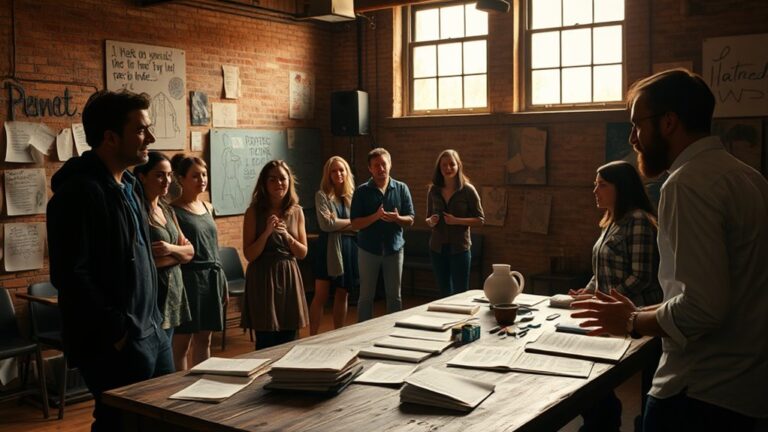
The success of Off-Broadway productions hinges not merely on compelling narratives and imaginative set designs but furthermore on the collaborative synergy between designers and directors. This partnership is often marked by rigorous collaborative brainstorming sessions, where creative minds converge to shape the artistic vision of the production. Here, both parties share their insights, inspirations, and aspirations, allowing for a dynamic exchange of ideas that can lead to groundbreaking concepts.
Directors, who possess a clear vision for the storytelling and emotional tone of the piece, rely heavily on set designers to translate these ideas into tangible environments. The designer's role is to improve the narrative through innovative use of space, materials, and visual cues, all during ensuring that the set aligns with the director's artistic intentions. This symbiotic relationship nurtures an atmosphere where experimentation thrives, leading to unique presentations that challenge conventional norms.
In an industry that prizes originality, the best Off-Broadway productions arise from an ongoing dialogue between directors and designers. This collaboration not only refines the artistic vision but likewise brings forth unexpected solutions that heighten the audience's experience. The interplay of ideas facilitates a fertile ground for innovation, allowing both designers and directors to push the boundaries of what is possible on stage. In the end, it is this collaborative spirit that distinguishes Off-Broadway, transforming it into a lively incubator for theatrical creativity.
Minimalism in Set Creation
Minimalism in set creation emphasizes the use of fundamental elements, stripping away any superfluous details that may distract from the narrative. This approach not merely encourages a deeper connection between the audience and the performers but likewise invites creative use of space, allowing for flexibility in staging. By focusing on simplicity, designers can improve the emotional impact of a production during the maintenance of an aesthetically pleasing environment.
Essential Elements Only
In the domain of Off-Broadway productions, the set often serves as a silent character, shaping the audience's experience during its unobtrusive presence. This minimalist approach underscores the concept of "Essential Elements Only," where every piece of set materials is carefully chosen for its relevance and impact. By adhering to fundamental design principles, creators can achieve a significant aesthetic that improves storytelling without overwhelming the narrative.
Minimalism in set creation encourages innovation by stripping away extraneous details, allowing the audience to focus on the performance itself. Designers often employ a limited color palette and simple geometric forms, which reduce distractions and provoke specific emotional responses. The strategic use of texture and lighting can transform basic materials into evocative symbols, further deepening the audience's engagement.
Furthermore, this approach encourages collaboration between directors, actors, and designers, as each element must resonate with the overall vision. By embracing the philosophy of "less is more," Off-Broadway productions can create intimate, thought-provoking experiences that linger long after the final curtain call, proving that simplicity can be a formidable influence in theatrical design.
Creative Use of Space
Utilizing space creatively is a hallmark of effective Off-Broadway set design, where every inch can be transformed into a meaningful part of the narrative. This approach emphasizes minimalism, allowing for spatial storytelling that resonates deeply with audiences. By focusing on fundamental elements, designers craft adaptive environments that shift seamlessly to reflect emotional nuances and thematic changes within the performance.
The beauty of minimalism lies in its capacity to evoke impactful imagery without overwhelming the senses. Thoughtful placement of versatile props, innovative use of lighting, and strategic arrangement of seating can redefine the performance space, inviting audiences to engage with the story on a more personal level. For instance, a single chair may symbolize solitude or connection, depending on its context, as shadows can morph a simple backdrop into a dynamic setting.
In Off-Broadway productions, the interplay between actors and their environment becomes a crucial component of the narrative. As designers embrace the potential of limited resources, they reveal a domain where creativity flourishes, proving that less can truly be more in the sphere of theatrical expression. This commitment to innovative spatial design continues to push boundaries and inspire future generations of theater artists.
Use of Technology in Sets
Innovation is at the heart of contemporary Off-Broadway productions, particularly in the sphere of set design where technology plays a pivotal role. The integration of virtual reality and augmented reality is transforming how audiences experience narratives, allowing for deeper engagement with the story. Through immersive environments, these technologies create a sense of presence that traditional sets cannot achieve.
Projection mapping has become a staple in modern set design, enabling designers to transform surfaces into dynamic digital backdrops that respond to the unfolding action. This technique breathes life into static elements, providing real-time animation that captivates viewers. Moreover, interactive installations invite audience participation, blurring the lines between performer and spectator, thereby enriching the theatrical experience.
Sensor technology improves this interaction by reacting to the audience's movements and emotions, further personalizing the experience. Automated scenery allows for quick shifts between scenes, supporting a fluid narrative flow while minimizing downtime. Coupled with innovative sound design, which utilizes spatial audio to envelop the audience, these elements create a multi-sensory environment that amplifies the storytelling.
As Off-Broadway continues to embrace state-of-the-art technology, the result is a continually evolving environment of theatrical artistry. The fusion of these advanced techniques enriches the visual and auditory experience and challenges conventional boundaries, paving the way for future explorations in set design. In this domain, creativity knows no limits, and the possibilities are as boundless as the imagination itself.
Color and Lighting Techniques
Color and lighting techniques are essential components of set design that profoundly influence the mood and atmosphere of a production. The interplay of colors and lighting not only improves the visual aesthetics but additionally engages the audience's emotional and psychological responses. Comprehending color psychology allows designers to select hues that evoke specific feelings—warm tones can create intimacy, whereas cooler shades may invoke detachment or melancholy.
Lighting symbolism adds another layer of meaning, guiding the audience's perception of time, space, and character emotions. For instance, a sudden shift from bright to dim lighting can signal a dramatic plot twist, effectively manipulating the viewer's emotional experience.
The following table outlines common color and lighting techniques used in innovative Off-Broadway sets:
| Color/Lighting Technique | Effect on Mood |
|---|---|
| Warm Colors (Red, Yellow) | Invokes warmth, passion |
| Cool Colors (Blue, Green) | Creates calmness, introspection |
| High Contrast Lighting | Improves tension, drama |
| Soft Lighting | Evokes nostalgia, tenderness |
| Flickering Lights | Suggests chaos, instability |
These techniques, when combined thoughtfully, can transform a simple stage into an immersive experience that resonates with the audience on multiple levels. In Off-Broadway productions, where resources may be limited, the effective use of color and lighting can uplift a performance, making it memorable and impactful. Consequently, innovative set designers utilize these elements to craft not just a backdrop, but a dynamic storytelling medium.
Transformative Use of Space
How can the strategic use of space improve an Off-Broadway production? The answer lies in the concept of spatial storytelling, which invites audiences to engage with the narrative on a visceral level. In Off-Broadway, where budgets may be limited, the ability to repurpose and adapt environments can lead to groundbreaking theatrical experiences. Innovative set designers are utilizing the transformative influence of space to create immersive worlds that resonate deeply with viewers.
By reimagining traditional stage layouts, designers can blur the lines between performance and audience interaction. For instance, utilizing unconventional venues allows for dynamic staging that shifts as the story unfolds. This adaptability not only engages the audience but additionally raises the emotional stakes of the narrative. The use of multi-layered spaces invites actors to traverse their environment, nurturing a sense of fluidity that complements the thematic elements of the production.
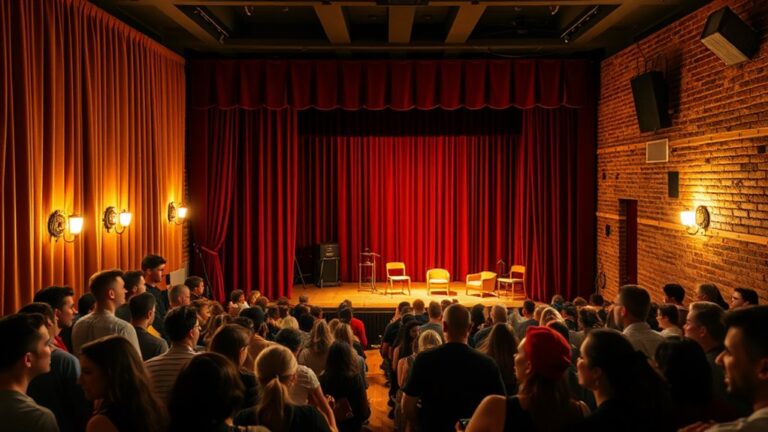
Moreover, the integration of audience seating within the set itself can create a sense of intimacy, making viewers feel like participants rather than mere observers. This approach cultivates a unique relationship between the actors and the audience, amplifying the impact of the performance.
Ultimately, the transformative use of space in Off-Broadway productions showcases the potential of adaptive environments to improve storytelling. By pushing the boundaries of how space is utilized, these innovative sets create unforgettable experiences that challenge traditional perceptions of theatre, inviting audiences to reimagine the narratives they witness.
The Role of Props
The impact of spatial storytelling in Off-Broadway productions extends beyond the physical stage to encompass the thoughtful use of props. In this intimate theatrical domain, props serve as fundamental components that deepen narrative complexity and improve emotional resonance. Each object is carefully chosen, not merely to complement the set but to engage in prop storytelling that resonates with the audience and supports the overarching theme.
Prop symbolism plays a significant role in this creative process. A seemingly mundane item can carry profound significance, embodying characters' desires, fears, or transformations. For instance, a simple key might symbolize freedom or entrapment, whereas a weathered photograph could evoke nostalgia or loss. Such elements invite the audience to interpret and connect with the narrative on a more profound level, transforming objects into catalysts for emotional engagement.
Innovative Off-Broadway productions often employ props in unexpected ways, breaking traditional boundaries of their intended use. This can include multi-functional items that shift roles throughout the performance, thereby enriching the storytelling experience. The ingenious integration of props nurtures a dynamic relationship between the actors and the material world, allowing for a fluid exchange of meaning.
Ultimately, the role of props in Off-Broadway is far from ancillary; they are fundamental threads in the fabric of storytelling. By weaving prop symbolism into the narrative, productions raise their artistic expression, enchanting audiences and redefining the very nature of theatrical experience.
Audience Interaction and Immersion
Off-Broadway productions often challenge traditional theatrical boundaries by breaking the fourth wall, inviting audiences to engage directly with the performance. This approach creates dynamic spatial experiences that blur the lines between actors and viewers, enhancing the overall narrative. Furthermore, the incorporation of multisensory elements further immerses the audience, making them an integral part of the storytelling process.
Breaking the Fourth Wall
In many theatrical productions, breaking the fourth wall serves as a strong tool for engaging the audience in a more immersive experience. This technique allows performers to directly address viewers, nurturing a connection that transcends the traditional boundaries of the stage. By inviting audience members into the narrative, productions can greatly alter audience perception and improve immersive storytelling.
The following table illustrates some innovative methods employed in Off-Broadway productions to break the fourth wall:
| Technique | Impact on Audience Perception |
|---|---|
| Direct Address | Creates a sense of intimacy and inclusion |
| Interactive Elements | Encourages active participation from the audience |
| Non-linear Narratives | Challenges conventional storytelling and invites reflection |
These innovative approaches not just captivate but additionally challenge the audience to engage with the narrative on a deeper level. As Off-Broadway continues to push the boundaries of theatrical conventions, the art of breaking the fourth wall remains an essential element in crafting transformative experiences that resonate long after the curtain falls.
Dynamic Spatial Experiences
Dynamic spatial experiences in theater have transformed audience interaction and immersion, redefining how stories are told on stage. Today's innovative Off-Broadway productions leverage immersive storytelling and spatial choreography to create environments where the audience becomes an integral part of the narrative. This approach not only improves engagement but additionally nurtures a deeper connection to the themes and characters.
Consider the following elements that contribute to dynamic spatial experiences:
- Audience Proximity: By positioning spectators close to the action, performers can evoke emotional responses, blurring the line between observer and participant.
- Interactive Set Design: Sets that allow movement and exploration encourage audiences to navigate the space, nurturing a personal connection with the story.
- Fluid Performance Areas: Utilizing multiple performance zones enables a seamless flow of action, enthralling audiences as they follow the unfolding drama.
- Integrated Technology: Augmented reality and soundscapes can immerse viewers in the narrative, improving their sensory experience and deepening their emotional investment.
These elements collectively redefine traditional theater, inviting audiences to actively participate in the unfolding drama and experience stories in profoundly transformative ways.
Engaging Multisensory Elements
Multisensory elements play a crucial role in improving audience interaction and immersion within contemporary theater. The integration of soundscapes is pivotal, as auditory experiences can evoke emotions and set the tone for a performance. By incorporating live soundscapes or pre-recorded audio, productions create an atmosphere that envelops the audience, nurturing deeper engagement.
Scent experiences, through olfactory cues, add another dimension, often overlooked in traditional settings. The strategic use of scents can transport audiences to different environments, heightening the narrative's emotional resonance. Similarly, tactile elements invite physical interaction, allowing audience members to engage directly with the performance, thereby breaking down the fourth wall.
Visual surprises—unexpected projections or transformative set pieces—can captivate attention and improve storytelling. This sensory layering crafts a rich fabric of immersive storytelling, where every sense contributes to the overall experience.
Moreover, audience participation is increasingly prevalent, allowing attendees to influence the narrative trajectory, thereby cultivating a personalized connection to the work. As Off-Broadway continues to push boundaries, these innovative multisensory elements redefine the theatrical experience, creating memorable moments that linger long after the curtain falls.
Environmental and Sustainable Practices
Adopting environmental and sustainable practices has become a pivotal focus for Off-Broadway productions, reflecting a growing commitment to ecological responsibility within the theater community. As audiences become more conscious of their environmental impact, theaters are embracing innovative solutions to minimize their carbon footprint as well as enhancing the artistic experience.
Key strategies being implemented include:
- Sustainable Materials: The use of recycled, reclaimed, and ethically sourced materials is increasingly prevalent. This not only reduces waste but promotes a culture of sustainability in set design.
- Energy Efficiency: Productions are turning to energy-efficient lighting and equipment, which notably lowers energy consumption and supports eco-friendly practices.
- Biodegradable Elements: Incorporating biodegradable elements into set designs guarantees that materials do not contribute to long-term waste. This practice emphasizes the importance of circular economy principles and closed loop systems.
- Waste Reduction: Off-Broadway productions are actively engaging in waste reduction initiatives, such as repurposing set pieces for future shows, thereby minimizing landfill contributions and promoting a culture of reuse.
Case Studies of Innovative Sets
Innovative sets in Off-Broadway productions often showcase transformative use of space, enabling creators to maximize the impact of their narratives. Furthermore, interactive audience engagement becomes a focal point, blurring the lines between performers and spectators. Unique material choices further improve the theatrical experience, pushing the boundaries of traditional set design.
Transformative Use of Space
How can a simple shift in spatial arrangement raise a narrative to new heights? The transformative use of space in Off-Broadway productions exemplifies how innovative set designs can improve spatial storytelling, creating immersive environments that captivate audiences. By reimagining conventional layouts, designers can uplift the emotional and thematic resonance of a performance.
Consider these four pioneering approaches to set design:
- Dynamic Multi-Level Platforms: Utilizing verticality to create layers of action, allowing characters to inhabit distinct emotional spaces.
- Fluid Modular Structures: Employing movable elements that change configuration throughout the performance, reflecting the characters' evolving states of mind.
- Integrated Technology: Merging digital projections with physical sets to create a seamless blend of reality and imagination, improving narrative depth.
- Audience-Centric Layouts: Arranging seating to immerse viewers within the action, transforming them from passive observers into active participants in the story.
These innovative designs redefine how stories are presented and invite audiences to engage more deeply with the narrative, reinforcing the force of space in theatrical experiences.
Interactive Audience Engagement
In the domain of Off-Broadway theater, interactive audience engagement has emerged as a potent tool for improving storytelling and deepening emotional connections. Innovative sets serve as dynamic backdrops that invite audience participation, transforming spectators into active participants within the narrative. This approach cultivates immersive experiences that blur the line between performer and viewer, allowing audiences to feel integral to the unfolding drama.
Case studies illustrate the effectiveness of this engagement strategy. For instance, in productions like "Then She Fell," the audience navigates through the set, encountering characters in intimate, unpredictable encounters that provoke personal reflection and emotional investment. Another example is "Sleep No More," where audience members don masks and roam freely through a multi-level space, choosing their own pathways and experiences, which encourages a sense of agency and ownership over the story.
Such innovative designs not only improve the visual aesthetic but additionally create an environment where the audience feels genuinely involved. As Off-Broadway continues to explore the potential of interactive engagement, it paves the way for a new paradigm in theatrical storytelling that resonates deeply with contemporary audiences.
Unique Material Choices
The impact of interactive audience engagement in Off-Broadway productions is often amplified by unique material choices that improve the overall theatrical experience. Innovative sets increasingly leverage a variety of unconventional materials that bring depth and sustainability to the performance. These choices not only elevate the visual aesthetic but additionally resonate with the values of contemporary audiences.
Here are four remarkable examples of unique material choices in Off-Broadway sets:
- Recycled Materials: Utilizing discarded items contributes to a narrative of environmental awareness as well as providing an authentic backdrop.
- Biodegradable Components: Sets designed with biodegradable elements reflect a commitment to sustainability, ensuring that the production leaves a minimal ecological footprint.
- Found Object Aesthetics: Incorporating everyday objects transforms mundane items into striking visual elements, engaging viewers in a dialogue about resourcefulness.
- Mixed Media: The combination of experimental fabrics and innovative finishes enables designers to create dynamic environments that invite exploration and interaction.
Future Trends in Set Design
As the scenery of theater continues to evolve, set design is poised to embrace innovative technologies and sustainable practices that will redefine audience experiences. Future trends in set design will likely focus on creating immersive experiences that engage the audience on multiple sensory levels. The integration of virtual reality and augmented reality can transform traditional stages into dynamic environments, allowing viewers to step into the narrative and interact with the performance.
Sustainable materials will play a vital role in this evolution, as designers increasingly prioritize eco-friendly practices. By utilizing recycled and sustainably sourced components, creators can craft innovative textures that not just captivate the eye but likewise minimize environmental impact. Modular designs will allow for flexibility and adaptability, enabling sets to be easily reconfigured for different productions, thereby maximizing resources.
Moreover, digital projections and interactive installations will become more prevalent, allowing for real-time audience participation. This shift in the direction of interactivity will empower attendees to influence the unfolding narrative, blurring the lines between performer and spectator. As designers experiment with these technologies, they will create multifaceted environments that respond to audience emotions and actions, deepening the engagement.
Frequently Asked Questions
How Do Set Designers Find Inspiration for Their Creations?
Set designers draw inspiration from various sources to create compelling visual storytelling. They often explore cultural influences, examining art, history, and societal themes to inform their designs. Collaborating closely with directors and playwrights, designers interpret narratives through innovative spatial concepts, materials, and color palettes. Furthermore, they may seek inspiration from nature and urban environments, merging diverse elements to craft immersive experiences that enhance the audience's emotional connection to the performance.
What Materials Are Commonly Used in Off-Broadway Set Design?
In off-Broadway set design, a diverse array of materials is utilized, with a growing emphasis on recycled materials and sustainable practices. Designers often incorporate reclaimed wood, repurposed fabrics, and upcycled objects to create visually arresting environments as they minimize environmental impact. This innovative approach not just improves creativity but likewise promotes ecological responsibility, making it a hallmark of contemporary theatrical production. The integration of sustainable materials reflects a commitment to both artistry and environmental stewardship.
How Long Does It Take to Build an Off-Broadway Set?
In off-Broadway productions, the set construction timeline typically spans four to six weeks, showcasing a remarkable efficiency within the industry. This period includes a collaborative design process where directors, designers, and technicians unite to breathe life into creative visions. Innovative materials and techniques are often employed, allowing for unique and dynamic sets that improve storytelling. The synergy in this collaboration guarantees that every element contributes meaningfully to the overall theatrical experience.
Are There Specific Challenges Unique to Off-Broadway Set Design?
Yes, off-Broadway set design presents unique challenges, primarily because of budget constraints and space limitations. Designers often must innovate within tight financial parameters, leading to creative solutions that maximize impact as they minimize costs. Furthermore, the smaller performance spaces necessitate designs that effectively convey the narrative without overwhelming the audience. This requires a balance between artistic vision and practical execution, pushing designers to think outside the box and utilize materials resourcefully.
How Can Set Design Influence Audience Emotions During a Performance?
Can the mere arrangement of space and color truly evoke profound emotions? Absolutely. Set design plays an essential role in shaping audience experiences through color psychology and spatial dynamics. For instance, warm hues can create intimacy, whereas stark contrasts might evoke tension. Furthermore, the careful manipulation of space influences how audiences perceive characters' relationships and conflicts. In the end, innovative set designs can transform a mere performance into an emotional experience, heightening engagement and resonance.
About the Author