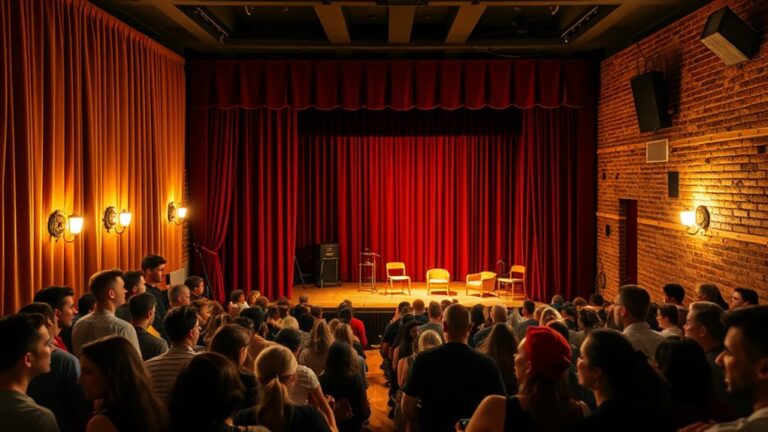

Off-Broadway has been a pivotal platform for innovative storytelling since its inception in the mid-20th century. Iconic plays like "Avenue Q" and "Rent" tackle pressing societal issues, from identity to activism, whereas "The Vagina Monologues" empowers voices surrounding womanhood and gender equality. Productions such as "The Laramie Project" encourage discussions on discrimination, and "The Last Five Years" explores personal narratives within relationships. These works not just reflect cultural shifts but additionally redefine audience engagement and representation. Exploring the stories behind these plays reveals the dynamic evolution of Off-Broadway and its lasting impact on theater and society.
The Birth of Off-Broadway
Though Off-Broadway emerged as a distinct theatrical movement in the mid-20th century, its roots can be traced back to the early 1900s, when the need for more experimental and diverse forms of storytelling began to take shape. This burgeoning desire for innovation laid the groundwork for what would become known as Off-Broadway, a platform that embraced artistic freedom and challenged the conventions of mainstream theater.
The Off Broadway origins are deeply intertwined with the counterculture movement of the 1960s and 1970s. As societal norms were being questioned, artists sought alternative theater spaces that allowed for more radical expressions. These venues became incubators for avant-garde productions and a wide array of narratives that often went unnoticed in traditional theaters. This shift was not merely about location; it represented a fundamental reimagining of the theatrical experience.
Off-Broadway's significance lies in its commitment to cultivating diversity in storytelling and providing a voice to underrepresented communities. The movement encouraged playwrights, directors, and performers to experiment with form, content, and style, further solidifying its role as a crucial force in American theater. As a result, Off-Broadway has become synonymous with innovation, offering audiences a revitalizing departure from conventional narratives and engaging with contemporary issues in profound ways.
In this lively terrain, the birth of Off-Broadway reflects an enduring quest for artistic freedom, making it a key player in the evolution of modern theater and ensuring its relevance in the cultural conversation.
A Look at "Avenue Q"
"Avenue Q," a groundbreaking musical that debuted in 2003, stands as a quintessential example of Off-Broadway's innovative spirit. Blending puppetry with sharp social commentary, this production uses a unique format to tackle adult themes of identity, love, and the challenges of adulthood. By presenting a world inhabited by both humans and puppets, "Avenue Q" cleverly subverts the traditional expectations of musical theatre, inviting audiences to engage with complex, relatable issues through the lens of humor and whimsy.
The use of puppet empowerment serves as a significant narrative tool, allowing characters to navigate their insecurities and aspirations in a manner that resonates deeply with contemporary audiences. The puppets, initially perceived as mere playful devices, evolve into profound symbols of the human experience, illustrating the struggles of finding one's place in a society fraught with challenges. The juxtaposition of innocent, childlike puppetry with frank discussions about sex, race, and existential dread creates a contrast that is both jarring and enlightening.
"Avenue Q" not merely entertains but additionally provokes thought, pushing the boundaries of what can be conveyed through musical theatre. Its unabashed exploration of adult themes and its celebration of the imperfect human condition nurture a sense of community among audience members, who laugh as they reflect on their own lives. In doing so, "Avenue Q" redefines the possibilities of Off-Broadway productions, cementing its status as a cultural touchstone that continues to inspire and challenge.
The Legacy of "Rent"
"Rent," which premiered in 1996, has left a lasting mark on the Off-Broadway scene, redefining the musical genre with its raw depiction of love, loss, and the struggles of a generation facing the AIDS crisis. This groundbreaking work by Jonathan Larson not merely captivated audiences but also set a new standard for character development and musical influences in theater.
The legacy of "Rent" can be encapsulated in three pivotal aspects:
- Cultural Relevance: Addressing social issues such as HIV/AIDS, homelessness, and LGBTQ+ rights, "Rent" resonates with audiences on a deeply personal level, nurturing a sense of community and activism.
- Innovative Musical Influences: Blending rock, pop, and traditional Broadway styles, Larson created a unique sound that expanded the musical terrain. This fusion inspired a slew of contemporary musicals, challenging the norms of musical theater.
- Character Development: Each character in "Rent" is intricately crafted, showcasing diverse backgrounds and experiences. Their paths of love, ambition, and loss encourage empathy and reflection, inviting audiences to see themselves within the narrative.
The impact of "Rent" echoes through modern theater, paving the way for future productions that prioritize authenticity and social commentary. Its legacy endures as a reflection of the strength of storytelling, exemplifying how the musical can be a transformative medium for cultural dialogue and change.
"The Vagina Monologues" Impact
The profound influence of "The Vagina Monologues," which premiered in 1996, parallels the cultural significance of "Rent" by addressing societal issues through a bold and unapologetic lens. This groundbreaking work by Eve Ensler catalyzed a transformative empowerment dialogue, challenging audiences to confront the intricacies of womanhood and sexuality. By drawing upon real-life experiences shared by women across diverse backgrounds, Ensler crafted a feminist narrative that not just resonated deeply but also inspired a global movement.
The monologues capture a mosaic of voices, each revealing the nuances of female identity, from joy to trauma. This raw authenticity provided a platform for women to reclaim their stories, nurturing an environment where discussions about gender-based violence, body image, and sexual autonomy could thrive. The impact of "The Vagina Monologues" extends far beyond the stage; it has ignited a series of conversations and initiatives aimed at social justice and gender equality.
Moreover, the play's commitment to inclusivity and intersectionality has contributed to its enduring relevance. It has encouraged generations of women to embrace their narratives as they advocate for collective empowerment. The annual V-Day campaign, inspired by the play, has raised millions for organizations working to end violence against women, showcasing the tangible impact of the work on societal change.
In essence, "The Vagina Monologues" serves not just as a piece of art but as an essential instrument for empowerment, encouraging ongoing dialogue about the female experience and reinforcing the importance of women's voices in shaping cultural discourse.
The Journey of "Little Shop of Horrors"
"Little Shop of Horrors" began as a low-budget film in 1960 before evolving into a beloved stage musical that premiered Off-Broadway in 1982. Its unique blend of humor, horror, and catchy songs has left a lasting cultural impact, resonating with audiences across generations. This exploration will highlight the origins of the musical and its significance in contemporary theater.
Origins of the Musical
In the domain of musical theater, few productions have captivated audiences quite like "Little Shop of Horrors." Originating as a low-budget 1960 cult film directed by Roger Corman, the story of a man-eating plant named Audrey II evolved into a beloved off-Broadway musical in 1982, with music by Alan Menken and lyrics by Howard Ashman. This shift from screen to stage exemplifies the strength of musical adaptations, showcasing a unique thematic exploration of desire, ambition, and the perils of unchecked greed.
Key elements that contributed to its success include:
- Innovative Score: Menken's catchy tunes combined with Ashman's witty lyrics created an unforgettable auditory experience that amplified the narrative.
- Cultivated Characters: The eccentric personalities, particularly Seymour and Audrey, resonate with audiences, making their struggles relatable and engaging.
- Visual Aesthetic: The striking design of Audrey II served as a symbol of temptation and excess, cleverly intertwining with the story's darker themes.
Through these elements, "Little Shop of Horrors" became a pioneering work in off-Broadway history, illustrating the potential for innovative storytelling through musical theater.
Cultural Impact Today
Off-Broadway's enduring classic, "Little Shop of Horrors," continues to resonate with contemporary audiences, highlighting its cultural significance beyond the stage. The musical's blend of horror and humor serves as a potent vehicle for social reflections, allowing it to engage with pressing contemporary themes such as consumerism, environmentalism, and the struggle for identity.
Its artistic innovation is evident in the way it intertwines diverse narratives, portraying characters from various backgrounds who grapple with their dreams and desires. This multifaceted approach nurtures a sense of community connection, encouraging audience engagement through shared experiences and varied perspectives.
As society evolves, "Little Shop of Horrors" remains a mirror, reflecting the intricacies of modern life as it prompts discussions about morality and ambition. Its relevance is amplified in today's environment, where identity exploration and the quest for belonging are paramount.
"In the Heights" and Cultural Identity
Set against the lively backdrop of Washington Heights, "In the Heights" serves as a dynamic exploration of cultural identity within a tight-knit Latino community. Lin-Manuel Miranda's groundbreaking musical not only emphasizes the liveliness of this neighborhood but additionally investigates the intricacies of cultural representation and identity exploration. Through its rich storytelling and compelling characters, the play highlights the multifaceted experiences of those who call this community home.
Key elements that encapsulate this cultural fabric include:
- Community Bonds: The interwoven lives of characters reflect the strength found in cultural solidarity, showcasing how communal ties can shape individual identities.
- Generational Perspectives: The narrative navigates the contrasting values between immigrant parents and their American-born children, revealing the challenges of balancing heritage with modern aspirations.
- Cultural Celebrations: From Dominican festivities to the everyday rituals of family life, the musical captures the essence of cultural pride, illustrating how traditions serve as anchors in the face of adversity.
"In the Heights" is not merely a performance; it is an innovative tribute to the Latino experience that resonates with diverse audiences. By providing a platform for underrepresented voices, it invites audiences to engage with the intricacies of cultural identity, cultivating a deeper comprehension of the immigrant experience in contemporary America. Through its lively score and heartfelt narrative, the musical transcends entertainment, becoming a significant agent of cultural discourse.
The Story Behind "The Fantasticks"
"The Fantasticks" stands as a quintessential example of Off-Broadway theater, originating in the early 1960s and enchanting audiences with its simple yet profound narrative. Its unique storytelling techniques, including minimalistic staging and poetic dialogue, have contributed to its lasting appeal and cultural significance. As we explore its origins, artistic innovations, and enduring legacy, the impact of this musical becomes increasingly clear.
Origin of the Musical
How did "The Fantasticks" become one of the longest-running musicals in theater history? At its inception, the creators, Tom Jones and Harvey Schmidt, embraced a unique blend of musical influences that shaped its enchanting narrative and melodic structure. The creative process was marked by innovation, simplicity, and a profound comprehension of the human experience.
Key elements that contributed to its enduring success include:
- Timeless Themes: The exploration of love, deception, and the expedition to maturity resonates universally, allowing audiences to connect deeply with the characters.
- Minimalist Staging: The use of a bare-bones set and a small cast highlights the beauty of storytelling, proving that imagination can often surpass grandiosity.
- Catchy, Memorable Score: With songs like "Try to Remember," the musical features memorable melodies that linger long after the curtain falls, enhancing audience engagement.
Through this innovative approach, "The Fantasticks" not only captured the hearts of theatergoers but likewise set a standard for future musicals, proving that profound creativity can thrive in simplicity. Its legacy continues to inspire new generations of artists and audiences alike.
Unique Storytelling Techniques
Drawing upon a rich fabric of theatrical traditions, "The Fantasticks" employs unique storytelling techniques that improve its narrative to a domain of imaginative artistry. The production features non-linear narratives and character-driven storytelling, allowing audiences to engage deeply with the emotional authenticity of its characters. By intertwining immersive experiences and audience interaction, it invites spectators to become part of the unfolding drama, blurring the lines between performers and viewers.
The minimalist staging further improves this intimacy, stripping away excess to focus on the essence of the story and its themes. Metafictional elements are woven into the fabric of the play, encouraging audiences to reflect on the nature of storytelling itself as it provides cultural commentary on love and societal norms.
| Technique | Description |
|---|---|
| Non-Linear Narratives | Engages the audience with a fragmented timeline. |
| Minimalist Staging | Focuses attention on characters and themes. |
| Emotional Authenticity | Creates relatable characters and situations. |
These techniques raise "The Fantasticks" beyond mere entertainment, transforming it into an evocative exploration of life's intricacies.
Cultural Impact and Legacy
Few works in the domain of American theater have left as significant a mark as "The Fantasticks," which has captivated audiences since its debut in 1960. This timeless production not just showcases the beauty of musical storytelling but also serves as a rich fabric of cultural reflections and societal commentary. Its enduring legacy can be attributed to three key elements:
- Universal Themes: The exploration of love, longing, and the intricacies of human relationships resonates across generations, inviting audiences to reflect on their own experiences.
- Innovative Structure: By employing a minimalist set and engaging narrative techniques, "The Fantasticks" offers a fresh perspective on the traditional musical form, inspiring countless productions that seek to innovate within the genre.
- Cultural Relevance: The play's poignant commentary on the nature of conflict and reconciliation continues to mirror societal challenges, making it a relevant piece in today's cultural scenery.
As a cornerstone of Off-Broadway theater, "The Fantasticks" not just entertains but also provokes meaningful dialogue, ensuring its place in the annals of American theatrical history as it inspires future generations of artists.
"The Last Five Years" and Personal Narratives
"The Last Five Years," a groundbreaking musical by Jason Robert Brown, masterfully intertwines personal narratives within its unique storytelling structure. The innovative format—where one character's experience unfolds chronologically as the other moves in reverse—creates a significant juxtaposition that reveals the intricacies of love and heartbreak. This dual perspective not just serves as a narrative device but additionally amplifies the emotional resonance of the story, allowing audiences to experience the highs and lows of a relationship in a profoundly intimate way.
At its core, the musical is a poignant exploration of personal growth through the lens of a romantic partnership. Cathy, an aspiring actress, and Jamie, a successful writer, navigate their individual aspirations and the toll that ambition takes on their relationship. As they traverse their five years together, the characters' personal narratives highlight the dichotomy between individual fulfillment and shared commitment. This thematic depth resonates with audiences who have grappled with similar struggles, making the musical a relatable reflection on the nuances of love.
Brown's evocative score complements the narrative structure, infusing each moment with emotional weight. The songs encapsulate the characters' desires, fears, and regrets, amplifying the audience's connection to their experiences. In the end, "The Last Five Years" stands as a reflection of the strength of storytelling, illustrating how personal narratives can illuminate the broader human experience and nurture profound comprehension and empathy among its listeners.
"The Laramie Project" and Social Change
Through a poignant examination of a real-life tragedy, "The Laramie Project" serves as a compelling catalyst for social change. By recounting the events surrounding the brutal murder of Matthew Shepard, this groundbreaking play ignites critical discussions around LGBTQ+ rights, hate crimes, and community resilience. It challenges audiences to confront societal prejudices and encourages proactive engagement in the pursuit of justice and insight.
The impact of "The Laramie Project" can be distilled into three significant contributions to social awareness and community dialogue:
- Humanizing the Victim: By presenting Matthew Shepard's story through the voices of those who knew him, the play cultivates empathy and reminds audiences of the human cost of bigotry.
- Creating Safe Spaces for Dialogue: The structure of the play promotes open discussions about difficult topics, enabling individuals to share their experiences and perspectives on discrimination, acceptance, and love.
- Inspiring Activism: The play serves as a rallying cry for social justice, encouraging viewers to become advocates for change within their communities, whether through participation in local organizations or broader movements for equality.
In these ways, "The Laramie Project" not only sheds light on a tragic event but likewise transforms it into a compelling impetus for social innovation. It invites audiences to engage thoughtfully, nurturing an environment where dialogue can flourish and inspire meaningful action.
The Evolution of "The Play That Goes Wrong"
"The Play That Goes Wrong" originated from the creative minds of Mischief Theatre, showcasing a unique blend of slapstick humor and theatrical mishaps. The key creative team, including co-writers Henry Lewis, Jonathan Sayer, and Henry Shields, played an essential role in shaping its comedic narrative, which resonated with audiences. Over time, audience reception has evolved, transforming the play into a beloved staple of modern theater, celebrated for its wit and ingenuity.
Origins of the Play
Originating from the creative minds of Henry Lewis, Jonathan Sayer, and Henry Shields, "The Play That Goes Wrong" emerged as a groundbreaking theatrical experience that blends farce with a meta-theatrical twist. The play draws on a rich fabric of play inspirations and historical influences, weaving together elements that resonate with audiences seeking innovation in theater.
The evolution of this comedic masterpiece can be summarized through three key influences:
- Classic Farce: The slapstick humor and mistaken identities echo the works of renowned playwrights like Molière and Feydeau, establishing a foundation of comedic chaos.
- Meta-Theatricality: By incorporating the concept of a play within a play, it pays homage to the likes of "Noises Off," creating a self-referential narrative that invites audience engagement.
- Physical Comedy: The influence of silent film era antics, reminiscent of Charlie Chaplin and Buster Keaton, improves the physicality of the performances, generating laughter through visual gags and timing.
These elements combined not merely shaped "The Play That Goes Wrong" but equally redefined the audience's expectations of contemporary theater, making it a hallmark of Off-Broadway's innovative environment.
Key Creative Team
Crafted by the collaborative efforts of Henry Lewis, Jonathan Sayer, and Henry Shields, the creative team behind "The Play That Goes Wrong" played a pivotal role in its development and success. Their innovative approach stemmed from a shared creative vision that emphasized humor and the chaos of theatrical mishaps. By blending their unique strengths, they forged a script that not only captivates audiences but also challenges conventional theatrical norms.
The collaborative process among the trio was marked by a relentless pursuit of perfection, as they carefully crafted each scene to maximize comedic effect while maintaining a coherent narrative. This synergy allowed them to explore the boundaries of physical comedy and timing, resulting in a play that resonates with both seasoned theatergoers and newcomers alike.
Their commitment to experimentation nurtured an environment where ideas could flourish, leading to unexpected twists and layers within the production. As a result, "The Play That Goes Wrong" transcended traditional comedy, becoming a fresh and dynamic theatrical experience that continues to inspire future productions. This remarkable teamwork exemplifies how collaboration can yield groundbreaking artistry in the constantly changing realm of Off-Broadway theater.
Audience Reception Journey
Enthralling audiences since its debut, "The Play That Goes Wrong" has experienced a remarkable odyssey of reception that reflects its unique blend of chaos and comedy. The production not just entertains but additionally nurtures a profound emotional connection, enhancing audience engagement through its inventive narrative style.
- Initial Reception: Upon opening, audiences were captivated by the witty mishaps and dynamic performances, leading to a rapid rise in popularity and critical acclaim.
- Word-of-Mouth Buzz: The play's reputation grew through enthusiastic word-of-mouth, as patrons shared their laughter-inducing experiences, attracting diverse demographics to the theater.
- International Expansion: Following its success, the play ventured internationally, resonating with global audiences and affirming its universal themes of humor and resilience in the face of calamity.
Each stage of its reception has showcased the play's ability to innovate within the genre, ensuring that it remains a staple of modern theater. The continual evolution of "The Play That Goes Wrong" not just highlights its creative brilliance but additionally the importance of nurturing an emotional connection that keeps audiences returning for more delightful chaos.
Why Off-Broadway Matters Today
Although frequently eclipsed by Broadway's commercial allure, Off-Broadway plays serve a crucial role in the theatrical environment today by nurturing innovation and diversity. This lively sector of theater champions artistic freedom, allowing creators to explore experimental works that challenge conventional narratives and audience expectations. Off-Broadway acts as a crucible for innovative storytelling, where playwrights can investigate complex themes, crafting cultural commentary that resonates with contemporary issues.
The emphasis on community engagement is a hallmark of Off-Broadway productions, which frequently prioritize accessibility in theater, inviting diverse voices to the forefront. These productions cultivate grassroots movements that empower underrepresented artists and stories, creating a rich mosaic of narratives that reflect the multifaceted nature of society. By encouraging participation from local audiences, Off-Broadway strengthens the connection between performers and spectators, cultivating an environment that values genuine audience connection.
Moreover, Off-Broadway plays often tackle social relevance, addressing pressing themes such as identity, politics, and personal experience. This fearless approach not only entertains but also prompts critical dialogue, inspiring audiences to reflect on their own lives and the world around them.
In a setting increasingly influenced by commercial interests, Off-Broadway remains a crucial space for artistic exploration, where the influence of theater can provoke thought, ignite empathy, and encourage a sense of community. Therefore, it is important to recognize and support Off-Broadway's role in shaping the future of theatrical expression.
Frequently Asked Questions
What Defines an Off-Broadway Play Compared to Broadway?
An off-Broadway play is characterized by its performance in smaller, more intimate settings, typically accommodating fewer than 500 seats. This atmosphere nurtures innovative storytelling, allowing for experimental narratives and diverse voices that may not fit the traditional Broadway mold. Off-Broadway productions often emphasize artistic expression and audience engagement, prioritizing creativity over commercial viability, which distinguishes them from their larger counterparts and encourages fresh perspectives within the theatrical terrain.
How Are Off-Broadway Productions Typically Funded?
How do off-Broadway productions secure the necessary funding to bring their unique visions to life? The answer often lies in innovative crowdfunding strategies, where creators connect directly with their audience to raise capital. Furthermore, investor partnerships play an essential role, allowing producers to collaborate with financial backers who share their artistic vision. This blend of community support and strategic investment not only fuels creativity but also nurtures a thriving ecosystem for groundbreaking theatrical experiences.
What Are Common Themes Found in Off-Broadway Shows?
Off-Broadway shows frequently explore themes that resonate with contemporary audiences, such as social issues, identity, and personal struggle. These productions often prioritize character development, allowing for nuanced portrayals that evoke empathy and reflection. By tackling pressing societal concerns, Off-Broadway plays create a platform for dialogue and innovation, challenging conventional narratives and encouraging audiences to engage with diverse perspectives. This blend of thematic depth and character exploration is pivotal in redefining theatrical expression.
How Has Off-Broadway Evolved Over the Years?
Off-Broadway has evolved considerably over the years, becoming an essential platform for artistic innovation and diverse narratives. This evolution has been marked by a commitment to audience engagement, allowing for more interactive and immersive experiences. The shift in the direction of embracing contemporary themes and experimental formats has attracted a wider demographic, nurturing a dynamic environment where emerging artists can challenge traditional norms. As a result, Off-Broadway continues to redefine the theatrical scenery, inspiring future generations.
Who Are Some Notable Playwrights of Off-Broadway?
Remarkable playwrights of Off-Broadway have considerably impacted the terrain of contemporary theater through their innovative narratives and compelling characters. Figures such as Edward Albee, Lynn Nottage, and David Mamet have made considerable contributions, often collaborating with visionary directors and performers. These playwright influences have not merely shaped the Off-Broadway scene but have additionally paved the way for new voices and diverse storytelling, nurturing a lively environment for artistic exploration and experimentation.
About the Author