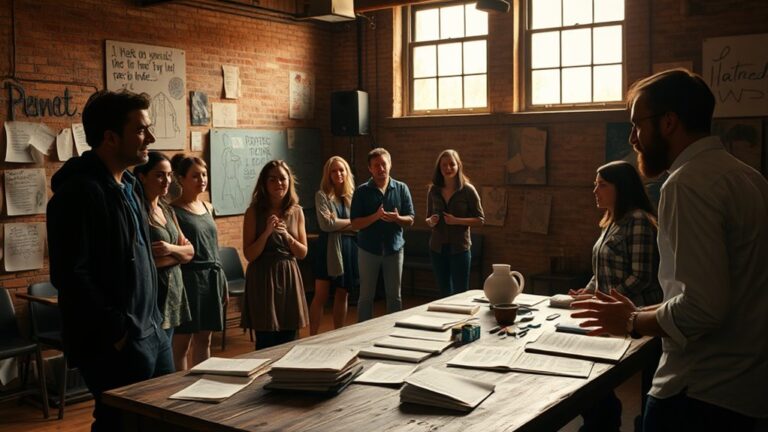
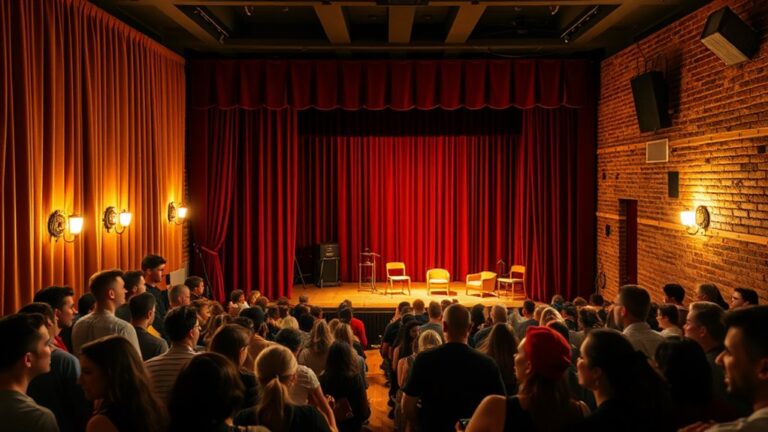
Off-Broadway has evolved greatly since its inception in mid-20th century New York City. Initially, it emerged as a creative alternative to Broadway, providing a platform for avant-garde works and social commentary. The 1960s and 1970s catalyzed artistic experimentation, as the 1980s embraced musicals, blending emotional storytelling with commercial success. The 1990s spotlighted diverse voices, reflecting broader societal changes. In recent years, technological advances have transformed audience engagement. Today, Off-Broadway faces both challenges and opportunities, with a focus on sustainability and innovation. To uncover the intricacies of this lively theater scene, further exploration awaits. As artists and creators navigate this dynamic landscape, they constantly seek new ways to captivate audiences and tell meaningful stories. Workshops, community engagements, and collaborations with local artists have become essential components in the development process, offering offbroadway production insights that enrich the creative landscape. By embracing these evolving practices, Off-Broadway continues to set trends and expand its influence, ensuring its vital role in the theatrical ecosystem remains vibrant.
Origins of Off-Broadway
Emerging from the lively cultural environment of New York City in the mid-20th century, Off-Broadway theater represented a significant shift in the American theatrical panorama. This movement arose as a response to the commercial constraints of Broadway, offering a platform for artistic experimentation and diverse narratives that were often marginalized in mainstream venues. The founding theaters, such as the Cherry Lane Theatre and the Public Theater, played a pivotal role in shaping this setting, providing intimate spaces that nurtured innovative storytelling.
Early productions within these spaces reflected a departure from traditional forms, embracing avant-garde techniques and unconventional themes. Works like "The Fantasticks," which debuted in 1960, showcased the potential for musical theater to explore complex emotional terrains while remaining accessible to a broader audience. This fusion of artistic integrity and audience engagement became a hallmark of Off-Broadway, attracting both seasoned playwrights and emerging voices enthusiastic to challenge the status quo.
Moreover, the Off-Broadway movement championed social commentary, addressing issues such as race, gender, and identity in ways that resonated with the cultural zeitgeist. These productions not only entertained but also provoked thought, encouraging audiences to confront societal norms and envision new possibilities. As the Off-Broadway scene flourished, it established itself as a crucible for innovation, setting the stage for a theatrical evolution that would resonate through subsequent decades. The origins of Off-Broadway consequently signify a transformative moment in American theater, bridging the gap between artistic ambition and the public's evolving tastes.
The 1960s: A Cultural Revolution
How did the tumultuous events of the 1960s reshape the terrain of Off-Broadway theater? The decade was marked by dynamic social upheavals and counterculture movements that profoundly influenced artistic expression. Emerging from a backdrop of civil rights activism, anti-war protests, and the sexual revolution, Off-Broadway became a fertile ground for innovative voices seeking to challenge societal norms and explore avant-garde themes.
The 1960s saw a surge in artistic experimentation, as playwrights, directors, and actors leveraged the flexible and intimate spaces of Off-Broadway to present works that defied conventional storytelling. Productions like "Hair" exemplified this shift, blending music, dance, and provocative narratives that resonated with the youth's desire for liberation and authenticity. The theater became a platform for radical ideas, where the boundaries of genre and form were continuously pushed, nurturing an environment ripe for collaboration and cross-pollination of ideas.
As audiences flocked to these performances, they encountered a plethora of perspectives that not only reflected the zeitgeist but also sparked dialogues around identity, politics, and culture. The era's spirit of rebellion and exploration permeated the Off-Broadway scene, encouraging artists to take risks and engage with pressing societal issues. This cultural revolution eventually laid the groundwork for future generations, reinforcing Off-Broadway's role as a vital incubator for innovation, expression, and change in American theater. Through its embrace of counterculture and artistic experimentation, the 1960s indelibly marked Off-Broadway as a lively arena for transformative storytelling.
Breaking Boundaries in the 1970s
The artistic scenery of Off-Broadway continued to evolve in the 1970s, building on the revolutionary spirit of the previous decade as it introduced new themes and forms. This era marked a significant departure from traditional storytelling, embracing experimental theater that challenged conventional narratives and production techniques. Playwrights and directors sought to engage audiences in provocative ways, employing avant garde performances that demanded active participation and reflection.
The socio-political climate of the time catalyzed a wave of political commentary, as artists utilized their platforms to address pressing issues such as civil rights, feminism, and anti-war sentiments. These themes resonated deeply with the burgeoning social movements of the decade, allowing Off-Broadway to serve as a forum for cultural critique and artistic expression. Productions often blurred the line between performer and spectator, nurturing an environment of audience engagement that encouraged dialogue and introspection.
Furthermore, Off-Broadway theaters undertook significant community outreach efforts. They collaborated with grassroots organizations, ensuring that marginalized voices were heard and represented on stage. This commitment to inclusivity not just diversified the narratives presented but additionally strengthened the bond between artists and their communities. Through their innovative approaches, the 1970s Off-Broadway scene established itself as a crucible for creativity, where the interplay of art and activism flourished, paving the way for future generations to explore the transformative influence of theater.
The Rise of the Musical
Transforming the Off-Broadway scenery, the rise of the musical in the 1980s brought a new dimension to the theatrical experience, blending storytelling with song and dance to captivate diverse audiences. This period marked a significant shift in the direction of musical experimentation, paving the way for innovative storytelling that engaged viewers on multiple sensory levels.
As Off-Broadway theaters began to embrace this genre, they provided a platform for emerging artists to push creative boundaries. Productions like "The Fantasticks" and "Little Shop of Horrors" demonstrated the potential of musicals to address complex themes during their accessibility. The intimate settings of Off-Broadway venues nurtured a connection between performers and audiences, enhancing the emotional resonance of the narratives.
The table below highlights key elements that characterize the rise of the musical during this transformative era:
| Element | Description |
|---|---|
| Musical Experimentation | The blending of various musical styles and genres to create unique scores. |
| Innovative Storytelling | Use of songs to advance plots and develop characters in unexpected ways. |
| Audience Engagement | The intimate setting allowing for direct interaction and emotional investment. |
| Diverse Themes | Exploration of contemporary issues, allowing for a broader dialogue. |
The 1980s: Commercial Success
As Off-Broadway musicals gained traction in the 1980s, they not just enriched the artistic atmosphere but also achieved remarkable commercial success. This decade marked a pivotal shift where Off-Broadway evolved from primarily experimental endeavors to thriving commercial productions that captivated audiences and investors alike. The combination of innovative storytelling and imaginative staging caught the eye of a burgeoning theater-goer demographic, enthusiastic for fresh and engaging narratives.
One of the most significant factors contributing to this success was the emphasis on audience engagement. The intimacy of Off-Broadway venues nurtured a unique connection between performers and spectators, allowing for a more immersive experience. Productions like "Little Shop of Horrors" and "The Fantasticks" exemplified this trend, blending humor, music, and relatable themes that resonated deeply with audiences. Their ability to attract diverse crowds led to increased ticket sales and the establishment of a loyal following.
Moreover, the 1980s saw the rise of savvy marketing strategies that further propelled the visibility of Off-Broadway shows. Creative promotional campaigns and word-of-mouth buzz transformed these once-niche productions into must-see events. In this lively era, Off-Broadway became a playground for artistic innovation, allowing creators to explore unconventional themes as they achieved commercial viability.
Ultimately, the 1980s solidified Off-Broadway's place in the theatrical domain, illustrating that artistic merit and commercial success could coexist harmoniously. This decade laid the groundwork for future explorations into diverse storytelling, setting the stage for the next evolution in American theater.
Diversity and Representation in the 1990s
The 1990s marked a significant turning point for Off-Broadway, as a broader range of cultural narratives began to emerge, reflecting the diverse experiences of marginalized communities. This era likewise saw notable advancements in gender representation, with more female playwrights and directors gaining recognition. Furthermore, the amplification of LGBTQ+ voices played an essential role in shaping the theatrical scenery, nurturing a more inclusive environment.
Increased Cultural Narratives
Throughout the 1990s, Off-Broadway theaters became a lively platform for diverse voices, reflecting the multifaceted fabric of American society. This era saw a surge in cultural representation that reshaped the theatrical environment, providing a stage for narratives often overlooked by mainstream productions. The commitment to narrative diversity allowed for a richer, more inclusive storytelling experience, marking a significant shift in the arts.
- Emergence of New Playwrights: A wave of emerging playwrights from various cultural backgrounds began to share their stories, challenging traditional narratives and offering fresh perspectives.
- Exploration of Identity: Productions frequently explored the intricacies of race, ethnicity, and sexuality, cultivating a deeper comprehension of the human experience and resonating with diverse audiences.
- Collaborative Artistic Ventures: Off-Broadway embraced collaboration between artists of varying backgrounds, leading to innovative works that blended cultural traditions and storytelling techniques.
This lively era not only enriched the Off-Broadway scene but as well set the stage for future generations, emphasizing the importance of representation in art and culture. The narratives developed during this time continue to inspire and influence contemporary theater, heralding a commitment to inclusivity and innovation.
Gender Representation Growth
Gender representation in Off-Broadway theater during the 1990s marked a crucial shift toward inclusivity and visibility. This era saw an emergence of female playwrights who challenged the traditional narratives that dominated the stage. Their works not just highlighted diverse experiences but complemented the storytelling environment with unique perspectives that had previously been marginalized.
As the decade progressed, the movement toward inclusive casting became increasingly prominent. The commitment to showcase a broader spectrum of characters allowed for a more authentic representation of society, engaging audiences in new and innovative ways. The success of productions featuring strong female leads and complex female-driven narratives demonstrated a growing acceptance and recognition of women's voices in theater.
Moreover, this transformation encouraged an environment where collaboration between male and female creators flourished. The collaboration among diverse artists led to the development of both compelling narratives and dynamic character arcs that resonated with a wide range of audiences. By the end of the 1990s, Off-Broadway had firmly established itself as an essential platform for gender representation, laying the groundwork for future advancements in inclusivity and diversity within the performing arts.
LGBTQ+ Voices Amplified
Frequently, Off-Broadway served as a crucial platform for amplifying LGBTQ+ voices during the 1990s, reflecting a significant shift in societal attitudes and artistic expression. This era marked a transformative phase in queer representation, contributing to visibility growth and community empowerment.
- Identity Exploration: Productions embraced complex characters that navigated the intricacies of sexual orientation and gender identity, nurturing a deeper comprehension of individual experiences.
- Intersectional Narratives: The stage became a canvas for diverse stories, highlighting the interconnectedness of race, sexuality, and class, thereby enriching the storytelling evolution.
- Cultural Impact: Off-Broadway plays such as "Rent" and "Angels in America" not just captivated audiences but also ignited discussions on pressing social issues like the AIDS crisis, demonstrating the influence of artistic expression in advocacy.
The 1990s underscored the importance of visibility, as LGBTQ+ narratives gained prominence in mainstream culture. Through innovative storytelling, Off-Broadway encouraged a dynamic community that celebrated diversity and stimulated ongoing dialogue about identity. This period catalyzed a lasting legacy, laying the groundwork for future generations of LGBTQ+ artists and audiences.
Technological Advances in the 2000s
The scenery of Off-Broadway theatre underwent significant transformation in the 2000s, largely driven by technological advances that reshaped production methodologies and audience engagement. This era marked a departure from traditional staging techniques, embracing digital staging that allowed for innovative set designs and dynamic visual storytelling. The use of projection technology became increasingly prevalent, enabling productions to create immersive environments that could shift and evolve within moments, thereby enhancing the narrative depth and emotional resonance of the performances.
Furthermore, the advent of interactive experiences transformed audience participation, blurring the lines between performers and spectators. The integration of mobile applications and social media platforms allowed audiences to engage with the narrative in real-time, nurturing a sense of community and shared experience that was previously unattainable. Productions began experimenting with audience-driven storylines, where attendees could influence the direction of the performance, thereby deepening their emotional investment.
Additionally, advancements in sound and lighting technology raised the sensory experience of Off-Broadway productions. The precision of digital sound design and programmable lighting systems enabled creators to craft atmospheres that were both enchanting and nuanced. These innovations not only attracted a diverse array of artists and productions to Off-Broadway but equally positioned the genre as a crucial incubator for new theatrical forms, ensuring its relevance in a constantly changing cultural environment. The 2000s stand as a proof of the potential of technology to enrich the theatrical experience, marking a pivotal moment in the evolution of Off-Broadway theatre.
The Impact of the Internet
The emergence of the internet has greatly transformed the Off-Broadway environment, particularly through online ticket sales that improve accessibility for audiences. Social media platforms have become essential tools for promotion, allowing productions to reach broader demographics and engage with fans in real time. Furthermore, the rise of streaming performances has opened new avenues for theater companies, enabling them to showcase their work beyond traditional venues.
Online Ticket Sales
How has the rise of the internet transformed the environment of ticket sales for Off-Broadway productions? The integration of online platforms has transformed the way audiences engage with theater, making ticket purchases more accessible than ever. This shift not only improves convenience but also allows for innovative online marketing strategies that reach a broader demographic.
The impact of online ticket sales can be summarized in three key areas:
- Wider Reach: Through digital platforms, Off-Broadway shows can attract audiences from diverse geographical locations, transcending traditional boundaries and broadening their fan base.
- Real-time Availability: Online sales enable instantaneous updates on ticket availability, empowering patrons to secure their seats without delay. This immediacy cultivates a sense of urgency and excitement.
- Improved User Experience: Streamlined, user-friendly interfaces simplify the purchasing process, allowing for quick access to performance details and ticket options, thereby increasing overall ticket accessibility.
As Off-Broadway continues to evolve, the emphasis on online ticket sales will remain essential in crafting engaging experiences and driving audience participation in the ever-changing environment of theater.
Social Media Promotion
As Off-Broadway productions increasingly immerse themselves in social media platforms, their ability to connect with diverse audiences has dramatically expanded. This leap into the digital domain has transformed the terrain of promotion, allowing for unprecedented social media engagement that transcends traditional marketing methods. The immediacy and accessibility of platforms like Instagram, Twitter, and TikTok enable productions to reach potential theatergoers in innovative ways, shaping a more dynamic relationship with the audience.
Through enthralling visuals, behind-the-scenes content, and engaging stories, Off-Broadway shows can cultivate a sense of community and encourage audience interaction that was previously unattainable. This direct line of communication allows productions to solicit feedback, create polls, and even involve fans in decision-making processes, enriching the overall theater experience.
Moreover, the viral nature of social media can amplify a production's reach, turning casual observers into enthusiastic supporters. As Off-Broadway continues to utilize the influence of social media, it not only improves its marketing strategies but also nurtures a lively ecosystem where creativity thrives, paving the way for future innovations in theater promotion. The integration of social media into the Off-Broadway experience is not just beneficial; it is crucial for survival in a competitive environment.
Streaming Performances Rise
With the advent of high-speed internet and advancements in streaming technology, Off-Broadway productions have embraced a new frontier in accessibility and audience engagement. The rise of virtual performances has transformed traditional theater, allowing productions to reach wider audiences than ever before. This shift has not merely provided streaming accessibility but has likewise redefined the relationship between artists and spectators.
- Global Reach: Off-Broadway shows can now connect with viewers around the world, breaking geographical barriers that once limited attendance.
- Diverse Programming: Streaming platforms enable a broader range of performances, including experimental works and niche genres that might not secure physical staging.
- Interactive Experiences: Many virtual performances incorporate innovative elements such as live Q&A sessions and interactive features, nurturing a dialogue between artists and audiences.
As Off-Broadway continues to adapt, embracing streaming technology will be vital to its evolution. By leveraging these tools, productions not only improve streaming accessibility but also invigorate the theatrical experience, ensuring that the essence of live performance resonates in a digital age. This innovative approach heralds a promising future for Off-Broadway, blending tradition with modernity.
Off-Broadway in the 2010s
The scenery of Off-Broadway in the 2010s was marked by a dynamic blend of innovation and tradition, showcasing a diverse array of voices and narratives. This decade saw an upsurge in experimental storytelling that challenged conventional theatrical forms and emphasized unique perspectives. Productions began to prioritize audience engagement, creating immersive experiences that invited spectators to interact with the narrative and performers in unprecedented ways.
The following table highlights key Off-Broadway productions of the 2010s that exemplified these themes:
| Production Title | Notable Elements |
|---|---|
| "Hamilton" | Revolutionary narrative style |
| "Sleep No More" | Immersive, site-specific format |
| "The Curious Incident of the Dog in the Night-Time" | Interactive audience experience |
| "Fun Home" | Poignant storytelling and music |
As Off-Broadway theaters embraced a more inclusive ethos, they showcased works that reflected the multifaceted identities of contemporary society. Furthermore, the rise of technology allowed for innovative multimedia integration, further enhancing the storytelling experience.
The 2010s positioned Off-Broadway as an essential platform for emerging playwrights and diverse narratives, nurturing a lively cultural dialogue and paving the way for future artistic explorations. With each production, audiences were not merely passive observers; they became active participants in the unfolding of stories, encapsulating the spirit of innovation that defined Off-Broadway throughout the decade. The intimate settings of Off-Broadway allowed for a more personal connection between actors and the audience, fostering an environment where new voices could flourish. These productions often uncovered Broadway’s unseen backstage secrets, revealing the intricacies and challenges of the theatrical world while emphasizing the power of storytelling. As a result, the decade not only celebrated established artists but also heralded new talents, contributing to a richer, more inclusive narrative landscape in contemporary theater.
Recent Trends and Innovations
What new avenues for creativity have emerged within Off-Broadway in recent years? The environment of Off-Broadway has transformed dramatically, embracing innovative methods to engage audiences and push artistic boundaries. This evolution reflects a commitment to immersive experiences and collaborative projects, allowing creators to experiment with form and narrative.
- Audience Participation: Productions increasingly invite the audience to become active participants, blurring the lines between performer and spectator. This shift nurtures a deeper connection, improving the theatrical experience through interactive storytelling.
- Cross Genre Blending: Off-Broadway has become a fertile ground for cross-genre blending, integrating elements from theater, dance, music, and visual arts. This approach not only diversifies the offerings but additionally attracts a wider audience who seek unique and transformative experiences.
- Site Specific Performances: The rise of site-specific performances allows artists to utilize unconventional spaces, creating a more intimate and relevant connection with the community. These performances often reflect local narratives, improving community engagement and nurturing a sense of belonging.
Alongside these trends, digital integration has become paramount, enabling productions to reach broader audiences through virtual platforms. Artistic partnerships are flourishing, promoting collaborative efforts that challenge traditional boundaries and improve the richness of Off-Broadway offerings. Collectively, these innovations mark a lively and dynamic era for Off-Broadway, redefining its role in the theatrical environment.
The Future of Off-Broadway
Off-Broadway's future promises to be an exciting domain of artistic exploration and innovation, driven by a commitment to inclusivity and diversity. As the arena of theater evolves, Off-Broadway is poised to embrace new playwrights whose voices reflect the rich mosaic of contemporary society. This shift in evolving themes will nurture narratives that resonate with diverse audiences, enhancing audience engagement and forging deeper connections.
Immersive experiences are likely to redefine traditional theater-going, inviting audiences to step into the narrative, thereby blurring the lines between performer and spectator. This evolution will be further supported by regional Off-Broadway productions, which can showcase local talents and stories, enriching the national theater scene as well as promoting community outreach initiatives.
However, the path forward is not without its challenges. Funding challenges continue to threaten artistic ventures, necessitating innovative financial models and strong artist collaborations to guarantee sustainability. As Off-Broadway seeks to utilize global influences, it can draw from international theater practices, enriching its offerings and broadening its appeal.
The rise of virtual productions presents another frontier for Off-Broadway, enabling artists to reach broader audiences and experiment with new formats. These digital platforms can serve as a testing ground for avant-garde works, paving the way for future live performances. In the end, Off-Broadway's future lies in its ability to adapt, innovate, and engage with audiences in meaningful ways, guaranteeing that this dynamic art form remains relevant and impactful in the years to come.
Frequently Asked Questions
What Defines an Off-Broadway Production Compared to Broadway?
An off-Broadway production is primarily defined by its theatrical scale and venue capacity, typically accommodating 100 to 499 seats, as opposed to Broadway's larger theaters. This smaller scale nurtures a unique audience intimacy, allowing for more innovative and experimental storytelling. Off-Broadway productions often prioritize artistic expression and diverse narratives, appealing to audiences seeking fresh perspectives, during the provision of a platform for emerging talent in a dynamic and evolving theatrical environment.
How Do Ticket Prices for Off-Broadway Shows Differ From Broadway?
Ticket prices for Off-Broadway shows typically reflect a commitment to ticket affordability, often being lower than their Broadway counterparts. Recent pricing trends indicate a growing divergence, with Off-Broadway productions strategically positioning themselves as accessible alternatives. This difference not just attracts a diverse audience but additionally encourages innovative storytelling, cultivating a lively theater community that prioritizes inclusivity. As a result, Off-Broadway serves as an essential platform for emerging talent and avant-garde performances, enhancing the overall theatrical environment.
Who Are Some Notable Playwrights Who Started in Off-Broadway?
Many notable playwrights have emerged from the Off-Broadway scene, making significant contributions to contemporary theater. Playwright profiles include figures such as Lynn Nottage, whose works explore complex social issues, and David Mamet, known for his sharp dialogue. Furthermore, Suzan-Lori Parks and Stephen Adly Guirgis have garnered acclaim for their innovative storytelling techniques. These artists exemplify how Off-Broadway serves as an essential platform for experimentation and the development of groundbreaking theatrical narratives.
What Are the Most Famous Off-Broadway Theaters Today?
Today, several famous venues stand out in the Off-Broadway scene, showcasing innovative performances and iconic productions. The Public Theater, known for its groundbreaking works, continues to push artistic boundaries. Playwrights Horizons, with its commitment to new plays, offers a platform for emerging voices. The Signature Theatre, renowned for celebrating the works of a single playwright, further enriches the Off-Broadway arena, making it a crucial hub for theatrical innovation and creativity.
How Can Emerging Artists Get Involved in Off-Broadway Productions?
Emerging artists can engage with Off-Broadway productions by actively seeking audition opportunities and participating in networking events. Many theaters host open calls and workshops, providing platforms for new talent to showcase their skills. Furthermore, joining local theater groups and attending industry meetups can facilitate connections with established professionals. By immersing themselves in the artistic community and remaining persistent, emerging artists can carve a path into the lively world of Off-Broadway. Additionally, exploring diverse performance opportunities, such as immersive theater experiences or specialty acts, can help artists stand out. Attending unconventional gatherings like an aerialists and chocolate event may introduce them to unique collaborators and broaden their creative network. By embracing varied artistic expressions, emerging performers increase their chances of finding their niche in the Off-Broadway scene.
About the Author